
Most people assume sambuca is just an after-dinner shot someone lights on fire at an Italian restaurant.

That misreads it entirely - sambuca is a structured, high-proof liqueur with real depth, and understanding anise in cooking helps explain why its flavor behaves differently depending on how you apply heat.
If alternatives to anise are on your radar, you'll quickly see why sambuca sits in its own category.
Sambuca is a sweet, syrupy Italian liqueur built on aniseed. It delivers strong black licorice flavor and is served neat, flamed, or stirred into espresso. It's a legitimate cooking ingredient as well as a digestif, with 38-42% ABV.
What Is Sambuca?
Sambuca is an Italian anise-flavored liqueur, typically bottled at 38-42% ABV and produced primarily in central-northern Italy. It's distilled from neutral grain spirit and flavored with aniseed, along with other botanicals that vary by producer.
Remember it later
Planning to try this recipe soon? Save it for a quick find later!
The name most people recognize is Molinari, which helped define the modern style after Luigi Molinari began producing his version in Civitavecchia in 1945. Other major producers include Luxardo and Vaccari, each with slightly different botanical signatures.
Three main variants exist in the market:
- ⬜ White sambuca (sambuca bianca) - Clear, the most common style; clean anise with floral sweetness
- ⬛ Black sambuca (sambuca nera) - Deep indigo-black color; elderberry and licorice root give it a darker, earthier profile
- 🔴 Red sambuca - Less common; colored with hibiscus or berry botanicals, slightly less anise-forward
Sambuca is distinct from anisette, which is lower in alcohol and less syrupy. It's also not the same as ouzo or raki, though all three are anise spirits - sambuca's higher sugar content and Italian production standards set it apart.
What Does Sambuca Taste Like?
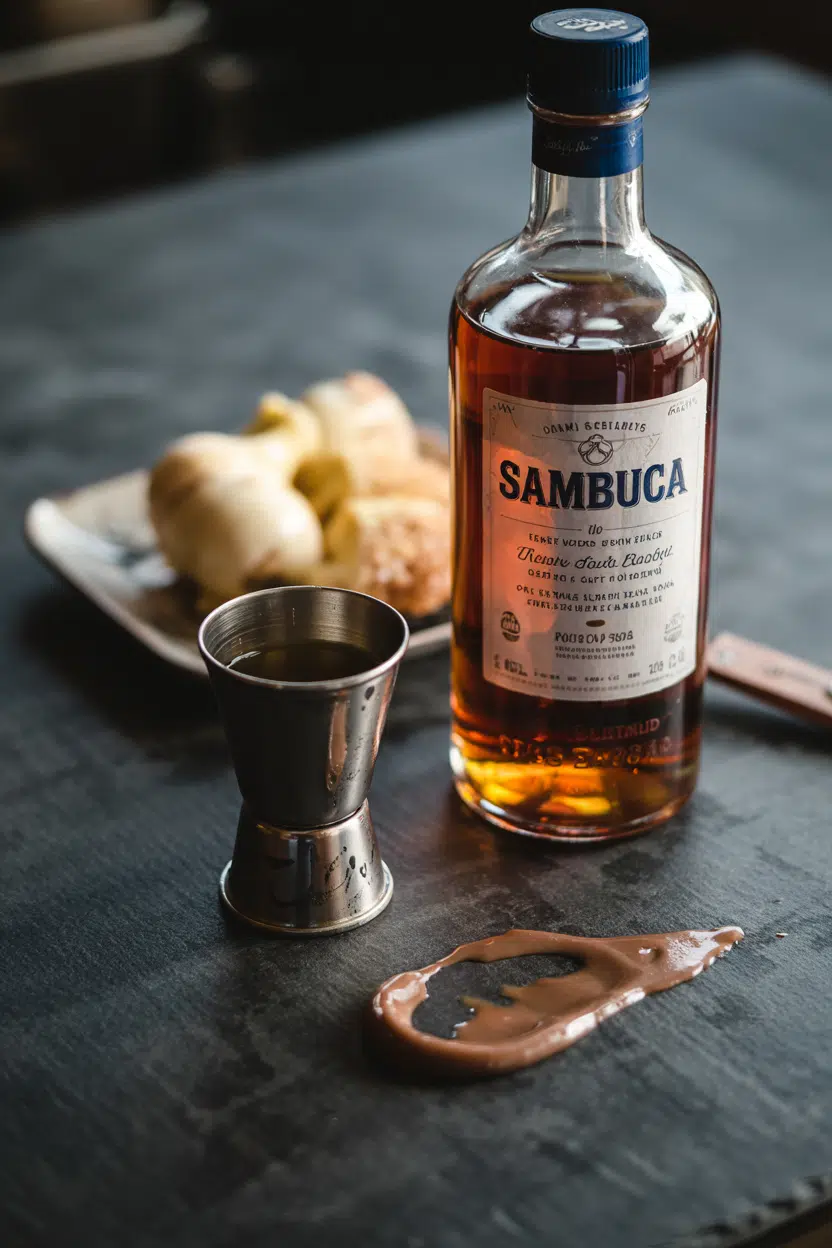
Sambuca leads with intense black licorice sweetness - sharper and more pronounced than fennel, but with a soft floral edge that keeps it from being harsh.
The mouthfeel is noticeably thick and syrupy, coating the palate rather than cutting through it.
Heat changes sambuca considerably. Flambing briefly softens the sharp anise edge, leaving a warmer, more caramelized quality in the aroma.
Stirred into hot espresso, the sweetness integrates and the licorice note becomes a background accent rather than the main event.
Compared to ouzo, sambuca reads sweeter and thicker - ouzo has a drier, more herbaceous finish. For a full breakdown of how they compare, ouzo's flavor and uses covers the differences in detail.
How to Use Sambuca
Sambuca's most iconic serving is con la mosca - "with the fly" - where three coffee beans float in the glass before drinking.
The beans represent health, happiness, and prosperity in Italian tradition, and their bitter oils cut through the sweetness in each sip.
Beyond the digestif glass, sambuca earns real kitchen utility. For savory applications, a small measure brushed into a glaze for roast duck or pork belly plays the sweet-anise note against rendered fat extremely well.
It's the kind of addition that reads as complexity rather than booze.
| Method | Best For | Tip |
|---|---|---|
| 🥃 Neat/Chilled | Post-dinner digestif, con la mosca service | Serve cold - heat amplifies anise to overwhelming levels when unintended |
| 🔥 Flambé | Tableside drama, warmed cocktails, caramelized fruit | Ignite briefly; prolonged flame burns off too much aroma |
| ☕ Stirred into Coffee | Espresso cocktails, after-dinner coffee drinks | Add after brewing - heat alone integrates the sweetness cleanly |
| 🍳 Reduction | Glazes for pork or duck, dessert sauces, baked goods | Reduce slowly; sugar scorches quickly at high heat |
| 🍑 Broiled Fruit | Peaches, figs, or citrus segments as a dessert component | Brush lightly - one layer is enough, two turns cloying |
In desserts, sambuca pairs naturally with dark chocolate, orange zest, and mascarpone. A tablespoon folded into a mascarpone cream for tiramisu adds anise depth without announcing itself loudly.
The same logic applies when using it to brush baked goods - less is more.
For Mediterranean-leaning dishes, the anise connection is direct. Just as making giouvetsi lamb with kritharaki at home shows how anise-forward aromatics work alongside braised meat, sambuca can function as a finishing splash in slow-cooked lamb sauces.
If sambuca isn't available, alternatives to sambuca outlines which anise spirits can step in without wrecking the balance.
How to Buy and Store Sambuca
Choose a bottle from a named Italian producer - Molinari, Luxardo, or Vaccari are reliable starting points. Check the ABV label: anything under 38% is likely an imitation style with a thinner body.
Avoid bottles that look cloudy or hazy, which signals contamination or improper storage on the shelf.
White sambuca is the most widely available and the best entry point. Black sambuca suits those who want a less overtly sweet, earthier profile.
For storage, keep bottles upright in a cool, dark cupboard - light degrades both the color and the aromatic compounds over time. Full details on keeping sambuca fresh cover what changes after a bottle has been open for several months.
Unopened bottles hold indefinitely; opened ones are best consumed within one to three years.
Where to Start With Sambuca
Sambuca rewards people who approach it with some intention. Start with white sambuca served chilled and neat, with three coffee beans - that's the benchmark experience every other use builds from.
Move to cooking once you're confident with the flavor. A small reduction into a glaze, or a spoon folded into mascarpone cream, shows what sambuca does when it's working with other ingredients rather than standing alone.
Those who find the anise too sharp for neat sipping often prefer it here.
Frequently Asked Questions
No. Anisette is lower in alcohol (typically 25-30% ABV) and much less syrupy than sambuca. Sambuca must meet Italian production standards with higher ABV and a thicker, sugar-forward body that anisette doesn't match.
Sambuca is noticeably sweeter and thicker, with a more intense licorice sweetness. Ouzo has a drier, more herbaceous finish and turns milky white when diluted - sambuca stays clear. For more on how ouzo differs, see [swapping out ouzo](https://forkliftkitchen.com/ouzo-substitutes/) when a recipe calls for it.
Standard sambuca runs 38-42% ABV, putting it in the same range as whiskey or gin. Some premium expressions reach 42%, while budget versions may dip slightly below 38%.
Three beans represent health, happiness, and prosperity in Italian tradition - the ritual is called con la mosca ("with the fly"). The beans also serve a practical purpose: their bitter oils balance the liqueur's intense sweetness with each sip.
Yes, but reduce it first. Cooking burns off some alcohol and softens the raw anise sharpness, especially in glazes or sauces. Use it in small amounts alongside fat-rich ingredients like duck or mascarpone, which absorb and mute the intensity. For context on how [espresso powder stand-ins](https://forkliftkitchen.com/espresso-powder-substitutes/) work in similar coffee-forward applications, the same principle of small additions applies.



