
Pad thai arrives at the table, and those scattered crushed peanuts on top aren't garnish - they're structural. They add crunch, a round toasty flavor, and a hint of richness that pulls the whole dish together.

Peanuts do that across dozens of cuisines, from West African groundnut stews to American peanut butter cookies, and understanding what makes them work is the starting point for using them well.
Peanuts are edible legume seeds with a rich, toasty, earthy flavor that deepens with roasting. Used in snacks, sauces, and baked goods across multiple cuisines, they're one of the most widely applied plant proteins in the world.
What Are Peanuts?
Peanuts are the seeds of Arachis hypogaea, a legume plant native to the Paraguay region of South America.
Remember it later
Planning to try this recipe soon? Save it for a quick find later!
Unlike tree nuts, the plant flowers above ground and then sends its pods downward into the soil to mature - which is why peanuts are also called groundnuts, particularly in West Africa, India, and the UK.
Four main commercial varieties exist. Each has slightly different characteristics in the kitchen:
- Runner - The most common U.S. variety; consistent size, widely used for peanut butter
- Virginia - Large kernels, preferred for roasted in-shell snacking
- Spanish - Smaller, higher oil content, used in candy and peanut oil production
- Valencia - Typically three kernels per pod; sweet flavor, good for boiling
Despite being a legume, peanuts behave like tree nuts in cooking. Their high fat content, dense texture, and concentrated flavor make them interchangeable with almonds or cashews in many applications - and they're often shelved and marketed alongside them.
What Do Peanuts Taste Like?
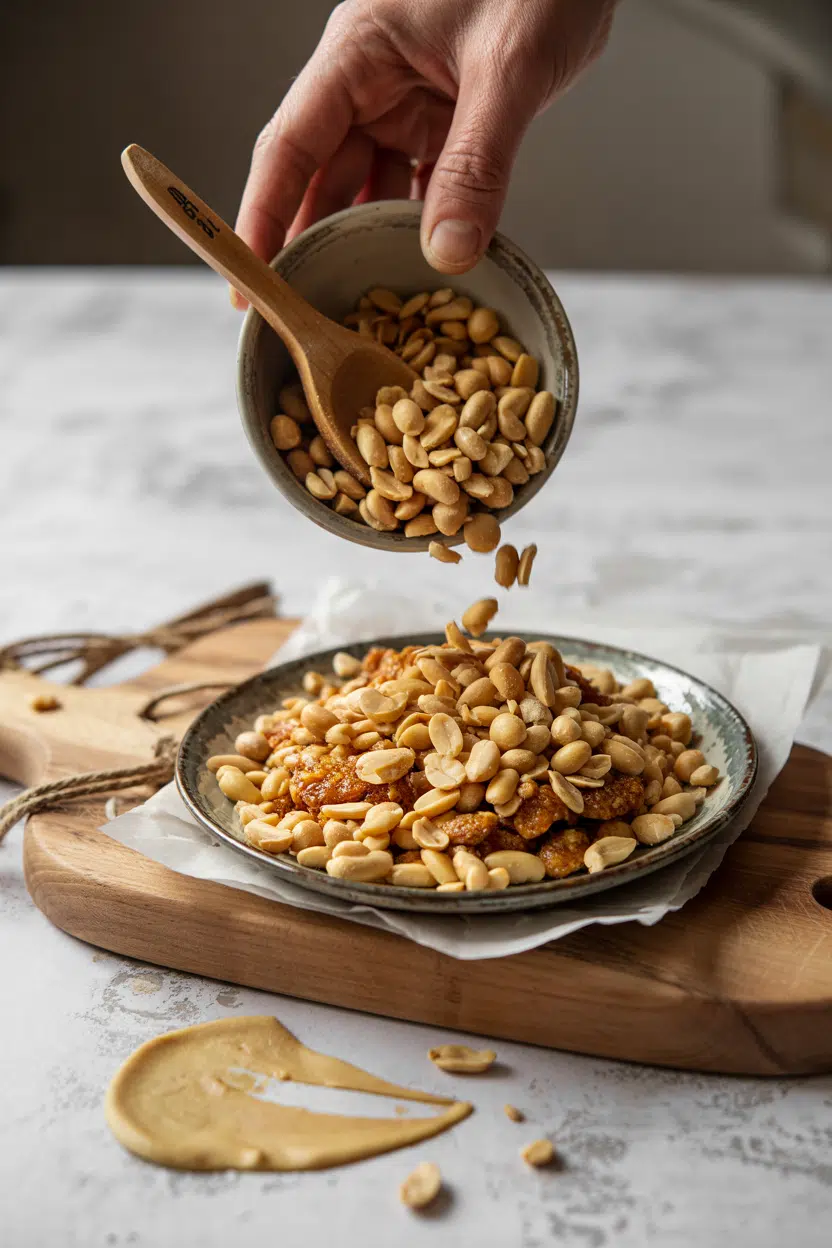
Raw peanuts have a mild, slightly beany flavor with an earthy undertone. Roasting changes everything. Heat drives off moisture and triggers the Maillard reaction, building that familiar toasted nuttiness with warm, almost brown-sugar edges.
Compared to almonds or hazelnuts, peanuts have a more pronounced legume earthiness underneath the toasted layer. Salting amplifies the savory and umami notes considerably.
Boiled peanuts - a Southern staple - take on a completely different profile: soft, salty, and almost bean-like, with none of the crunch.
How to Use Peanuts
Peanuts cross more cuisines than almost any other single ingredient. West African cooking relies on them heavily - groundnut stew builds a thick, savory base from blended peanuts, tomatoes, and aromatics, closely related to the Ghanaian groundnut soup tradition.
In Southeast Asia, roasted peanuts ground into satay sauce or a Thai peanut dressing are non-negotiable anchors of flavor.
| Method | Best For | Tip |
|---|---|---|
| 🥗 Raw | Boiled Southern-style, sprouting, light salads | Use Valencia or Spanish varieties for boiling - they soften evenly |
| 🍳 Dry-Roasted | Snacking, crushing for garnish, stir-fry topping | Roast at 350°F (175°C) for 10-15 min; shake the pan halfway |
| 🛢️ Oil-Roasted | Coated snacks, peanut brittle, confections | Adds sheen and crunch; drain on paper towel to avoid sogginess |
| 🥣 Blended | Peanut butter, satay sauce, peanut dressings | Process with a pinch of salt; add neutral oil only if needed |
| 🍪 Baked | Cookies, brownies, energy bars | Chop roughly - fine crumbs get lost, whole nuts stay distinct |
American applications lean sweet: peanut brittle, peanut butter cookies, and Reese's-style chocolate combinations are the dominant tradition. Brazilian paçoca - a crumbly pressed peanut candy - shows the same instinct with a drier, less sweet result.
Peanuts pair tightly with soy sauce and lime in savory sauces, with chocolate in desserts, and with chilies and garlic in spicy preparations. Fresh herbs like cilantro and mint cut through the richness in salads and noodle bowls.
If you need a swap in a sauce application, check these peanut butter substitutes for workable alternatives.
How to Buy and Store Peanuts
Look for shelled kernels that are plump and uniform in color, with no dark spots or powdery coating. A rancid or sharp smell at the store is a hard no.
Vacuum-sealed or nitrogen-flushed packages extend shelf life meaningfully - they're worth the slight price premium.
Storage by form:
- Unshelled raw peanuts - Cool, dry pantry; last several months
- Shelled roasted kernels - Airtight container, refrigerated; use within 1-3 months
- Peanut butter (opened) - Refrigerate; natural varieties separate but stay fresh for months
For a full breakdown of how long each form lasts, the peanut shelf life guide covers every storage scenario in detail.
Where to Start With Peanuts
Start with dry-roasted whole peanuts if you're new to cooking with them. Crush them over noodles or grain bowls to understand the texture and flavor contribution before committing to a full sauce.
Once comfortable, the next move is a simple peanut sauce - peanut butter thinned with soy sauce, lime, garlic, and a little water. It works on everything from grilled chicken to cold noodles.
From there, the range opens up considerably.
Frequently Asked Questions
Botanically, they're a legume - seeds that grow in pods underground, related to lentils and chickpeas. Culinarily and nutritionally, they're grouped with tree nuts because their fat content, flavor, and kitchen behavior closely match walnuts and almonds.
Both share a roasted nuttiness, however peanuts have a deeper earthy, legume-forward character that almonds lack. Almonds lean cleaner and slightly more bitter; peanuts read as richer and more savory.
Spread raw shelled peanuts in a single layer on a baking sheet and roast at 350°F (175°C) for 10-15 minutes, shaking once halfway through. Pull them before they look fully done - carryover heat darkens them further as they cool.
Their polyunsaturated fats oxidize when exposed to air, heat, or light - producing that sharp, paint-like smell. Roasted peanuts go rancid faster than raw because the roasting process breaks down some of the natural antioxidant compounds.
Yes - both raw and roasted peanuts freeze well in airtight bags for up to a year with no significant texture loss. Peanut butter also freezes, though natural varieties may need stirring after thawing.



