Shoyu turns up in the dipping sauce beside your gyoza, in the glaze coating yakitori skewers, and in the broth of a bowl of ramen that tastes like it took all day to build. It's one of the most-used condiments in Japanese cooking, yet most people outside Japan treat it as interchangeable with any soy sauce on the shelf.

That's worth reconsidering.
Shoyu is a fermented Japanese soy sauce brewed from soybeans and wheat using koji. It delivers umami-rich, mildly sweet, rounded flavor - lighter in harshness than many alternatives - and works as a seasoning, dipping sauce, marinade, and finishing condiment across Japanese and pan-Asian cooking.
What Is Shoyu?
Shoyu (醤油) is Japan's native soy sauce, brewed by fermenting a mixture of soybeans and wheat with koji mold, then pressing the aged liquid from the solids.
Remember it later
Planning to try this recipe soon? Save it for a quick find later!
The wheat is what separates it from Chinese-style soy sauces and from tamari, which uses little to no wheat and tastes noticeably sharper as a result.
Most shoyu sold outside Japan is koikuchi, the dark, general-purpose style that accounts for roughly 80% of domestic Japanese production. A few other types are worth knowing:
- Koikuchi - The standard. Dark amber, balanced umami, mildly sweet. Works in almost any application.
- Usukuchi - Lighter in color but actually saltier than koikuchi. Used in Kyoto-style cooking to keep dishes pale.
- Nama shoyu - Unpasteurized, with a fresher, more complex aroma. Refrigerate from day one and use quickly.
- Tamari - Technically a separate category, wheat-free or nearly so, with a thicker body and deeper soy flavor.
For most home cooks, a bottle of koikuchi is the right starting point. Specialty styles serve specific regional dishes and are worth exploring once you have the basics down.
What Does Shoyu Taste Like?
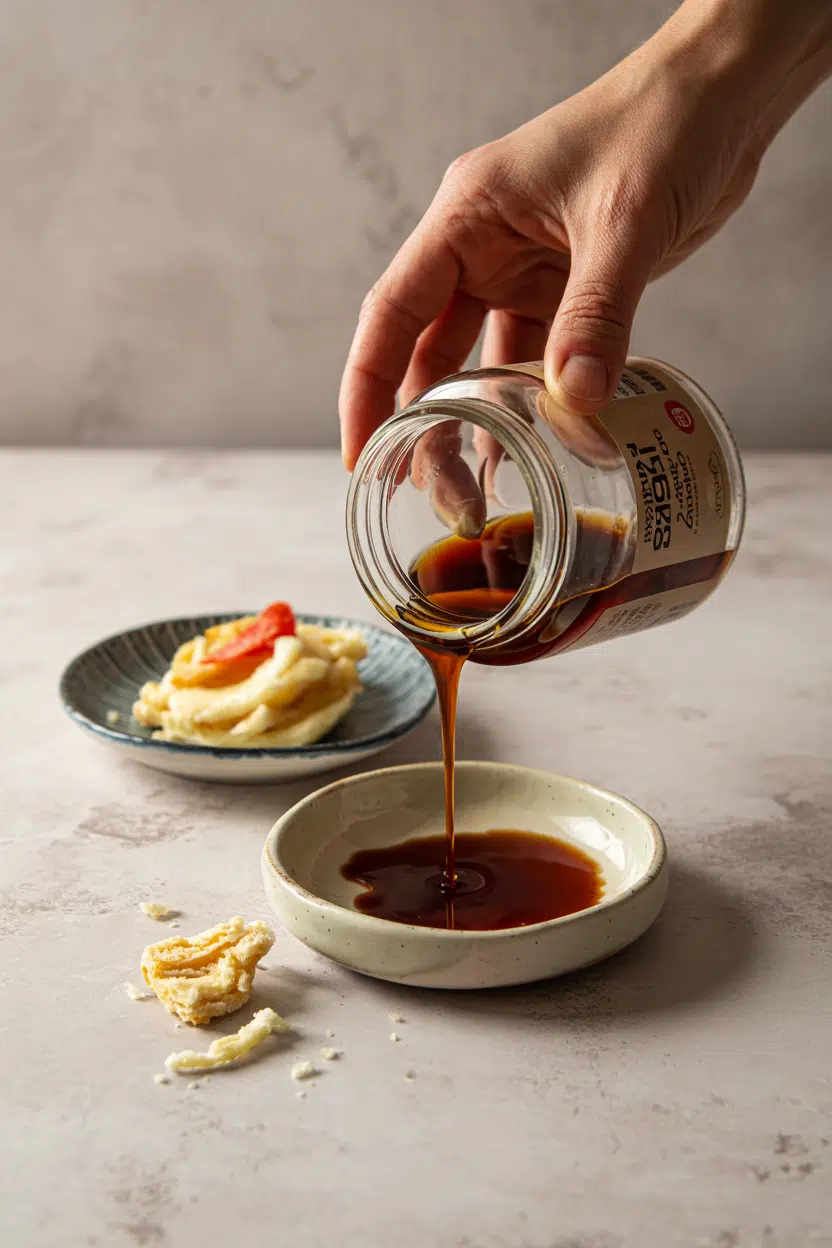
Umami is the dominant note - a savory depth that coats the palate without tasting sharp or metallic. The wheat in the brew adds a mild sweetness that rounds out the salt, making shoyu noticeably less aggressive than some Chinese soy sauces and softer than tamari.
Heat changes the equation. Added early in cooking, shoyu mellows and deepens, contributing color and background savoriness.
A splash added at the end of cooking preserves the toasty, bready aroma that makes it worth reaching for as a finishing sauce.
The texture is thin and fluid - a small pour goes a long way before the saltiness becomes noticeable. That's the signal to stop.
How to Use Shoyu
Shoyu is a workhorse condiment. It pulls equal weight as a dipping sauce, a braise base, and a one-ingredient finishing drizzle.
The key is matching the application to the style: light touch for delicate dishes, more assertive use in long-cooked preparations.
| Method | Best For | Tip |
|---|---|---|
| 🥗 Dipping | Gyoza, sashimi, dumplings | Combine with citrus or rice vinegar to cut the salt |
| 🍳 Stir-frying | Vegetables, fried rice, noodles | Add near the end so the aroma doesn't cook off |
| 🥩 Marinating | Chicken yakitori, grilled fish, tofu | Short marinades work - over 2 hours can over-salt proteins |
| 🍲 Braising | Nikujaga, simmered root vegetables | Pair with [mirin](https://forkliftkitchen.com/aji-mirin-vs-rice-vinegar/) and [sake](https://forkliftkitchen.com/sake-substitutes/) for a balanced braise liquid |
| ✨ Finishing | Steamed greens, silken tofu, soups | A few drops only - you're adding aroma, not seasoning |
Dashi and shoyu are the backbone of most Japanese clear soups and noodle broths. Together they create the layered savory base that makes shoyu ramen taste like more than the sum of its parts. Ginger, garlic, scallions, and sesame oil all pair naturally for marinades and finishing.
For a teriyaki glaze, reduce shoyu with sugar and mirin until it thickens and turns glossy. Mushrooms and tofu both benefit from direct seasoning with shoyu, because their high water content absorbs it evenly.
How to Buy and Store Shoyu
Read the label before you buy. Look for shoyu listed by type - koikuchi is the default choice for general cooking. Check the ingredient list for wheat if gluten is a concern; most standard shoyu contains it. The bottle should be clear amber without cloudiness unless it's labeled nama (unpasteurized).
Once opened, refrigerate it. Room-temperature storage accelerates darkening and gradually strips the aroma.
An opened bottle stored in the fridge holds its best flavor for 6-12 months. For full details on how long shoyu actually lasts, see our guide to shoyu freshness guide.
Unopened bottles keep 12-24 months in a cool, dark pantry.
Start With Koikuchi
If you're new to shoyu, one bottle of koikuchi covers most of what you'll cook. It works in marinades, broths, dipping sauces, and stir-fries without adjustment.
From there, consider branching into specialty types. Nama shoyu adds fragrance to cold dishes and finishing applications.
Usukuchi suits pale broths and Kansai-style cooking.
If gluten is a factor, tamari is the closest substitute - it's made with minimal or no wheat and delivers a similar umami depth. For a broader comparison of alternatives, the shoyu replacements guide covers the full range.
Frequently Asked Questions
Shoyu is a type of soy sauce - specifically the Japanese style, brewed with both soybeans and wheat. Chinese soy sauces and other regional varieties are made with different ratios and fermentation methods, producing noticeably different flavor profiles.
Yes, standard shoyu is brewed with wheat - typically a 50/50 ratio with soybeans. Gluten-free versions exist and are labeled as such; tamari is the most common wheat-free alternative.
Koikuchi is the standard choice for sushi dipping. Some sushi chefs prefer tamari for its thicker body and cleaner soy flavor, especially with raw fish.
Nama shoyu is unpasteurized soy sauce, bottled without heat treatment to preserve live enzymes and a fresher, more aromatic flavor. It requires refrigeration from purchase and has a shorter shelf life than standard shoyu.
Koikuchi shoyu and many Chinese soy sauces have similar sodium levels, but shoyu tastes less sharp because the wheat adds sweetness that softens the salt perception. Usukuchi shoyu is actually saltier by sodium content despite its lighter color.