Freezing basil is one of the smartest moves you can make with a big summer harvest - but only if you do it right. Fresh basil lasts 5-10 days in the fridge, 1-4 days on the counter, and up to a year in the freezer when packed in oil.
How you store it from the start determines whether you're pulling fragrant green cubes out in January or tossing a blackened, slimy bunch in October.
Fresh basil lasts up to 10 days refrigerated and up to 12 months frozen in oil or pesto. Keep it dry before refrigerating, never in the coldest fridge zone, and freeze in olive oil to lock in volatile aromatic oils for cooked dishes.
How Long Does Basil Last?
Fresh basil is one of the more perishable herbs you'll bring home. Unlike hardier stems such as parsley, basil is chill-sensitive and breaks down quickly under cold or wet conditions.
Remember it later
Planning to try this recipe soon? Save it for a quick find later!
| Method | State | Duration | Notes |
|---|---|---|---|
| 🧊 Fridge | Raw, whole bunch | 5-10 days | Genovese leaves near 10 days if stems are trimmed and leaves kept dry |
| 🧊 Fridge | Washed, loose leaves | 3-5 days | Wet leaves discolor and go limp faster; dry and containerize immediately |
| ❄️ Freezer | Pesto or chopped in oil | 6-12 months | Best method for preserving green color and aromatic oils |
| ❄️ Freezer | Whole leaves (flash-frozen) | 3-6 months | Airtight bag essential; texture softens, best for cooked dishes |
| 🏠 Pantry | Dried, sealed jar | 12-36 months | Flavor fades before safety becomes a concern; store away from heat |
| 🏠 Counter | Upright in water | 1-4 days | Cooler rooms extend life; keep out of direct sun and away from cold drafts |
The wide range in fridge life - five to ten days - comes down to two variables: leaf damage and moisture. Bruised or wet leaves tip toward the shorter end every time.
How to Store Basil
Fresh basil needs a different approach depending on when you plan to use it. Two methods work well for the fridge; one works for short-term counter storage.
Upright in water (counter or fridge door): Trim about half an inch off the stems and place the bunch in a glass with 1-2 inches of water. Cover loosely with a plastic bag and keep it away from cold blasts - basil is chill-sensitive and suffers cold injury near the back wall of a fridge. This method suits basil you'll use raw within a few days.
Paper towel wrap (fridge): For leaves you won't use immediately, dry them completely, wrap in a paper towel, and slide into a perforated plastic bag or produce container. The paper towel absorbs any residual moisture that would otherwise cause browning.
Pantry (dried basil only): Sealed commercial jars keep well for one to three years. Keep lids tight and store away from the stove or any heat source - volatile oils degrade quickly under warmth and light.
Can You Freeze Basil?
Yes, and it's worth doing before a large crop goes to waste. The method you choose changes how useful the basil will be later.
Oil-packed basil keeps far better than plain frozen leaves. Blending or chopping leaves with olive oil before freezing protects the volatile aromatic compounds that give basil its character. Plain flash-frozen leaves retain less flavor and turn limp once thawed - they're useful in soups and sauces, not on a Caprese salad.
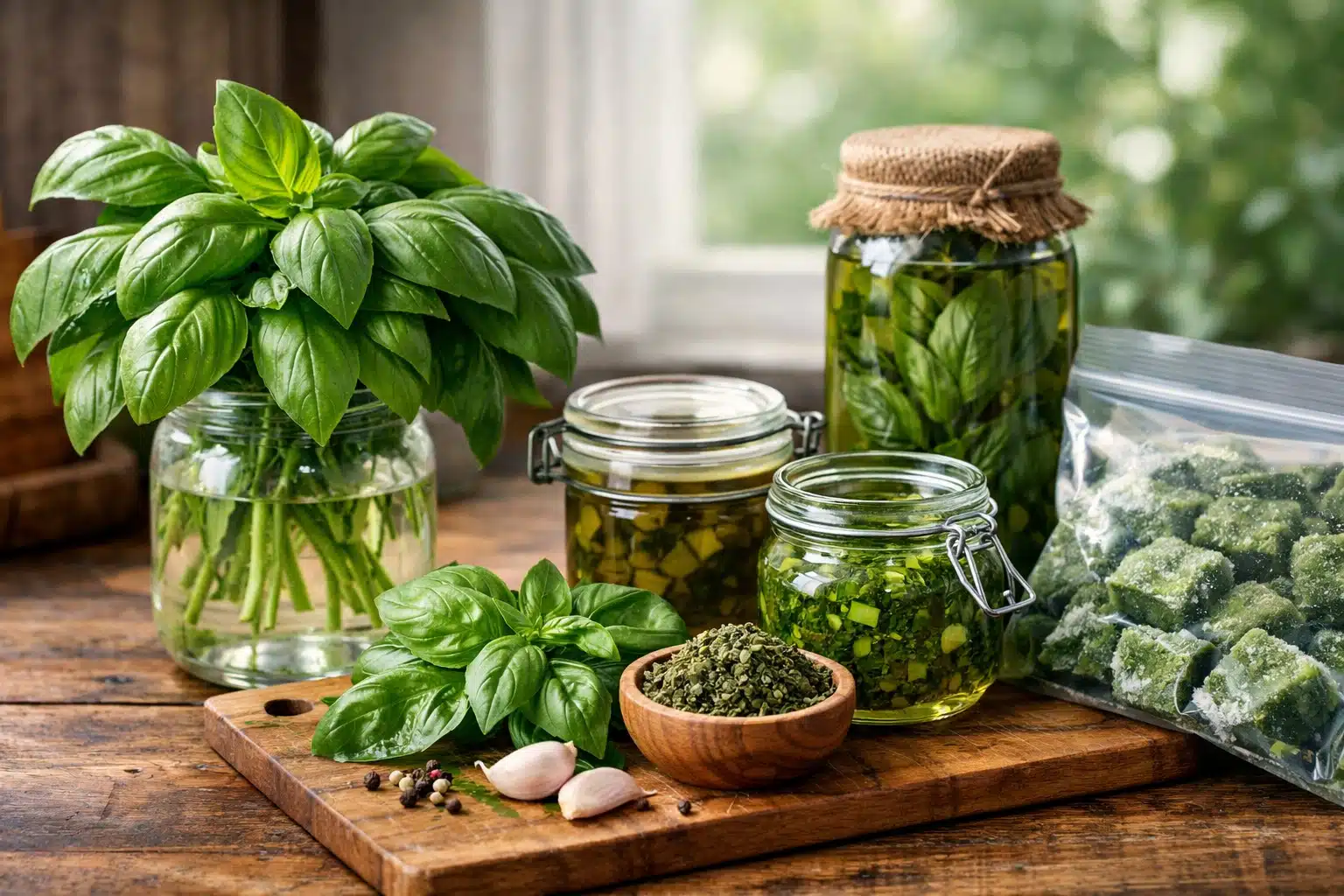
- Pesto or oil-cube method - Blend leaves with olive oil (and a squeeze of lemon juice to slow oxidation), pour into an ice-cube tray, and freeze solid.
- Transfer to bags - Pop the frozen cubes out and seal in an airtight freezer bag. Remove as much air as possible. Label with the date.
- Flash-freeze whole leaves (optional) - Lay dry leaves in a single layer on a baking sheet. Freeze until solid, then transfer to an airtight bag immediately.
- Thaw correctly - Add oil cubes directly to hot pans - no thawing needed. Thaw whole leaves briefly at room temperature for cooked applications only. Never refreeze thawed basil.
Storing herbs in ice-cube trays is one of the more practical preservation techniques for any soft herb, and basil benefits more than most because the oil protects its aroma through months of freezer storage.
Signs Basil Has Gone Bad
Bad basil usually announces itself through three senses at once. Knowing which signs are salvageable and which mean discard helps avoid unnecessary waste.
The brown spotting on basil is distinct from decay in other herbs: it traces along veins and edges first, a sign of bruising or chill injury rather than mold. Mold appears as fuzzy white or grey growth - that batch goes straight in the bin.
Getting the Most From Your Basil
A few targeted habits make the difference between basil that lasts a week and basil you're throwing out after two days.
- 🌿 Freeze in olive oil - Oil-packed cubes preserve volatile aromatics far better than plain frozen leaves; add them directly to hot pans.
- 💧 Keep it dry - Excess moisture is the single biggest driver of early decay; pat leaves dry before storage and hold off washing until use.
- 🌡️ Avoid cold spots - Store basil in the fridge door or front of a shelf, never near the back where temperatures drop and chill injury blackens edges.
- 🍅 Redirect bruised leaves - Brown-edged or slightly wilted leaves still carry good flavor; redirect them to [basil substitutes](https://forkliftkitchen.com/basil-substitutes/) in sauces or soups rather than discarding.
- 🏷️ Label frozen portions - Date your ice-cube bags and use the oldest cubes first; oil-packed basil holds quality for up to 12 months.
Frequently Asked Questions
Yes, but expect texture loss. Flash-frozen whole leaves become limp once thawed and work best added directly to soups or cooked sauces. They won't hold up for raw applications like salads or garnishes.
Not exactly. Oil-packed or pesto-frozen basil comes closest, since the oil protects aromatic compounds during freezing. Plain frozen leaves lose a noticeable amount of brightness and freshness compared to just-picked basil.
No. Wet leaves decay significantly faster in the fridge, developing sliminess and browning within a day or two. Wash basil only immediately before use.
No. Refreezing thawed basil breaks down cell structure further and accelerates flavor loss. Portion basil into single-use quantities before freezing so nothing goes to waste.
Freeze it in olive oil using an ice-cube tray - this method retains the most aroma and color over months. Dried basil is a workable backup but loses the fresh, clove-like character that makes the herb distinctive.