
Banana earns its place in more kitchens than almost any other fruit - not because it's convenient, but because it changes form so dramatically as it ripens.

The same fruit that thickens a smoothie bowl on Monday becomes the foundation of a banana bread batter by Thursday, and that transformation is the whole point.
Banana is a soft tropical fruit that shifts from starchy and mild when green to sweet and honeyed when fully ripe. It works raw, baked, fried, or frozen, making it one of the most adaptable fruits in everyday cooking.
What Is Banana?
Banana is the fruit of plants in the Musa genus, domesticated thousands of years ago in the New Guinea and Philippines region of Southeast Asia. Botanically, it's classified as a berry - which surprises most people who assume it's simply a "fruit."
Remember it later
Planning to try this recipe soon? Save it for a quick find later!
Commercially, two broad categories dominate: dessert bananas (the sweet, raw-eating type) and plantains (starchy, cooking-forward varieties used like a vegetable).
The Cavendish variety accounts for the majority of global export bananas, though hundreds of cultivars exist, ranging from stubby red bananas to finger-sized Lady Finger types.
A few things to know about the broader banana family:
- Cavendish - The standard yellow supermarket banana; mild sweetness, reliable texture
- Plantain - Larger, starchier, and rarely eaten raw; essential to Caribbean, West African, and Latin American cooking
- Red banana - Shorter and denser with a slightly raspberry-like finish when very ripe
- Lady Finger (sugar banana) - Smaller, sweeter, and thinner-skinned than Cavendish
The word "banana" itself traces through Portuguese and Spanish, likely borrowed from West African languages during the era of trade and colonization.
What Does Banana Taste Like?
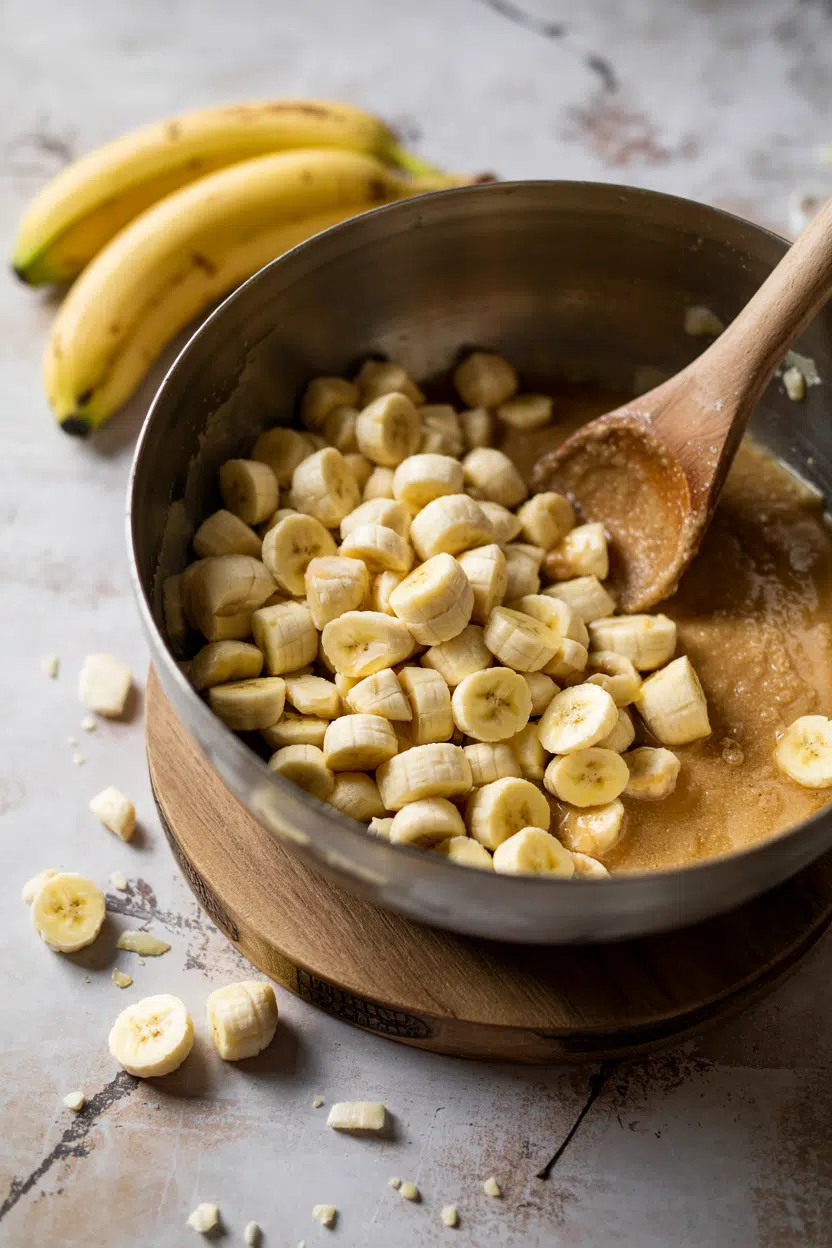
Ripe banana tastes like a blend of pear candy and soft vanilla - sweet, slightly floral, and almost creamy on the palate. The sweetness comes primarily from fructose and glucose that develop as the starch breaks down during ripening.
Unripe banana is a different experience entirely. Green fruit tastes closer to a mild potato - starchy, slightly astringent, and low in sweetness.
That starchiness comes from resistant starch, which also makes green bananas harder to digest than their spotted counterparts.
Heat intensifies banana's sweetness noticeably. Grilling or frying concentrates the sugars and produces caramel-like depth that raw banana never reaches on its own.
How to Use Banana
Raw banana needs almost no preparation: peel, slice, eat. It adds natural sweetness to yogurt bowls, oatmeal, and cereal without any added sugar.
Frozen ripe banana, blended alone or with a splash of milk, produces a creamy dairy-free ice cream with no additional ingredients required.
Baking is where overripe bananas shine hardest. Mashed banana replaces some of the fat and sugar in batters for muffins, pancakes, and quick breads, contributing moisture and body. Three heavily spotted bananas are enough to sweeten a standard loaf without extra sugar adjustment. If you're low on ripe fruit, check whether banana swaps can fill the gap in your recipe.
For savory applications, plantains lead. Twice-fried tostones (green plantains smashed and fried until crisp) and sweet maduros (ripe plantains caramelized in oil) are both staples in Caribbean and Latin American cooking.
If you're building a plate around tostones, knowing pairings for tostones broadens the menu fast.
| Method | Best For | Tip |
|---|---|---|
| 🥗 Raw | Snacking, yogurt bowls, smoothies, cereal toppings | Use fully yellow to spotted fruit for best sweetness |
| 🍞 Baking | Banana bread, muffins, pancake batter | Only heavily spotted bananas give strong banana flavor |
| 🍳 Frying | Tostones, maduros, caramelized banana desserts | Green plantains for tostones; ripe for sweet maduros |
| 🔥 Grilling/Broiling | Caramelized desserts, warm fruit sides | Leave peel on while grilling to hold shape |
| ❄️ Freezing | Smoothies, dairy-free ice cream, baking prep | Peel and slice before freezing for easier blending |
Banana pairs cleanly with peanut butter, cinnamon, chocolate, lime, and brown sugar. Avoid combining it with strongly astringent ingredients - unripe persimmon, for instance - which creates an unpleasant chalky mouthfeel.
How to Buy and Store Banana
Buy based on when you plan to eat. Green-tinged bananas ripen at room temperature over 3-5 days, so they're the right call for mid-week use. Bright yellow fruit with minimal spotting is ready today.
Heavily brown-spotted bananas should go straight into baking or the freezer.
At home, store bananas at room temperature away from direct sunlight. Wrapping the stem cluster in plastic wrap slows the release of ethylene gas and extends ripeness by a day or two.
Once ripe, move them to the refrigerator - the peel will darken quickly, however the flesh inside stays firm for another 3-7 days.
For longer storage, peel, slice, and freeze. Frozen bananas keep well for up to three months and go directly from freezer to blender.
The full breakdown of banana storage life covers fridge, counter, and freezer timelines in more detail. For comparison, mango storage life follows a similar ripeness-based storage logic.
Where to Start With Banana
Banana rewards attention to ripeness above everything else.
If you've only ever eaten it as a quick snack, start with a caramelized version: halve a ripe banana, cook it cut-side down in butter and brown sugar for two minutes, and finish with a pinch of cinnamon.
- For baking - Wait until the peel is more brown than yellow. That fruit is past snacking prime but at peak baking power.
- For savory cooking - Buy green plantains specifically; standard dessert bananas don't hold up to frying the same way.
- For smoothies - Freeze ripe bananas in advance. They blend smoother and colder than fresh.
One fruit, three very different starting points. Pick the one that fits your kitchen this week.
Frequently Asked Questions
Unripe banana tastes starchy and mildly astringent, closer to a plain cooked potato than sweet fruit. The sweetness is almost absent because the starches haven't yet converted to simple sugars.
Ripening converts resistant starch into fructose and glucose, which register as sweetness on the palate. The more spotted the peel, the further that conversion has progressed.
Yes - overripe bananas are excellent in quick breads, muffins, and pancake batters. They add moisture, natural sweetness, and structure, often reducing the need for added fat or sugar.
Ripe bananas refrigerated in their peel last 3-7 days before the flesh softens too far. The peel turns dark brown or black quickly in the cold, but that's cosmetic - the inside stays usable.
Yes. Peel and slice them before freezing so they're blender-ready straight from the bag. Frozen banana also blends into a thick, creamy dairy-free ice cream with no other ingredients needed.



