
You spot it at the back of the fridge door - a small glass jar, pale yellow-beige, with a French label you can barely read. Dijon mustard is one of those condiments that earns far more than its shelf space suggests.
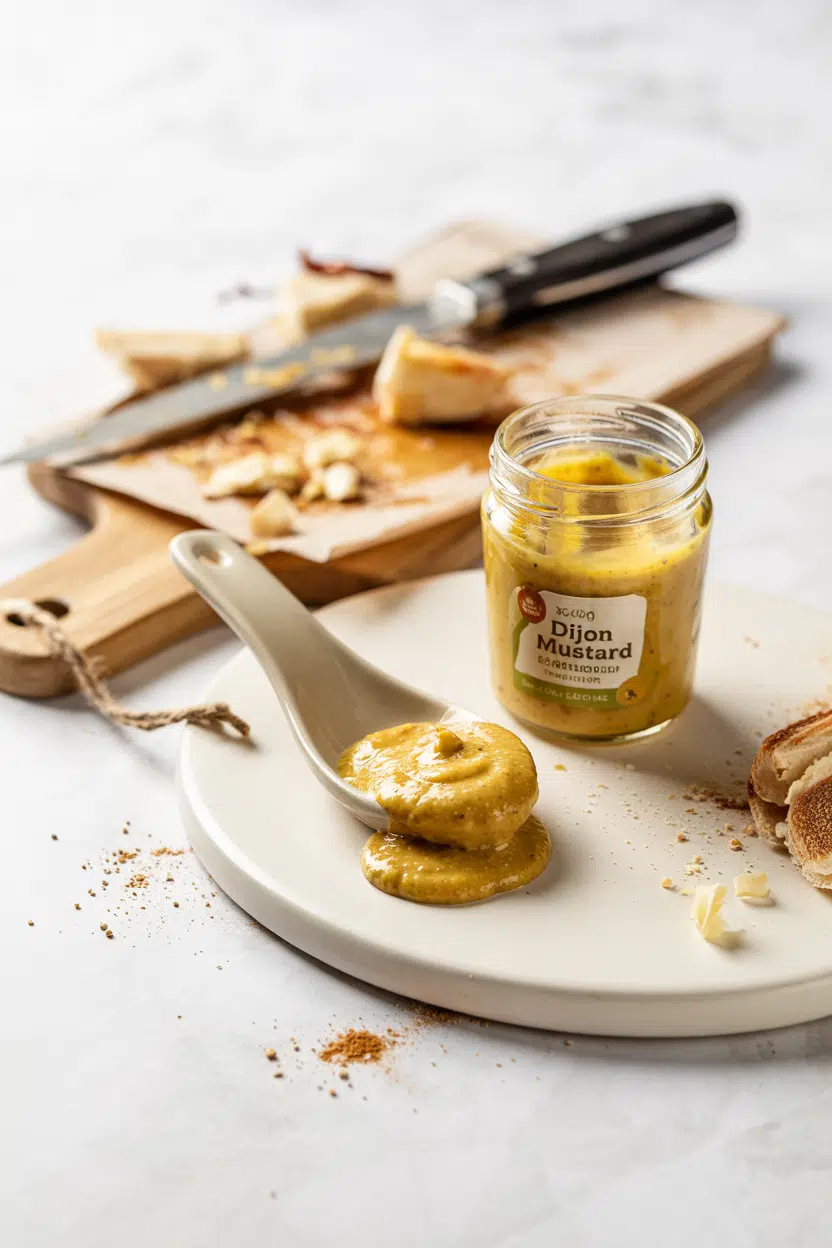
Unlike the bright-yellow squeeze bottles used for hot dogs, this is a sharp, emulsified paste that quietly anchors vinaigrettes, pan sauces, and glazes across French and modern American cooking.
Dijon mustard is a smooth, pale-yellow condiment from Burgundy, France, made with brown or black mustard seeds and white wine or vinegar. It has a sharp, tangy, pungent flavor that works across dressings, sauces, glazes, and spreads. Opened jars keep well for 6-12 months in the fridge.
What Is Dijon Mustard?
Dijon mustard originated in the Dijon region of Burgundy, France, where it was traditionally made using brown or black mustard seeds ground with verjuice - the acidic juice of unripe grapes.
Remember it later
Planning to try this recipe soon? Save it for a quick find later!
Modern producers replaced verjuice with white wine or wine vinegar, which is now the standard.
The result is a finely ground, smooth emulsion with no visible seed texture. It sits in a different category from whole-grain mustard, which retains crushed seeds, and from yellow mustard, which uses milder white mustard seeds and turmeric for color.
You'll see it labeled as moutarde de Dijon, Dijon-style mustard, or simply Dijon.
Not all jars are equal. Authentic Dijon lists brown or black mustard seeds alongside wine or vinegar - skip vague "Dijon-style" products if the sharp, pungent profile matters to you.
If you're ever in a pinch, brown mustard comes closest to replicating the heat level, while yellow mustard is milder but widely available.
What Does Dijon Mustard Taste Like?
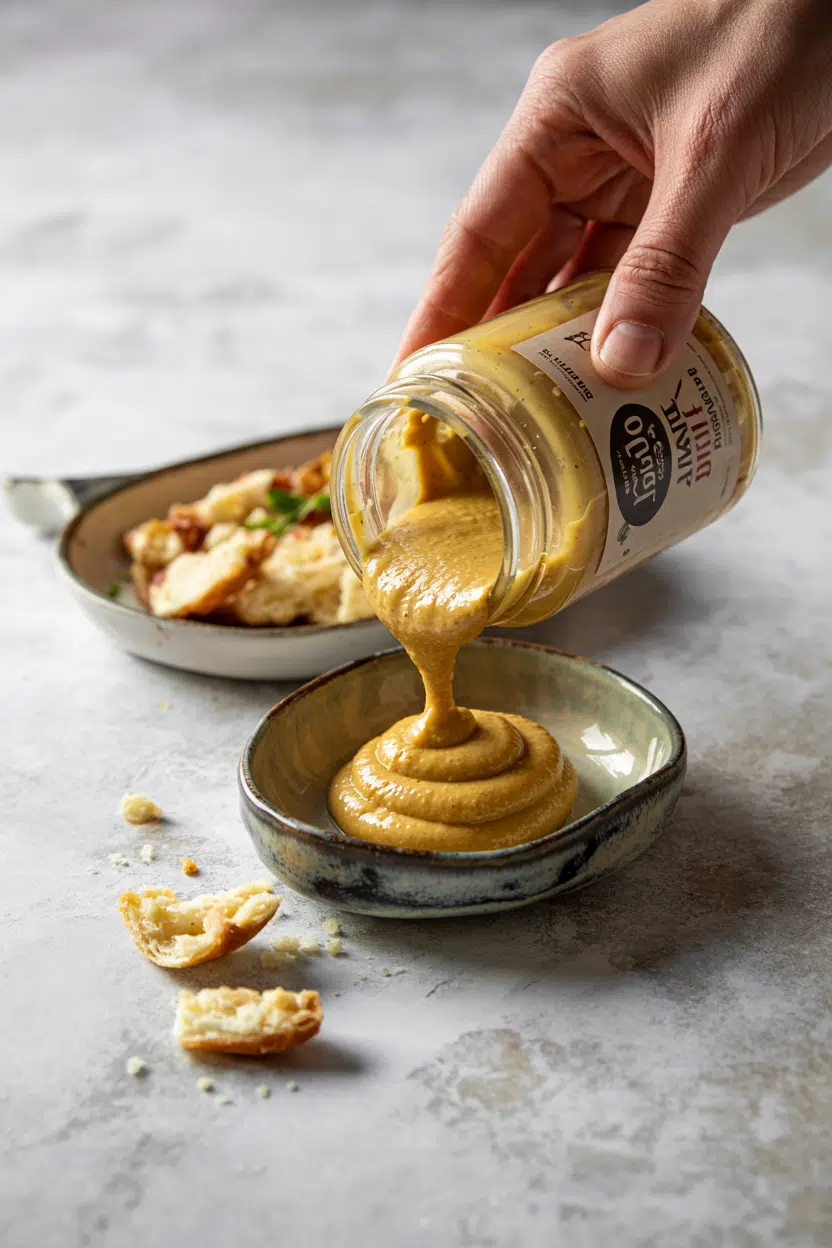
Dijon hits the front of the palate first with sharp, bright heat from the brown mustard seed oils, followed immediately by tangy acidity from the wine or vinegar base. There's a faint savory bitterness underneath - not harsh, but noticeable.
Think of it as a sharper yellow mustard crossed with a tangy white-wine vinaigrette. Heat cooking mellows its edge noticeably - stirred into a cream sauce, the sharpness softens into something rounder and more savory.
Used cold in a dressing, the full bite stays intact.
How to Use Dijon Mustard
Whisking into emulsions is where Dijon earns its place first. A teaspoon in a vinaigrette acts as an emulsifier, binding oil and vinegar into a cohesive, stable dressing. The same property makes it useful in homemade mayonnaise blends and aioli-style spreads.
In hot applications, Dijon builds depth in pan sauces and beurre monté - deglaze a skillet after searing pork or chicken, add a splash of white wine, then whisk in a spoonful before finishing with butter.
Classic Dijon cream sauce, served alongside steak or salmon, follows the same logic.
| Method | Best For | Tip |
|---|---|---|
| 🥗 Cold Emulsion | Vinaigrettes, dressings, sandwich spreads | Use 1 teaspoon per 3 tablespoon oil - it binds without dominating |
| 🍳 Pan Sauce | Cream sauces for steak, salmon, pork | Add off the heat to preserve sharpness |
| 🔥 Glaze | Roast chicken, pork tenderloin, rack of lamb | Mix with honey or sherry vinegar before brushing on |
| 🥣 Fold-in | Potato salad, egg salad, deviled eggs | Start with half the amount you think you need |
Dijon pairs cleanly with shallots, garlic, tarragon, and chives. It works alongside cream and butter in French-style preparations, and balances well with honey for glazes on pork or roasted root vegetables.
For a classic balsamic vinaigrette, a small amount of Dijon adds body without shifting the flavor profile.
How to Buy and Store Dijon Mustard
Read the ingredient list before buying. Brown or black mustard seeds plus white wine or wine vinegar should appear near the top. A smooth, even pale yellow-beige color with no visible liquid separation in the sealed jar signals good emulsion stability.
Storage is straightforward:
- Unopened - keep in a cool, dark pantry; stable for 12-24 months
- After opening - refrigerate in the original jar or sealed tube
- Aroma - fades fastest at room temperature, so don't leave it out between uses
- Color shift - slight darkening over time is normal and doesn't affect safety
For a full breakdown of timelines and signs of spoilage, see our guide to dijon mustard storage life. If you run out, dijon mustard alternatives covers the closest alternatives - and for seed-texture fans, whole-grain mustard is the most direct swap.
Start Here With Dijon Mustard
If you've never cooked with it before, start with a vinaigrette. Whisk one teaspoon into a simple oil-and-vinegar dressing - that single use demonstrates both its emulsifying function and its flavor contribution better than any other application.
From there, move to a pan sauce or a honey glaze for roasted pork. Those two applications cover the full range of what Dijon does in a hot kitchen.
Once you've used it in all three contexts, you'll stop reaching past it.
Frequently Asked Questions
It's sharp rather than spicy in the chili-heat sense. The heat comes from brown mustard seed oils and hits the front of the palate quickly, then fades - it doesn't linger the way capsaicin does.
Yellow mustard uses milder white mustard seeds, water, and turmeric - it's tangier and softer. Dijon uses brown or black seeds with wine, giving it significantly more heat and a more complex, savory edge.
Yes - it works in pan sauces, glazes, and baked applications. Add it off the heat in cream sauces to preserve its sharpness, since prolonged boiling mutes the flavor considerably.
White wine is used in production, but most of the alcohol processes out before the final product. Residual alcohol levels in commercial Dijon are typically negligible.
Refrigerated, an opened jar retains its best quality for 6-12 months. The flavor slowly mellows beyond that point, though the mustard remains safe to eat for longer if stored properly.



