
Rub a fresh sprig of marjoram between your fingers and you get it immediately - a warm, faintly sweet scent with a whisper of pine and something almost floral underneath. It's quieter than oregano, softer than thyme.

That restraint is exactly what makes it useful.
Marjoram is a mild Mediterranean herb with a sweet, lightly piney flavor. Use fresh leaves as a finishing herb or add dried marjoram late in cooking to preserve its delicate aroma. It suits lamb, pork, beans, tomatoes, and butter-based dishes especially well.
What Is Marjoram?
Marjoram (Origanum majorana) is a tender perennial herb in the mint family, native to the Eastern Mediterranean and Cyprus region. It grows small, oval gray-green leaves on slender stems and has been used in kitchens across the Mediterranean since ancient times.
Remember it later
Planning to try this recipe soon? Save it for a quick find later!
You'll see it sold as sweet marjoram, pot marjoram, or knotted marjoram - the last name coming from the tight, knotted clusters of flower buds it produces. All three refer to the same species.
The herb sits in the same genus as oregano, which explains the frequent mix-ups at the store. Botanically close, yes - but marjoram is noticeably milder and sweeter, with none of oregano's sharp, peppery punch.
Both fresh and dried forms are widely available. Fresh leaves are thin, delicate, and bruise easily.
Dried marjoram concentrates the flavor but also amplifies the sweetness slightly, making it the more common pantry option for home cooks.
What Does Marjoram Taste Like?
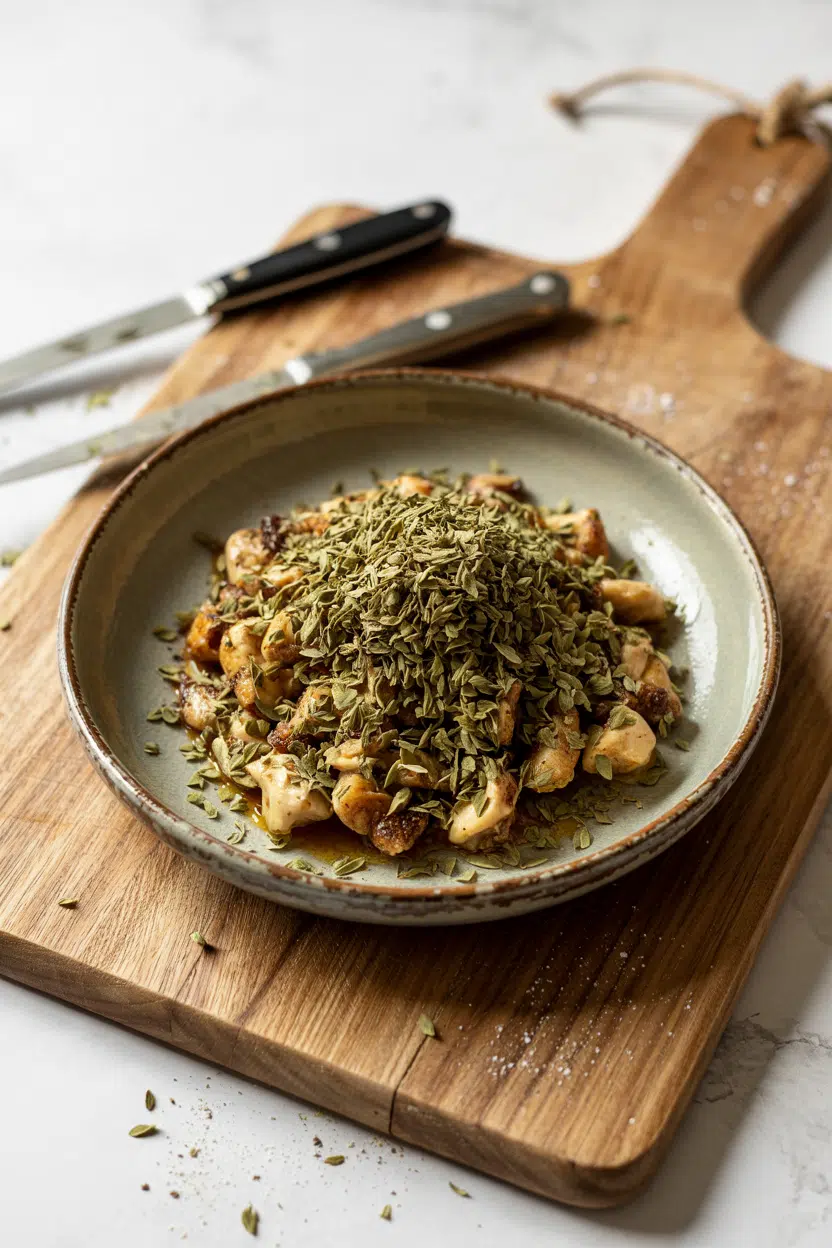
Sweet marjoram tastes like a gentler, more floral version of oregano. Think soft thyme with a lifted, almost citrusy top note and a quiet warmth that lingers without bitterness.
The flavor is mild in intensity - it adds presence without dominating a dish. Fresh leaves carry the citrus-pine note most clearly, with a faint floral quality that's easy to lose if you're not paying attention.
Heat changes how it behaves. Prolonged cooking fades the floral top notes first, leaving the sweeter, warmer base behind.
That's why most cooks add dried marjoram late in simmering dishes rather than at the start.
How to Use Marjoram
Marjoram works best when it doesn't fight other flavors. It shines in dishes where a gentle herbal warmth is the goal rather than a bold aromatic statement.
For fresh leaves, treat them like a finishing herb. Scatter them over a tomato salad or sliced feta just before serving, fold them into compound butter for roasted chicken, or toss with warm roasted vegetables right off the tray.
Dried marjoram is more forgiving - stir it into bean soups, lentil stews, and sausage mixes, adding it in the last 15-20 minutes of cooking.
| Method | Best For | Tip |
|---|---|---|
| 🥗 Fresh/Finish | Salads, feta, roasted vegetables, compound butter | Add after cooking; heat kills delicate floral notes fast |
| 🍲 Stirred In | Bean soups, lentil stews, tomato sauces, braised meats | Add in the last 15-20 minutes to preserve aroma |
| 🥩 Stuffing/Mix | Pork sausage, lamb stuffing, herb-bread crusts on fish | Dried works better here - holds up through oven heat |
| 🫙 Infused | Herb oils, marinades, dressings with lemon | Steep in warm olive oil off heat; strain before using |
The cuisines that rely on it most - Greek, Italian, Middle Eastern, North African, and German - tend to pair marjoram with lamb, pork, tomatoes, white beans, and potatoes. It loves fat: olive oil, butter, and cream all carry its sweetness well.
Lemon brings out the citrusy lift; garlic adds depth without overpowering it.
Steer clear of pairing marjoram with heavy licorice-forward spices like anise or tarragon in the same dish. The flavors don't harmonize.
For a similar herb with a bolder profile, check our guide to marjoram alternatives.
How to Buy and Store Marjoram
Fresh marjoram should have small, firm, gray-green leaves with no yellowing or browning at the stem ends. The sprigs should smell sweet and piney the moment you handle them - that aroma is your quality check.
For dried marjoram, choose finely crumbled, olive-green leaves in an opaque or dark container. Pale gray-green or dusty brown color signals age.
- Fresh storage - Wrap loosely in a damp paper towel, place in a perforated bag, and refrigerate. Lasts about 5-10 days.
- Dried storage - Keep in an airtight container away from heat and light. Good for 6-12 months; after that, flavor fades noticeably.
Full guidance on how long it keeps is available in our marjoram storage guide guide.
Start Here With Marjoram
New to this herb? Go dried first.
Stir a teaspoon into a pot of white beans or a simple tomato sauce in the last 15 minutes of cooking and taste the difference it makes.
Once you're comfortable with the dried form, move to fresh leaves as a finisher. Fold them into herb-seasoned roasted nuts or scatter over a warm potato dish right before serving.
That's where its floral delicacy becomes most apparent - and hardest to replace with anything else.
Frequently Asked Questions
No. Both are in the Origanum genus, but marjoram is noticeably milder and sweeter. Oregano carries a sharper, more peppery heat that marjoram lacks entirely.
Yes, but use about two-thirds the amount - oregano's intensity can easily overpower a dish that calls for marjoram's softness. Fresh thyme is a closer substitute if you want to preserve the floral note.
Add dried marjoram in the last 15-20 minutes of cooking. Fresh leaves should go in at the very end, off the heat, or used raw as a garnish to preserve aroma.
It loses the fresh citrus-floral top notes but retains - and even concentrates - the sweet, warm base flavor. Dried marjoram is well-suited to cooked applications where fresh would fade anyway.
German bratwurst and liver sausage rely heavily on dried marjoram. Greek bean soups, Italian tomato-based sauces, and North African lamb stews also use it as a core background herb.



