
Most people treat furikake like a niche condiment-something reserved for Japanese cooking or restaurant rice bowls. That framing undersells it badly, and it also misses what furikake actually is: a dry seasoning blend that functions as a one-step umami punch for almost anything savory.

Once you understand what's inside the packet, you'll stop sprinkling it only on steamed rice rolls and start reaching for it constantly.
Furikake is a Japanese dry seasoning blend of toasted sesame, dried nori, and bonito flakes. It delivers umami, salt, and light crunch in a single sprinkle. Use it on rice, eggs, avocado, or popcorn. Opened jars stay fresh for up to six months when kept dry.
What Is Furikake?
Furikake (ふりかけ) is a Japanese dry seasoning blend designed to be sprinkled directly onto food at the table. The core ingredients are toasted sesame seeds, dried nori flakes, salt, and some form of dried fish-most commonly katsuobushi (bonito flakes).
Remember it later
Planning to try this recipe soon? Save it for a quick find later!
Sugar, soy, and MSG appear in many commercial blends too.
The category is broader than a single recipe. Dozens of regional and commercial varieties exist in Japan, ranging from simple sesame-salt mixes to blends with dried shiso leaves, salmon flakes, or wasabi.
Outside Japan, you'll see it labeled as furikake seasoning, rice furikake, or furikake sprinkle-all the same idea.
Here's what to know about the main types:
- Bonito furikake - The classic. Contains katsuobushi for a deep, smoky umami base.
- Vegetarian/nori furikake - Fish-free blends built around sesame and nori; check for the word "vegetarian" on the label.
- Salmon furikake - Uses dried salmon instead of bonito; slightly milder and less smoky.
- Shiso furikake - Includes dried perilla leaf, which adds a herbal, slightly anise-like note.
What Does Furikake Taste Like?
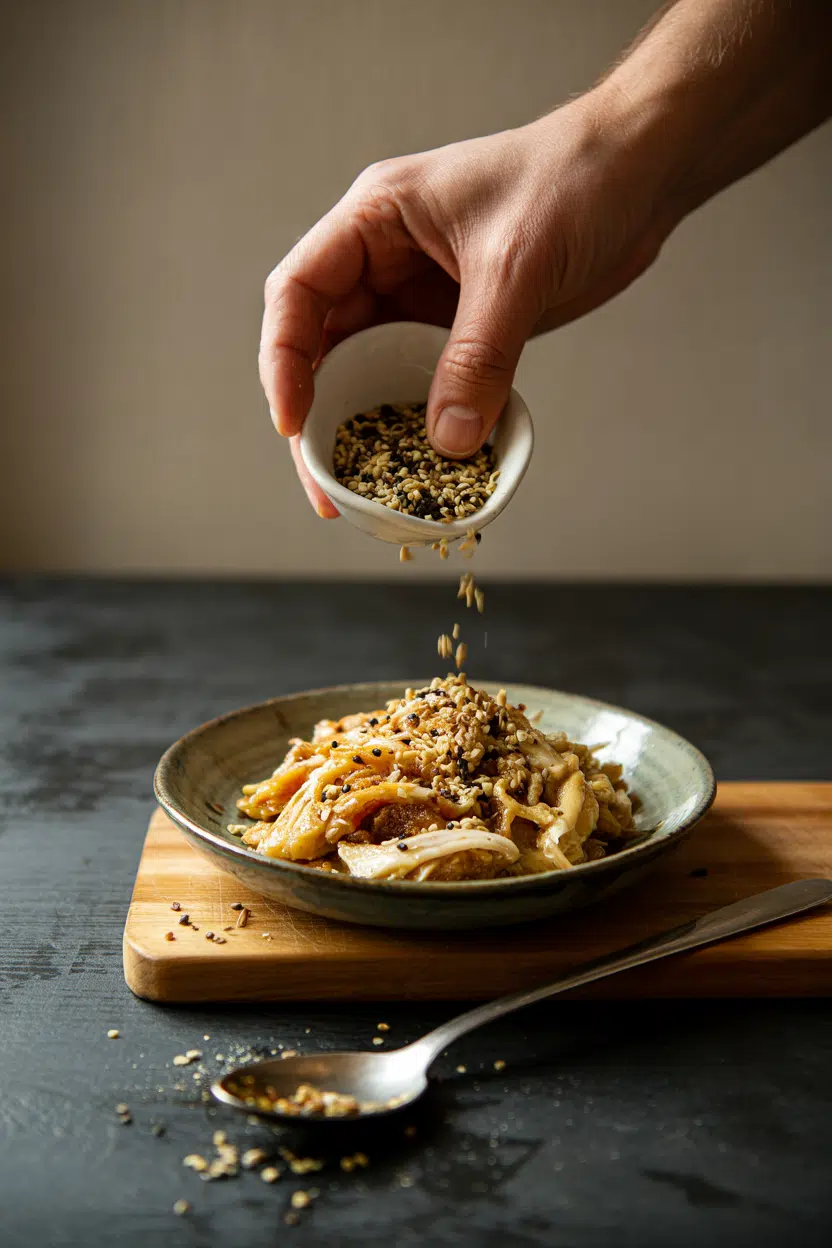
Furikake lands closest to a toasted sesame-salt mix with seafood undertones. The sesame brings nuttiness and a gentle roasted quality.
Nori adds a briny, oceanic depth that reads as savory rather than fishy. Bonito flakes push the whole blend toward a smoky umami character similar to dashi broth, but in concentrated dry form.
Heat doesn't change furikake's flavor dramatically when used as a finishing sprinkle. However, brief toasting in a dry pan intensifies the sesame and nori aromas noticeably.
At moderate intensity, it seasons without overwhelming-which is exactly what makes it work across so many applications.
How to Use Furikake
Furikake's primary role is as a no-cook finishing sprinkle, and steamed white or brown rice is the most natural starting point. A light coating on warm rice gives you salt, crunch, and umami in one move.
It's also the traditional filling and coating for onigiri, the Japanese rice balls where furikake gets folded into or pressed onto the outside of the rice.
Beyond rice, the blend crosses into everyday cooking with minimal effort.
| Method | Best For | Tip |
|---|---|---|
| ✋ Finishing Sprinkle | Rice, eggs, avocado toast, popcorn | Add after plating so texture stays dry and crunchy |
| 🍳 Stirred Into Spreads | Furikake mayo, cream cheese, dips | Mix 1 teaspoon per 2 tablespoon mayo; let sit 5 min to hydrate |
| 🧂 Dry Rub | Grilled fish, chicken thighs, tofu | Press gently onto surface before grilling on high heat |
| 🥗 Folded Into Dishes | Cold noodle salads, grain bowls | Add just before serving to keep flakes from going soggy |
Japanese and Japanese-American fusion cooking use furikake most heavily. However, the blend fits pan-Asian preparations well too-scattered over a sesame noodle bowl or used as a coating for nori chips.
It pairs well with eggs, avocado, grilled fish, tofu, and even plain popcorn.
If you're working without it, check our guide to furikake swaps for blends that approximate the umami-sesame profile. Avoid furikake with strongly sweet glazes or dessert applications-its salty, seafood-forward notes fight sweetness rather than complement it.
How to Buy and Store Furikake
Check the label for katsuobushi if you want the full smoky umami profile. If you need a fish-free option, look specifically for "vegetarian" on the packaging-standard blends almost always contain bonito or dried fish.
Storage is straightforward:
- Pantry storage - Keep in an airtight container away from heat and humidity; this covers most kitchens.
- Humid climates - Transfer to a sealed jar and refrigerate to prevent clumping.
- Shelf life - Unopened commercial packets hold for 6-12 months; opened containers stay at their best for 3-6 months.
For a full breakdown of signs of spoilage and expiration timelines, see our furikake freshness guide guide.
Where to Start With Furikake
Start with a bonito blend on plain steamed rice - that's the format this seasoning was built around. Once you know the flavor, move to eggs or avocado toast for a fast weekday application.
If fish-based blends aren't an option, a vegetarian nori-sesame version still delivers most of the character. Onigiri rice balls are the best vehicle for exploring how furikake changes with different rice-to-seasoning ratios - start there before branching into dry rubs or snack coatings.
Frequently Asked Questions
Most commercial furikake is not vegan - bonito (dried tuna) is a standard ingredient. Look for blends labeled "vegetarian" or check ingredients for katsuobushi-free versions built on nori and sesame only.
The base is toasted sesame seeds, dried nori flakes, katsuobushi (bonito), salt, and sugar. Many commercial blends add soy sauce powder, MSG, or dried shiso depending on the variety.
Opened furikake keeps for 3-6 months in an airtight container stored away from heat and moisture. Clumping or a loss of toasty aroma are the clearest signs it's past its best.
Yes - eggs, avocado toast, popcorn, grilled fish, and cold noodle salads all work well. It functions as a finishing salt with added umami, so any dish needing a savory, crunchy finish is a candidate.
Many commercial blends do include MSG as a flavor enhancer, though it's not universal. Check the ingredient list - artisan or natural-label versions often skip it in favor of higher katsuobushi content for umami.



