
You spot it in the refrigerated cheese section - a compact block or tub labeled simply "queso fresco," often tucked between queso blanco and panela. It's unassuming, bright white, and easy to pass over if you don't know what it does.

What it does, specifically, is finish a dish - crumbled over tacos at the last second, scattered across a bowl of esquites, or pressed into a warm sope - in a way that no aged cheese can replicate.
Queso fresco is a fresh, unaged Mexican cheese with a mild lactic tang and crumbly, moist texture. It's used almost exclusively as a finishing cheese - crumbled over hot dishes just before serving. It won't melt and stretch, but that's not what it's for.
What Is Queso Fresco?
Queso fresco - literally "fresh cheese" - is a fresh, unripened Mexican cheese made primarily from cow's milk, sometimes blended with goat's milk for a slightly sharper edge.
Remember it later
Planning to try this recipe soon? Save it for a quick find later!
It belongs to the same category as farmer's cheese or fresh ricotta: no aging, no rind, no bacterial cultures developing over time.
The name also appears as queso de mesa (table cheese) in some regions, which hints at how central it is to everyday eating across central and southern Mexico.
Unlike ricotta, which is smooth and spreadable, queso fresco holds a loose, crumbly structure that falls apart easily when pressed between your fingers.
It's worth separating queso fresco from its closest relative, cotija. Cotija is aged, significantly saltier, and drier - a comparison worth understanding if you've seen both in the same store aisle.
Panela is another common fresh Mexican cheese, though it's firmer and less crumbly.
- 🧀 Cow's milk base - sometimes blended with goat's milk for added tang
- Uncooked and unaged - no rind, no curing, no stretching
- Regional names - queso de mesa is the most common alternate label
- Texture category - sits between ricotta and farmer's cheese in firmness
What Does Queso Fresco Taste Like?
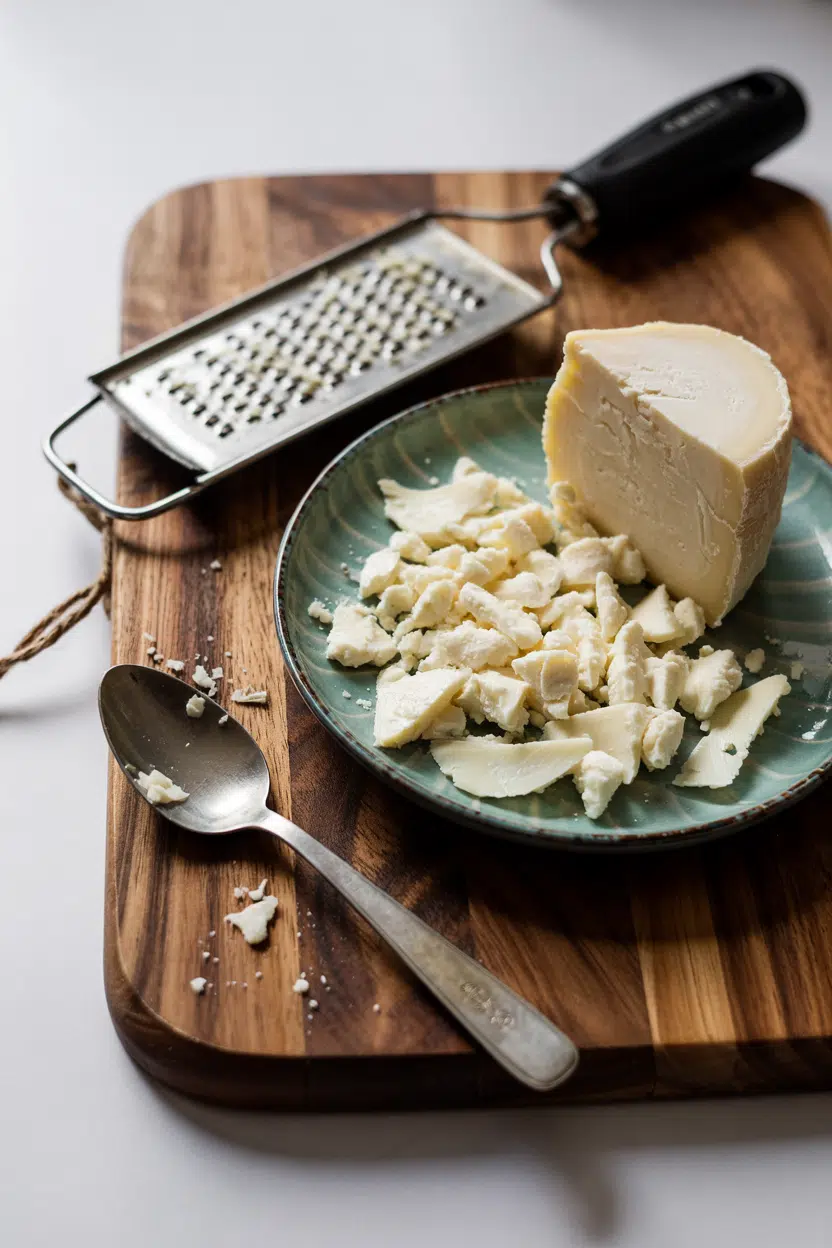
Queso fresco tastes clean. The dominant note is a mild lactic tang - the same bright dairy acidity you get from fresh yogurt or buttermilk, but far gentler.
Underneath that sits a quiet milky sweetness and a low-level salt that seasons without dominating.
The closest comparison is fresh farmer's cheese or a much milder ricotta salata. Cotija pushes saltier and sharper; queso fresco stays soft in flavor even when it crumbles sharp in texture.
Warmed slightly - say, crumbled over a hot bowl of pozole - the cheese softens and the lactic notes mellow further. It won't melt into the broth, however.
The structure holds, which is what makes it useful as a finishing layer rather than a cooking ingredient.
How to Use Queso Fresco
Queso fresco belongs at the end of cooking, not the beginning. Most applications call for crumbling it directly over a finished dish at the table - that's its core job, and it does that job in a wide range of contexts.
In traditional Mexican cooking, it's scattered over tacos and tostadas just before serving, folded into Mexican street corn salads, or pressed into the filling cavities of sopes and gorditas where it adds moisture.
It also works stirred gently into soups at the final moment - the heat softens the crumbles without dissolving them.
| Method | Best For | Tip |
|---|---|---|
| 🥗 Raw Crumble | Tacos, tostadas, salads, grilled veg | Add at the very last second to keep texture distinct |
| 🍲 Warmed in soup | Pozole, black bean soup, enchilada broth | Stir in off heat - the residual warmth softens without dissolving |
| 🫓 Pressed into filling | Sopes, gorditas, stuffed chiles | Combine with refried beans or roasted corn to stretch the filling |
| 🌿 Cheese board | Fruit, honey, warm tortillas | Pair with lime zest or fresh herbs to sharpen its mild flavor |
Avoid using queso fresco anywhere you need stretch or full melt. High-heat applications like a grilled cheese or a bubbling enchilada sauce will leave you with a curdled, dry result rather than a smooth pull.
Fresh cilantro and lime, roasted corn, poblano or jalapeño chiles, and black beans are its strongest pairings - each one amplifies the cheese's dairy brightness without drowning it.
How to Buy and Store Queso Fresco
Look for a block or tub that's uniformly white with no yellowing or gray patches. The surface should be moist but not slimy, and a quick smell should confirm clean fresh milk - nothing sour or sharp beyond a gentle lactic note.
Avoid any package with pooled watery liquid beyond minor whey separation, a slimy film on the surface, or a pungent sour odor. Once opened, wrap the block in wax paper or parchment, then transfer to an airtight container.
Don't leave it exposed in its original packaging - it absorbs fridge odors quickly. For a detailed breakdown of how long it stays good, see our guide to queso fresco storage life.
- Unopened tub: 2-3 weeks refrigerated, check sell-by date
- Opened block: 5-7 days maximum, wrapped and sealed
- Freezing: Not recommended - the texture crumbles excessively on thaw
Start Here With Queso Fresco
If you've never used it before, buy a block and crumble it over tacos. That single use will show you exactly what the cheese does - a cool, milky counterpoint to spiced meat and bright salsa.
From there, try it over panela-style dishes or scattered into a warm soup off the heat. If you need a stand-in for a recipe, our guide to queso fresco replacements covers the closest options.
Frequently Asked Questions
No. Cotija is aged, much saltier, and drier - it holds its crumble even when warmed and has a sharper, more pungent flavor. Queso fresco is unaged with a mild lactic taste and higher moisture content.
Not in the way that stretching cheeses do. It softens and warms through, but the proteins are structured to hold their shape rather than flow - making it unsuitable for sauces or grilled cheese applications.
An unopened tub keeps about 2-3 weeks. Once opened, use it within 5-7 days stored in an airtight container wrapped in wax paper.
It's lightly salted - noticeably less so than cotija or feta. The salt level is low enough that queso fresco rarely over-seasons a dish even when crumbled generously as a garnish.
Fresh farmer's cheese is the closest match in texture and mild flavor. Mild feta (rinsed to reduce saltiness) works in a pinch. Avoid ricotta salata as a direct swap - it's significantly drier and saltier.



