
Alfredo sauce does one thing no other sauce does quite as well: it clings. That glossy, buttery coat - built from heavy cream, butter, and Parmigiano-Reggiano - wraps every strand of fettuccine in a way that's closer to a dairy emulsion than a traditional poured sauce.

It's not a simple cream sauce, and it's not béchamel either. Understanding how it works changes how you cook with it.
Alfredo sauce is a rich, dairy-based emulsion of butter, heavy cream, and aged Parmesan with a silky, clinging texture. It has a buttery, umami-forward flavor with salty cheese sharpness, and works best tossed hot with ribbon pasta or baked into casseroles.
What Is Alfredo Sauce?
Alfredo sauce belongs to the category of emulsion sauces - dairy-based, fat-forward, and built for coating rather than pooling. The original Roman version, credited to restaurateur Alfredo di Lelio in early 20th-century Rome, used only butter and Parmesan, no cream at all.
Remember it later
Planning to try this recipe soon? Save it for a quick find later!
The American version expanded that base to include heavy cream, which is now the standard in most homes and restaurants outside Italy.
It goes by a few names - salsa Alfredo, Alfredo's sauce - but the formula varies more than the label suggests. Jarred commercial versions often add starch thickeners and stabilizers.
Fresh or homemade versions rely on the emulsification between fat, protein, and pasta starch to hold their texture. Both work, but they behave differently in the pan.
What Does Alfredo Sauce Taste Like?
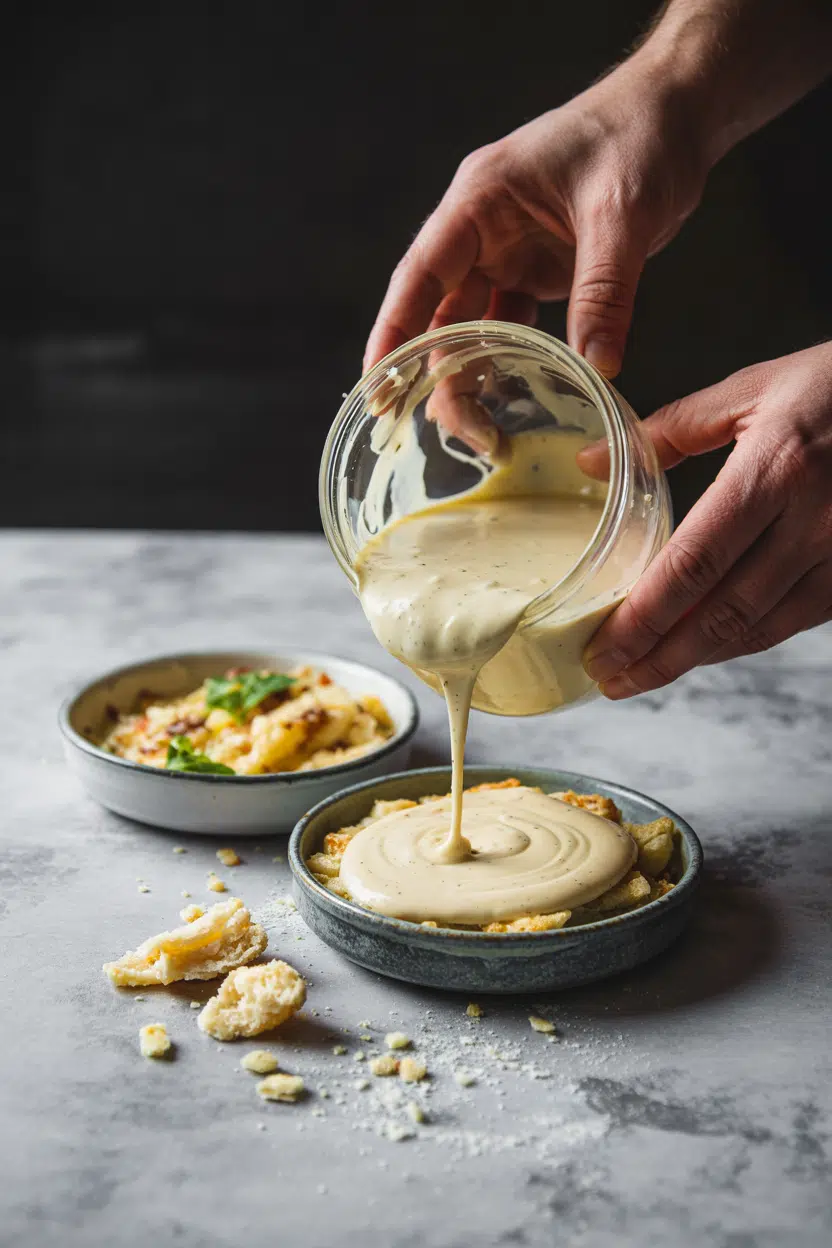
The dominant note is buttery richness, followed immediately by the sharp, salty depth of aged Parmesan. It's not a sweet sauce - there's no caramelization, no tomato acidity.
The tang comes entirely from the aged cheese, which reads more umami-forward than sour.
A useful comparison: think of spaghetti carbonara without the egg-yolk richness and smokiness. Both are fatty, cheese-heavy, and cling to pasta - but Alfredo reads creamier and milder.
It's noticeably richer than béchamel, which is flour-thickened and comparatively neutral.
Heat changes the profile noticeably. Overcooking drives off moisture and makes the sauce greasy and grainy rather than glossy.
Finished off the heat, it stays silky and cohesive.
How to Use Alfredo Sauce
Alfredo sauce works across more applications than its pasta reputation suggests, though high-heat and acidic environments are its two consistent weak points. The emulsion breaks under aggressive heat, and heavy cream doesn't pair well with acid-heavy tomato sauces.
| Method | Best For | Tip |
|---|---|---|
| 🍳 Toss | Fettuccine, gnocchi, ravioli | Add a splash of starchy pasta water to tighten the emulsion |
| 🫙 Bake | Pasta casseroles, al forno dishes | Add breadcrumbs on top; brief bake only - overcooking breaks it |
| 🍕 Spread | White pizza base under mushrooms or spinach | Use sparingly - it thickens further under oven heat |
| 🥦 Drizzle | Steamed vegetables like broccoli | Finish off heat; let residual warmth keep it fluid |
For pasta, fettuccine is the standard pairing because the flat, wide surface holds the clingy sauce better than round or tubular shapes. Ribbon pastas generally outperform everything else here.
Grilled chicken folded into a finished Alfredo is the most common protein addition - the mild char complements the buttery sauce without overwhelming it.
Beyond pasta, Alfredo works as a white pizza sauce under mushrooms and spinach, and it blends well with pesto for a cream-pesto hybrid that softens pesto's sharpness.
If you need a swap in any of these applications, check our guide to alfredo sauce replacements for workable alternatives.
- 🧀 Cheese additions - Pecorino Romano stirred in at the end sharpens the overall salt and tang without changing the texture.
- 🌿 Pesto blend - Mix one part pesto to three parts Alfredo for a cream-pesto pasta that balances richness and herbaceous bite.
- 🍄 Mushroom pairing - Sautéed cremini or shiitake add an earthy counterpoint that prevents the sauce from feeling one-dimensional.
- 🫙 Casserole use - Combine with cooked pasta, protein, and vegetables, then bake briefly with breadcrumbs for a textured crust.
How to Buy and Store Alfredo Sauce
When buying jarred Alfredo, read the ingredient list first. Jars listing cream and Parmesan near the top outperform those built primarily on modified starch and vegetable oil.
Look for a smooth, glossy appearance through the jar - visible separation or a greasy film at the top signals lower-quality emulsification.
For refrigerated tubs or homemade sauce, check for a bright ivory color and a faint nutty aroma from the cheese. Once opened or made, store in a sealed shallow container in the fridge - shallow containers cool faster, which matters for a dairy sauce.
For full shelf life details, see our breakdown of alfredo sauce storage guide.
- Unopened jar: Stable in the pantry until the printed date.
- Opened jar or fresh tub: 3-5 days refrigerated.
- Homemade sauce: 3-4 days refrigerated; does not freeze well without separation.
Where to Start With Alfredo Sauce
Alfredo rewards restraint. Start with good Parmigiano-Reggiano - not pre-shredded - and finish the sauce off the heat.
The difference between Parmesan and Parmigiano-Reggiano matters more here than in most applications, since the cheese does most of the flavor work.
If you're choosing between jarred and homemade, jarred works fine for casseroles and pizza bases. For tossed pasta, homemade is worth the fifteen minutes.
That's the clearest decision the sauce asks you to make.
Frequently Asked Questions
The classic base is butter and Parmigiano-Reggiano, emulsified with starchy pasta water. American versions add heavy cream to extend the sauce and increase stability. Commercial jars often include starch thickeners and stabilizers.
Béchamel is a flour-thickened white sauce with a neutral, mild flavor. Alfredo contains no flour - it holds through fat and cheese protein - and has a much stronger, saltier Parmesan character. See our full béchamel vs Alfredo comparison for cooking differences.
Technically yes, but the emulsion almost always breaks on thawing, leaving a greasy, grainy texture. If you must freeze it, thaw slowly in the fridge and reheat gently while whisking in a small splash of cream.
Fettuccine is the standard - its flat, wide surface holds the clingy sauce better than tubular or thin round pastas. Pappardelle and tagliatelle work equally well for the same reason.
Graininess usually means the heat was too high when you added the Parmesan, causing the proteins to clump rather than melt smoothly. Pull the pan off the heat before adding cheese, and use finely grated - not shredded - Parmesan.



