
Most people buy balsamic vinegar once, use it on salads, and assume that's the full story. That assumption costs them most of what the ingredient can actually do.

Balsamic vinegar is a concentrated, aged grape-must vinegar from Modena and Reggio Emilia, Italy. It delivers a sharp-sweet, wood-aged depth that ranges from thin commercial versions to thick, syrupy tradizionale aged for decades. Use it as a finisher, glaze, or dressing base.
What Is balsamic vinegar?
Balsamic vinegar - aceto balsamico in Italian - is made from freshly crushed grape must that's cooked down, fermented, and then aged in a progression of wooden barrels.
Remember it later
Planning to try this recipe soon? Save it for a quick find later!
Unlike standard wine vinegars, it never starts as wine; the must is reduced before fermentation even begins, which concentrates the natural grape sugars from the start.
Two protected designations matter here. Aceto Balsamico Tradizionale (from Modena or Reggio Emilia) carries DOP status, must age a minimum of 12 years across multiple wood types - oak, chestnut, cherry, mulberry - and is bottled in small, legally mandated quantities.
The commercial alternative, Balsamic Vinegar of Modena IGP, is made faster, often blended with wine vinegar, and ranges widely in quality.
You'll also encounter "balsamic glaze" sold in squeeze bottles - that's a reduced, sweetened version of commercial balsamic, not a separate product category.
- Tradizionale DOP - minimum 12-year aging, thick and syrupy, sold in small certified bottles
- Balsamic Vinegar of Modena IGP - the everyday bottle, quality varies; check for dark color and viscosity
- Balsamic glaze / condimento - pre-reduced, often with added sugar; convenient but less complex
What Does balsamic vinegar Taste Like?
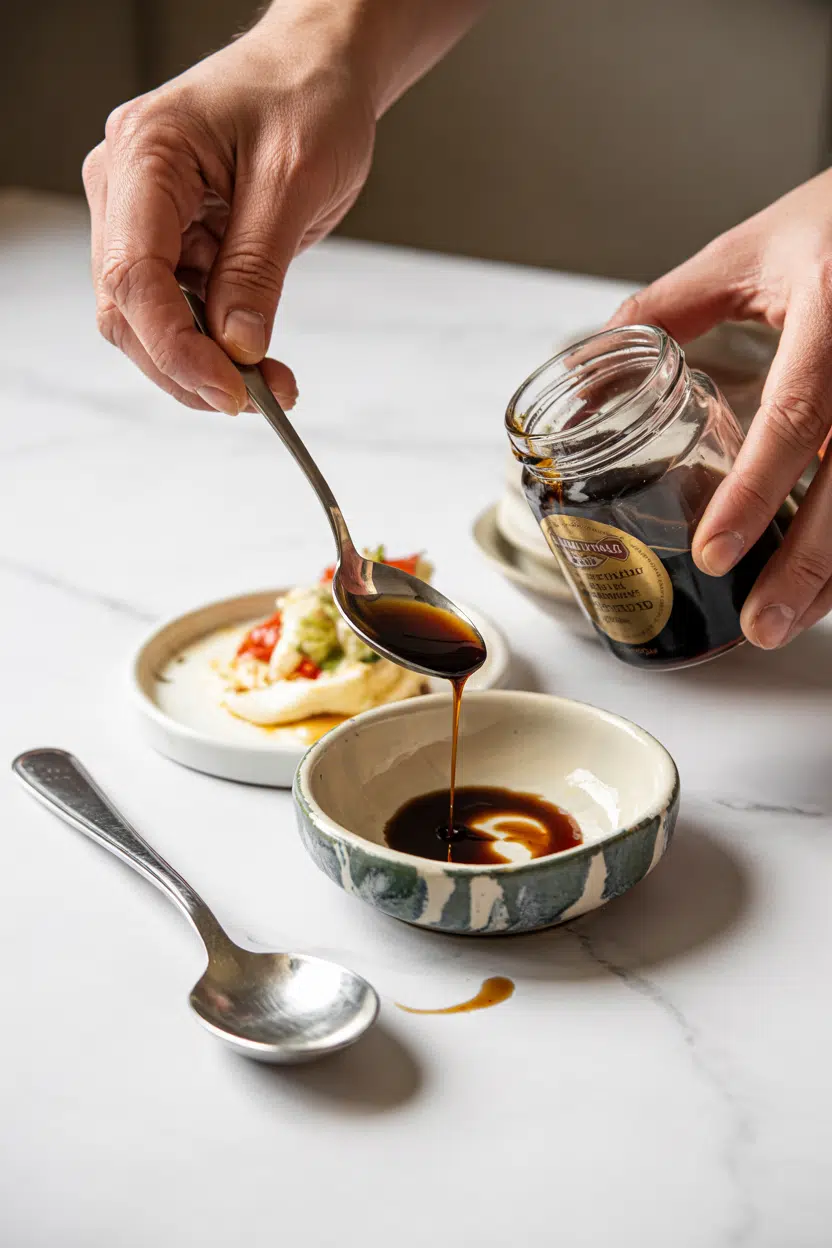
The closest comparison is a concentrated red wine vinegar swaps that's been deepened with brown sugar and molasses - but that still undersells it. There's a woody barrel character underneath the acidity, and a subtle umami undertow that most fruit vinegars don't have.
Heat changes the profile noticeably. Reducing balsamic in a pan drives off the sharper volatile acids and amplifies the caramel sweetness, making it softer and more syrupy.
Raw, it hits with more acid upfront before the sweetness follows. Traditional aged balsamic reads differently still - the sweetness and acid are already integrated, with far less of that initial bite.
How to Use balsamic vinegar
Balsamic's strongest role is as a finishing ingredient. A few drops over fresh strawberries or sliced figs need nothing else.
The same logic applies to a classic Caprese - skip the heavy dressing and drizzle balsamic directly over tomatoes and mozzarella with a good extra-virgin olive oil.
Reducing it into a glaze opens a second lane entirely. Simmer commercial balsamic over medium heat until it coats a spoon, and you have a concentrated glaze that works on roasted pork, carrots, or beets.
The reduction cuts the sharpness and produces a sauce-weight consistency without adding any thickener.
| Method | Best For | Tip |
|---|---|---|
| 🥗 Finishing Drizzle | Caprese, strawberries, aged cheeses, grilled steak | Use tradizionale or a quality IGP bottle - thin balsamic runs and pools without coating |
| 🔥 Glaze / Reduction | Roasted vegetables, pork, carrots, pan sauces | Reduce 3:1 over medium heat; watch closely after 5 minutes - sugars burn fast |
| 🥣 Vinaigrette | Green salads, grain salads, roasted beet salads | Combine with extra-virgin olive oil at roughly 1:3 ratio; add a small amount of honey or mustard to emulsify |
| 🍳 Pan Sauce Addition | Beef, pork, duck pan sauces | Add 1-2 teaspoons near the end to balance fat and richness without full reduction |
In dressings, balsamic pairs naturally with Parmesan or aged cheeses on the side, and it holds up to bold partners - roasted root vegetables, pork, and beef all take it well.
Avoid using it with delicate raw fish; the strong sweet-acid character simply overpowers subtle flavors.
If you need a stand-in in a recipe, balsamic vinegar swaps cover several workable options depending on whether you need the sweetness or the acidity to carry the dish.
How to Buy and Store balsamic vinegar
For everyday cooking, buy "Balsamic Vinegar of Modena IGP" in a dark glass bottle. Look for a label that lists grape must first - not wine vinegar topped up with caramel color.
A good bottle should have visible viscosity; swirl it and watch how slowly it coats the glass.
For storage, keep it upright in a cool, dark cabinet with the cap tight. Heat and light degrade the aroma over time.
Unlike extra-virgin olive oil, which has a firm best-by window, balsamic vinegar is highly shelf-stable - an unopened bottle keeps essentially indefinitely. Opened, best aroma holds for 3-5 years, though the vinegar remains usable well beyond that.
Full details are at our guide to balsamic vinegar storage guide.
- Avoid clear glass bottles - they offer no UV protection and indicate a lower-quality product
- Skip anything labeled "balsamic-style" or "balsamic flavored" - these are not real balsamic
Where to Start With Balsamic
Buy one IGP bottle for daily use and keep it for vinaigrettes, pan sauces, and quick glazes. Once you've worked through that, add a small bottle of tradizionale - it's a different ingredient, not just a better version of the same thing.
Start with strawberries or a Caprese to understand the finishing role before you try reducing or marinating.
Frequently Asked Questions
It's made from freshly crushed grape must - the whole pressed juice including skins, seeds, and stems - cooked down and then aged in wooden barrels. No wine is involved; the must is reduced before fermentation, which is what makes the flavor distinct from standard wine vinegar.
Both, but the balance shifts with age. Commercial balsamic hits acid-first with sweetness behind it. Traditional aged balsamic is noticeably sweeter and more integrated, with less of that sharp upfront bite.
Tradizionale is aged a minimum of 12 years in a sequence of different wood barrels, producing a thick, syrupy texture and deeply complex flavor. Commercial balsamic is made in weeks to months, often blended with wine vinegar, and is far thinner and sharper.
Yes, but timing matters. Add it late in pan sauces to preserve its acidity, or reduce it separately into a glaze. Avoid adding it at the start of long braises - prolonged heat flattens the flavor and can cause excessive darkening from the sugars.
No. Its high acidity makes it self-preserving at room temperature. Store it upright in a cool, dark cabinet with the cap sealed - refrigeration is unnecessary and can thicken traditional versions to the point where they're hard to pour.



