
Kumquat pulls off something no other citrus can: the rind is sweet and the flesh is tart, which means eating it whole, skin and all, gives you both sensations in a single bite.
That reversal of the usual citrus logic is exactly why it earns a real place in cooking - not just as a garnish, but as a functional ingredient that adds layered acidity, fragrant citrus oil, and gentle bitterness to everything from duck braises to cheese boards.
Kumquat is a small whole-edible citrus with a sweet rind and tart flesh. Eaten raw, candied, or simmered into marmalade, it contributes bright acidity and fragrant citrus oil. Refrigerate unwashed; whole fruits keep 1-2 weeks.
What Is Kumquat?
Kumquat is a small citrus fruit native to Southeast Asia, first cultivated in China and now grown across subtropical and warm-temperate regions worldwide.
Remember it later
Planning to try this recipe soon? Save it for a quick find later!
Unlike most citrus, the entire fruit is edible - rind, pith, and flesh together - which sets it apart from every other member of its family.
It belongs to the genus Fortunella, though modern classification folds it into Citrus. Three varieties appear most often in markets:
- Nagami - the most widely sold variety; oval-shaped, predominantly tart, with the classic sweet-rind contrast
- Meiwa - rounder and noticeably sweeter throughout, with softer pulp; good for eating raw
- Marumi - small and round, sharper in flavor, less common outside specialty growers
Nagami is the one you'll most likely find at a grocery store. Meiwa is worth seeking out at farmers' markets if you want less pucker.
What Does Kumquat Taste Like?
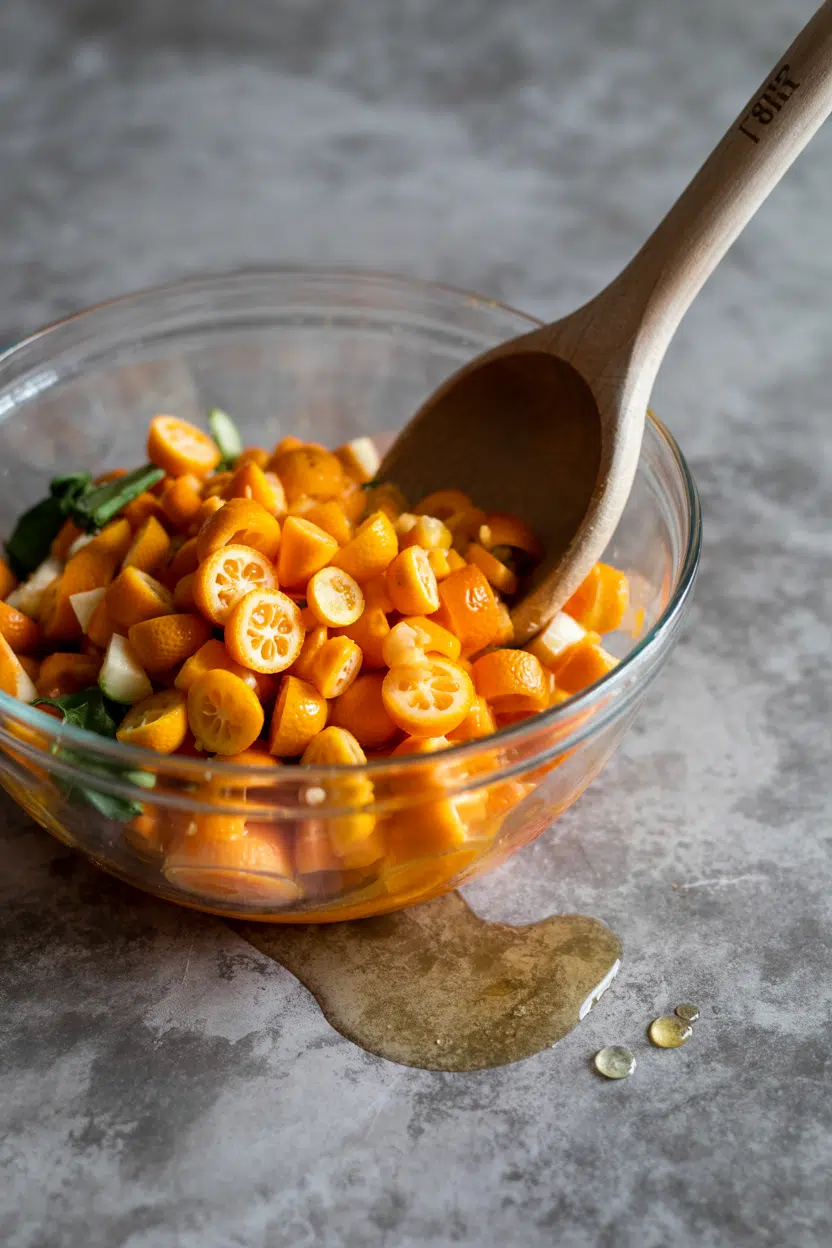
Bright and assertive - that's the honest summary. The rind delivers sweetness alongside fragrant citrus oil, while the flesh hits back with a sharp, lemon-leaning sourness. A small amount of bitterness from the pith rounds out the finish.
The closest comparison is eating orange peel and sour orange flesh simultaneously, except the rind oils here have a floral, almost orange-blossom quality. Heat mellows the tartness considerably - simmered or roasted kumquats taste softer and more jammy, with the bitterness fading to background.
Variety matters here. Meiwa stays sweeter even raw; Nagami stays sharp until cooked down.
If a recipe reads too bitter on first taste, you've likely included too many seeds - remove them before slicing.
How to Use Kumquat
Raw and uncooked is the simplest entry point. Slice thin, skin-on, and layer into salads with arugula, fennel, and goat cheese - the rind's oil coats the greens and the flesh sharpens the dressing. Chop roughly and you have a fast relish for roast pork or duck.
Cooking opens up more range. Here's how each method changes the fruit:
| Method | Best For | Tip |
|---|---|---|
| 🥗 Raw | Salads, salsas, relishes, cheese boards | Remove seeds first; slice thin for even bitter distribution |
| 🍳 Simmered | Marmalade, compote, pan sauces | Add honey or sugar early to balance tartness as it reduces |
| 🍰 Candied | Cake decoration, cheese boards, desserts | Blanch once before candying to cut bitterness from the pith |
| 🍗 Roasted/Braised | Poultry pan sauces, glazes for pork | Add in the last 20 minutes - prolonged heat destroys the rind's fragrance |
| 🍹 Infused | Syrups, cocktails, iced tea | Muddle or halve before steeping to release rind oils fully |
In Asian-influenced cooking, preserved kumquats and ginger-based chutneys appear alongside rice and congee. Mediterranean-leaning preparations lean on olive oil, rosemary, and kumquat vinaigrette.
Duck and fatty pork are the natural meat partners - the fruit's acidity cuts the richness without the flat sharpness of straight lemon juice.
How to Buy and Store Kumquat
At the store, reach for fruits that feel heavy for their size with a smooth, glossy rind. Wrinkling signals dehydration and age - those fruits will have lost volatile oil from the rind, which is exactly where the flavor lives.
A quick smell near the stem end should give you a clear citrus fragrance.
Storage is straightforward:
- Refrigerator - unwashed, in a breathable container or perforated bag; keeps 1-2 weeks
- Room temperature - fine for 2-4 days if you're using them quickly
- Preserved or candied - dramatically extended shelf life; kumquat marmalade and pickled forms keep for months when properly sealed
Keep them whole until you're ready to use them. Cutting exposes the flesh and accelerates moisture loss, especially from the rind.
For a full breakdown of how long kumquats last across storage conditions, see our guide on kumquat storage guide.
Where to Start with Kumquat
New to the fruit? Eat one raw first. That single bite - sweet rind folding into tart flesh - tells you everything about how it behaves in a dish.
From there, slice a few into a simple arugula salad or stir them into a pan sauce for roast chicken.
If you want a lower-commitment entry, look for candied kumquats at specialty food shops. They show the sweet side of the fruit without the sharp raw punch.
Once you've placed the flavor, you'll recognize where it fits: any dish that needs bright acidity, fragrant citrus oil, or a contrast against rich, fatty ingredients.
Frequently Asked Questions
Yes - the rind, pith, and flesh are all edible. Remove the seeds before eating, as they're bitter and add nothing. This whole-fruit eating is what makes kumquat unique among citrus.
The flavor ratio is reversed: an orange has sweet flesh and bitter rind, while a kumquat has sweet rind and sour flesh. Kumquats are also more intensely aromatic and noticeably more tart overall.
In relishes, marmalades, and pan sauces, yes - they substitute for bitter orange or mandarin with added complexity. They don't work as a drop-in for lime or lemon in recipes relying on clean, neutral acidity.
Each fruit is low in calories and provides vitamin C, fiber, and potassium. The edible rind adds oil-based phytonutrients and flavonoids not found in peeled citrus. Candied preparations significantly increase the sugar content.
Bitterness comes primarily from the seeds and the white pith layer just inside the rind. Removing seeds before eating reduces it sharply. Blanching before candying or cooking draws out most of the remaining bitterness.



