
You spot it at the back of the pantry, half-buried behind the baking soda and a box of cornstarch. Baking powder is one of those ingredients that rarely gets its own moment - it's just there, measured and added, quietly doing the structural work.

But get it wrong - old powder, wrong amount, wrong pairing - and a banana bread comes out dense and flat. Understanding what it actually is and how it behaves makes it a much more reliable tool.
Baking powder is a chemical leavening agent that releases carbon dioxide in batters to produce lift and a light, open crumb. It has a mildly alkaline, faintly bitter flavor that disappears when used correctly. Best for quick breads, pancakes, biscuits, and cakes.
What Is Baking Powder?
Baking powder is a dry chemical leavening agent made from three components: an acid salt, a carbonate or bicarbonate (almost always sodium bicarbonate), and a starch carrier - typically cornstarch - that absorbs moisture and keeps the mix stable in the can.
Remember it later
Planning to try this recipe soon? Save it for a quick find later!
When it contacts liquid, and again when heat is applied, a chemical reaction releases carbon dioxide gas, which inflates bubbles in the batter and creates lift.
The dominant type sold today is double-acting baking powder, which reacts twice: once when wet and once in the oven. This gives bakers more flexibility than older single-acting formulas, which exhausted most of their rise the moment liquid hit the mix.
Some formulations use aluminum-based acid salts; others, labeled aluminum-free, swap in sodium acid pyrophosphate or cream of tartar instead.
- Double-acting - Standard grocery option; two reaction stages for consistent rise
- Single-acting - Rare today; reacts fully on contact with liquid, no oven boost
- Aluminum-free - Uses non-aluminum acids; reduces any residual metallic note
- Homemade blend - Cream of tartar plus baking soda, mixed fresh for immediate use
What Does Baking Powder Taste Like?
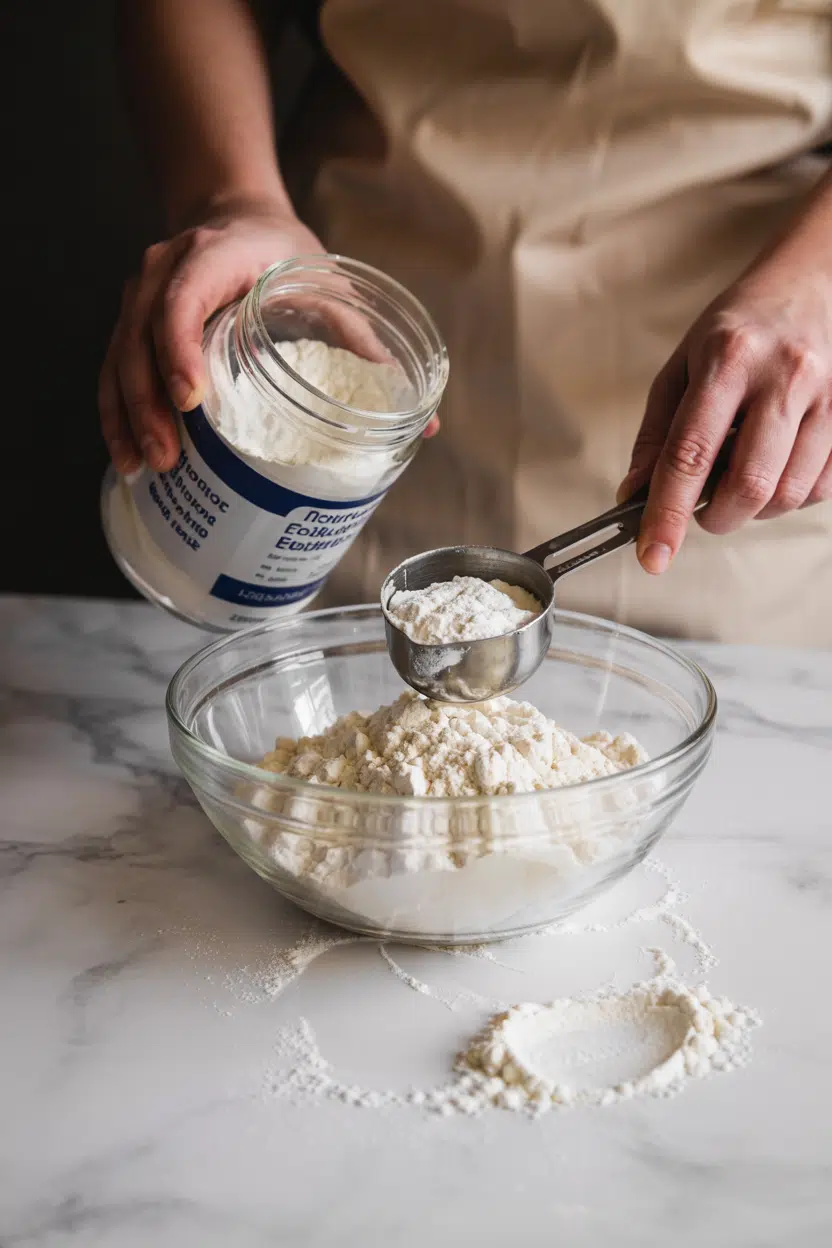
On its own, baking powder tastes unpleasant - mildly alkaline, slightly salty, with a faint bitter or dusty edge. That metallic note comes from the acid salts used in the formula, particularly aluminum compounds if present.
In a correctly formulated recipe, none of that off-flavor survives baking. The acid-base reaction consumes both components fully, leaving no perceptible taste behind.
Problems surface when baking powder is overused - too much creates a soapy or metallic aftertaste in the finished crumb - or when a batter sits too long before going into the oven, letting the reaction run out before heat sets the structure.
How to Use Baking Powder
Baking powder does its best work in quick-bread batters - recipes that go from bowl to oven without a proofing stage. Muffins, banana bread, scones, and drop biscuits all rely on it for lift.
American-style pancakes and waffles also depend on it almost entirely for their airy texture.
The standard ratio in most recipes is 1 teaspoon per cup of flour, though richer batters with eggs may need slightly less. Always whisk it into the dry ingredients before combining with wet - this distributes it evenly and prevents pockets of unreacted powder.
Once wet and dry mixes meet, work quickly and get the batter into the oven while the first CO₂ reaction is still active.
| Method | Best For | Tip |
|---|---|---|
| 🫙 Dry Mix | Quick breads, muffins, scones | Whisk into flour before adding any liquid |
| 🥞 Batter | Pancakes, waffles, crepes | Combine wet and dry last; cook immediately |
| 🍗 Frying Batter | Tempura, fried chicken coatings | Cold liquid keeps bubbles from releasing too early |
| 🎂 Cake Batter | Sheet cakes, cupcakes, loaf cakes | Don't overmix after adding - degasses batter |
Buttermilk and yogurt are natural partners here. Both are acidic, and that extra acid boosts the reaction with the bicarbonate component, producing additional lift.
If you're out of options, check the baking powder replacements available using pantry staples. Pairing with eggs adds structural support while the powder handles the rise - a combination that defines most American layer cakes and cupcake recipes.
How to Buy and Store Baking Powder
At the store, reach for a double-acting formula in a sealed metal canister or foil-sealed container. Avoid anything that feels damp, rattles with clumps, or lacks a printed best-by date.
Clumping means moisture got in - that powder has likely already begun reacting and won't perform reliably.
Once opened, transfer the powder to an airtight, opaque container and keep it away from the stove. Steam and heat are the main enemies.
For full details on how long it stays potent, the baking powder storage guide guide covers testing and dating in depth.
- Unopened - Good for 2-3 years in a sealed container
- After opening - Reliable rise for 6-12 months; test after 6 months
- Signs it's spent - No bubbling in hot water, visible clumps, damp smell
Start With What the Recipe Demands
Choose double-acting for everyday baking - it's forgiving and widely available. If you're sensitive to metallic aftertaste, go straight for an aluminum-free label; the difference is noticeable in delicate recipes like scones or white cakes.
When a recipe calls for baking soda instead, that's a different ingredient entirely - not interchangeable without adjustment. If you run out, baking soda replacements require a different approach than swapping leaveners one-for-one.
Frequently Asked Questions
No. Baking soda is pure sodium bicarbonate and needs an acidic ingredient in the recipe to activate. Baking powder contains its own acid, so it works in non-acidic batters without any extra adjustment.
It reacts in two stages: once when liquid is added, and again under oven heat. Each reaction releases carbon dioxide, which inflates air pockets in the batter and creates a light, open crumb.
The metallic note comes from aluminum-based acid salts in standard formulas. Switching to an aluminum-free baking powder eliminates it almost entirely, especially in mild-flavored baked goods like scones or vanilla cake.
Not when used correctly. At normal amounts, the acid and base fully react during baking, leaving no flavor behind. Overuse - or letting batter sit too long before baking - is what creates a detectable bitter or soapy taste.
Yes - combine 1 part baking soda with 2 parts cream of tartar. Use it immediately; homemade blends lack the cornstarch buffer that keeps commercial powder stable, so they react faster once mixed.



