
Worcestershire sauce does something in a recipe that's hard to explain until you taste the difference it makes. A few drops into a beef marinade or a pan sauce and the whole dish shifts - there's suddenly a savory depth, a background complexity that makes everything taste more like itself.

It works the same way soy sauce does, but where soy sauce is singular and saline, Worcestershire is layered: fermented, tangy, faintly sweet, and unmistakably anchovy-driven. Nothing else replicates it.
Worcestershire sauce is a dark, fermented British condiment made from vinegar, tamarind, molasses, and anchovies. It delivers concentrated umami, tang, and mild sweetness in small quantities - used in marinades, sauces, braises, and cocktails to add savory depth without tasting like any single ingredient.
What Is Worcestershire Sauce?
Worcestershire sauce is a fermented liquid condiment originating from the West Midlands of England - specifically Worcester - in the early 19th century. The brand Lea & Perrins brought it to commercial production around 1837, and their recipe remains the most recognized version worldwide.
Remember it later
Planning to try this recipe soon? Save it for a quick find later!
The base formula combines distilled malt vinegar, tamarind extract, molasses, anchovies, garlic, shallots, cloves, and a proprietary spice blend - then ferments the mixture for an extended period. That aging process is what makes the sauce more than the sum of its parts.
You'll see it labeled as Worcester sauce, Worcestershire, or simply by brand name. Vegan and gluten-free versions exist, swapping anchovy for anchovy paste swaps like mushroom extract or soy, though the flavor profile shifts noticeably.
Common variants include:
- Standard (anchovy-based) - the authentic style with full umami depth from fermented fish
- Vegan/vegetarian - replaces anchovies with mushroom or yeast extract; lighter and less complex
- Low-sodium - reduced salt versions for dietary restrictions, often thinner in body
- Gluten-free - omits wheat-derived malt vinegar; check labels carefully for tamarind and soy sources
What Does Worcestershire Sauce Taste Like?
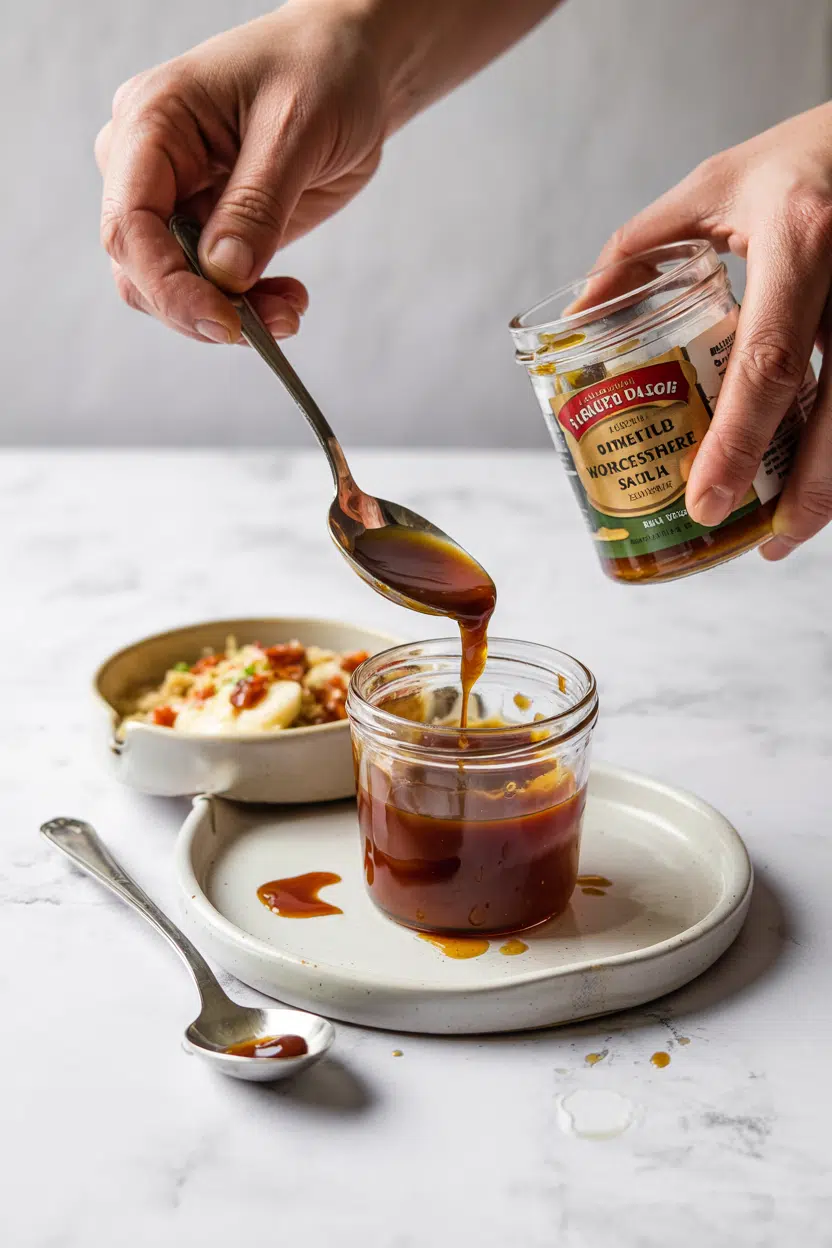
The closest single comparison is a concentrated fish sauce crossed with balsamic vinegar - but sweeter and considerably more complex than either alone. Anchovy-driven umami leads, giving a savory depth that lands at the back of the palate rather than on the front.
Tamarind adds a sour-fruity pull, while molasses rounds the edges with malt sweetness. The vinegar keeps everything bright and prevents the sauce from reading as heavy.
Heat concentrates the sauce quickly, intensifying the umami while softening the vinegar edge. In cold applications - dressings, cocktails - the tangy and fermented notes stay forward and bright.
How to Use Worcestershire Sauce
Worcestershire earns its place across heat levels and cooking stages - stirred into something cold, deglazed into a hot pan, or dropped raw into a cocktail shaker. The key is restraint; it's measured in teaspoons, not tablespoons.
In British and American cooking, it appears most in beef and lamb dishes. Whisk it into a marinade alongside mustard and garlic before grilling steaks, or add a teaspoon into meatloaf or burger mix for savory complexity that reads as depth, not fishiness.
Pan sauces benefit from a small pour after deglazing - it rounds out wine-based reductions cleanly.
| Method | Best For | Tip |
|---|---|---|
| 🥗 Raw/Cold | Vinaigrettes, Caesar dressing, Bloody Mary, cocktail bases | Add to acid-forward bases - the vinegar in the sauce integrates naturally |
| 🍳 Hot Sauces | Pan sauces, gravies, braises, stews | Add near the end of cooking; prolonged heat fades the top notes |
| 🥩 Marinades | Beef, lamb, pork before grilling or searing | Combine with [soy sauce substitutes](https://forkliftkitchen.com/soy-sauce-substitutes/) or molasses for a deeper base |
| 🍖 Mixed In | Meatloaf, burger patties, meatballs | 1-2 teaspoons per pound of meat is enough; more turns salty |
| 🍖 Barbecue | Barbecue sauce blending, glazes | Pairs with [molasses](https://forkliftkitchen.com/molasses-substitutes/) and smoked paprika for sweet-savory balance |
It pairs naturally with red meat, tomato-based sauces, mustard, brown sugar, and garlic. Avoid using it near light floral ingredients or delicate seafood - the fermented anchovy note will dominate.
How to Buy and Store Worcestershire Sauce
Look for bottles in dark glass or opaque packaging - light degrades the volatile aromatics over time. Check the label for anchovies or fermented fish; their presence signals authentic umami construction.
Avoid bottles with swollen or leaked caps, which indicate heat exposure or compromised sealing.
Shelf life for an unopened bottle runs one to three years at pantry temperature. Once opened and refrigerated, expect peak flavor for six to twelve months - the sauce stays shelf-stable longer, however the aroma fades noticeably past that window.
For a full breakdown, see our guide on worcestershire sauce freshness guide.
If you run out or need a substitute, worcestershire sauce swaps that combine soy sauce, tamarind, and a touch of vinegar come closest.
Start Here If You're New to It
Use Worcestershire as a background ingredient, not a feature. If you can taste it distinctly in the finished dish, you've used too much.
Start with beef. A teaspoon in a steak marinade or a half-teaspoon in a pan sauce after deglazing shows you what it does at its best - a shift in depth that makes the whole dish more cohesive.
From there, try it in a Bloody Mary or a simple vinaigrette.
One bottle lasts most home cooks well over a year. It's a low-commitment addition with high payoff across a wide range of savory cooking.
Frequently Asked Questions
Standard Worcestershire is not vegan - it contains anchovies. Several brands produce vegan versions using mushroom extract or yeast to replicate the umami, though the depth is noticeably less complex than the anchovy-based original.
Yes, in all traditional formulations. Anchovies are fermented into the sauce and are not detectable as a distinct fish flavor - they dissolve into the broader umami profile. Anyone with a fish allergy should treat standard Worcestershire as a fish product.
Soy sauce is saltier, thinner, and single-note savory. Worcestershire is more complex - it adds tamarind sourness, molasses sweetness, and fermented spice alongside the umami. The two aren't interchangeable, though each can partially substitute the other in small amounts.
Yes - it's a standard ingredient. A few dashes add savory backbone and fermented complexity that hot sauce alone can't provide. Start with half a teaspoon per drink and adjust from there.
The core ingredients are malt vinegar, tamarind, molasses, anchovies, garlic, shallots, and a blend of spices including cloves. These are combined and fermented over an extended period before bottling, which develops the sauce's layered flavor.



