
Jicama does something few raw vegetables can manage: it holds its crunch through acid, heat, and time without turning to mush. That staying power makes it a reliable backbone in dishes that need texture - slaws, tacos, ceviches - where softer vegetables would collapse.

It's mild enough to take on bold seasonings and sturdy enough to stay distinct, which is why it shows up in Mexican street food and Southeast Asian stir-fries alike. If you're already reaching for crisp, neutral tubers like kohlrabi or rutabaga for texture, jicama belongs in that conversation too.
Jicama is a round, brown-skinned tuber with crisp white flesh and a mild, slightly sweet flavor. It shines raw - sliced thin, julienned, or cut into sticks - and holds its texture well in quick-cooked preparations. Store whole at room temperature up to two weeks.
What Is Jicama?
Jicama (Pachyrhizus erosus) is a leguminous climbing vine native to Mexico and Central America, grown specifically for its large underground tuber.
Remember it later
Planning to try this recipe soon? Save it for a quick find later!
Despite belonging to the bean family, only the root is edible - the seeds, pods, and leaves contain toxic rotenone and should never be eaten.
The tuber itself is roughly globe-shaped, with thin, papery brown skin and bright white, water-dense flesh underneath. You'll also see it labeled as Mexican turnip or yam bean, though it's unrelated to true yams or turnips.
It typically ranges from the size of a grapefruit to a small melon, and smaller specimens tend to be sweeter and less fibrous than the largest ones.
Jicama is a staple in Mexican markets and increasingly common in Asian grocery stores, where it appears under names like singkamas in Filipino cuisine.
It belongs to the same category of crisp, neutral tubers as daikon radish - both prized for their texture rather than assertive flavor.
What Does Jicama Taste Like?
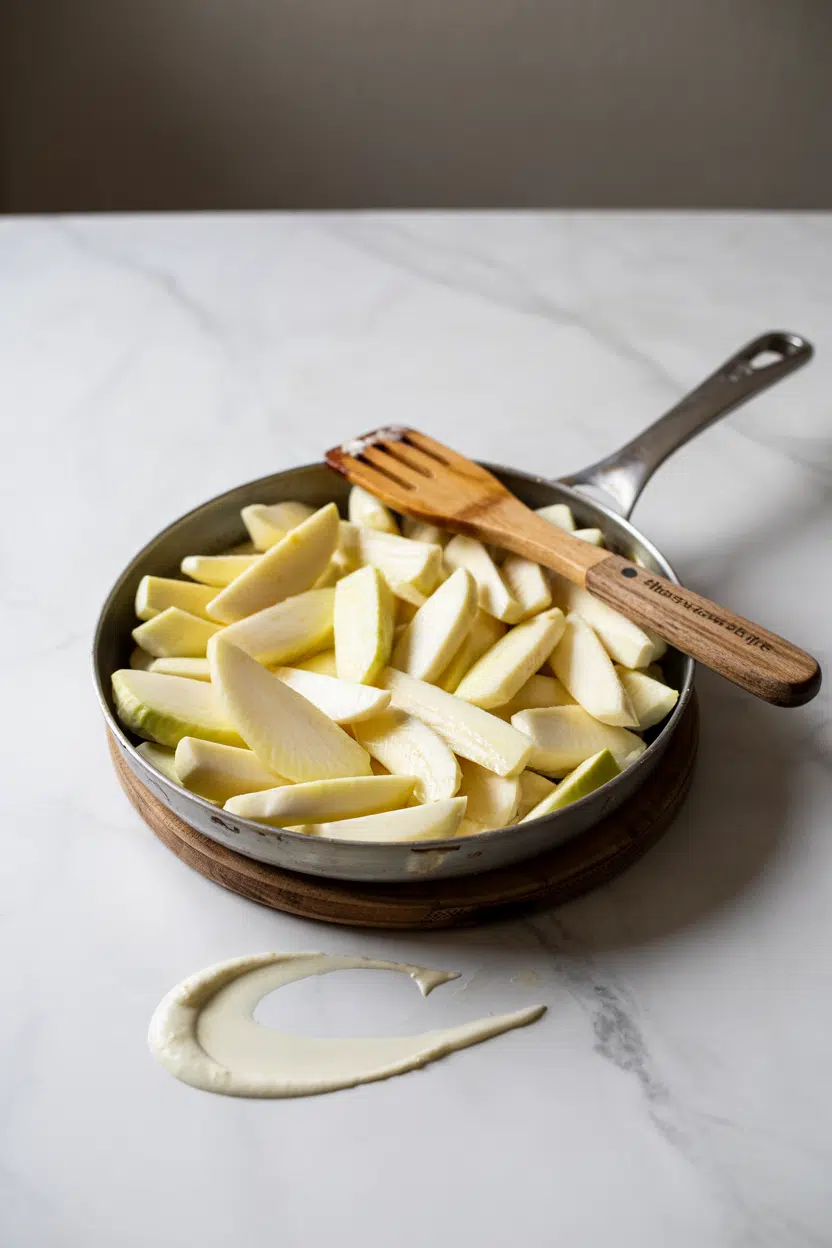
Raw jicama is mildly sweet and clean, landing somewhere between a crisp apple and a raw water chestnut. There's a faint nuttiness that comes through in the middle of a bite, and a subtle peppery note near the core that most people barely notice.
The aroma is almost nonexistent - fresh and clean at most. That near-neutral profile is actually a strength: jicama absorbs lime juice, chili powder, and kaffir lime leaf replacements without fighting them.
Brief cooking softens the crunch to a tender-crisp bite and slightly mutes the sweetness, but jicama never develops the deep savory notes you'd get from roasting a denser root vegetable.
How to Use Jicama
Jicama's most natural role is raw, and it works across more cuisines than most cooks expect. In Mexican cooking, it's julienned into fresh salsas, tossed with lime and chili powder as a street snack, or sliced thin as a crisp layer in tacos and tostadas.
In Southeast Asian and Filipino cooking, it goes into stir-fries, fresh salads, and alongside dipping sauces where its neutral flesh absorbs surrounding flavors readily.
It pairs especially well with acid and heat: lime juice, tajín-style seasoning, cilantro, and red onion all sharpen its mild sweetness.
For contrast in texture and richness, jicama works alongside avocado, mango, and fresh seafood - it's a reliable addition to ceviche-style dishes where it holds up against acid without going soft.
| Method | Best For | Tip |
|---|---|---|
| 🥗 Raw | Slaws, tacos, crudités, salads, pico de gallo | Cut matchsticks or thin slices; dress with lime immediately to keep flesh bright |
| 🔥 Stir-fry | Asian-style dishes needing tender-crisp texture | Add in the last 2 minutes - high heat, short time preserves the bite |
| 🫙 Quick Pickle | Garnishes, tacos, grain bowls | A 30-minute vinegar brine is enough; overnight makes it soft |
| 🔥 Grilled | Skewers, side dishes with char contrast | A few minutes per side only - internal texture should still have a bite |
Avoid long braises or slow-cooked applications. Extended heat makes jicama mealy and waterlogged, which defeats its entire purpose.
Heavy cream sauces also work against it, masking the delicate flavor that makes it worth using.
How to Buy and Store Jicama
At the market, pick jicamas that feel heavy for their size with dry, unbroken skin. Avoid any with soft spots, deep cracks, or mold forming at the stem end.
Smaller to medium bulbs are the better choice - oversized ones tend to be woody and less sweet.
Storage is straightforward:
- Whole, unpeeled - keeps 2-4 weeks in a cool, dry spot; up to 2 months refrigerated
- Peeled or sliced - refrigerate in an airtight container with lime juice for up to 1 week
- Avoid freezing - the high water content means it turns mushy after thawing
For a full breakdown, see our guide to jicama storage guide.
Where to Start With Jicama
Skip the elaborate preparations at first. Cut it into sticks, squeeze lime over it, and dust with tajín or chili-lime salt - that's the version that shows you exactly what jicama does. Once you understand its texture and flavor profile, the move to slaws, tacos, and stir-fries is intuitive.
If you want alternatives with a similar crunch, our jicama replacements covers the closest options. The difference between chamoy and tajín is also worth knowing before you season your first batch.
Frequently Asked Questions
Raw is the most common approach - peeled, sliced into sticks or matchsticks, and seasoned with lime and chili powder. It also works in quick stir-fries and brief pickles, but always peel it first; the skin is tough and not pleasant to eat.
No. Despite the nickname "Mexican turnip," jicama is botanically a legume, not a brassica like turnip. The flavor is milder and sweeter, and the texture stays crisper raw than a turnip does.
Yes, but keep it brief. A short stir-fry or a few minutes on a grill leaves it tender-crisp. Longer cooking makes it mealy and strips the texture that makes it useful.
It's low in calories, high in water, and contains vitamin C, potassium, and inulin - a prebiotic fiber that feeds gut bacteria. Worth noting: inulin can cause bloating in people sensitive to it.
Neither in significant amounts. Its carbohydrates come largely from inulin, which the body doesn't digest like regular starch, keeping the glycemic impact low. That's part of why it's used as a lower-carb crunchy snack.



