Most people assume sweetened condensed milk is just milk made thicker, when in fact it's a fundamentally different product - one where water removal and heavy sugar addition change both structure and behavior in ways regular milk simply can't replicate.

Understanding those differences is what separates desserts that set correctly from ones that don't.
Sweetened condensed milk is a thick, shelf-stable dairy concentrate with an intensely sweet, caramelized flavor. It's used across Latin American, Southeast Asian, and American baking - from tres leches cake to no-churn ice cream - and nothing substitutes it exactly.
What Is Sweetened Condensed Milk?
Sweetened condensed milk starts as whole cow's milk, reduced by evaporation to remove roughly 60% of its water content.
Remember it later
Planning to try this recipe soon? Save it for a quick find later!
Sugar is added during processing - typically at a ratio that results in a final product of around 40-45% sugar by weight - leaving a dense, pourable concentrate that stays shelf-stable without refrigeration until opened.
Its origin is tied to 19th-century canning innovation, when Gail Borden developed a commercial process to extend milk's usable life. The product spread globally and became foundational in cuisines that lacked reliable refrigeration.
You may also see it called leche condensada in Spanish-speaking markets, or "sweetened evaporated milk" - though that's technically a misnomer, since evaporated milk is a separate, unsweetened product.
Cans are the standard format, though tubes and glass jars exist in some markets. Most versions use whole milk, but low-fat and lactose-free varieties appear on shelves with increasing regularity.
What Does Sweetened Condensed Milk Taste Like?
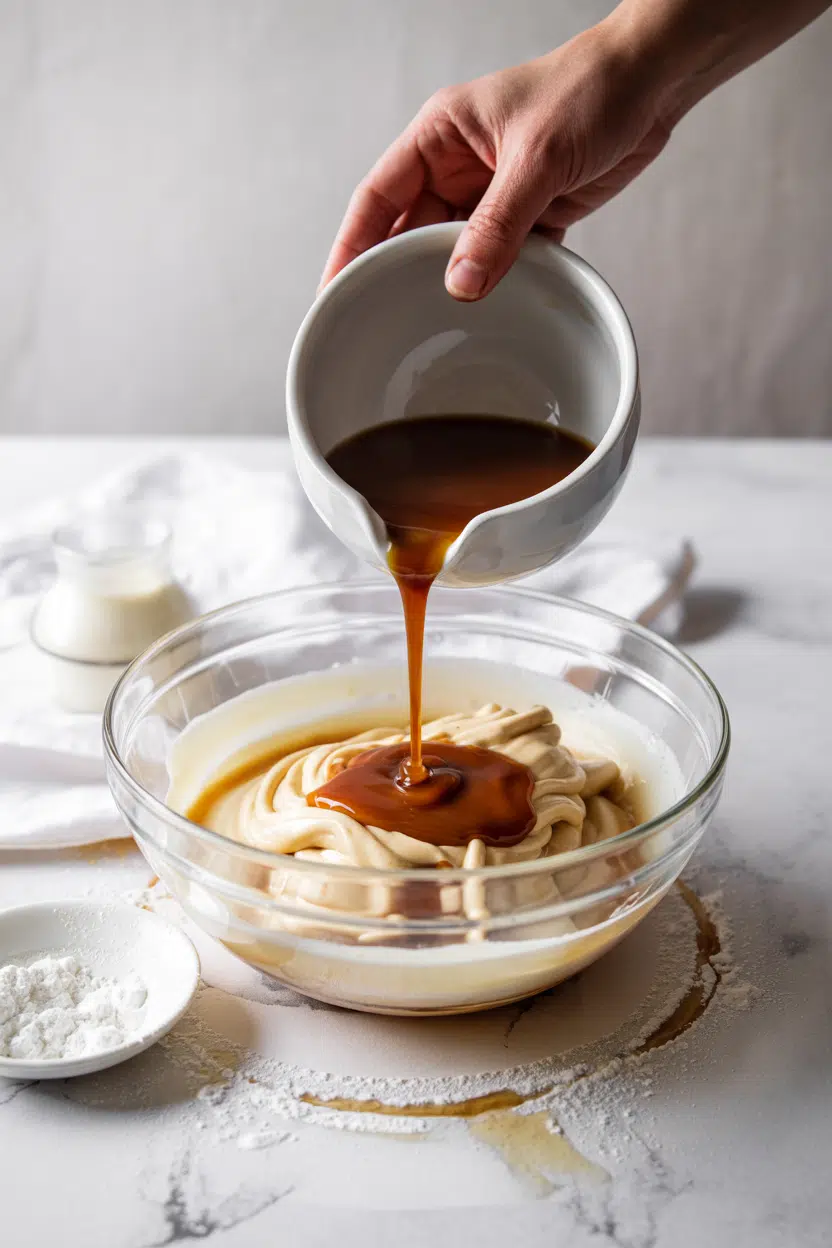
The dominant note is caramelized sugar, specifically the kind of sweetness that reads almost cooked rather than raw - similar to what happens when milk sugar undergoes low-level Maillard browning during the evaporation process.
It's not quite dulce de leche, which takes that reaction much further, but it's already partway there.
Underneath the sweetness sits a mild, milky creaminess and a faint buttery undertone. There's very little dairy tang compared with regular milk or cream.
Heat intensifies the caramel character further. Warming sweetened condensed milk over low heat - or baking it in-can submerged in water - pushes it into full dulce de leche territory, darker, thicker, and distinctly toasted.
How to Use Sweetened Condensed Milk
Sweetened condensed milk functions as both a sweetener and a structural agent, which is what makes it so useful across different recipe types. It contributes sugar and body in a single pour, without the added liquid volume that plain sugar dissolved in cream would bring.
| Method | Best For | Tip |
|---|---|---|
| 🥄 Direct Mix | Coffee, tea, beverage sweetening | Stir thoroughly - it sinks to the bottom of cold drinks |
| 🍮 Baked or Simmered | Dulce de leche, custards, flan | Keep heat low and even; high heat scorches the sugars fast |
| ❄️ Chilled/No-Heat | No-churn ice cream, bar fillings, fridge-set desserts | Combine with whipped cream for no-churn; it sets firm when frozen |
| 💧 Diluted | Tres leches cake soak, milk-based pours | Mix with whole milk or evaporated milk to loosen the texture |
In Southeast Asian cooking - particularly Filipino cuisine - sweetened condensed milk anchors leche flan, a firmer, denser custard than its French cousin, relying on the sugar content to set properly. Latin American kitchens use it extensively, from tres leches cake soaks to the filling for alfajores cookies.
Southern U.S. baking reaches for it in chess pie and key lime pie, where its acidity-binding properties hold the custard together.
It pairs cleanly with strong brewed coffee or espresso, cocoa, vanilla, cinnamon, tropical fruits like mango and banana, and citrus zest used for contrast.
Avoid combining it directly with sharp acidic ingredients like undiluted vinegar-based dressings - the sugar and protein structure can separate unpleasantly under high acid.
How to Buy and Store Sweetened Condensed Milk
At the store, check every can for dents, bulges, or rust before adding it to your cart. A bulging can signals internal pressure from spoilage - skip it entirely.
For glass jars or tubes, look for a clear, syrupy consistency and no visible sugar crystallization at the bottom.
- Unopened cans - Store at room temperature, away from direct sunlight and heat sources; shelf life runs 12-24 months.
- Opened portions - Transfer to an airtight container and refrigerate immediately; use within 7-10 days.
- Tubes and jars - Follow the label, but refrigerate after opening regardless of format.
The sweetened condensed milk storage life is generous compared with fresh dairy, but once you break the seal, it behaves more like any other opened dairy product.
If you need a replacement and don't have a can on hand, sweetened condensed milk alternatives do exist, though most require cooking down heavy cream with sugar to approximate the same texture and sweetness level.
Start Here
Reach for sweetened condensed milk when a recipe needs both sweetness and body without adding extra liquid volume. If you're new to it, stir a spoonful into strong coffee first - that single use demonstrates exactly how it behaves: it melts in, thickens slightly, and sweetens without thinning.
From there, no-churn ice cream is the next logical step before moving into baked custards and flan.
Frequently Asked Questions
Evaporated milk is unsweetened and thinner - it's just milk with water removed. Sweetened condensed milk has sugar added during processing, giving it a thick, syrupy texture and nearly double the caloric density of evaporated milk.
Yes, but you need to cook them together first. Simmer one cup of heavy cream with a third cup of sugar for 20-25 minutes until reduced and thickened - the result approximates the texture and sweetness, though the flavor is slightly less caramelized.
Seven to ten days in a sealed, non-metal container. Beyond that, watch for off smells, color darkening, or visible mold - any of those means discard it.
No. The combination of reduced water content and high sugar concentration makes it shelf-stable at room temperature. Refrigerating it before opening won't hurt, but it thickens considerably when cold and becomes harder to pour.
Yes. Submerge the unopened can in water and simmer for two to three hours, keeping the can fully covered throughout. The result is a thick, deeply caramelized spread - never open the can while it's still hot.