
Spread onto bruschetta, tossed through hot pasta, or spooned into a bowl of minestrone just before serving - pesto sauce shows up in more places than most people expect. It's a raw emulsion of basil, nuts, cheese, garlic, and olive oil that does the work of a dressing, a condiment, and a finishing sauce all at once.

Unlike cooked sauces such as salsa or Spanish romesco, pesto stays raw, which means everything you taste is direct and unfiltered.
Pesto sauce is a raw, herb-based emulsion from Liguria, Italy, built on fresh basil, pine nuts, hard cheese, garlic, and extra-virgin olive oil. It delivers herbaceous, nutty, and garlicky flavor with moderate intensity and works across pasta, bread, fish, and more.
What Is pesto sauce?
Pesto alla genovese originated in Liguria, the narrow coastal region of northwest Italy centered on Genoa. The name comes from the Italian pestare, meaning to pound or crush - a reference to the mortar and pestle method used in its traditional preparation. Classically, it contains just five ingredients: fresh basil, pine nuts, garlic, hard aged cheese (either Parmigiano-Reggiano or Pecorino Romano, often both), and extra-virgin olive oil.
Remember it later
Planning to try this recipe soon? Save it for a quick find later!
No cooking is involved. Everything is ground or blended into a coarse-to-smooth paste, then emulsified with oil.
Unlike herb sauces built around heat - think Argentine chimichurri - pesto relies entirely on the raw intensity of each ingredient to carry the final flavor. Variations exist across Italy and beyond, swapping in sun-dried tomatoes, walnuts, or spinach, but the Ligurian original remains the benchmark.
Outside Italy, "pesto" frequently refers to any blended herb sauce in a similar style, though nothing matches the specific balance of the classic version.
What Does pesto sauce Taste Like?
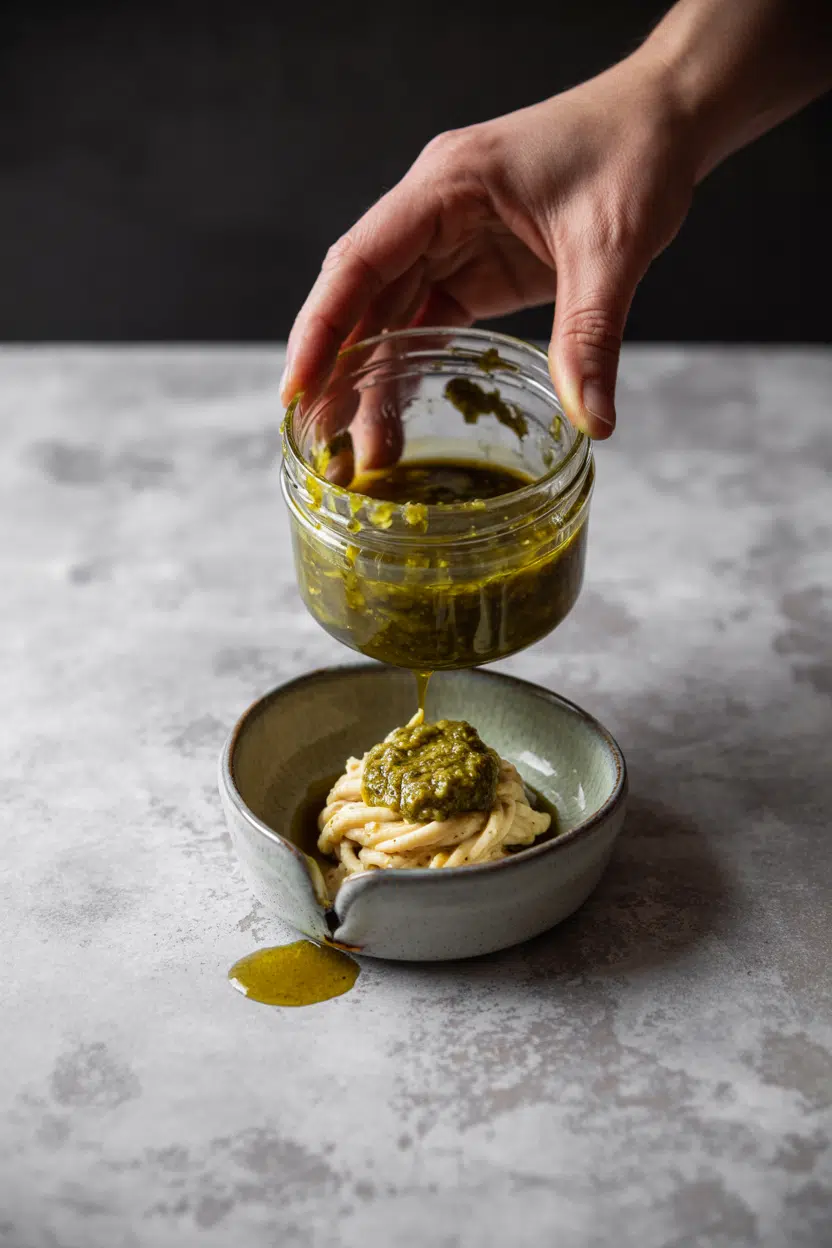
Pesto tastes like a concentrated herb salad dressed with olive oil and grated hard cheese - but that description only gets you partway there. The basil sweetness hits first, grassy and bright.
Then the pine nut richness rounds out the middle, adding a faint buttery quality that keeps the sauce from feeling sharp.
Garlic provides a clean bite that fades quickly, while the aged cheese brings a salty, lasting umami that anchors the whole thing. The olive oil ties it together, softening the edges without dulling any individual note.
Heat changes things noticeably. Pesto tossed directly into a hot pan turns dull in color and loses its bright basil character fast.
The standard fix - stir it into pasta off the heat or at the very end - preserves what makes it worth using.
How to Use pesto sauce
Classic pesto pasta is the obvious starting point. Trofie and trenette are the traditional Ligurian shapes, though spaghetti works fine. The rule: toss pesto with al dente pasta using a splash of starchy pasta water to loosen the sauce and help it coat evenly. This is one place where pesto really cannot be replaced by a cooked tomato sauce - the texture and raw herb lift are specific to it. For a different red sauce direction, tomato sauce alternatives cover that gap well.
Beyond pasta, the uses multiply quickly.
- 🍞 Bruschetta base - Spread on toasted bread in place of butter or a tomato topping for a sharper, herb-forward bite.
- 🍲 Soup finish - A spoonful stirred into minestrone just before serving adds a fresh herb lift that cooked herbs can't replicate.
- 🍕 Pizza base - Used in place of tomato sauce on white pizza, paired with mozzarella and roasted vegetables.
- 🐟 Finishing sauce - Slathered on grilled salmon or roasted chicken in the last few minutes of cooking for herb richness.
- 🥗 Dip or spread - Stirred into mayonnaise or yogurt for a sandwich spread that pairs well with shrimp or chicken.
Pesto pairs naturally with fresh tomatoes, mozzarella or burrata, baby potatoes, grilled zucchini, and lemon zest. One pairing to avoid: delicate salads that need a light hand.
Pesto's weight overwhelms greens that call for something closer to a béchamel-style base or a thin vinaigrette.
| Method | Best For | Tip |
|---|---|---|
| 🥗 Raw | Pasta toss, bruschetta, dips, cold salads | Add pasta water to loosen; never heat directly |
| 🍳 Brief Finish | Soups, risotto, grilled fish, chicken | Stir in off the heat to preserve basil aroma |
| 🍕 Baked | Pizza base, gratin topping under cheese | Cover with cheese before baking to shield basil from direct heat |
How to Buy and Store pesto sauce
At the store, color is your first signal. Bright to deep green with visible herb flecks and a glossy oil layer means fresh, intact basil. A dark brown cast or a strong vinegar smell means it's past its best.
For jarred pesto, check that basil appears first on the ingredient list and that preservatives are minimal.
Fresh deli pesto should go straight into the fridge and be used within five to seven days. Storage details beyond that - including how long pesto sauce lasts under different conditions - are worth knowing before you buy more than you need.
- Unopened jar: Months at room temperature; check the best-by date.
- Opened refrigerated: 5-7 days, oil layer on top, airtight container.
- Frozen portions: Up to 3 months; freeze in ice cube trays for easy single-serve use.
Where to Start with Pesto
If you've never cooked with pesto, trofie al pesto genovese is the clearest first test - it shows the sauce with no distractions. For a quicker entry point, spread it on toast with a slice of fresh tomato.
From there, the other uses fall into place naturally, and you'll find yourself keeping a jar on hand more often than not.
If homemade pesto isn't on the table, a good jarred version gets you most of the way there. Our guide to pesto sauce swaps covers what to reach for when you're out or need a different flavor profile.
Frequently Asked Questions
Traditional pesto alla genovese contains fresh basil, pine nuts, garlic, Parmigiano-Reggiano or Pecorino Romano, and extra-virgin olive oil. No cooking is involved - the ingredients are ground into a paste and emulsified with oil.
Yes. Pesto freezes well for up to three months with minimal flavor loss. Freeze in small portions - ice cube trays work well - and thaw by stirring directly into hot pasta off the heat.
Both are raw herb sauces, however chimichurri uses parsley and oregano with vinegar and red pepper, while pesto uses basil, pine nuts, and cheese. Chimichurri is thinner and more acidic; pesto is richer and nuttier.
Pesto is calorie-dense due to olive oil, nuts, and cheese, however the fats are primarily monounsaturated. It also provides vitamin K and vitamin A from basil, plus calcium and protein from hard cheese.
Refrigerate fresh pesto in an airtight container with a thin layer of olive oil covering the surface. Use within five to seven days, or freeze in portions for up to three months.



