
You spot it at the fish counter between the tilapia and the trout - a row of pale, pearly fillets with no scales, no skin, just clean white flesh. Catfish doesn't announce itself the way salmon does.

It sits quietly, and that's exactly why it gets overlooked.
Most people who avoid it do so based on reputation rather than experience. Wild-caught catfish from murky river water earned that muddy stigma fair and square, however farmed varieties are a different fish entirely - mild, buttery, and closer to cod than anything swampy.
Catfish is a mild, firm-fleshed freshwater fish with a slightly sweet flavor and meaty texture. Farmed varieties are cleaner and more neutral; wild fish can carry an earthy note. Best for frying, blackening, or stewing - a staple of Southern U.S. and Southeast Asian cooking.
What Is Catfish?
Catfish are scaleless freshwater fish identified by the whisker-like barbels around their mouths - sensory organs that help them navigate murky water.
Remember it later
Planning to try this recipe soon? Save it for a quick find later!
They're not a single species but a broad family, and the ones you'll find at most American fish counters are channel catfish, blue catfish, or flathead catfish, often labeled simply as "catfish" with no further distinction.
The U.S. catfish industry is dominated by farm-raised fish from ponds in Mississippi, Alabama, and Arkansas. Wild fish are still caught from major river systems, though they're less consistent in flavor.
Internationally, related species appear across Southeast Asia and West Africa, where they're staples in riverine cooking traditions.
In markets, catfish goes by a few aliases:
- Mudcat - an informal name for wild-caught channel catfish, common in the rural South
- Channel cat - the most commercially farmed variety in the U.S.
- Flathead catfish - a larger, wilder species with stronger flavor, rarely farmed
- Blue catfish - prized for its mild, clean flavor; found in larger river systems
What Does Catfish Taste Like?
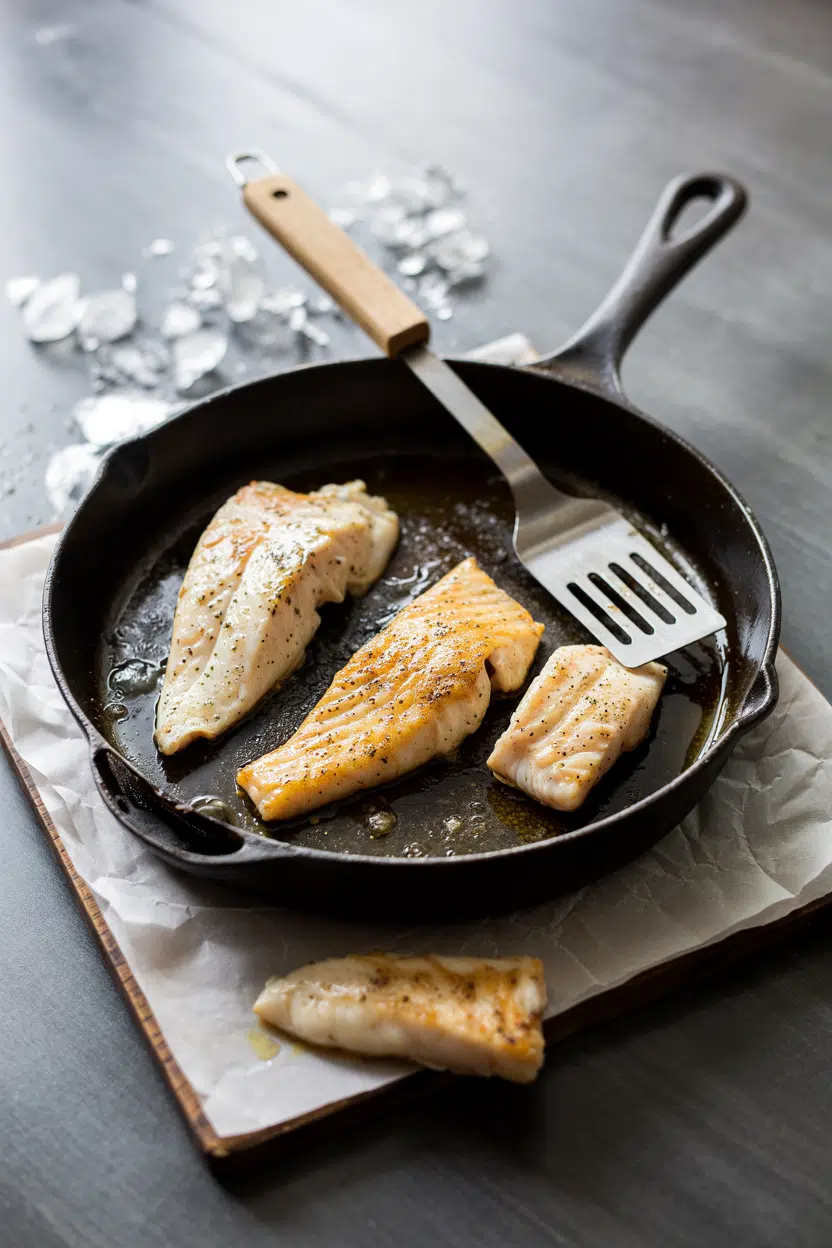
Farmed catfish tastes mild and slightly sweet, with a buttery quality that makes it easy to season in almost any direction. Think of it as sitting between tilapia and mild cod - firmer than tilapia, less flaky than cod, with a meatier bite. If you've tried tilapia replacements or sea bass alternatives, catfish often comes up as a practical match.
Wild catfish is a different proposition. Fish pulled from rivers or natural ponds can carry a pronounced earthy or muddy note - geosmin, a compound absorbed from algae and sediment in the water.
It's not spoilage; it's simply the environment the fish lived in.
Heat tightens the flesh and pushes the earthy notes forward, which is one reason bold coatings and spice work so well with this fish.
How to Use Catfish
Catfish holds up to aggressive heat and heavy seasoning in ways that more delicate white fish can't. Its firm texture won't fall apart in a hot skillet or a deep fryer, and its mild base flavor absorbs marinades and spice rubs without being overwhelmed.
| Method | Best For | Tip |
|---|---|---|
| 🍳 Deep-Fry | Southern-style fillets with crisp cornmeal crust | Dredge in seasoned cornmeal, not flour alone, for proper crust |
| 🔥 Blacken | Cajun-spiced fillets with smoky char | Use a cast-iron pan at near-smoking heat; butter baste at the end |
| 🍲 Stew/Braise | Tomato or okra-based broths, West African fish stews | Add fish last - it only needs 8-10 minutes to cook through |
| 🔥 Grill | Whole fish or thick fillets with smoky char | Oil the grates well; catfish skin tears easily if it sticks |
| 🫙 Bake | Lemon-herb fillets, foil-wrapped for moisture | 375°F for 15-18 minutes; don't overbake or it dries quickly |
Cornmeal breading is the classic pairing in the American South - coarser than flour, it fries up crunchier and holds the crust better. If you're experimenting with texture, cornmeal replacements like fine polenta or panko work as alternatives. Acidity is key with this fish: lemon juice, vinegar-dressed coleslaw, or pickles cut through the richness and brighten the plate.
For cuisines, catfish appears in Vietnamese canh chua (a tamarind-sour soup), Nigerian pepper stew, and Cajun étouffée-style preparations, as well as in straightforward Deep South fish fries.
It pairs well with okra, tomatoes, butter, garlic, and cayenne - practically everything that defines Southern and Creole cooking.
How to Buy and Store Catfish
At the counter, look for fillets that are pearly white to off-white - any gray tint is a warning sign. There should be no ammonia smell; a faint freshwater or neutral scent is fine.
Avoid anything slimy or with ragged edges from mishandling. For whole fish, check that the eyes are bright and clear, the flesh springs back under light pressure, and the barbels are intact.
Farmed catfish will almost always look cleaner and smell more neutral than wild. Once home, refrigerate fillets on a tray covered with plastic wrap and use within 1-2 days. For longer storage, freeze raw fillets in a single layer first, then vacuum-seal or wrap tightly. Properly frozen catfish holds quality for 4-6 months. A simple baked lemon-herb preparation works well for fillets you're cooking the day you buy them.
Start Here With Catfish
If you've never cooked catfish before, buy farmed. It's consistent, mild, and forgiving - you won't hit the muddy note that puts people off wild fish.
Dredge it in seasoned cornmeal and pan-fry it first. That single method will show you exactly what this fish does well.
From there, blackening is the natural next step. Once you're comfortable with the flavor, try a stew.
If you'd rather swap in something similar while you decide, catfish alternatives include mild options that cook the same way.
Frequently Asked Questions
Farmed catfish has very little "fishy" smell or flavor - it's mild, slightly sweet, and closer to tilapia than anything strongly marine. Wild catfish can taste earthier, but that comes from geosmin absorbed from sediment, not from the fish itself being strong or oily.
Yes, when fully cooked. U.S. farm-raised catfish is regulated and considered safe for regular consumption. Like all freshwater fish, it should never be eaten raw - cook to an internal temperature of 145°F to eliminate parasite risk.
Fresh fillets are pearly white to off-white with no gray areas and no ammonia smell. The flesh should look moist but not wet or slimy, with clean-cut edges rather than torn or ragged ones.
Most catfish sold in U.S. supermarkets is farm-raised, primarily from pond operations in Mississippi and Alabama. Wild catfish is available from river fisheries but is less common in retail and tends to have stronger, earthier flavor.
Up to 4-6 months at best quality when vacuum-sealed or tightly wrapped. Beyond that it's safe to eat but the texture degrades - freeze as quickly as possible after purchase for the best results.



