
Most people grab club soda without thinking twice, treating it as neutral filler behind whatever spirit or syrup takes center stage. That's the wrong read.
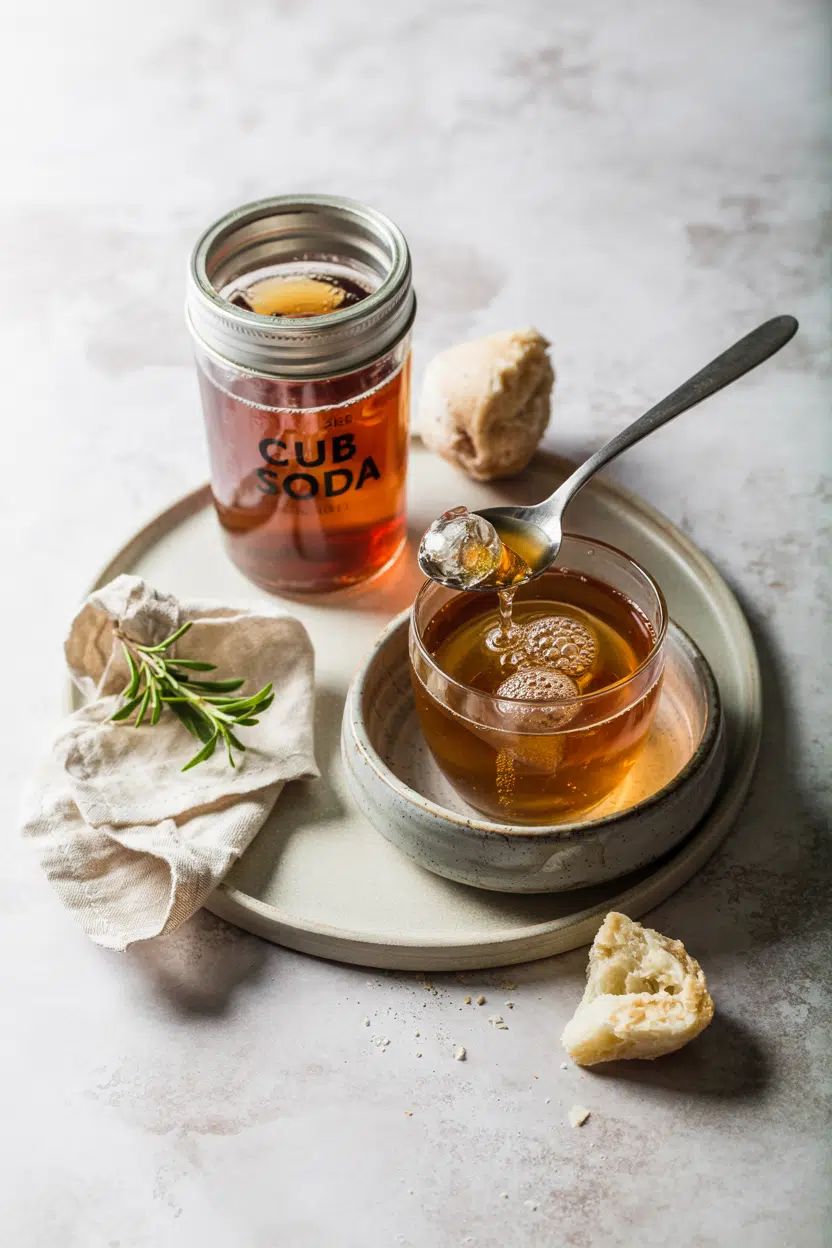
The added minerals - sodium bicarbonate, potassium sulfate, trace salts - give it a faint alkaline edge that plain seltzer lacks, and that distinction matters in everything from a whiskey highball vs cocktail to a tempura batter. Understanding what club soda actually is changes how you use it.
Club soda is carbonated water with added minerals - sodium bicarbonate, potassium sulfate, or sodium chloride - giving it a mild saline-alkaline bite that plain seltzer lacks. It's calorie-free, sugar-free, and works as a cocktail mixer, batter lightener, and finishing splash.
What Is Club Soda?
Club soda is water that has been carbonated with CO₂ and then infused with added minerals - typically sodium bicarbonate, potassium sulfate, or sodium chloride. That mineral addition is what separates it from plain seltzer, which is just CO₂-charged water with nothing else added.
Remember it later
Planning to try this recipe soon? Save it for a quick find later!
It originated in North American commercial beverage production and became a bar staple under names like soda water and club-water. You'll sometimes see it mislabeled as "sparkling water," though true sparkling water carries natural carbonation from a source, not an industrial process.
Several subtypes exist depending on brand formulation:
- Standard club soda - sodium bicarbonate dominant, mild alkaline note, widely available in cans and glass bottles
- High-mineral variants - extra potassium sulfate, slightly fuller mineral character, popular in European bistro service
- Low-sodium formulations - reduced bicarbonate for shoppers monitoring sodium intake without giving up carbonation
The carbonation level tends to be vigorous compared to many mineral waters, with persistent small bubbles rather than the large, fast-dissipating bubbles you get from cheap sparkling water.
What Does Club Soda Taste Like?
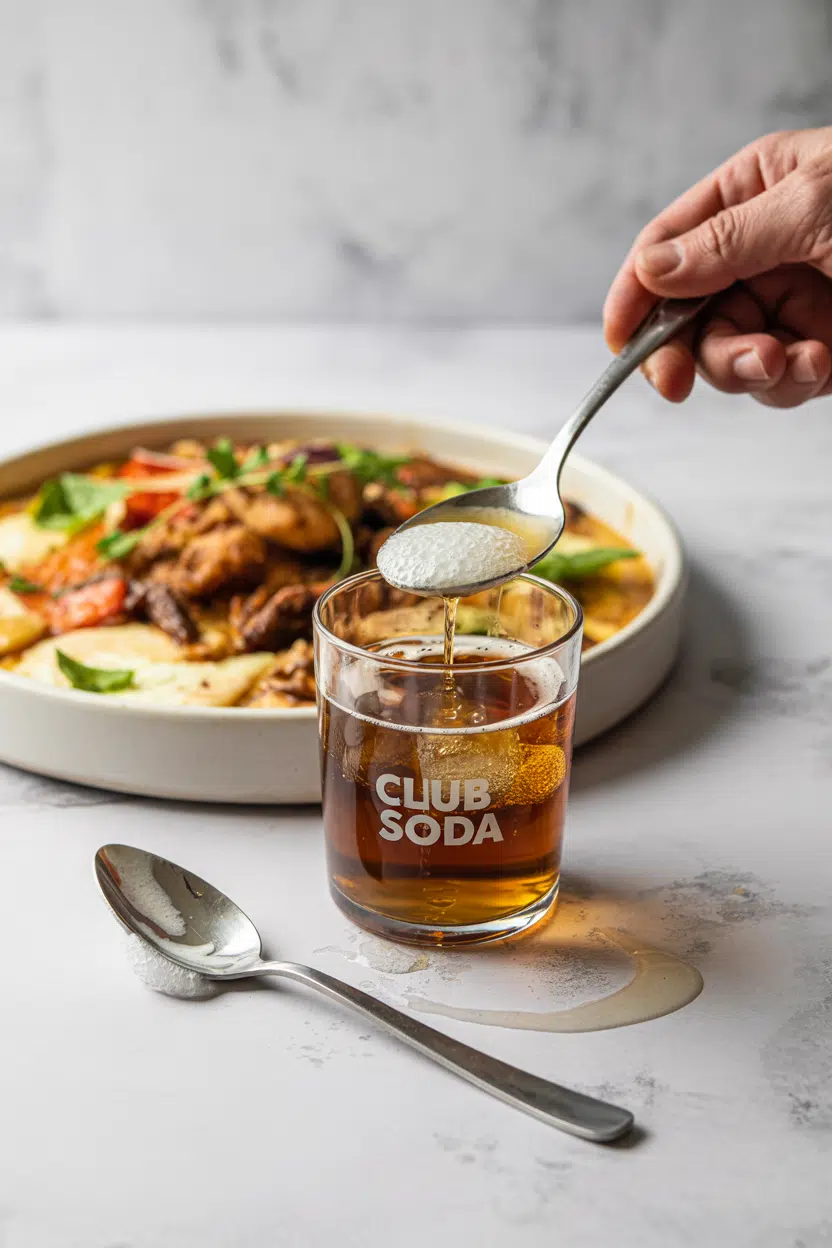
Club soda tastes cleaner and more neutral than tonic water vs ginger ale - no sweetness, no quinine bitterness. What you notice instead is a faint baking-soda tang on the back of the palate, followed by a light mineral bite that fades quickly.
That alkaline edge isn't sharp - most people wouldn't identify it blind without comparison. It becomes more noticeable when you sip club soda alone rather than mixed, or when you've had plain seltzer right before it.
Once opened, the flavor doesn't change dramatically, however the carbonation drops fast. Flat club soda still carries the mineral salts, so it retains a slightly rounded mouthfeel even after the fizz is gone - a texture plain flat water doesn't replicate.
How to Use Club Soda
Club soda earns its place in three distinct roles: beverage mixer, batter lightener, and finishing agent. Each depends on the carbonation staying active, so timing matters across all three.
| Method | Best For | Tip |
|---|---|---|
| 🥗 Cold Mix | Highball cocktails, spritz mocktails, diluted syrups | Add last, stir once gently to preserve bubbles |
| 🍳 Batter | Tempura, pancakes, beer-batter alternatives | Fold in just before frying - bubbles collapse within minutes |
| ✨ Finishing Splash | Cooked shellfish (shrimp, oysters), chilled fruit compotes | A small pour brightens without adding sweetness |
| 🍧 Cold Stir | Fizzy granitas, fruit salads with sparkle | Add immediately before serving - it loses fizz fast when stirred |
In cocktail work, club soda pairs cleanly with vodka, gin, and whiskey because it adds lift without sweetness. It also works well with citrus (lemon, lime) and fresh herbs like mint or basil in spritz-style mocktails.
For batter, the alkaline CO₂ bubbles create pockets that expand during frying, producing lighter, crispier coatings. Japanese tempura practice leans on this - some cooks chill their club soda further to slow bubble loss before folding it in.
One area to avoid: delicate emulsions that need oil-water bonding. The carbonation disrupts that structure and will break your foam or sauce.
How to Buy and Store Club Soda
Buy club soda in clear glass bottles or sturdy cans labeled explicitly as "club soda" or "soda water," and flip to the ingredient list to confirm added minerals are present.
Avoid dented cans or bottles with visible bulging - both signal compromised carbonation before you even open them.
Storage is straightforward:
- Unopened bottles/cans - store in a cool, dark pantry or refrigerator; carbonation stays stable until the best-by date
- Opened bottles - reseal tightly and refrigerate upright; the club soda freshness guide drops sharply once open, with peak fizz lasting only 1-3 days
- Cans - use in one sitting; partial cans can't be resealed effectively and go flat within hours
Skip plastic bottles if you're storing long-term. Glass and aluminum retain carbonation better than PET plastic.
Where to Start With Club Soda
If you've only used club soda as a generic mixer, start with a side-by-side taste test against plain seltzer. The difference is subtle but real, and recognizing it helps you choose the right one for each job.
From there, try it in a batter before you try it in a cocktail. The effect in frying is immediate and obvious - you'll see the difference in crispness before you've had a chance to second-guess anything.
Club soda also compares differently to beer than most people expect when used as a batter liquid - worth knowing if you're substituting in a beer-batter recipe.
Frequently Asked Questions
No. Both are carbonated water, however seltzer has no added minerals. Club soda contains sodium bicarbonate, potassium sulfate, or sodium chloride, which gives it a faint alkaline-saline note that seltzer lacks.
No calories, no sugar. The only nutritional variable is sodium, which ranges from negligible to moderate depending on how much bicarbonate the brand adds.
In cocktails, it works as a low-calorie swap but removes all sweetness and quinine bitterness. A gin and tonic made with club soda tastes noticeably drier and less complex.
The added minerals - primarily sodium bicarbonate or sodium chloride - produce a mild saline note. Some brands use more than others, so saltiness varies by formulation.
Peak carbonation holds for 1-3 days when resealed and refrigerated upright. After that it's safe to drink but noticeably flatter - fine for cooking, less ideal for mixing drinks.



