
You spot it at the deli counter - a massive, pale-pink cylinder flecked with white cubes and, sometimes, green pistachios. Mortadella is one of Italy's oldest and most recognized cured meats, and it's worth understanding before you order it thin or thick.

Unlike cold cuts that rely on smoke or heavy spicing, this one earns its character through emulsification, fat distribution, and centuries of technique.
Mortadella is a cooked, emulsified Italian pork sausage from Bologna with a mild, slightly sweet flavor, smooth texture, and visible pork fat cubes. It's served cold on panini, folded into pasta, or laid out for antipasti. Pistachio versions add a nutty layer. Best within 3-5 days of opening.
What Is Mortadella?
Mortadella is a cooked, finely emulsified pork sausage originating from Bologna, in the Emilia-Romagna region of Italy. It belongs to the charcuterie family of cured meats, though unlike prosciutto or salami, it's heat-processed rather than air-dried.
Remember it later
Planning to try this recipe soon? Save it for a quick find later!
The sausage is made by grinding pork shoulder to a very fine paste, then blending in cubed pork fat (lardons) before the mixture is stuffed into a large casing and slow-cooked.
That process gives mortadella its characteristic cross-section - a uniform pale-pink interior dotted with bright white fat cubes.
Several regional and commercial varieties exist:
- Mortadella di Bologna DOP - the protected designation of origin version; made with specific cuts, minimal additives, and traditional spicing including nutmeg and white pepper
- Mortadella with pistachios - a premium variant with whole pistachios folded into the paste, adding color and a mild nuttiness
- Mortadela - the Brazilian spelling and version, often slightly sweeter and more heavily spiced, popular in South America
- Italian-American bologna - a commercial descendant, more processed, less nuanced than the original
It's also sold as Bologna sausage in American delis, though the supermarket version rarely matches the quality of imported or artisan-produced mortadella. If you're comparing it to similar products, mortadella substitutes cover the closest alternatives.
What Does Mortadella Taste Like?
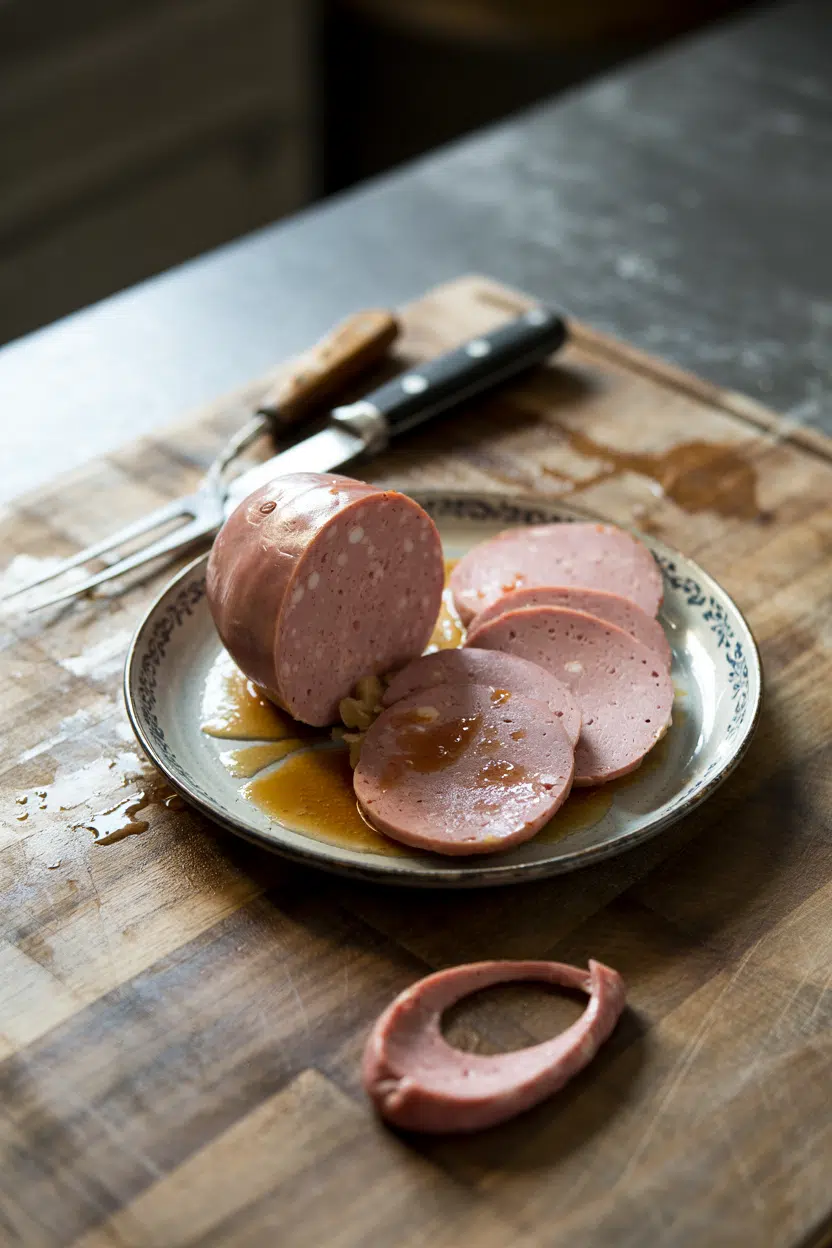
Mortadella's flavor is mild and gently savory, built on soft pork umami with a slight sweetness that comes from the curing process rather than added sugar. It doesn't hit hard - it settles in.
The white fat cubes aren't just visual - they melt slightly against the tongue, giving mortadella a creamy mouthfeel that distinguishes it from leaner deli meats. Compared to high-quality bologna, it's silkier and more refined.
Next to prosciutto, it's milder and less tangy, without the dry-cured sharpness.
Heat changes it subtly. Warmed briefly on a sandwich press, the fat softens further and the curing spices open up a touch more.
How to Use Mortadella
Mortadella is most at home served cold and sliced thin. A deli slicer set to near-transparent thickness produces the silkiest result, ideal for layering onto a panini with provolone and arugula or rolling around green olives for an antipasti spread.
It handles heat better than most people expect. Cubed small and briefly sautéed, it finishes a risotto with a fatty, savory note.
Folded into warm pasta off the heat - particularly egg-based dishes like a carbonara-style preparation - the fat from the cubes blends into the sauce without rendering out. Chopped into frittatas or omelets, it contributes savory richness without dominating.
| Method | Best For | Tip |
|---|---|---|
| 🥗 Cold/Sliced | Panini, antipasti boards, charcuterie plates | Slice as thin as possible; ask the deli counter for setting 1-2 |
| 🍳 Warmed | Pressed sandwiches, toasted focaccia | Brief heat only - 30 to 60 seconds - to soften fat without drying it out |
| 🍝 Folded into pasta | Egg-based pastas, pasta salads | Add off the heat so the fat emulsifies into the sauce rather than frying |
| 🥘 Sautéed cubes | Risotto finish, omelets, frittatas | Cut into small dice; cook briefly over medium heat just until edges color |
Pairings lean toward mild, complementary flavors. Provolone or fontina, crusty focaccia, pickled vegetables, and a Lambrusco - the lightly sparkling red from Emilia-Romagna - all balance mortadella's richness without overriding it.
Avoid strong, highly acidic dressings or heavy chili heat, which flatten the subtle cured notes completely.
How to Buy and Store Mortadella
At the counter, look for a pale-pink, even interior with clean white fat cubes and a glossy surface. Avoid any package showing slimy film, darkened edges, or a grayish tinge - those are signs of oxidation or age.
For the best product, seek out DOP-labeled mortadella di Bologna, which guarantees specific cuts, traditional spicing, and no excessive additives. A short ingredient list - pork, salt, spices - is the clearest signal of quality over a processed alternative.
If you need a backup for provolone cheese in your build, that's worth sorting before you shop.
Store mortadella vacuum-sealed or tightly wrapped at 34-40°F (1-4°C). Once opened, wrap it in parchment first, then plastic, or transfer to an airtight container to prevent odor transfer from other fridge items.
Opened slices keep for 3-5 days; unopened vacuum packs last significantly longer. For full timing details, the mortadella storage guide guide breaks down all scenarios.
Start With a Panini
New to mortadella? Buy a quarter-pound sliced thin from a deli counter that stocks DOP product.
Build a pressed sandwich with provolone, arugula, and a smear of mustard on focaccia. That single preparation shows you everything - the silky texture, the mild savory-sweet flavor, and why this sausage has held its place in Italian kitchens for centuries.
Frequently Asked Questions
Not exactly. American bologna is a commercial descendant of mortadella, but it's typically more processed, more finely ground, and less flavorful. Authentic mortadella di Bologna has visible fat cubes, DOP protection, and a silkier texture that mass-produced bologna doesn't replicate.
Those cubes are hard pork fat, called lardons, folded into the emulsified paste before cooking. They're what gives mortadella its creamy mouthfeel - they soften against the tongue and contribute most of the richness you taste.
Yes, though it performs best with brief, gentle heat. Cubed and sautéed, it finishes a risotto well. Folded into warm pasta off the heat, the fat blends in without rendering out. Avoid high, sustained heat - it dries out fast.
Opened slices keep 3-5 days in the fridge when wrapped tightly in parchment then plastic. Unopened vacuum-sealed packs last several weeks. Discard if you see a slimy surface or any gray discoloration at the edges.
Yes - sodium is high because curing salt is central to the preservation process. It's also notable in saturated fat from the pork fat cubes. Those on low-sodium or heart-conscious diets should treat it as an occasional item rather than a daily protein source.



