
Pinch kosher salt between your fingers and you notice it before you taste it - those broad, flat crystals have a satisfying coarse texture that table salt simply doesn't offer.
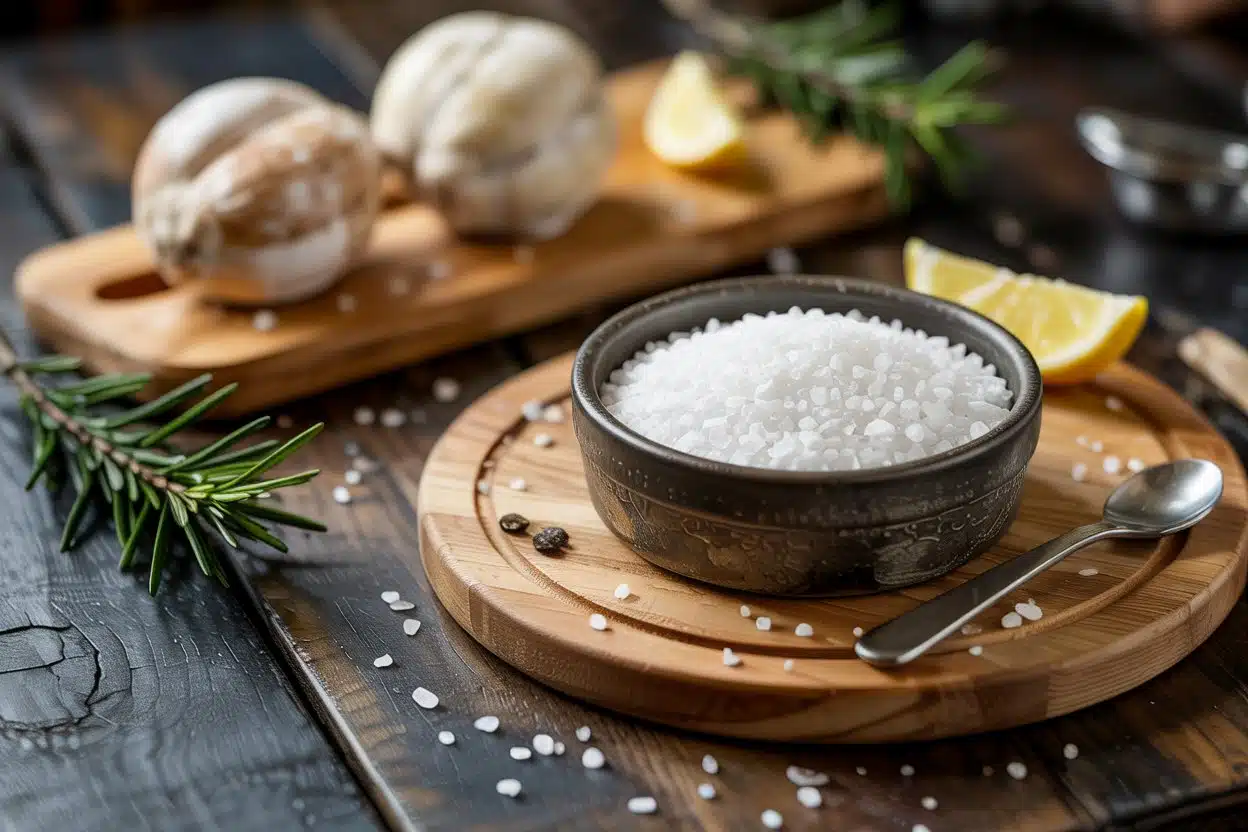
Press them against a raw steak and they cling there, drawing moisture upward, building the foundation of a proper crust.
That mechanical quality is the whole point.
Kosher salt is a coarse, additive-free sodium chloride with flat or hollow crystals. It seasons cleanly - no metallic or iodized bite - and works across dry rubs, brines, pasta water, and finishing. Lighter per teaspoon than table salt, so measure by weight when precision matters.
What Is Kosher Salt?
Kosher salt is a coarse-grained sodium chloride shaped into flat, plate-like crystals rather than the compact cubes of standard table salt.
Remember it later
Planning to try this recipe soon? Save it for a quick find later!
Its name comes from the Jewish koshering process - drawing blood from meat before cooking - where those wide, irregular crystals create surface contact that fine salt cannot replicate.
Most kosher salt contains no iodine and no anti-caking chemicals, which is why food professionals reach for it by default. Clean NaCl and nothing else.
Two main crystal geometries dominate the market. Diamond Crystal produces hollow, light flakes that float and cling; a teaspoon is noticeably lighter than its Morton equivalent. Morton kosher salt uses denser, harder crystals that pack more salt per unit volume.
Neither is wrong - they simply behave differently in recipes that call for volumetric measures.
You'll also see it labeled koshering salt or coarse salt in some older recipes and cookbooks.
What Does Kosher Salt Taste Like?
Kosher salt tastes clean. No iodized sharpness, no chemical undertone - just a straightforward, pure salinity that registers on the tongue and steps aside.
Compared to fine table salt, it feels milder per teaspoon because the larger crystals take up more volume with less actual sodium. Taste them side by side and the difference is subtle; measure them by the spoon and it becomes significant.
Used as a finishing salt, the crystals crack under a tooth before dissolving - that brief crunch is the sensory signature of surface seasoning done right. Heat dissolves it completely, leaving no trace of texture in cooked sauces or braises.
How to Use Kosher Salt
Kosher salt earns its place across nearly every stage of cooking, from raw prep to final plating. Its crystal geometry does real mechanical work - something finer salts can't replicate.
| Method | Best For | Tip |
|---|---|---|
| 🧂 Dry Rub | Steaks, chops, whole birds before grilling or roasting | Apply 45+ minutes ahead to let moisture return to surface |
| 💧 Brine | Poultry, pork, vegetables for pickling or fermentation | Use non-iodized kosher salt - iodine inhibits fermentation |
| ✨ Finishing | Roasted vegetables, salads, chocolate desserts, cocktail rims | Add at the last moment so crystals retain their crunch |
| 🍝 Cooking Water | Pasta, blanched greens, soaking beans | Kosher salt dissolves quickly; season water generously |
In American home and restaurant kitchens, it's the default seasoning salt. French technique uses coarse salt similarly - for roasting, for en-croûte preparations, for finishing grilled bread rubbed with olive oil.
Mediterranean cooking leans on it for brining, particularly with olives, eggplant, and whole roasted fish.
Pairings work best when the salt contrasts or amplifies - rosemary and garlic rubs on lamb, citrus zest with roasted carrots, butter and kosher salt finishing a pan sauce. The sweet-salt contrast it provides on chocolate and caramel desserts is one of the most reliable combinations in baking.
If you need a substitute in a pinch, kosher salt swaps depend on the application - finishing versus brine versus baking each calls for a different swap.
Salted Caramel Fudge BrowniesFinishing crystals hit every layer of the sweet-salt contrast→Salted Caramel Iced LatteA pinch sharpens the caramel and cuts sweetness cleanly→Chicken Saltimbocca with ProsciuttoSeason the chicken before layering - kosher salt won't over-brine the thin cutlet→
How to Buy and Store Kosher Salt
At the store, the main decision is crystal type. Diamond Crystal-style flat flakes are lighter and cling well to meat surfaces.
Morton-style dense crystals pack harder and measure saltier by volume. Check the label for additives - most quality brands list only sodium chloride, but some coarser "kosher-style" salts include anti-caking agents.
Storage is straightforward:
- Airtight container - keep the box sealed or transfer to a jar; loose salt absorbs kitchen humidity fast
- Cool, dry pantry - avoid storing near the stove or any steam source
- Away from strong odors - salt absorbs ambient smells if left uncovered
Kept dry, kosher salt freshness guide is effectively indefinite. Clumping is a moisture problem, not a spoilage one - break up clumps and the salt is still usable.
Where to Start with Kosher Salt
If you've been cooking with iodized table salt, switching to kosher salt for seasoning meat is the most immediate upgrade. Season a steak 30 minutes before cooking and notice how the surface dries and concentrates.
From there, try it as a finishing salt on roasted vegetables or a dark chocolate dessert - that's where the crystal crunch registers most clearly. Once you cook with it regularly, measure by weight, not volume.
That single habit prevents every recipe conversion headache.
Frequently Asked Questions
The name refers to the koshering process, not the salt's certification status. Its flat crystals draw blood from meat surfaces, fulfilling a requirement of Jewish dietary law. The salt itself may or may not carry a kosher certification depending on the brand.
Most brands do not. Kosher salt is typically sold as plain sodium chloride without iodine supplementation. If you rely on iodized salt as a dietary iodine source, you'll need to account for that separately.
Use weight, not volume. Six grams of table salt equals six grams of kosher salt regardless of crystal size. If you must convert by teaspoon, use roughly ¾ teaspoon table salt for every 1 teaspoon of Morton kosher salt, or ½ teaspoon for Diamond Crystal.
Crystal structure is the key difference. Diamond Crystal uses hollow, layered flakes that are lighter per teaspoon and dissolve faster; Morton uses denser, compressed crystals with more sodium by volume. Many professional recipes are written specifically for one brand - check before scaling.
Yes, as long as it contains no iodine or anti-caking agents. Iodine inhibits the beneficial bacteria needed for fermentation, and anti-caking additives can cloud brine. Always read the label before using kosher salt in preservation recipes.



