
You spot it on the baking aisle between the granulated and raw sugars - that slim bag labeled icing sugar, powdered sugar, or confectioners' sugar depending on where you live. It looks like plain white sugar, only finer, and most shoppers grab it without a second thought.
Understanding exactly what makes it different from caster sugar or brown sugar changes how you use it and what you expect from it.
Icing sugar is granulated sugar ground to a ultra-fine powder with a small amount of cornstarch added as an anti-caking agent. It dissolves almost instantly, making it the go-to sweetener for frostings, glazes, and dustings where a smooth, grit-free finish is required.
What Is Icing Sugar?
Icing sugar is granulated white sugar that has been milled to an extremely fine powder, then blended with a small percentage of cornstarch - typically around 3% - to prevent clumping.
Remember it later
Planning to try this recipe soon? Save it for a quick find later!
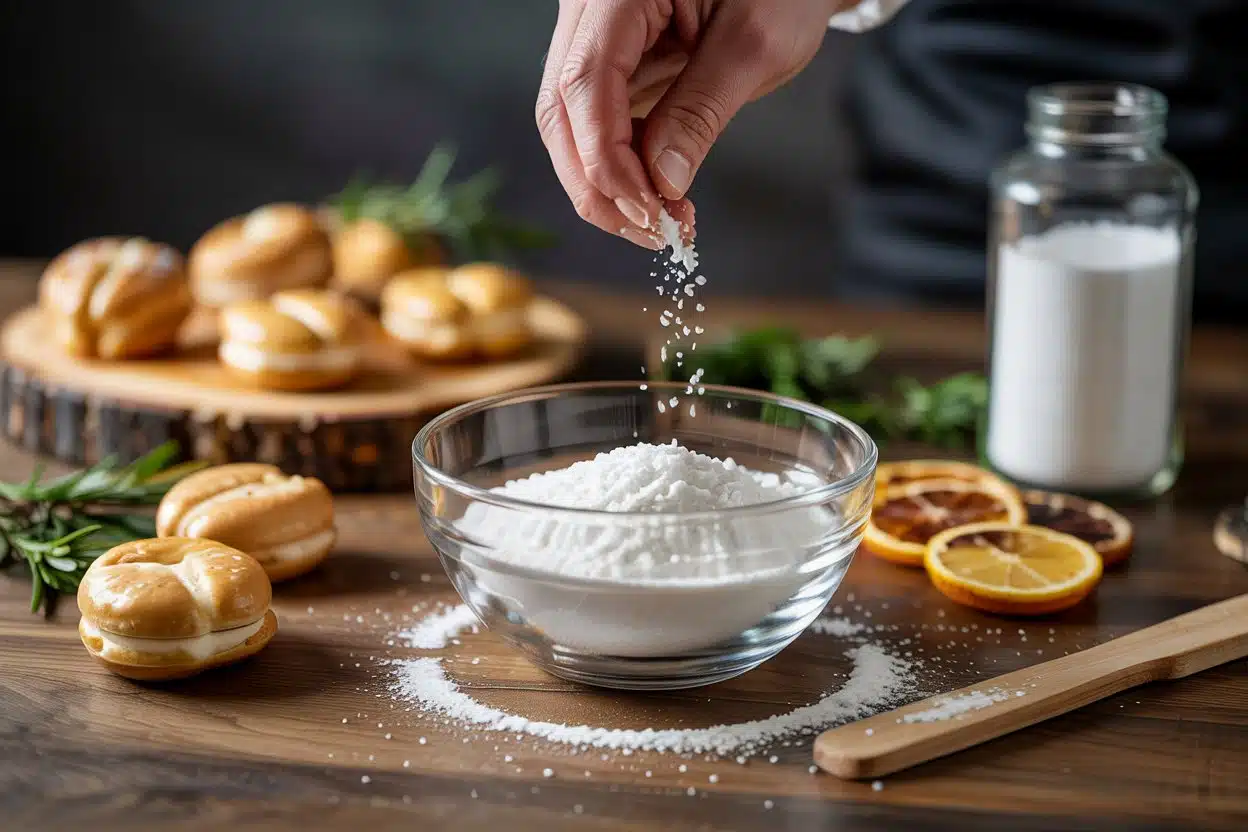
That cornstarch content is what separates it from plain powdered sugar in some markets, though the two names are used interchangeably almost everywhere.
It goes by several names depending on your region: confectioners' sugar in the United States, powdered sugar in casual American usage, 10X sugar in professional bakery contexts (the "X" indicating how many times it has been milled), and icing sugar in the UK, Australia, and Canada.
The finer the milling, the smoother it dissolves.
Unlike caster sugar, which still has a fine but perceptible crystal structure, icing sugar has no discernible grain at all.
It sits in the finely milled sugar category and is not interchangeable with granulated or caster sugar in recipes that rely on crystal structure for aeration.
What Does Icing Sugar Taste Like?
Icing sugar tastes clean and straightforwardly sweet - no molasses depth, no caramel warmth, nothing that competes with other flavors in a recipe. That neutrality is intentional and useful.
Eat it straight from a spoon and you get pure sweetness that dissolves almost before you can register its texture. At high concentrations - like in a stiff royal icing - a mild starchy aftertaste from the cornstarch becomes more noticeable.
Compared to granulated sugar, it reads as slightly less sharp on the palate because the particles are too fine to create that brief crystalline snap on the tongue. No bitterness, no complexity.
That blank-slate quality is exactly why it works in frostings where the butter or cream cheese carries the flavor.
How to Use Icing Sugar
Sifting first is non-negotiable for most applications - icing sugar compacts in the bag and will leave small lumps in buttercream if you add it straight. A fine-mesh sieve takes ten seconds and fixes the problem entirely.
| Method | Best For | Tip |
|---|---|---|
| 🧁 Whisking | Buttercream, cream cheese frosting, glazes | Add gradually - dumping it all at once creates a sugar cloud and uneven mixing |
| 🍩 Dusting | Doughnuts, crepes, tarts, waffles | Dust just before serving; it absorbs moisture and disappears on warm surfaces |
| 🍋 Whisking into glazes | Bundt cakes, scones, cookies | Add liquid slowly - icing sugar glazes tighten fast and are hard to thin once set |
| 🥛 Folding into cream | Stabilized whipped cream | Use 1-2 tablespoons per cup of cream to sweeten and stabilize without graininess |
In American baking, it's the standard for classic buttercream - beaten with butter and a splash of milk until light and spreadable. British patisserie uses it heavily for royal icing on celebration cakes, where a smooth white surface is essential.
French pastry relies on it for mille-feuille glazes and dusted tarts where the finish needs to be immaculate.
Pairing icing sugar with citrus juice or zest produces a sharp, glossy glaze that cuts through rich cakes. Combine it with cocoa powder for a quick chocolate drizzle without cooking anything.
Mixed into cream cheese with vanilla, it produces a frosting that holds shape without the graininess you'd get from granulated or even caster sugar.
One thing it won't do well: substitute in recipes that call for icing sugar alternatives requiring crystal structure to cream fat and trap air. That job belongs to granulated sugar.
Cinnamon Sugar Donut MuffinsA dusting of icing sugar on top finishes these cleanly→Cinnamon Sugar Roasted NutsSee how a powdered coating sticks and sets differently than granulated→Iced Brown Sugar Oat Milk LatteContrast: what brown sugar's molasses depth adds that icing sugar skips→
How to Buy and Store Icing Sugar
Look for a sealed bag or canister with a visible best-by date. The label should confirm the cornstarch content if you're buying for stability in royal icing or intricate decorating work.
Skip any package with visible moisture clumps, yellowing, or an off smell - those signal that humidity has already gotten in.
Storage is straightforward:
- Airtight container - a sealed tub or jar in a cool, dry pantry is all it needs.
- Away from humidity - keep it off the counter near the stove or kettle where steam collects.
- Away from strong odors - icing sugar absorbs ambient smells readily; don't store it next to spices.
- Shelf life - properly stored, it lasts 1-2 years without quality loss, similar to how granulated sugar stores long-term.
Clumped icing sugar isn't ruined. Sift it before use and it performs normally.
Where to Start With Icing Sugar
Start with a simple glaze - icing sugar mixed with lemon juice until pourable. It takes two minutes and shows you exactly how the ingredient dissolves, sets, and behaves on a warm cake surface.
If you need the sugar for frosting rather than glazes, try a basic two-ingredient buttercream: icing sugar beaten with softened butter. No cornstarch complications, no heat required.
Once you have those two uses down, everything else - royal icing, stabilized whipped cream, dusted finishes - follows the same logic.
If a recipe asks for something icing sugar can't do, like creaming fat for a layer cake, check cornstarch alternatives or swap guidance before assuming icing sugar will work.
Frequently Asked Questions
Yes, they're the same product. "Powdered sugar" is the common American term; "icing sugar" is used in the UK, Australia, and Canada. Both are finely milled white sugar, usually with cornstarch added.
It's granulated white sugar ground to a very fine powder, with roughly 3% cornstarch blended in to prevent clumping. Some brands sell a pure-sugar version without the cornstarch anti-caking agent.
Not directly in most baking recipes. Icing sugar lacks the crystal structure needed to cream with butter and trap air, so cakes made with it instead of granulated sugar will be denser. It works as a swap in no-heat frostings and glazes only.
Most commercial icing sugar does - cornstarch (called cornflour in the UK and Australia) is added at around 3% to prevent clumping. Check the ingredients list if you need a corn-free version, as pure-sugar alternatives exist.
Yes. Blend granulated sugar in a high-powered blender or spice grinder for 1-2 minutes until it reaches a fine powder. Add one teaspoon of cornstarch per cup to replicate commercial icing sugar's anti-caking stability.



