
Pimento cheese - that spread of sharp cheddar, mayo, and soft red pepper - shows up at Southern potlucks, steakhouse breadbaskets, and cocktail parties with equal confidence. The pepper responsible for that gentle sweetness and deep red color is the pimento pepper, a small, heart-shaped pod with thick walls and almost no heat.

It also hides inside every green olive you've ever eaten. Most people consume it regularly without knowing its name.
The pimento pepper is a mild, sweet red pepper from Spain with thick, meaty walls and virtually no heat. It's sold fresh, jarred, or roasted and appears in everything from olive stuffing to pimento cheese spread.
What Is Pimento Pepper?
The pimento pepper - also written as pimiento - is a small, heart-shaped sweet pepper (Capsicum annuum) native to Andalusia and the Canary Islands of Spain.
Remember it later
Planning to try this recipe soon? Save it for a quick find later!
It sits in the same family as red bell peppers but has notably thicker walls, a rounder body, and a denser, more concentrated flesh.
Fresh pimentos grow to roughly two to three inches long and ripen to a deep, glossy red. You'll find them sold three ways: fresh at specialty markets, roasted and packed in oil, or sliced and jarred in brine.
The jarred version is by far the most common in North American grocery stores.
A few naming notes worth knowing:
- Pimento vs. pimiento - both spellings are correct; "pimiento" is the Spanish original, "pimento" the anglicized version
- Cherry pepper confusion - red cherry peppers share a similar round shape but carry noticeably more heat; they are not the same thing
- Smoked paprika connection - Spanish pimentón (the smoked paprika used in chorizo and stews) is made by drying and smoking pimiento peppers
What Does Pimento Pepper Taste Like?
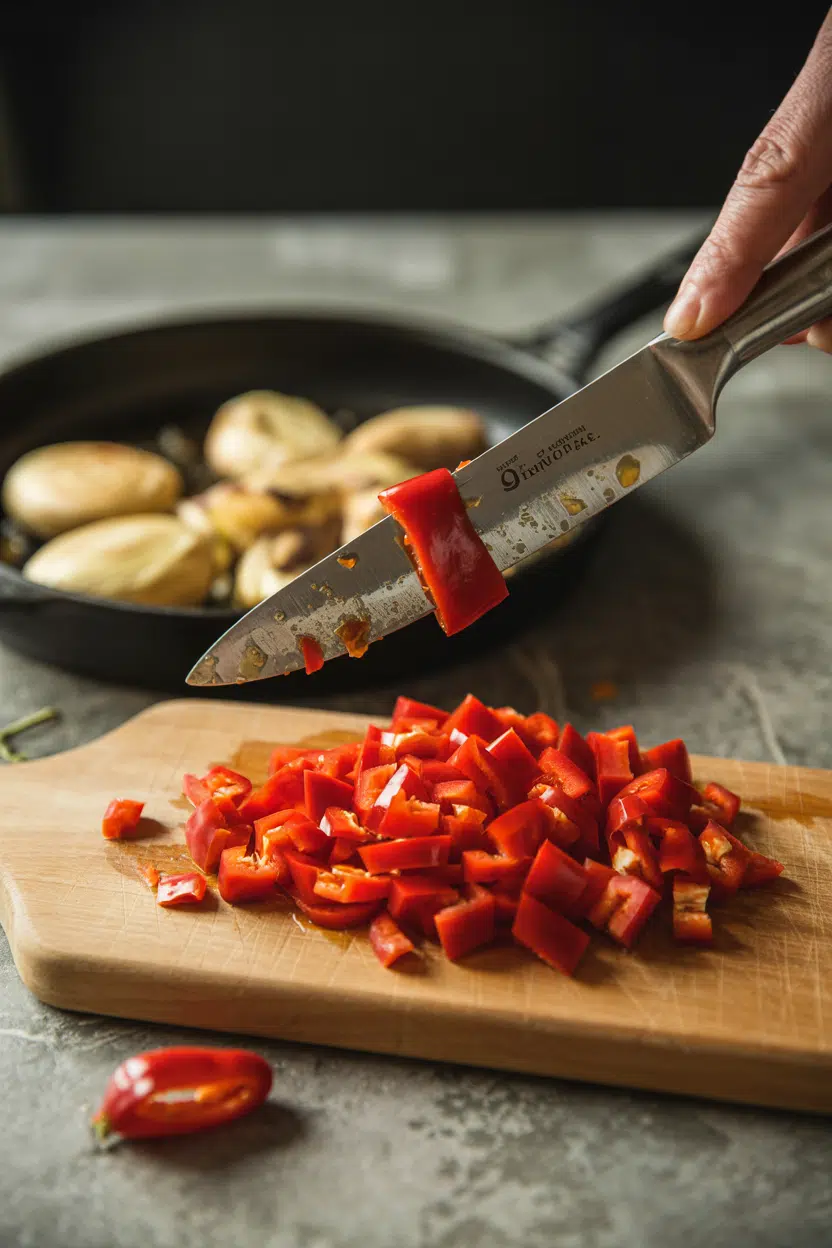
The dominant note is mild, clean sweetness - rounder and more concentrated than a red bell pepper, without any of the slight bitterness bell peppers can carry. Raw, there's a faint vegetal freshness underneath.
Roasting deepens everything. The natural sugars caramelize, the flesh softens to a silky give, and a mild smokiness develops at the skin. Jarred pimentos take on a gentle tang from the brine - not sour, just bright enough to cut through rich cheeses or creamy spreads.
Heat level is essentially zero; pimentos contain negligible capsaicin, which is why they work so well in dishes designed for people who want pepper flavor without any burn.
How to Use Pimento Pepper
Pimentos are one of the few peppers that work equally well raw, roasted, pureed, or pickled. Their thick walls hold up to long cooking without dissolving, and their sweetness rarely clashes with surrounding ingredients.
| Method | Best For | Tip |
|---|---|---|
| 🥗 Raw | Potato salads, cold pasta salads, diced into spreads | Slice thin - raw walls are firm and chewy if cut thick |
| 🍳 Roasted | Tapas, antipasto, sandwiches, romesco sauce | Char under a broiler, steam in a bag, then peel; skin removes cleanly |
| 🫙 Jarred/Brined | Pimento cheese, pizza, olive stuffing, deviled eggs | Pat dry before folding into spreads - excess brine thins the texture |
| 🫕 Pureed | Sauces, aioli, blended dressings | Roasted pimentos blend smoother than raw for a silkier result |
Pimento cheese is the most iconic application in American cooking - sharp cheddar, cream cheese or mayo, and diced or pureed pimentos, served on white bread or as a dip. In Spanish cooking, roasted pimientos appear on tapas boards alongside anchovies, olive oil, and crusty bread. They're also central to Spanish romesco sauce, which blends them with toasted almonds, tomato, and garlic.
The pepper pairs naturally with sharp cheddar, garlic, smoked paprika, capers, grilled meats, and smoked fish. Olive oil and lemon sharpen the sweetness without competing.
For similar mild-sweet pepper options in a pinch, pimento pepper alternatives include jarred roasted red bells and jarred peppadews, though neither has quite the same density.
How to Buy and Store Pimento Pepper
Fresh pimentos appear in specialty markets and some farmers' markets in late summer. Look for firm, glossy red pods with thick walls and no soft spots or wrinkling - that's your sign they've been sitting too long.
For jarred pimentos, the brine should be clear, not cloudy, and the flesh should show uniform deep red color throughout.
Storage is straightforward:
- Fresh whole pimentos - refrigerate in a perforated bag in the crisper drawer; use within 1-2 weeks
- Unopened jarred/canned - store in the pantry; shelf life runs several months to well past a year
- Opened jar - cover tightly and refrigerate; the pimento pepper storage guide after opening runs about 2-3 weeks
For longer-term needs, red bell peppers roasted and packed under olive oil behave similarly - though they're thinner-walled and milder in sweetness.
Where to Start With Pimento Pepper
If you've never cooked with pimentos intentionally, jarred is the right entry point. No roasting, no peeling, just open and use.
- Make pimento cheese first - it's the fastest way to understand how the pepper's sweetness plays against sharp, salty dairy
- Add diced pimentos to potato salad - they fold in without overpowering, adding color and a round, sweet note
- Try roasting fresh ones if you spot them at a market - char, peel, and dress with olive oil and flaky salt as a stand-alone side
Once you've tasted the difference between a jarred pimento and a roasted-from-fresh one, you'll know which form your recipes actually need.
Frequently Asked Questions
Yes - same pepper, different spelling. "Pimiento" is the original Spanish word; "pimento" is the anglicized version used widely in the United States. Both refer to the same small, sweet, heart-shaped red pepper.
Sweet, with virtually no heat. Pimentos register near zero on the Scoville scale, making them one of the mildest peppers available. They're specifically chosen for olive stuffing because they add flavor without any burn.
About 2-3 weeks refrigerated once opened. Keep them submerged in their brine with a tight lid. Discard if the brine turns cloudy or the flesh shows any discoloration.
Yes, though texture softens significantly after thawing. Freeze roasted or raw pimentos on a sheet tray first, then transfer to a bag. Use thawed pimentos in cooked dishes or pureed sauces - not raw applications.
Pimentos have thicker walls and a sweeter, denser flesh than red bell peppers. Bell peppers are larger with thinner walls and a slightly more vegetal, less concentrated flavor. In most recipes they're interchangeable, but pimentos give a richer result.



