
Orzo does something no other small pasta quite manages: it reads like a grain, cooks like pasta, and absorbs broth the way rice does in a well-made pilaf.

That triple-duty quality makes it one of the most practical shapes in the pantry, whether you're finishing a weeknight soup, building a cold lunch salad, or looking for a creamy base that lands somewhere between arborio rice and a classic pasta bake.
Orzo is a rice-shaped durum wheat pasta with a mild, slightly nutty flavor and firm, chewy bite. It boils like pasta, absorbs broth like rice, and suits soups, salads, pilafs, and bakes. Shelf life runs 12-24 months unopened.
What Is orzo?
Orzo is a short-cut pasta shaped like a large grain of rice, made from durum wheat semolina. Despite its appearance, it belongs firmly in the pasta category - same dough, same cooking behavior, same starch release.
Remember it later
Planning to try this recipe soon? Save it for a quick find later!
The name comes from the Italian word for barley, referencing its shape rather than its ingredients.
In Italy, the same shape is often sold as risoni - "large rice" - and appears in regional soups and brothy dishes. Greek cooking adopted it heavily, most famously in avgolemono-style soups and baked casseroles.
Middle Eastern and Turkish cooks use risoni in pilafs and stuffed vegetables alongside or in place of rice.
Orzo comes in a few forms worth knowing:
- Standard semolina orzo - the most common; smooth, pale yellow, all-purpose
- Whole-wheat orzo - slightly earthier in flavor, higher in fiber, less common in stores
- Enriched/fortified orzo - standard semolina with added iron and B vitamins
- Gluten-free orzo - made from rice or corn flour; texture differs noticeably from the wheat version
What Does orzo Taste Like?
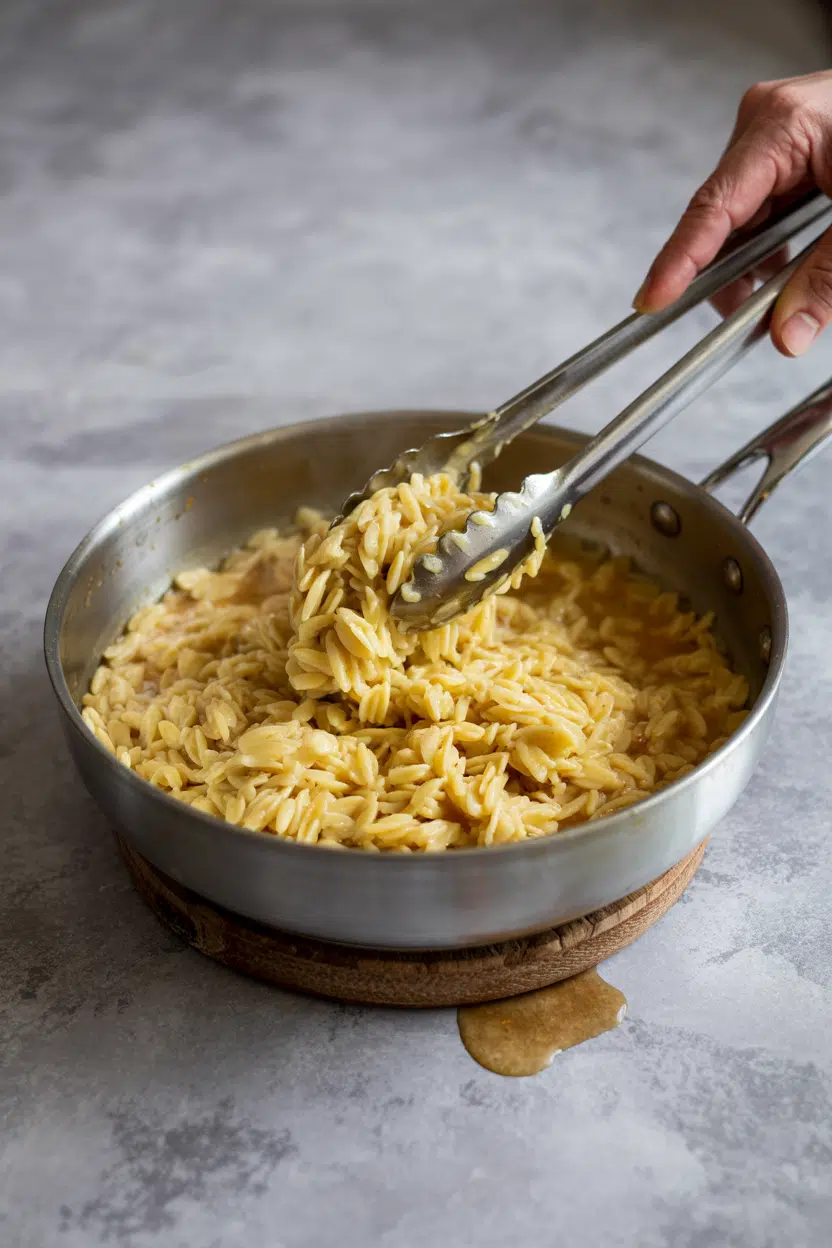
Orzo has a mild, wheaty flavor with a faint nuttiness from the semolina - subtle enough that it takes on the character of whatever it's cooked in.
Compared to most rice varieties, it reads slightly more neutral, with less of the grassy or starchy notes you get from long-grain white rice.
Texture shifts significantly with method. Boiled and drained, it stays firm with a grain-like chew. Stirred into soups or cooked risotto-style, it releases starch slowly and turns creamy without becoming mushy.
Toasting it dry in oil before adding liquid lifts the aroma noticeably - a brief, nutty warmth that plain boiling doesn't produce.
How to Use orzo
Orzo's mild flavor makes it one of the more adaptable small pastas in the kitchen. Its starch behavior sits between standard pasta and Arborio rice, which is why it works in preparations borrowed from both worlds.
If you're already comfortable cooking couscous replacements, orzo fits into many of the same roles with even better broth absorption.
Greek and Italian cooks have the longest track record with it. In Greek cooking, it finishes soups, bakes into casseroles layered with meat and béchamel, and appears in avgolemono where its starch helps thicken the egg-lemon broth.
Italian regional cooking uses risoni in minestrone and brothy vegetable soups. American adaptations lean toward cold orzo salads and creamy baked dishes.
| Method | Best For | Tip |
|---|---|---|
| 🍳 Toasted then simmered | Pilafs, side dishes, grain bowls | Use a 1:2 ratio of orzo to broth; don't stir too often |
| 🥗 Boiled and chilled | Salads with feta, herbs, lemon | Rinse after draining to stop cooking and prevent clumping |
| 🍲 Added to soup | Chicken soups, seafood stews, minestrone | Add in last 8-10 minutes; it swells and absorbs broth quickly |
| 🥘 Baked in casserole | Gratins, orzo mac-and-cheese, stuffed peppers | Partially cook before baking so it doesn't absorb all moisture |
Orzo pairs well with lemon, olive oil, feta, dill, parsley, chicken, tomatoes, and seafood. It holds up to roasted vegetables and integrates naturally into a lemon-herb pilaf format.
Avoid pairing it with very heavy cream-and-fat sauces that bury its neutral character without adding anything in return.
How to Buy and Store orzo
Look for packages where the pieces are uniformly shaped and intact, with no powdery residue at the bottom. Check the ingredient list - "semolina" or "durum wheat semolina" should be the first item.
Broken pieces cook unevenly and release excess starch, which clouds soups and makes salads gluey.
Storage is straightforward:
- Unopened - keep in its original sealed bag in a cool, dry pantry; lasts 12-24 months
- Opened - transfer to an airtight container immediately; use within 6-12 months
- Cooked - refrigerate in a sealed container for up to 4 days; toss with a little oil to prevent clumping
For a full breakdown of how long it keeps under different conditions, see our guide to orzo freshness guide. Cooked orzo salads have a shorter window - check the orzo salad storage life guide if you're prepping ahead.
Start Here With Orzo
New to orzo? Toast it in olive oil first, then simmer in chicken broth. That single method - pilaf-style - teaches you how it absorbs liquid, how it builds texture, and when to pull it before it overcooks.
From there, soup and salad applications follow naturally. If you want to swap it into a dish that currently calls for rice or another small grain, the orzo swaps guide covers ratios and method adjustments worth checking before you start.
Frequently Asked Questions
Pasta. It's made from durum wheat semolina dough, extruded into a rice-like shape. The resemblance to rice is purely visual - its starch structure, cooking behavior, and gluten content are all identical to standard pasta.
Boiled in salted water, orzo reaches al dente in 8-10 minutes. Added directly to soup, it takes roughly the same time but absorbs broth as it cooks, so check at 8 minutes to avoid overcooking.
Yes, in most applications. Pilafs, stuffed peppers, grain bowls, and soups all work well with a straight swap. Use slightly less liquid than you would for rice - orzo absorbs broth faster and can turn mushy if the ratio is too high.
Orzo is slightly more neutral than most rice varieties, with a faint wheaty nuttiness from semolina. It lacks the grassy or floral notes of jasmine rice and the earthy depth of brown rice.
No. Standard orzo is made from durum wheat and contains gluten. Rice- or corn-based gluten-free versions exist but cook differently and have a softer, less chewy texture than wheat orzo.



