
That first sip carries a sharp, candied brightness - dried orange peel meeting sweet syrup, with just enough bitter pith underneath to keep it honest. Triple sec sits behind some of the most recognizable cocktails on any menu, and understanding what it actually tastes like changes how you use it.
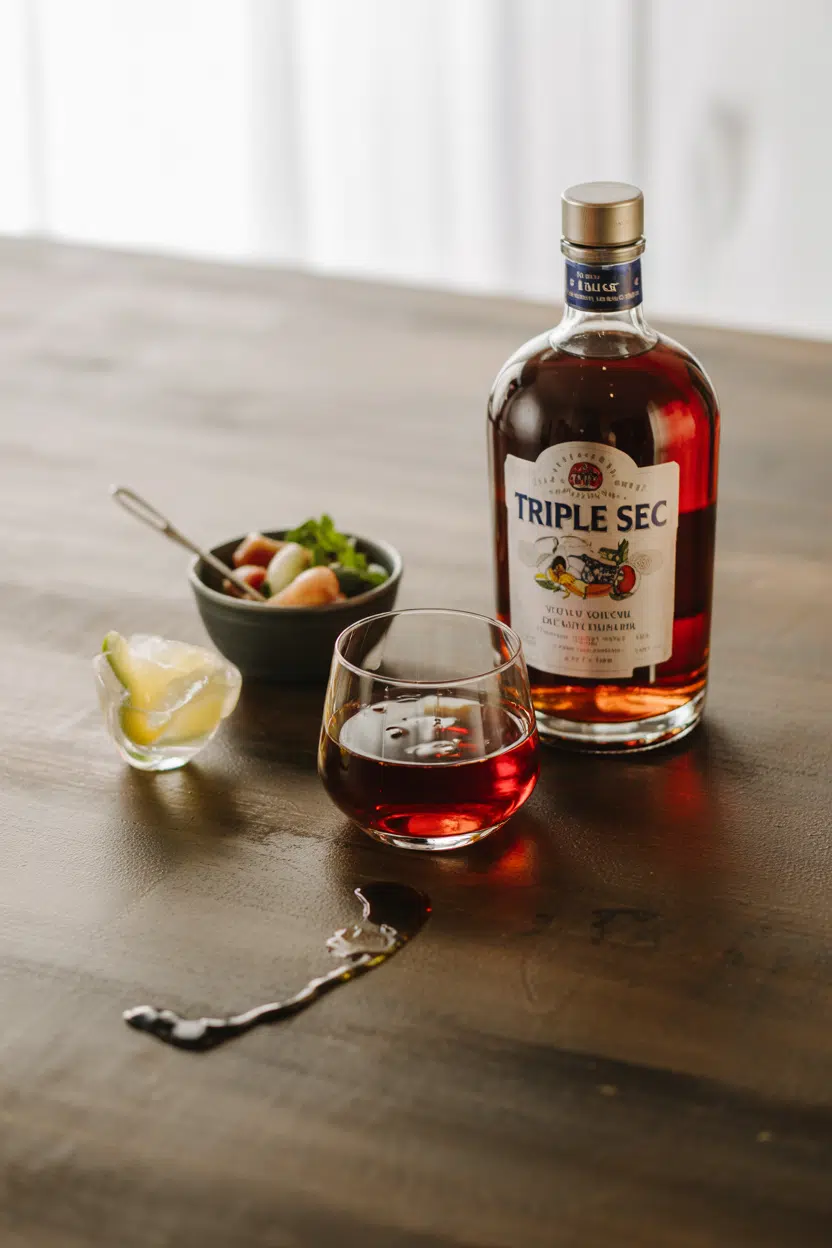
If you've wondered how it compares to other orange bitters replacements or grand marnier swaps, this profile covers everything from flavor to shelf life.
Triple sec is a clear orange liqueur made from dried orange peels, used primarily as a citrus-sweet component in cocktails and some sauces. It tastes sweeter and softer than Cointreau, with a candied orange profile and mild bitter finish.
What Is Triple Sec?
Triple sec is a clear orange liqueur made by macerating and distilling the dried peels of both bitter and sweet oranges, then blending the distillate with sugar and neutral spirit. It originated in 19th-century France, with Maison Combier widely credited as an early commercial producer.
Remember it later
Planning to try this recipe soon? Save it for a quick find later!
The name likely refers to a triple distillation process, though the exact etymology is debated.
ABV ranges widely - from around 15% in budget bottles up to 40% in premium expressions. That range matters in cocktails, since a low-ABV version adds sweetness without much alcohol punch, while a stronger bottle contributes both.
Triple sec is often grouped with curaçao-style liqueurs, which also use dried orange peel. Here's how the main types compare:
- Standard triple sec - Widely available, clear, 15-25% ABV, noticeably sweet, budget to mid-range price
- Cointreau - A premium triple sec at 40% ABV, drier, more spirit-forward, sharper orange finish
- Curaçao - Can be clear or colored (blue, orange), sourced from laraha peel, slightly more complex bitter note
- Grand Marnier - Cognac-based orange liqueur, amber, richer and oakier than standard triple sec
What Does Triple Sec Taste Like?
Triple sec leads with bright, candied orange peel - the kind of sweetness you associate with orange hard candy rather than fresh juice.
A clean citrus backbone runs underneath, and there's a brief flutter of bitter pith at the finish that prevents it from tasting flat or one-dimensional.
Compared to Cointreau, standard triple sec tastes noticeably sweeter and less boozy - the spirit doesn't cut through as sharply.
In cooking, heat softens the bitter note further and amplifies the syrupy orange character, which works well for reductions but can turn cloying if you overdo it.
How to Use Triple Sec
Triple sec earns its place primarily in classic cocktails. It bridges the tart and the sweet - in a Margarita it softens lime acidity while keeping the tequila front and center, and in a Sidecar it balances cognac's weight with just enough citrus lift.
The Cosmopolitan uses it for orange depth alongside cranberry. If you need to rework a recipe, there are solid triple sec alternatives worth considering.
Beyond cocktails, triple sec moves into the kitchen more easily than most people expect. French-influenced cooking uses it in pan sauces for duck and pork - deglaze after searing, reduce briefly, and the liqueur's sugar and citrus tighten into a gloss.
Contemporary dessert work folds it into custards, whipped creams, or cake glazes where a straight orange extract would smell artificial.
| Method | Best For | Tip |
|---|---|---|
| 🍹 Cocktails | Margarita, Cosmopolitan, Sidecar, daiquiri variations | Use a higher-ABV triple sec so the spirit isn't lost in the mix |
| 🍳 Deglazing | Pan sauces for duck, pork, chicken | Add off-heat first, then return to flame to avoid flare-up |
| 🎂 Glazes & reductions | Cake soaking syrup, fruit glazes, tart fillings | Reduce with equal sugar over medium heat until slightly thickened |
| 🔥 Flambéing | Crêpes Suzette-style desserts, plated fruit | Warm gently before igniting - cold liqueur won't catch easily |
| 🥗 Marinades | Stone fruit, citrus-forward vinaigrettes | Pair with lime zest and a neutral oil to keep orange flavor bright |
Avoid pairing triple sec with strongly tannic red wines - the bitter orange oils clash rather than complement. It also overwhelms delicate green teas.
Stone fruit (peaches, apricots) and dark chocolate are natural fits, as is ginger in both cocktail and savory applications.
How to Buy and Store Triple Sec
ABV is your first checkpoint. A bottle labeled 15% works fine for desserts and low-proof applications, however anything going into a spirit-forward cocktail should sit at 30-40% ABV. Check for a clean, pronounced orange-peel aroma when you can - bottles that smell medicinal or solvent-like signal lower-quality oils.
When comparing triple sec to drier premium options, reviewing cointreau replacements can help you land on the right ABV and sweetness level for your recipe.
- Unopened - Stores well for several years in a cool, dark location
- Opened - Best quality within 12-24 months; the triple sec storage life extends further, though aroma fades
- Storage position - Upright, away from heat sources, cap sealed tightly to prevent alcohol evaporation
Where to Start with Triple Sec
A classic Margarita is the fastest way to understand what triple sec actually contributes - lime, tequila, and triple sec with no distractions.
From there, try it in a pan sauce reduction, where the sugar and agave vs simple syrup question becomes relevant if you're adjusting sweetness levels.
If the sweetness feels like too much, step up to Cointreau or try a drier curaçao-style bottle. Standard triple sec suits high-volume batching and dessert glazes particularly well - it's where the sweetness is an asset rather than a problem.
Frequently Asked Questions
No. Cointreau is a specific brand of triple sec made at 40% ABV with a drier, more spirit-forward profile. Standard triple sec is sweeter, lower in alcohol, and less complex - it's a category, not a single product.
ABV ranges from about 15% in budget bottles up to 40% in premium expressions like Cointreau. Most widely available grocery-store bottles sit between 20-25% ABV.
Yes. Cointreau, curaçao, or a mix of fresh orange juice and simple syrup all work. Each changes the sweetness and alcohol balance slightly, so adjust lime juice accordingly.
It won't spoil in a way that makes it unsafe, but aroma and flavor fade after opening. An opened bottle held past 24 months often smells flat - the citrus oils degrade before the alcohol does.
The Margarita, Cosmopolitan, Sidecar, and Long Island Iced Tea all call for it. It also appears in the White Lady and various tiki-style drinks where orange sweetness balances rum or gin.



