
Leek does something that neither onion nor shallot fully replicates: it melts into a dish without announcing itself.
Where onion asserts and garlic dominates, leek settles quietly into the background, building sweetness and depth that holds the whole thing together. Soups, braises, quiches, risottos - leek is the allium you reach for when you want presence without heat.
Leek is a mild, sweet allium from the Mediterranean. It tastes like a gentle onion with a faint garlic undertone. Best cooked low and slow, it builds silky texture and rounded flavor. Use it in soups, braises, tarts, and risottos. Raw, it works as a thin-sliced garnish. Keeps up to two weeks refrigerated.
What Is Leek?
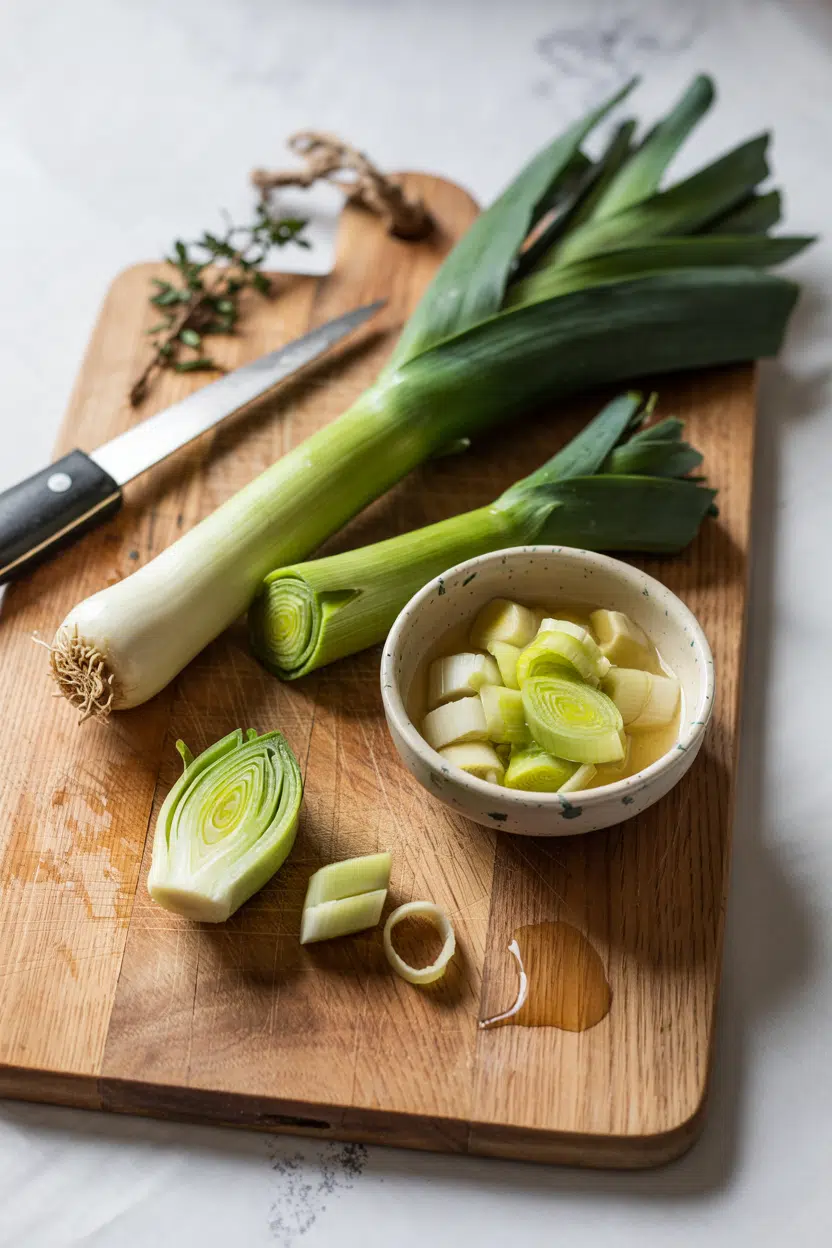
Leek is a long, cylindrical allium - the same botanical family as onion, garlic, and chives - formally classified as Allium ampeloprasum var. porrum. It grows as a tightly bundled shaft rather than forming a round bulb.
Remember it later
Planning to try this recipe soon? Save it for a quick find later!
The plant has three distinct zones. The white shaft at the base is the most tender and prized part.
The pale to light-green collar above it is usable in most cooking. The stiff, dark-green flat leaves at the top are fibrous and sharp-tasting - they go into stocks but rarely onto the plate.
Leek goes by poireau in French kitchens and porro in Spanish, reflecting its deep roots in European cooking. Several cultivar groups exist, broadly divided into summer-harvest types (slender, milder) and winter-harvest types (thicker, more robust), though both taste nearly identical once cooked.
- White shaft - the most tender section, sweetest flavor, used in everything
- Light-green collar - slightly tougher but fully edible; fine for soups and sautés
- Dark-green leaves - fibrous and strong; best reserved for stock
What Does Leek Taste Like?
Raw leek has a low-sulfur pungency - noticeably allium, with a crisp bite and faint grassiness, but nowhere near as sharp as a raw onion. Thin-sliced over a salad, it registers as clean and mildly sharp.
Heat changes it entirely. Slow sweating or braising converts the fibrous white shaft into something soft and almost silky, with a sweetness that's closer to caramelized onion than anything green.
A faint garlic undertone stays throughout; the grassy note disappears.
Think of it as a mild onion blended with a hint of garlic and a whisper of celery leaf. That's the closest comparison, and it holds whether the leek is raw or cooked.
How to Use Leek
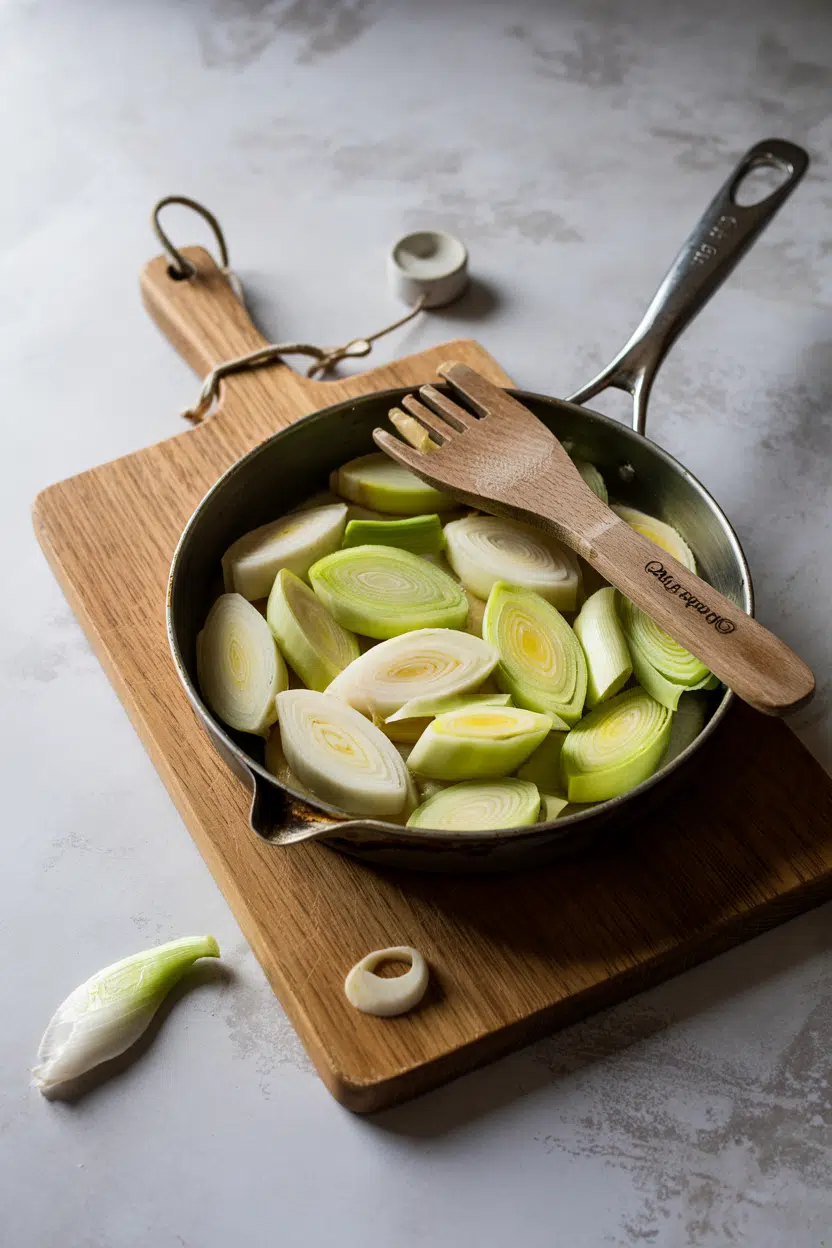
Sweating is the foundational method - low heat, a lid or cover, and a generous knob of butter. Done right over 10 to 15 minutes, leek softens fully and releases its sweetness without browning. This is the base for vichyssoise, the classic cold potato-leek soup, and for countless French-style braises.
Leek pairs best with potato, butter or cream, thyme, bacon or pancetta, Gruyère or cheddar, white wine, and mushroom. These pairings show up across French, British, Welsh, and Eastern European kitchens - all cuisines where leek is a staple rather than an afterthought.
If you need a substitute, other mild alliums like shallots or fennel bulb come closest to leek's gentle sweetness. Avoid raw strong onion as a direct swap - it overwhelms dishes where leek was chosen specifically for restraint.
| Method | Best For | Tip |
|---|---|---|
| 🍲 Sweating | Soup bases, braises, risotto | Keep heat low; cover the pan to trap steam |
| 🥘 Braising | Whole stalks as a side dish | Use butter and stock; finish with a little cream |
| 🔥 Grilling/Charring | Smoky side dish, warm salads | Halve lengthwise; char cut-side down first |
| 🥧 Baking | Quiche, tarts, savory pastry | Pre-sweat before adding to custard to avoid excess moisture |
| 🥗 Raw | Thin-sliced garnish, fresh salads | Use only the white shaft; slice paper-thin |
How to Buy and Store Leek
Choose leeks with a firm, tight white shaft and a crisp light-green collar. The shaft should feel heavy and solid, not spongy.
Avoid any leek with yellowing leaf tips, a slimy base, or a strong sulfur smell - all signs of age.
Don't wash leeks before refrigerating. Moisture accelerates decay.
Wrap them loosely in a perforated plastic bag or paper and store in the crisper drawer.
Whole, unwashed leeks hold well for one to two weeks in the fridge. Once trimmed or sliced, use them within three to five days.
For longer storage, blanch and freeze sliced leeks - they hold their flavor for up to three months, though texture softens.
Where to Start With Leek
Leek rewards patience more than technique. If you've never cooked with it, sweat a sliced white shaft in butter over low heat until it collapses and turns translucent - about 12 minutes.
That single step shows you everything leek can do.
From there, add potato and stock for a simple soup, fold into a quiche, or braise whole stalks alongside chicken. Those who find standard onion too sharp will often find leek is the green onion substitute they were actually looking for in mellow, cooked dishes.
Frequently Asked Questions
No. Both are alliums, but leeks are thicker, milder, and don't form a hollow tube like scallions do. Scallions are eaten raw more often; leeks almost always need cooking to reach their best texture and flavor.
Halve the leek lengthwise down to the root, then fan the layers under cold running water. Grit hides between the inner layers, so a surface rinse won't remove it - you need to open the leek up fully.
Yes, but selectively. The dark-green outer leaves are tough and fibrous - better for stock than eating. The light-green collar just above the white shaft is fully edible and works well in soups and sautés.
It can. Leeks contain inulin, a prebiotic fiber that feeds gut bacteria but ferments during digestion. People sensitive to FODMAPs - a group of fermentable carbohydrates - often react to leek in larger portions.
Whole, unwashed leeks last one to two weeks in the crisper. Trimmed or sliced leeks keep three to five days in a sealed container. Don't wash them before storing - moisture shortens shelf life noticeably.



