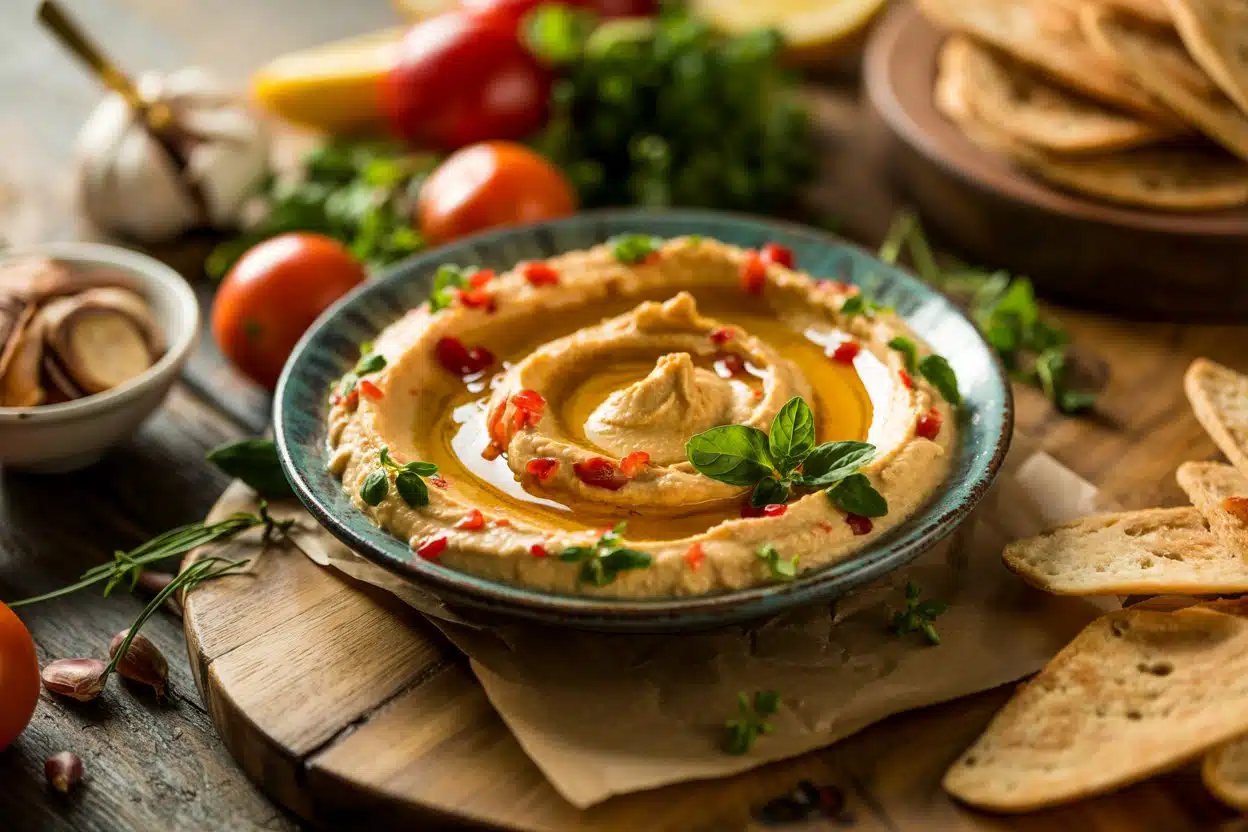
Hummus is a thick, creamy spread made from blended chickpeas, tahini, lemon juice, and garlic.
It tastes nutty and slightly tangy with a smooth, velvety texture that works as a dip, sandwich spread, or base for grain bowls.
We break down the full flavor profile, common uses, and nutrition facts below.
Hummus is a blended chickpea spread from the Levant, built on tahini, lemon juice, and garlic. It reads nutty, tangy, and savory all at once - mild enough to pair with almost anything, rich enough to anchor a meal on its own.
What Is Hummus?
Hummus - also spelled hommous, houmous, or ḥummuṣ - is a legume-based spread from the Levant, with roots in Lebanese, Syrian, and broader Eastern Mediterranean cooking. The word itself is simply Arabic for chickpea.
Remember it later
Planning to try this recipe soon? Save it for a quick find later!
At its core, it's cooked chickpeas (garbanzo beans) blended with tahini, fresh lemon juice, garlic, and often a drizzle of olive oil.
What separates a good batch from a mediocre one is technique, not ingredients. Longer blending, warm chickpeas, and ice-cold water or aquafaba (the chickpea cooking liquid) produce that signature silky texture.
Shortcut versions skipping these steps land closer to a chunky bean paste.
Variations exist across the region and beyond:
- Classic Levantine - pale, smooth, heavy on tahini, finished with olive oil and paprika
- Israeli-style - often served warm, topped with whole chickpeas and spiced oil
- North African - sometimes spiced with cumin or harissa, deeper in color
- Store-bought - roasted red pepper, spinach, and other flavored versions now common in Western supermarkets
What Does Hummus Taste Like?
Hummus lands in a flavor category that doesn't have a neat analogue. Think of a rich mashed bean spread with a lemony, garlicky lift - earthier than a white bean purée, creamier than refried beans, and distinctly savory in a way that sweet spreads aren't.
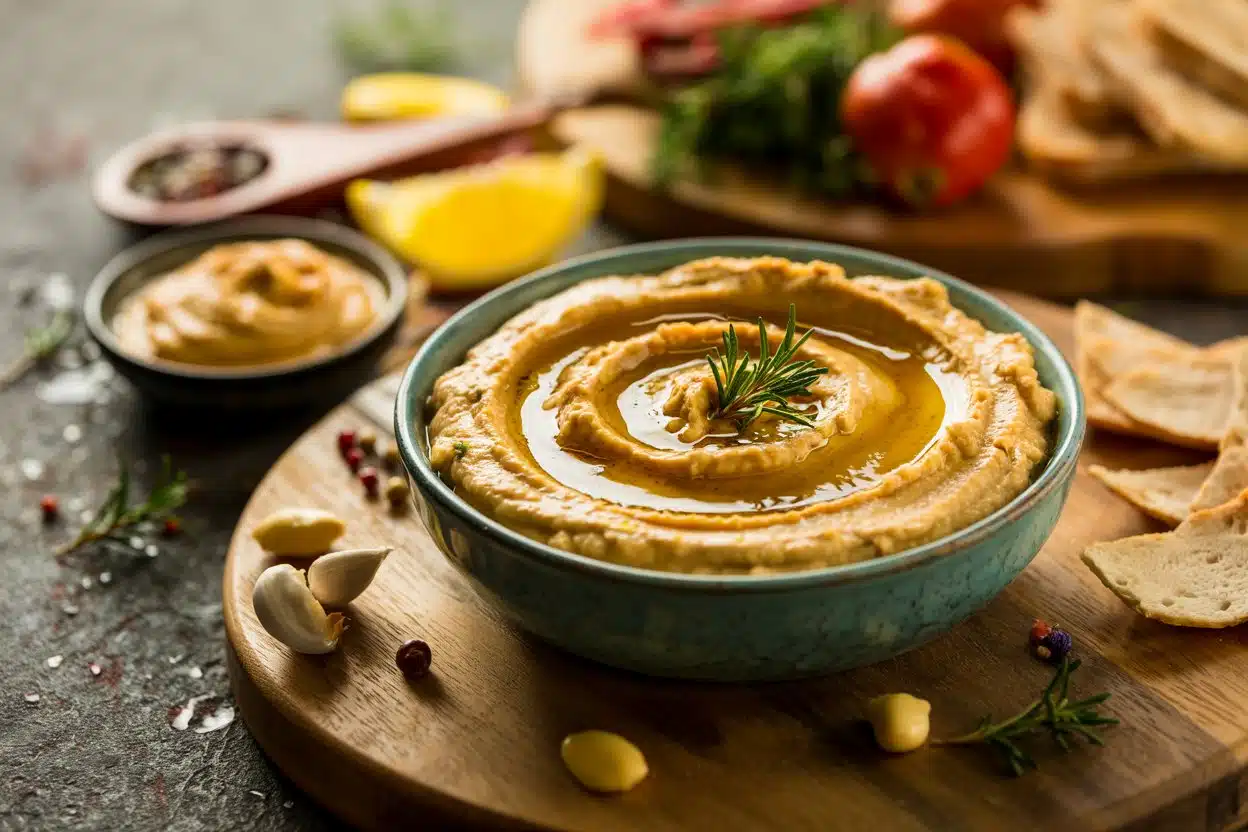
The tahini carries most of the nutty weight, while lemon provides brightness that stops the spread from tasting heavy. Garlic punches through both.
Warmed, hummus softens in flavor - the lemon mutes slightly and the chickpea base comes forward more than it does cold.
How to Use Hummus
Hummus earns its place well beyond a snack bowl. Its thick, creamy texture makes it a functional substitute for mayo or butter on sandwiches - it clings without sliding, adds body, and brings acidity from the lemon.
Smear it on toast, or load it into a pita pocket with crispy baked falafel patties and pickled turnips for a full Levantine-style meal.
As a bowl base, it works under roasted vegetables, spiced lamb, or grain mixes. Streak it across a plate before laying on grilled chicken or roasted fish - it acts as both sauce and anchor.
Blended into dressings with extra lemon and olive oil, it adds creaminess without dairy.
| Method | Best For | Tip |
|---|---|---|
| 🥗 Cold/Dip | Pita wedges, raw vegetables, mezze spreads | Drizzle with olive oil and dust with paprika or za'atar before serving |
| 🔥 Warmed | Hot appetizer topped with whole chickpeas and spiced oil | Warm gently over low heat; avoid boiling or it breaks and grains up |
| 🫙 Spread | Sandwiches, toast, wraps instead of mayo or butter | Pair with [pita bread](https://forkliftkitchen.com/pita-bread-substitutes/) or flatbreads for a classic base |
| 🥣 Bowl Base | Under roasted eggplant, grain bowls, spiced meats | Thin slightly with lemon juice or water so it spreads flat under toppings |
| 🥄 Dressing Base | Creamy salad dressings, sauce for roasted fish or chicken | Whisk with extra lemon juice and a splash of water to loosen the texture |
Hummus pairs tightly with za'atar, sumac, and roasted eggplant in Levantine cooking. It also stands alongside pickled cucumbers, olives, and grilled lamb.
If you want the paprika replacements that work as finishing garnishes, smoked or sweet varieties both complement the tahini base well. Avoid pairing hummus with raw sweet fruit - the tahini-lemon balance reads as clashing, not complementary.
How to Buy and Store Hummus
At the store, look for tubs with a pale beige, uniform surface and no strong sour smell. Excessive oil separation on a sealed tub signals age or temperature abuse.
Fresh-made hummus from a deli counter should look smooth with a visible olive oil sheen on top - not watery pooling. If you're making it from scratch, garbanzo bean flour pancakes aside, whole dried or canned chickpeas both work, though dried and home-cooked chickpeas produce noticeably silkier results.
Storage is straightforward: refrigerate in an airtight container and it holds for 4-7 days. Commercial unopened tubs last weeks to months by the label.
For a full breakdown of timelines and signs of spoilage, check our guide to hummus storage guide. Freezing is possible but changes texture - the spread tends to separate slightly on thawing.
Where to Start With Hummus
If you're new to cooking with it beyond a snack bowl, start with the sandwich swap. Replace mayo on a wrap or toast, add roasted vegetables and a pinch of sumac, and you'll immediately see how hummus holds weight as an ingredient rather than just a side.
From there, try it as a plate sauce - spoon and spread, then lay grilled chicken or fish on top. Those two moves cover most of what hummus does well.
If store-bought feels too salty, making a batch at home with canned chickpeas and good hummus swaps as reference points will show you where the flavor levers actually sit.
Frequently Asked Questions
The four core ingredients are cooked chickpeas, tahini (sesame paste), fresh lemon juice, and garlic. Most versions also include olive oil and a small amount of water or aquafaba to adjust consistency.
Fresh-made or opened store-bought hummus lasts 4-7 days refrigerated. An unopened commercial tub typically holds for several weeks to a few months - check the printed date on the lid.
Underblending is the most common cause. Process longer, and add ice-cold water or aquafaba a tablespoon at a time while the machine runs. Peeling the chickpea skins before blending also produces a noticeably smoother result.
Yes, but texture suffers. Hummus often separates slightly after thawing, turning grainy rather than smooth. Stir well after thawing and add a splash of olive oil or lemon juice to help it re-emulsify.
It's a moderate protein source - roughly 2-3 grams per two-tablespoon serving. It also contributes dietary fiber and monounsaturated fats from tahini and olive oil, which makes it nutritionally denser than most dips of similar volume.