Most people treat grits as a background player-a bland filler that soaks up whatever sauce lands on top.

That reading misses what stone-ground grits actually bring: a mild, toasty corn backbone that holds its own against sharp cheddar, smoky andouille, or a pan of seared shrimp.
Grits share DNA with polenta and cornmeal, but they're a distinct product with their own grind, tradition, and texture range. Understanding those differences is how you stop treating them as interchangeable and start cooking them with intent.
Grits are coarsely ground dried corn with a mild, buttery flavor and creamy texture when cooked. Stone-ground varieties carry the most corn character. They're the backbone of Southern breakfasts and the base for classic shrimp and grits.
What Is Grits?
Grits are coarsely ground dried corn, most commonly dent corn or flint corn, milled to a granular consistency that sits between fine cornmeal and cracked grain. They originate in the Southeastern United States, where Indigenous communities ground dried corn long before European settlers arrived.
Remember it later
Planning to try this recipe soon? Save it for a quick find later!
Three main varieties exist, and the differences between them are significant. Stone-ground grits retain more of the germ and hull, producing a coarser, more textured result with a genuine corn aroma.
Quick and instant grits are more finely milled and partially pre-cooked, sacrificing texture for speed.
Hominy grits are a separate category worth knowing. They're made from nixtamalized corn-dried corn treated with an alkaline solution-which gives them a slightly chewier texture and a deeper, earthier corn flavor than standard grits.
- ⬜ White grits - made from white dent corn; mild and traditional in the Deep South
- 🟡 Yellow grits - made from yellow corn; marginally sweeter, slightly more robust in color
- 🌿 Stone-ground (either color) - coarser grind, nuttier aroma, shorter shelf life due to retained germ
- ⚡ Quick and instant grits - finer grind, pre-gelatinized; cook in minutes but lack the bite
What Does Grits Taste Like?
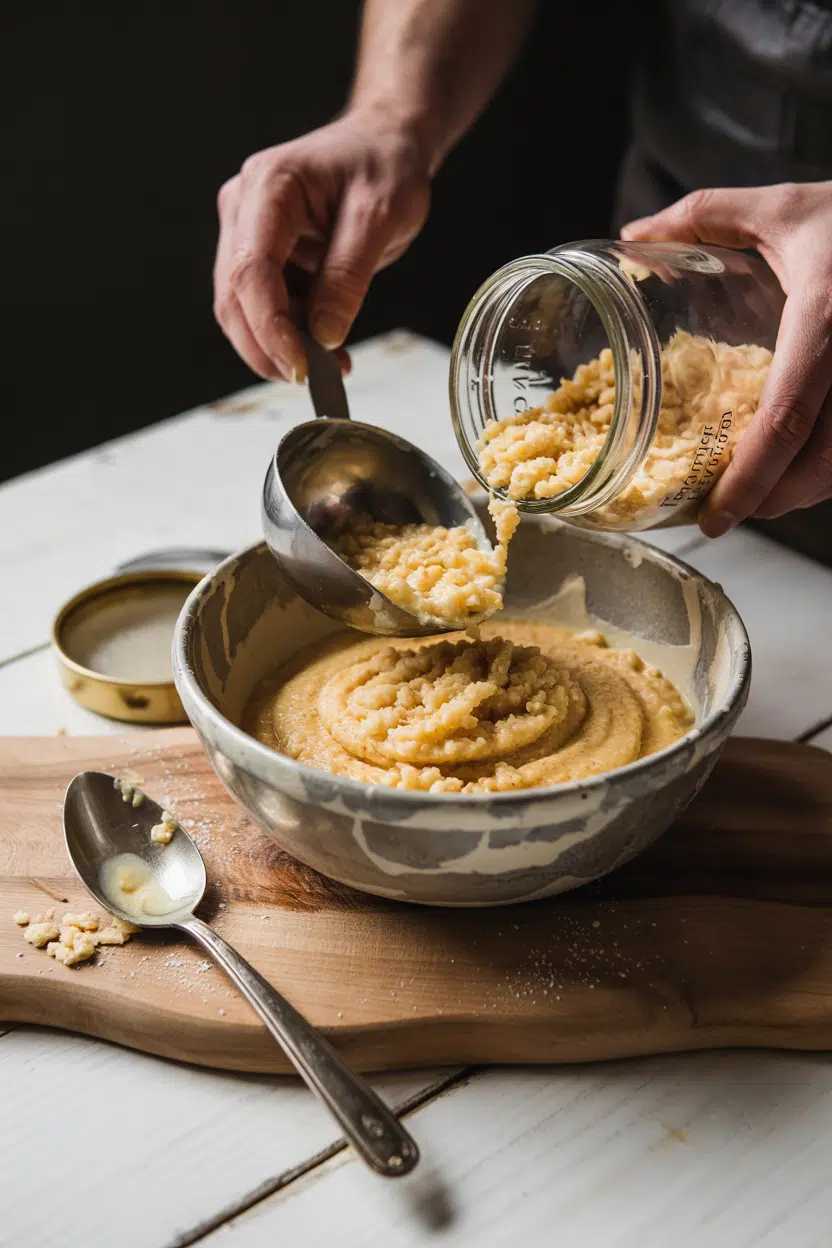
On their own, grits taste like warm, understated corn-mild, faintly sweet, with a starchy backbone that's more neutral than bold. Stone-ground varieties push further toward nutty and toasty; quick grits land closer to plain starch.
Heat and fat change the profile considerably. Simmered in stock instead of water, grits absorb savory depth.
Add butter or cream, and the texture shifts from grainy to silky while the flavor rounds out into something genuinely rich.
Compared to polenta, grits are milder and finer in corn note. Hominy grits carry a distinct minerality from nixtamalization-closer to a corn tortilla's deeper, slightly alkaline quality than to plain boiled grain.
How to Use Grits
Grits earn their reputation in Southern and Lowcountry cooking as a starch that can move between breakfast and dinner without adjustment. Simmering slowly in water, stock, or a mix of both is the standard method; whisking constantly in the first few minutes prevents lumps from setting.
Breakfast applications are the most straightforward. A bowl of grits finished with butter, sharp cheddar, and a fried egg is common across the South.
Shrimp and grits-seared shrimp over creamy grits with andouille, bacon, and savory stock-is the Lowcountry dish that brought the ingredient national attention.
Grits also work beyond the bowl. Fried grit cakes are made by cooling cooked grits in a pan, slicing them firm, then pan-frying until golden. They hold structure well and pair with relishes, poached eggs, or braised greens.
Baked into a casserole with eggs and cheese, grits become closer to spoonbread-a dish with more body and a custardy interior.
| Method | Best For | Tip |
|---|---|---|
| 🫕 Simmered | Breakfast porridge, shrimp and grits base | Use stock instead of water for deeper flavor |
| 🥘 Baked | Casserole, spoonbread with eggs and cheese | Slightly undercook before baking - they firm up in the oven |
| 🍳 Pan-Fried | Grit cakes, grilled slices as a side | Cool fully in a flat pan before slicing - at least 2 hours |
| 🥣 Thickener | Corn chowder, stew base | Stir in slowly near the end to control consistency |
Grits pair naturally with smoked and cured pork-bacon, sausage, andouille-and hold up well against acidic tomato-based stews. Scallions and hot sauce cut through richness.
If you need a swap, our guide to grits alternatives covers options by texture and use case.
How to Buy and Store Grits
Stone-ground grits are the buy if texture and corn flavor matter to you. Check packaging for the word "stone-ground" and look for a coarse, uneven grind through a clear window or bag panel. Quick and instant grits save time but produce a smoother, softer result that's closer to cream of wheat than to polenta.
Check the bag for hominy or nixtamalized if you want the earthier, chewier style. Avoid bags with visible clumping or any musty smell - both signal moisture exposure.
Sealed retail bags or vacuum packs are safer than bulk bins.
For storage details and exact timelines by grind type, the full breakdown is at our grits storage life guide. Cooked grits keep 3-5 days refrigerated in a sealed container.
Start Here If You're New to Grits
Stone-ground white or yellow grits simmered in half water, half chicken stock with a knob of butter is the best first run. It shows you the base flavor without interference. From there, sharp cheddar and a fried egg on top is all you need to understand why this ingredient anchors a whole regional cuisine.
If polenta is already in your rotation, grits will feel immediately familiar - though our polenta replacements guide explains where the two diverge in a recipe context.
Frequently Asked Questions
No, though they're close. Both are coarsely ground corn, but grits are typically made from dent corn while polenta traditionally uses flint corn, giving polenta a firmer set and slightly more defined corn flavor. The two can often substitute for each other, with minor texture differences.
Hominy grits are made from nixtamalized corn - dried corn soaked in an alkaline solution before grinding. This process softens the hull and releases more niacin, and it produces a slightly chewier texture and a deeper, earthier flavor than standard grits.
Stone-ground grits need 45 minutes to an hour of slow simmering. Quick grits cook in 5-7 minutes, and instant grits are ready in under 5. Stone-ground versions require occasional stirring to prevent sticking and uneven cooking.
Yes. Spread cooked grits in a flat layer in a freezer-safe container and freeze for up to three months. Thaw overnight in the fridge and reheat with a splash of water or stock, stirring to restore the creamy consistency.
Grits are naturally gluten-free, as they're made entirely from corn. Cross-contamination is a risk with products milled in shared facilities, so those with celiac disease should look for bags that carry a certified gluten-free label.