Pile pastrami high enough on rye bread and it becomes something close to a meal that defines a city. New York's Jewish deli culture built its reputation on this brined, smoked, spiced meat, and for good reason - no other cured cut delivers that combination of deep smoke, cracked pepper bark, and fork-tender brisket in a single slice.

Like brisket itself, pastrami rewards patience in its making and bold pairings at the table.
Pastrami is a brined, smoked, and spiced beef - most often brisket or navel cut - finished with a peppercorn-coriander crust. It tastes smoky, savory, and peppery with a slight tang from the brine. Best known in the classic pastrami on rye, it suits sandwiches, hashes, and eggs equally well.
What Is Pastrami?
Pastrami traces its roots to Romania, where a preserved meat called pastrame - typically made from mutton or goose - traveled with Ashkenazi Jewish immigrants to New York in the late 19th century.
Remember it later
Planning to try this recipe soon? Save it for a quick find later!
Once in the United States, beef became the standard, and the New York deli turned it into an institution.
The process is what sets it apart. Beef - almost always brisket or the fattier navel cut - gets cured in a seasoned brine, coated in a coarse peppercorn-coriander crust, cold-smoked, and then typically steamed before slicing.
That final steam is what gives deli pastrami its signature tenderness. Without it, you get something closer to smoked corned beef - which, while related, skips the spice crust and smoking entirely.
You may also see it labeled pastrami beef or referenced in the context of corned beef, since both start with a brined brisket. Montreal smoked meat is a close cousin - similar process, but spiced differently and sliced thicker.
- 🥩 Primary cut - brisket (flat or point) or beef navel for higher fat content
- 🌍 Origin - Romanian pastrame, refined in New York's Ashkenazi deli tradition
- 🔄 vs. corned beef - corned beef skips the spice crust, smoking, and steaming steps
- 🍖 Related - Montreal smoked meat uses a similar cure but a distinct spice profile
What Does Pastrami Taste Like?
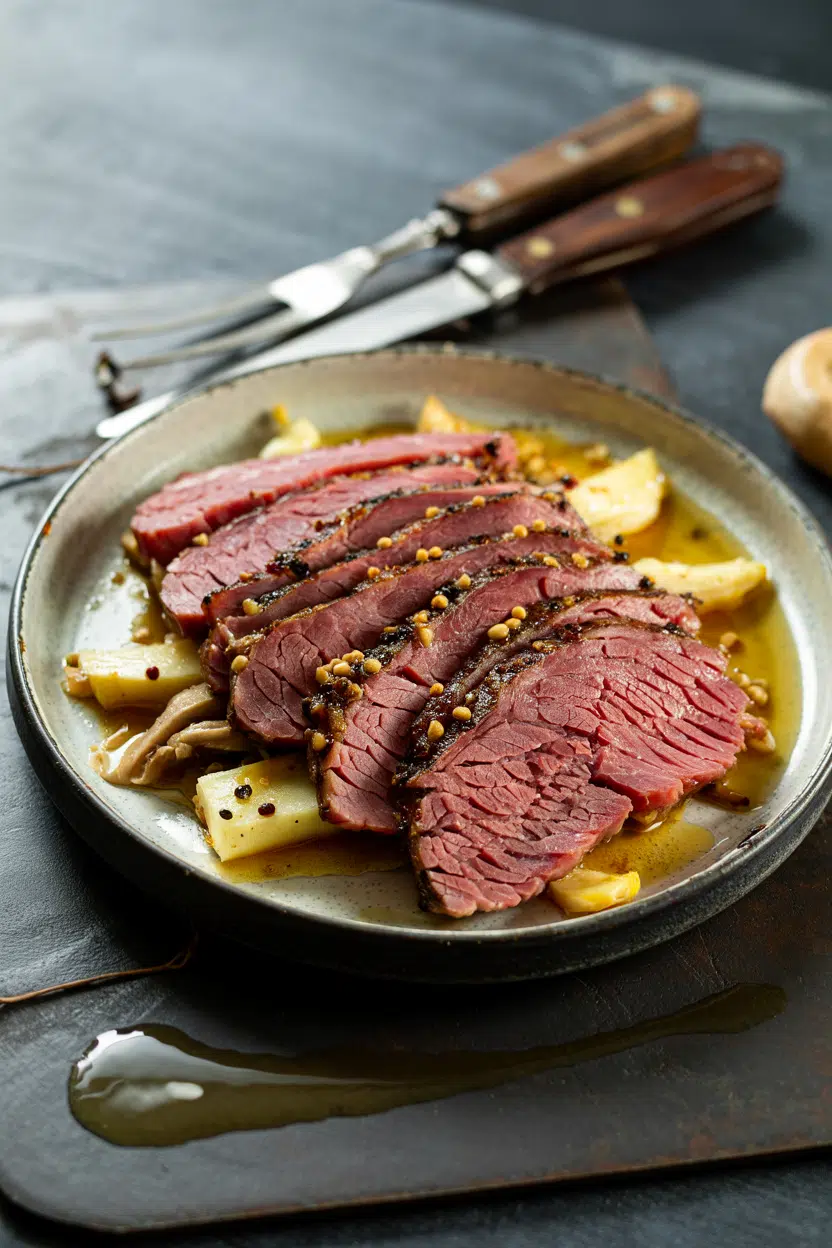
Pastrami hits hard. The dominant notes are smoke and black pepper, with coriander adding a faintly citrusy warmth beneath both.
Brine contributes a salty, slightly sour edge that keeps the richness from feeling flat.
The navel cut produces a fattier, more unctuous slice than brisket flat. Fat carries smoke particularly well here, so navel pastrami often tastes more intense than its leaner counterpart.
Heat changes things noticeably. Cold pastrami straight from the fridge tastes firmer and more peppery.
Warmed or steamed, the fat softens, the smoke rounds out, and the overall flavor opens up considerably.
How to Use Pastrami
The classic pastrami on rye - stacked thick with yellow mustard - remains the standard for a reason. The mustard's acidity cuts the fat cleanly, and rye's slight bitterness matches the smokiness without competing.
Beyond sandwiches, pastrami slots into a wide range of dishes.
| Method | Best For | Tip |
|---|---|---|
| 🥗 Cold/Sliced | Classic deli sandwiches, Reuben builds, deli plates with pickles | Stack generously - thin slices compress when cold |
| ♨️ Steamed | Warming for service, restoring moisture to refrigerated slices | Steam over water for 3-5 minutes; don't microwave dry |
| 🍳 Pan-Seared | Crispy-edged slices for eggs, hash, flatbreads, tacos | High heat, dry pan, 60-90 seconds per side maximum |
| 🍲 Chopped/Sautéed | Potato hash, poutine, mac and cheese, creamy pasta | Add late in cooking - it's already fully seasoned |
Reuben-style builds layer Swiss cheese, sauerkraut, and Russian dressing alongside the pastrami - the fermented sauerkraut echoes the brine already in the meat. For breakfast, thin slices tucked into scrambled eggs or a hash need nothing more than a fried egg on top.
Pastrami works well anywhere you'd want a salty, smoky contrast. Fold it into flatbreads or tacos for a deli-meets-street combination, or chop it into mac and cheese for a sharp, savory counterpoint to the cream.
Strong pairings include rye whiskey, dark beers, horseradish, and pickled onions - anything with enough intensity to hold its own.
Skip delicate floral desserts and light white wines. Both get buried under the smoke and pepper.
How to Buy and Store Pastrami
At the deli counter, look for slices with a dark, even spice crust and visible marbling throughout the meat. Avoid anything that looks dry, grayish, or has a patchy bark - those are signs of age or poor preparation.
For packaged pastrami, choose vacuum-sealed packs with an intact seal and minimal pooled liquid inside. Check the pack date and go for the freshest available.
- Refrigerator storage - keep tightly wrapped in butcher paper or an airtight container at 32-40°F
- Opened shelf life - use within 3-5 days for best quality
- Unopened vacuum-sealed - holds 2-3 weeks refrigerated
For longer storage, freezing works well. For full guidance on how long it lasts, see our pastrami storage life page.
If you're comparing cured meat options, our notes on side dishes for corned beef cover similar pairing logic.
Starting With Pastrami
New to pastrami? Start with the sandwich.
A good rye, yellow mustard, and well-steamed navel pastrami from a deli counter is the clearest possible introduction to what this meat does.
Once that benchmark is set, branch into eggs, hash, or a Reuben build. If you need an alternative in a recipe, our guide to pastrami replacements covers the closest options by use case.
Frequently Asked Questions
No. Both start with brined beef brisket, however pastrami also gets a peppercorn-coriander crust, smoked, and then steamed. Corned beef skips all three of those steps, which is why the flavor and texture differ so significantly.
Beef brisket or navel is cured in a seasoned brine for several days, then coated in cracked black pepper and coriander. It's cold-smoked until cooked through, then steamed before slicing to restore moisture and tenderness.
Brisket is most common, using either the flat or the point. Navel cut - from the plate section - is fattier and often preferred by deli purists for its richer flavor and more tender result.
Steam it. Place slices in a steamer basket or colander over simmering water, cover, and heat for 3-5 minutes. Microwaving without added moisture dries the meat out quickly and toughens the texture.
Yes. Wrap tightly in plastic wrap or vacuum-seal before freezing, and use within 2-3 months for best quality. Thaw overnight in the refrigerator and steam before serving to restore moisture.