You need just under 3 hours and a heavy pot. No stovetop babysitting, no complicated techniques, just slow simmering that turns tough beef short ribs into fork-tender meat with glossy sauce.

The long cook time does all the work. You brown the ribs, add liquid, then let low heat break down the collagen while Korean radish and carrots soak up every bit of that sweet-savory broth.
This is what we make for cold weather dinners or when we want something that feels special without requiring constant attention. The house smells incredible after the first hour.
Korean Galbi Jjim is braised beef short ribs simmered with soy sauce, garlic, ginger, and brown sugar until the meat falls off the bone. The key is maintaining a bare simmer for 2+ hours so the ribs tenderize without falling apart. Uniform vegetable cuts ensure everything finishes at the same time.
Why This Recipe Works
Low heat and time break down tough connective tissue in beef short ribs without drying out the meat. Rich mains need something to cut through, and soft buttery dinner bread does exactly that.
Remember it later
Planning to try this recipe soon? Save it for a quick find later!
Prep Time
20 min
Cook Time
2 hours 30 min
Total Time
2 hours 50 min
Servings
6 servings
Difficulty
Medium
Category
Main Dish
Quick Tip
Soak ribs, simmer low, skim, finish with sesame oil
Best For
Weeknight | Entertaining | Meal prep
Five reasons this works:
- Soaking removes blood - One hour in cold water pulls out impurities that would make the broth cloudy and metallic-tasting
- Browning builds flavor - Searing the ribs 3-4 minutes per side creates caramelized bits that dissolve into the braising liquid
- Low simmer tenderizes - Maintaining 180°F keeps collagen breaking down steadily without boiling the meat into dry strings
- Vegetables absorb sauce - Korean radish and carrots act like sponges, soaking up the sweet-savory broth while staying tender but intact
- Skimming keeps it clean - Removing foam and fat every 30 minutes results in a glossy, rich sauce instead of greasy slick
What You'll Need
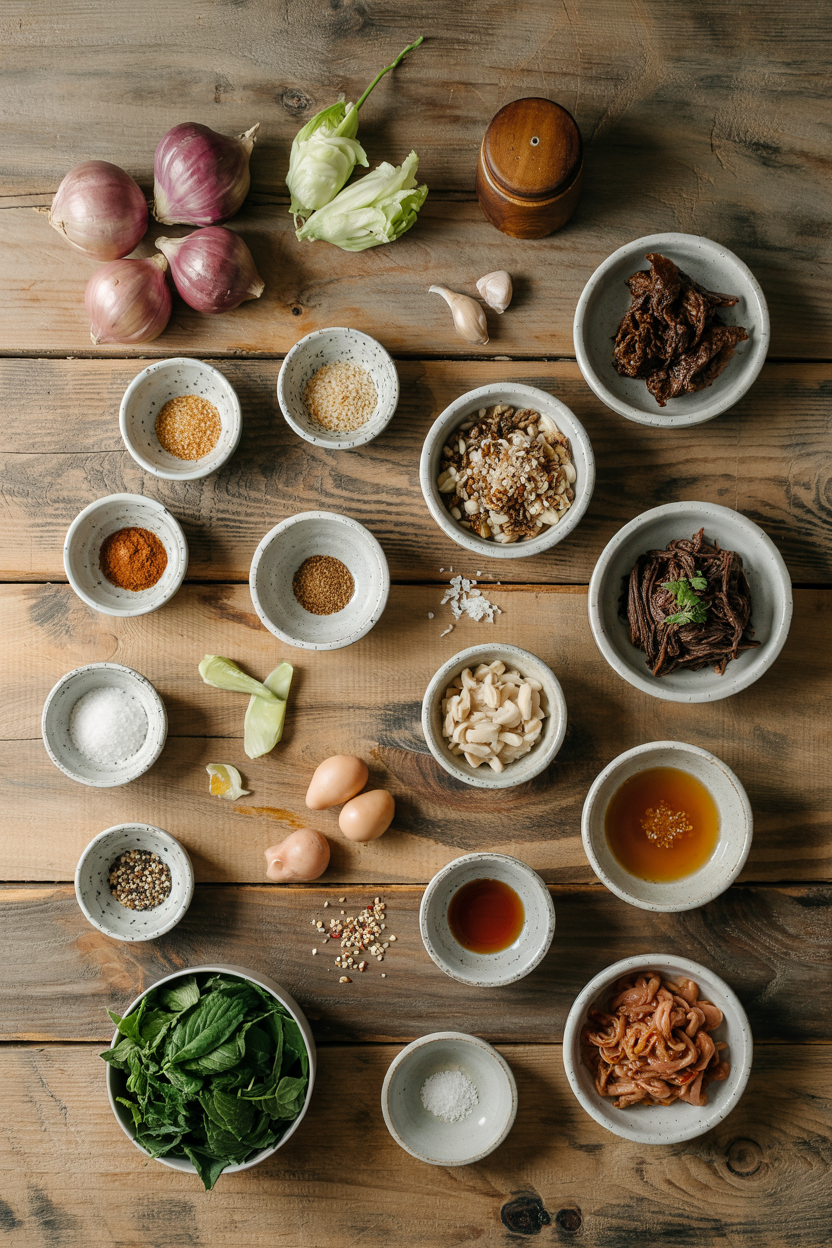
Stock your pantry with soy sauce, brown sugar, garlic, and ginger. For a version that comes together quickly, a similar dinner recipe uses the same braising technique with different aromatics and shorter cook time.
- 3 lbs beef short ribs
- 8 cloves garlic, minced
- 2-inch piece ginger, sliced
- 4 green onions
- 1 lb Korean radish (mu), cut in 1.5-inch chunks
- 2 large carrots, cut in 1.5-inch chunks
- ½ cup soy sauce
- ⅓ cup brown sugar or honey
- 1 tablespoon sesame oil
- 1 teaspoon black pepper
- 4 cups water
Ingredient Details
- Beef short ribs
Look for English-cut ribs with good marbling - the fat renders during braising and keeps the meat moist while adding richness to the sauce - Soy sauce
Use regular soy sauce, not low-sodium - the long simmer concentrates flavors but also reduces saltiness naturally - Korean radish (mu)
Cut into uniform 1.5-inch chunks so they finish cooking at the same time as carrots - smaller pieces turn mushy, larger pieces stay crunchy - Brown sugar or honey
Add gradually and taste as you go - too much sweetness masks the savory depth from the beef and soy sauce - Garlic
Mince it fresh instead of using jarred - raw garlic mellows during the long braise and adds aromatic depth that powder can't match - Sesame oil
Add this off the heat at the very end - cooking sesame oil makes it bitter and kills the nutty aroma that defines the dish - Ginger
Slice it thick so you can fish out the pieces before serving - thin slices dissolve into mush and add fibrous texture
Ingredient Swaps
Most swaps work if you match cooking time to the protein. A good creamy homemade homemade recipe helps balance the richness when you're making substitutions that change the fat content.
Four swaps that work:
- Beef short ribs → pork ribs or beef chuck - Pork ribs cook faster (90 minutes instead of 2.5 hours) and beef chuck needs cutting into 2-inch cubes but delivers similar tender texture
- Soy sauce → tamari or coconut aminos - Tamari keeps it gluten-free with almost identical saltiness, coconut aminos taste slightly sweeter and less umami-forward
- Korean radish → daikon or regular white radish - Daikon has the same mild peppery bite and holds its shape during braising, white radish works but turns softer
- Brown sugar or honey → maple syrup or white sugar - Maple syrup adds earthy sweetness, white sugar tastes cleaner but lacks the molasses depth that rounds out soy sauce
Pork Ribs
Works for: Budget cooking, faster meals (90 min vs 2.5 hours), leaner option
Skip if: You want the rich marrow flavor and gelatinous texture that only beef short ribs deliver
Tamari
Works for: Gluten-free diets, identical saltiness, nearly the same umami depth
Skip if: You can use regular soy sauce - tamari costs more and the flavor difference is negligible here
Instructions
Plan for 20 minutes of active prep, then 2.5 hours of mostly hands-off simmering. Salad cuts through all that richness with bright acidity and crunch.
- Soak the ribs - Submerge beef short ribs in cold water for 1 hour, changing the water after 30 minutes to draw out blood and prevent cloudy broth
- Brown the meat - Pat ribs dry, then sear them in a heavy pot over medium-high heat for 3-4 minutes per side until deeply golden, working in batches to avoid crowding
- Build the braise - Add garlic, ginger, soy sauce, brown sugar, black pepper, and 4 cups water to the pot, bring to a boil, then reduce to a bare simmer where bubbles just break the surface
- Skim and add vegetables - Skim foam and fat every 30 minutes for the first 90 minutes, then add Korean radish and carrots cut into uniform 1.5-inch chunks and simmer another hour until meat is fork-tender
- Finish and reduce - Remove lid and simmer 20 more minutes to thicken the sauce, turn off heat, stir in 1 tablespoon sesame oil, and let rest 5 minutes before serving
What to Serve With It
This needs steamed rice to soak up the sauce and something acidic to cut the richness. For more complete fresh vegetable dinner ideas that work with braised mains, we keep a rotation of banchan ready in the fridge.
| Side Dish | Prep | Why It Works | How to Serve |
|---|---|---|---|
| Steamed white rice | Easy | Neutral base that soaks up the glossy sauce without competing for attention | Mound 1 cup rice per person in shallow bowls, ladle ribs and sauce over top |
| Kimchi | Easy | Sharp fermented tang and crunch balance the sweet-savory richness of the braise | Serve ½ cup per person on the side, let people adjust spice level to taste |
| Blanched spinach with garlic | Easy | Mild, tender greens add freshness without overwhelming the main dish | Blanch 1 minute, squeeze dry, toss with minced garlic and sesame oil |
| Japchae (glass noodles) | Medium | Slightly sweet, chewy texture contrasts with fork-tender ribs and makes it feel like a feast | Serve room temperature or warm, 1 cup per person alongside the ribs |
| Pickled radish | Easy | Tart, crunchy cubes cleanse your palate between bites of rich meat | Quick-pickle radish in vinegar-sugar brine for 30 minutes, serve chilled |
Three ways to serve it:
- Weeknight bowl - Pile ribs over rice, add kimchi and blanched spinach, drizzle extra sauce over everything
- Family-style platter - Arrange ribs and vegetables on a large plate, surround with banchan, serve rice in a separate bowl so people can build their own plates
- Meal prep containers - Portion ribs with vegetables and sauce into containers, pack rice separately so it doesn't get soggy when reheated
Store and Reheat
Galbi jjim actually improves after a day in the fridge as flavors meld and the sauce thickens. Potato soaks up every drop of sauce on the plate, which is why we always make extra portions.
| Method | Time | Best For |
|---|---|---|
| 🍳 Stovetop | 10-15 min | Even reheating that preserves tender texture and glossy sauce without drying out the meat |
| 🔥 Oven | 20 min at 325°F | Large portions when you're reheating the whole batch - cover with foil to trap steam |
| 📦 Microwave | 3-5 min | Single servings in a hurry - add 2 tablespoon water and cover to prevent meat from drying out |
For best results when storing:
- Cool quickly - Spread ribs and vegetables in a shallow container so they drop to fridge temp in under 2 hours, preventing bacterial growth
- Remove fat layer - Refrigerate overnight, then peel off the solidified fat cap before reheating for cleaner sauce without greasiness
- Store with sauce - Keep meat and vegetables submerged in braising liquid so they stay moist during storage
- Use shallow containers - Stack no more than 2 inches deep for even cooling and easier portioning when you reheat
- Freeze in portions - Divide into single-serving containers with sauce, freeze up to 3 months, thaw in fridge overnight before reheating
Frequently Asked Questions
Simmer beef short ribs for 2 to 2.5 hours at a bare simmer (around 180°F) until the meat pulls away from the bone with a fork. Add vegetables after 90 minutes so they don't turn to mush.
Yes - make it up to 2 days ahead and refrigerate in the braising liquid. The flavors deepen and you can easily remove the solidified fat layer before reheating on the stovetop for 10-15 minutes.
Serve it with steamed white rice to soak up the sauce, plus kimchi for acidic crunch and blanched spinach with garlic for a mild green contrast. Japchae or pickled radish round out the meal.
The meat is done when it pulls away from the bone easily with a fork and the sauce has thickened to coat the back of a spoon. Vegetables should be tender but still hold their shape.
Yes - pork ribs work but need only 90 minutes of simmering instead of 2.5 hours since they're leaner and more tender. The flavor will be milder and less rich than beef short ribs.
Korean Galbi Jjim
Ingredients
Equipment
Method
- Submerge the beef short ribs in cold water for 1 hour, changing the water after 30 minutes to remove blood and prevent cloudy broth.3 lbs beef short ribs
- Pat the ribs dry. Heat a heavy pot over medium-high heat and sear the ribs for 3-4 minutes per side until deeply golden. Work in batches to avoid crowding.3 lbs beef short ribs
- Add garlic, ginger, soy sauce, brown sugar, black pepper, and 4 cups water to the pot. Bring to a boil, then reduce heat to maintain a bare simmer with bubbles just breaking the surface.8 cloves garlic, 2 inch ginger, 0.5 cup soy sauce, 0.33 cup brown sugar, 1 tsp black pepper, 4 cups water
- Skim off foam and fat every 30 minutes for the first 90 minutes. Then add the Korean radish and carrots cut into uniform 1.5-inch chunks. Continue simmering for another hour until the meat is fork-tender.1 lb Korean radish, 2 large carrots
- Remove the lid and simmer an additional 20 minutes to thicken the sauce. Turn off the heat, stir in sesame oil, and let the dish rest for 5 minutes before serving.1 tbsp sesame oil
Notes
- Soak ribs in cold water for an hour to prevent cloudy broth and remove blood.
- Maintain a bare simmer around 180°F to tenderize meat without drying it out.
- Add vegetables late in cooking to keep them tender but intact and skim fat regularly for a glossy sauce.