You need 2.5 to 3.5 hours and a heavy-bottomed pot. No quick fixes, no shortcuts, no pressure cooker hacks that promise the same result.

Beef chuck breaks down slowly in coconut milk, building layers of spice while the sauce reduces to a thick, dark coating. The long simmer is what makes rendang work - tender meat with concentrated flavor that sticks to every piece.
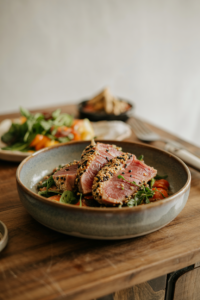
This is what you make for meal prep, special occasions, or when you want something that tastes like effort but mostly just needs time. Rich mains need something to cut through, and a fresh salad on the side does exactly that. For a version that comes together quickly, we keep a batch ready for nights like this - a fresh salad on the side that balances the richness without competing for attention.
Malaysian Beef Rendang is a slow-cooked beef curry where beef chuck simmers in coconut milk with aromatic spices until the sauce reduces to a thick, caramelized coating. The gentle simmer prevents the coconut milk from splitting while the beef breaks down over 2-3 hours. Make this when you want tender, richly flavored beef that works for meal prep or entertaining.
Why This Recipe Works
Beef chuck has enough fat and connective tissue to survive a long simmer without drying out. The coconut milk provides the creamy base while the spice paste builds layers of heat, sweetness, and aromatic depth that develop over hours. Most people skip hearty beef recipe options, but understanding how different cuts respond to slow cooking changes what you can pull off on a weeknight.
Remember it later
Planning to try this recipe soon? Save it for a quick find later!
Prep Time
30 min
Cook Time
2 to 3 hours
Total Time
2.5 to 3.5 hours
Servings
4 to 6 servings
Difficulty
Involved
Category
Main Dish
Quick Tip
Slow simmer until sauce thickens and beef is tender
Best For
Meal prep | Entertaining | Weeknight
What makes this different from other beef curries:
- Searing creates the foundation - browning beef cubes on medium-high for 3 minutes per side develops the base layer of flavor before the spices go in
- Fresh spice paste matters - grinding shallots, garlic, galangal, and chilies into a paste releases oils that transform during the long simmer
- Low heat prevents splitting - keeping the temperature below 200°F lets coconut milk reduce without breaking into oil and solids
- Reduction creates the coating - the sauce thickens over 2-3 hours until it clings to the beef with a dark, caramelized finish
- Lime leaves add fragrance late - tossing kaffir lime leaves in during the last 30 minutes preserves the citrus aroma without bitterness
What You'll Need
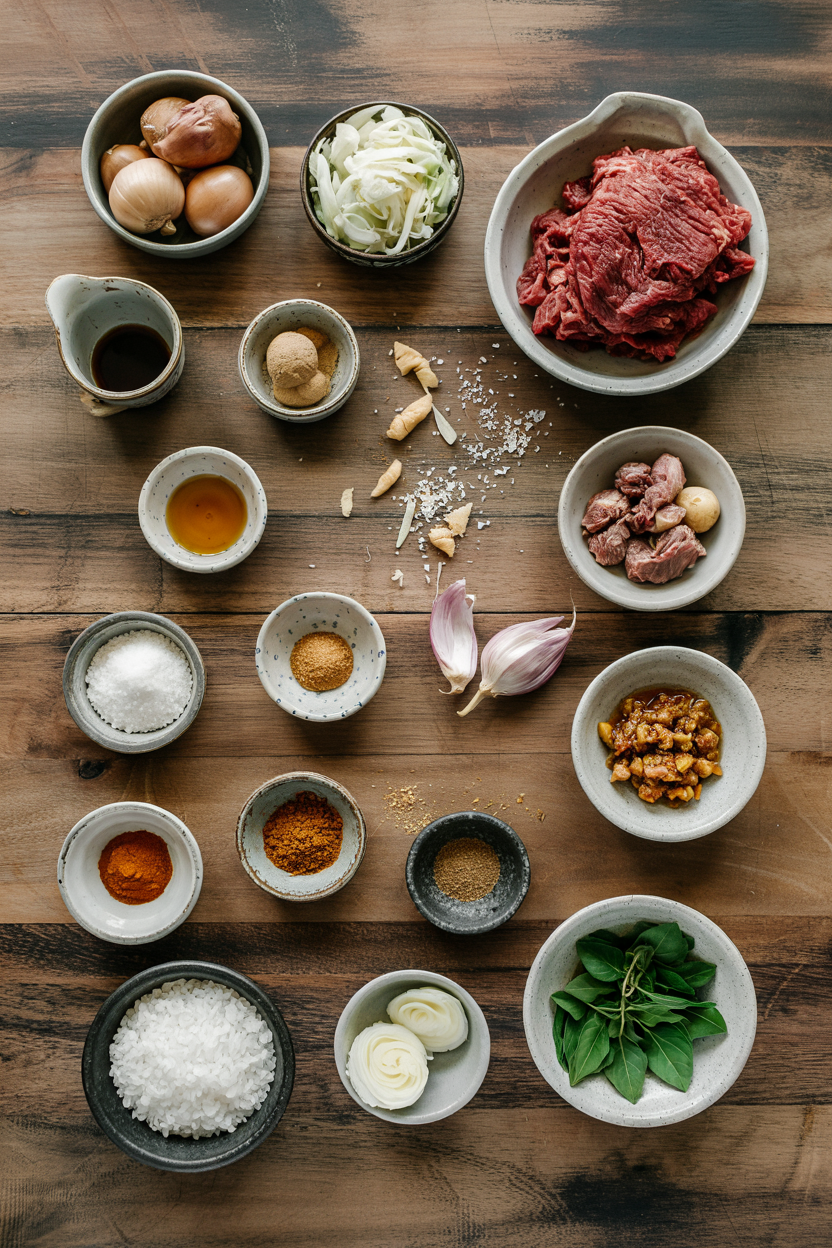
Shop for beef chuck at the meat counter, not pre-cubed stew meat which often comes from tougher cuts. Fresh galangal and kaffir lime leaves are worth tracking down at an Asian market - dried versions lose the aromatic punch that makes rendang distinctive.
- 2 lbs beef chuck, cubed
- 6 shallots
- 6 cloves garlic
- 2-inch piece ginger
- 2-inch piece galangal
- 2 stalks lemongrass
- 4 kaffir lime leaves
- 1 teaspoon turmeric
- 6-8 dried chilies or 3 tablespoon chili paste
- 2 (13.5 oz) cans coconut milk
- 2 tablespoon palm sugar or brown sugar
- 1 teaspoon salt
Ingredient Details
- Beef chuck
Look for pieces with visible marbling and connective tissue - they'll break down into tender, flavorful bites during the long simmer - Galangal
Similar to ginger but more floral and less sharp - this is what gives rendang its distinctive earthy background note that ginger can't replicate - Coconut milk
Full-fat only - the fat content is what creates the thick, glossy coating as the sauce reduces over hours - Kaffir lime leaves
Add these during the last 30 minutes to keep the citrus fragrance bright - longer cooking turns them bitter - Lemongrass
Bruise the stalks with the back of a knife before adding to release the aromatic oils without breaking them apart - Dried chilies
Rehydrate in hot water for 10 minutes before blending - this softens them and makes the paste smoother - Palm sugar
Adds subtle caramel notes that brown sugar approximates but doesn't fully match - use what you can find
Ingredient Swaps
You can adjust the heat level and work around missing ingredients without losing the core texture and flavor. The spice paste is flexible - start with less chili and taste as you go.
Four swaps that work:
- Galangal → fresh ginger - more sharp and less earthy, but keeps the aromatic base intact without changing technique
- Palm sugar → brown sugar - slightly more molasses-forward, less caramel depth, but sweetness level stays consistent
- Fresh lemongrass → lemongrass paste - loses the fibrous texture but maintains the citrus aroma with 1 tablespoon paste per stalk
- Kaffir lime leaves → lime zest - more citrus-forward without the floral oil complexity, use zest from 2 limes added at the end
Coconut Milk vs Coconut Cream
Works for: Coconut cream diluted 1:1 with water gives similar consistency and fat content for the sauce reduction
Skip if: You want the exact balance - cream can make the sauce slightly thicker and richer than traditional rendang
Beef Chuck vs Beef Brisket
Works for: Brisket has more connective tissue and needs an extra 30-60 minutes of simmering but produces similarly tender results
Skip if: You're short on time - chuck breaks down faster and is more forgiving with timing variations
Instructions
The first hour is active - searing beef, frying the spice paste, and getting the simmer started. After that, you're stirring every 15-20 minutes until the sauce thickens in the final hour when it needs attention every 10 minutes.
Sear the beef. Heat a heavy-bottomed pot or Dutch oven over medium-high heat with 2 tablespoon oil. Add beef cubes in a single layer and sear for 3 minutes per side until browned. Remove beef and set aside - don't skip this step or you'll lose the caramelized foundation.
Make the spice paste. Blend shallots, garlic, ginger, galangal, rehydrated chilies, and turmeric in a blender or food processor for 2 minutes until smooth. Lower heat to medium and add the paste to the pot. Fry for 5-7 minutes, stirring constantly, until the paste darkens and smells fragrant without burning.
Start the simmer. Return beef to the pot and add coconut milk, lemongrass, palm sugar, and salt. Stir to combine and bring to a gentle simmer. Once bubbling, reduce heat to low - you want lazy bubbles breaking the surface, not a rolling boil. Keep the temperature below 200°F to prevent the coconut milk from splitting into oil and solids.
Simmer low and slow. Cook uncovered for 2-3 hours, stirring every 15-20 minutes during the first 90 minutes. As the sauce thickens in the final hour, stir every 10 minutes to prevent sticking. Add kaffir lime leaves during the last 30 minutes. The beef is done when it breaks apart easily with a fork and the sauce has reduced to a thick, dark coating that clings to the meat.
Rest and adjust. Turn off heat and let the rendang rest for 15 minutes - this lets the flavors settle and the sauce thicken slightly as it cools. Taste and add more salt or sugar if needed before serving.
What to Serve With It
Rendang is rich and intensely flavored, so it needs something neutral to soak up the sauce and something fresh to cut through the richness. The slaw works best when it hits the table at the same time as the main. For nights when you need more variety, savory steak meal ideas walk through how to build a complete plate without overcomplicating the sides.
| Side Dish | Prep | Why It Works | How to Serve |
|---|---|---|---|
| Steamed jasmine rice | Easy | Neutral base that soaks up the thick sauce without competing for attention | Serve hot in a bowl with rendang spooned over the top |
| Cucumber salad | Easy | Cool, crisp contrast to the rich, spicy beef - refreshes the palate between bites | Dress with rice vinegar and a pinch of sugar, serve chilled on the side |
| Sautéed green beans | Easy | Adds fresh crunch and color without heavy flavors that clash with the spice paste | Toss in garlic and oil, serve warm alongside the rice |
| Nasi lemak (coconut rice) | Medium | Fragrant rice cooked in coconut milk and pandan - traditional pairing that amplifies the coconut notes | Pack into a bowl and invert onto the plate for presentation |
| Roti canai with dhal | Medium | Flaky flatbread with lentil curry - complements the savory and creamy flavors without duplicating them | Serve warm with dhal in a small bowl for dipping |
Three ways to serve it:
- Weeknight plate: Steamed jasmine rice, cucumber salad, and sautéed green beans - everything comes together in under 20 minutes while the rendang finishes
- Meal prep bowls: Pack rendang over rice with pickled vegetables in separate containers - reheat the beef and rice together, add fresh pickles when serving
- Hosting spread: Nasi lemak, roti canai with dhal, assorted pickled vegetables, and sambal belacan on the side - let guests build their own plates
Store and Reheat
Rendang improves after a day in the fridge as the flavors meld and the sauce thickens further. Cool it quickly in a shallow container before refrigerating - this prevents bacterial growth and keeps the beef tender.
| Method | Time | Best For |
|---|---|---|
| 🍳 Stovetop | 10-15 min on low heat | Best texture and even heating - add a splash of water if sauce is too thick |
| 🔥 Oven | 20 min at 325°F (163°C) | Large batches - cover with foil to prevent drying, stir halfway through |
| 📦 Microwave | 3-5 min, stir halfway | Single portions when you're short on time - heat in 1-minute intervals to avoid hot spots |
For best results when storing:
- Transfer to shallow containers - this cools the rendang faster and prevents it from sitting in the danger zone (40-140°F) where bacteria multiply
- Store for 3-4 days in the fridge - the sauce thickens as it sits, so it may need a splash of water when reheating
- Freeze for up to 3 months - portion into individual servings for easy defrosting, thaw overnight in the fridge before reheating
- Reheat gently on the stovetop - low heat prevents the coconut milk from breaking and keeps the beef tender without overcooking
- Add kaffir lime leaves fresh when reheating - frozen leaves lose their aromatic punch, so toss in fresh ones if you have them
Frequently Asked Questions
Yes - rendang actually improves after sitting for 24 hours as the spices meld and the sauce thickens. Cook it fully, cool quickly in a shallow container, and refrigerate for up to 4 days or freeze for up to 3 months.
The beef should break apart easily with a fork and the sauce should coat the meat with a thick, dark glaze. If the sauce is still watery after 2.5 hours, increase the heat slightly and simmer uncovered, stirring every 10 minutes, until it reduces.
Steamed jasmine rice or nasi lemak (coconut rice) are traditional choices that soak up the thick sauce. Add cucumber salad or pickled vegetables for a refreshing contrast to the rich, spicy beef.
Yes, but you'll need to reduce the sauce separately. Sear the beef and fry the spice paste on the stovetop first, then transfer everything to a slow cooker on low for 6-8 hours. Finish by simmering uncovered on the stovetop for 20-30 minutes to thicken the sauce.
Cool quickly in a shallow container and refrigerate for 3-4 days or freeze for up to 3 months. Reheat gently on the stovetop over low heat with a splash of water if the sauce is too thick - this prevents the coconut milk from breaking.
Malaysian Beef Rendang
Ingredients
Equipment
Method
- Heat a heavy-bottomed pot or Dutch oven over medium-high heat with 2 tablespoons of oil. Add beef cubes in a single layer and sear for 3 minutes per side until browned. Remove beef and set aside.2 lb beef chuck, 2 tbsp oil
- Blend shallots, garlic, ginger, galangal, rehydrated chilies, and turmeric in a blender or food processor for 2 minutes until smooth. Lower heat to medium and add the paste to the pot. Fry for 5-7 minutes, stirring constantly until the paste darkens and becomes fragrant without burning.6 shallots, 6 cloves garlic, 2 inch ginger, 2 inch galangal, 6 to 8 dried chilies, 1 tsp turmeric
- Return beef to the pot and add coconut milk, bruised lemongrass stalks, palm sugar, and salt. Stir to combine and bring to a gentle simmer. Once bubbling, reduce heat to low to maintain lazy bubbles without boiling. Keep temperature below 200°F to prevent coconut milk from splitting.2 lb beef chuck, 27 oz coconut milk, 2 stalks lemongrass, 2 tbsp palm sugar, 1 tsp salt
- Cook uncovered for 2 to 3 hours, stirring every 15-20 minutes during the first 90 minutes. In the final hour, stir every 10 minutes to prevent sticking. Add kaffir lime leaves during the last 30 minutes. The beef is ready when it breaks apart easily with a fork and the sauce has reduced to a thick, dark coating.4 leaves kaffir lime leaves
- Turn off heat and let the rendang rest for 15 minutes to settle flavors and thicken the sauce. Taste and add more salt or sugar if needed before serving.1 tsp salt, 2 tbsp palm sugar
Notes
- Use full-fat coconut milk to achieve a thick, glossy sauce.
- Maintain gentle simmer below 200°F to prevent splitting of coconut milk.
- Stir frequently during the final hour to avoid burning the sauce.