Most bean stews turn out mushy or bland because cooks rush the process or skip the overnight soak. The trick is slow simmering with chorizo and morcilla-Spanish sausages that release fat and smoky depth into the broth.

Fabes beans stay intact when you keep the heat low and patient. The pork shoulder breaks down over 2-3 hours, making the liquid silky without needing cream or flour.
This is what you make when you want comfort food that tastes like effort but mostly just needs time. Perfect for cold weather nights or when you're cooking for a crowd.
Spanish Fabada Asturiana is a slow-simmered white bean stew with chorizo, morcilla, and pork shoulder. The beans soak overnight, then simmer gently for 2-3 hours until creamy but intact. Low heat and gradual cooking create a rich, smoky broth without splitting the beans or toughening the meat.
Why This Recipe Works
Dried fabes break down slowly in a gentle simmer, releasing starch that thickens the broth naturally. For a quick chicken option when you're craving something rich, easy vin side delivers similar depth without the long cook time.
Remember it later
Planning to try this recipe soon? Save it for a quick find later!
Prep Time
12 hours (including soaking)
Cook Time
2.5-3 hours
Total Time
3-4 hours
Servings
6-8 servings
Difficulty
Medium
Category
Main Dish
Quick Tip
Simmer low and slow for creamy beans
Best For
Weeknight | Cold weather | Entertaining
What makes this work:
- Smoked paprika goes in halfway through-too early and it burns, too late and it tastes raw
- Chorizo and morcilla render fat that coats every bean-the broth stays silky instead of watery
- Sautéing onion and garlic first caramelizes the sugars-this adds sweetness that balances the smoky sausage
- Skimming foam after 30 minutes removes impurities-the final broth stays clear instead of cloudy and greasy
- Resting off-heat for 15-20 minutes lets flavors marry-beans absorb more seasoning and the stew thickens slightly
What You'll Need
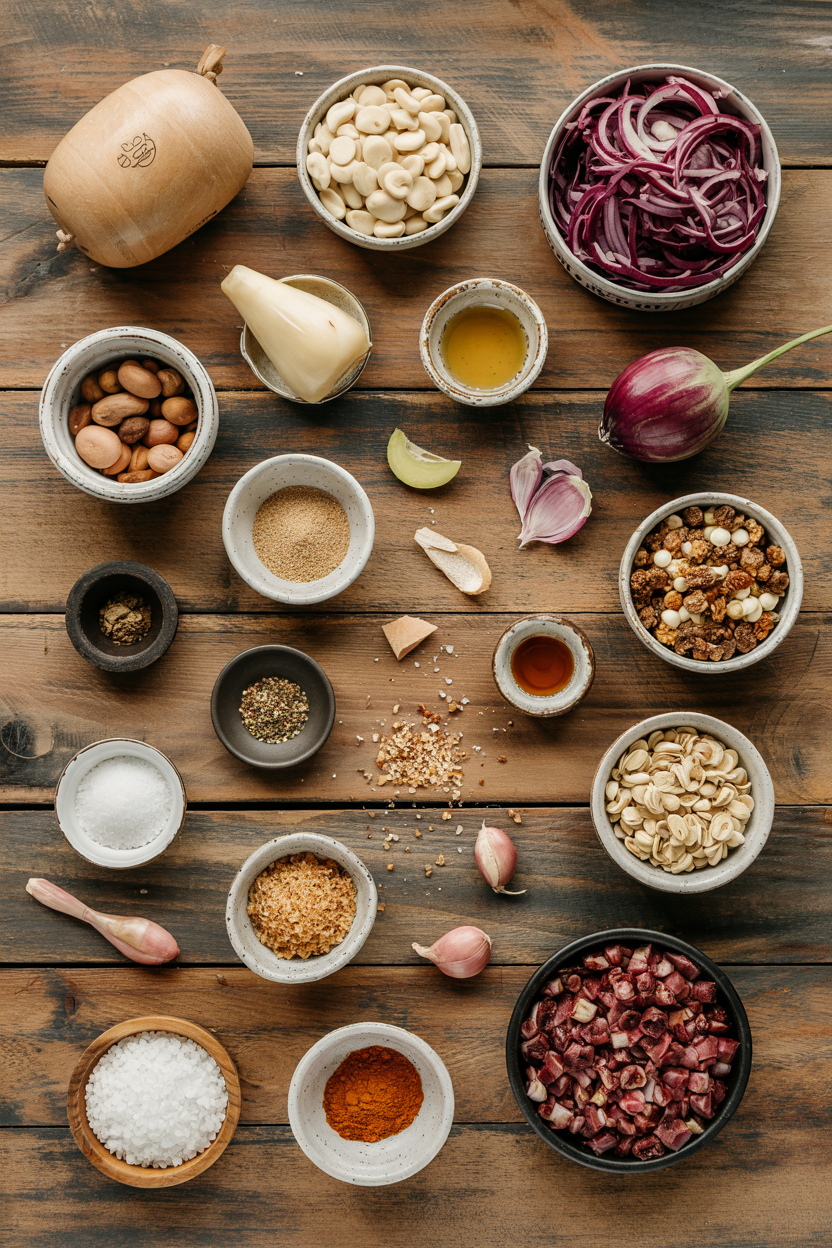
Most supermarkets stock cannellini beans if you can't find fabes-they're close enough in texture. When shopping for sides that balance the richness, this quick coleslaw dish brings the crunch and brightness you need.
- 1 lb dried fabes (Asturian white beans)
- 8 oz chorizo sausage
- 8 oz morcilla (Spanish blood sausage)
- 12 oz pork shoulder or bacon
- 1 yellow onion, diced
- 4 garlic cloves, minced
- 2 bay leaves
- 2 tablespoon smoked paprika (pimentón)
- 2 tablespoon olive oil
- Salt to taste
Ingredient Details
- Fabes (Asturian white beans)
Large, creamy beans that hold shape-cannellini work if you can't find them - Chorizo sausage
Spanish chorizo (not Mexican)-look for firm, cured links with smoky paprika - Morcilla (blood sausage)
Adds earthy richness-substitute black pudding or omit if unavailable - Pork shoulder
Cut into 1-inch cubes-bacon or pancetta work but add more salt - Smoked paprika (pimentón)
Spanish smoked paprika is essential-regular paprika plus liquid smoke works in a pinch - Onion and garlic
Sauté until translucent (5 minutes)-this sweetens the base before adding liquid - Bay leaves
Two leaves add subtle herbal notes-remove before serving
Ingredient Swaps
Fabes can be hard to source outside specialty stores, but cannellini beans deliver similar creaminess. If you're swapping proteins or seasonings to stretch your budget, simple homemade french fries make a satisfying side that doesn't compete with the stew's richness.
Four swaps that work:
- No fabes? Use cannellini or great northern beans-soak and simmer the same way, texture will be slightly less creamy
- Can't find morcilla? Try black pudding or leave it out entirely-you lose earthy depth but chorizo carries the smoky flavor
- Pork shoulder too much? Swap in bacon or pancetta-cut into chunks, expect saltier and fattier results
- No smoked paprika? Mix regular paprika with 2-3 drops liquid smoke-not as nuanced but gets the job done
Cannellini Beans
Works for: Budget cooking, easier to find, similar texture
Skip if: You want authentic Asturian creaminess and size
Kielbasa or Andouille
Works for: When Spanish chorizo isn't available, adds smoke
Skip if: You want traditional Spanish paprika flavor
Chicken Broth Instead of Water
Works for: Extra savory depth, richer final broth
Skip if: You want the traditional bean-forward taste
Instructions
Plan for 3 hours of mostly hands-off simmering once the beans are soaked. If you want a potato side that cooks faster than the stew, something creamy like potato wedges takes 20 minutes and adds textural contrast without extra pots.
- Soak beans overnight: Place 1 lb dried fabes in a large bowl, cover with cold water by 3 inches, soak 8-12 hours at room temperature.
- Sauté aromatics: Heat 2 tablespoon olive oil in a large Dutch oven over medium heat, add diced onion and minced garlic, cook 5 minutes until translucent.
- Add meats and beans: Drain soaked beans, add to pot with 8 oz chorizo (sliced), 8 oz morcilla (sliced), 12 oz pork shoulder (cubed), and 2 bay leaves, cover with 8 cups water.
- Simmer low and slow: Bring to a bare simmer (180°F), reduce heat to low, cook uncovered 2-3 hours, skimming foam after 30 minutes, stirring gently every 45 minutes.
- Finish and rest: Add 2 tablespoon smoked paprika halfway through cooking, salt to taste in final 30 minutes, remove from heat and rest 15-20 minutes before serving.
What to Serve With It
Fabada is rich and filling, so you want sides that add crunch or brightness without competing. For ideas on building out the full meal when serving this for company, weeknight chicken dinner ideas walks through options that balance hearty stews.
| Side Dish | Prep | Why It Works | How to Serve |
|---|---|---|---|
| Crusty rustic bread | Easy | Soaks up rich broth, no cooking needed | Slice thick, warm in oven 5 minutes, serve alongside |
| Simple green salad | Easy | Fresh greens cut through the richness | Toss with lemon vinaigrette, serve chilled |
| Roasted seasonal vegetables | Medium | Adds fiber and textural contrast | Roast at 400°F for 25 minutes, season with olive oil and salt |
| Pan con tomate | Easy | Traditional Spanish pairing, bright tomato flavor | Rub toasted bread with garlic and fresh tomato, drizzle olive oil |
| Manchego cheese platter | Easy | Salty, nutty contrast for hosting | Slice cheese, serve with olives and marcona almonds |
Three ways to serve it:
- Weeknight bowl: Ladle fabada into wide bowls, serve with crusty bread for dipping, add a simple green salad on the side
- Casual dinner party: Present in a large serving dish family-style, set out pan con tomate and a Manchego platter, let guests help themselves
- Meal prep portions: Divide into individual containers, pack sliced bread separately, reheat on stovetop for lunches
Store and Reheat
Fabada stores well and often tastes better the next day as flavors meld. For soups and stews with dairy or cream that need gentler storage, tangy sauce recipe offers tips on keeping sauces fresh without separation.
| Method | Time | Best For |
|---|---|---|
| 🍳 Stovetop | 10-15 minutes | Even warming without breaking beans |
| 🔥 Oven | 20 minutes at 325°F (160°C) | Large portions, preserves texture |
| 📦 Microwave | 3-5 minutes, stirring halfway | Small portions, speed over perfection |
For best results when storing:
- Cool quickly: Divide into shallow containers so stew cools within 2 hours-this prevents bacterial growth
- Fridge storage: Keep covered for 3-4 days-beans absorb more flavor as they sit
- Freeze in portions: Use freezer-safe containers, leave 1 inch headspace for expansion, label with date, use within 3 months
- Reheat gently: Add 2-3 tablespoon water or broth when reheating-stew thickens as it sits and needs thinning
- Skim fat after chilling: If you refrigerate overnight, a fat layer hardens on top-lift it off before reheating for a cleaner broth
Frequently Asked Questions
Canned beans break down and turn mushy in the long simmer. Stick with dried fabes or cannellini soaked overnight for the right texture.
Cool in shallow containers within 2 hours, refrigerate up to 4 days. Reheat on stovetop over low heat for 10-15 minutes, adding water to thin.
Beans should be tender but intact when pressed with a spoon, pork should shred easily with a fork after 2-3 hours of simmering.
Simmer uncovered for 30 more minutes to reduce liquid. Add more smoked paprika and salt gradually-taste after each addition.
Double the recipe easily in a large stockpot-cooking time stays the same. Portion into individual containers for meal prep; freezes well up to 3 months.
Spanish Fabada Asturiana
Ingredients
Equipment
Method
- Place 1 lb dried fabes in a large bowl, cover with cold water by 3 inches and soak 8-12 hours at room temperature.1 lb fabes (Asturian white beans)
- Heat 2 tablespoon olive oil in a large Dutch oven over medium heat, add diced onion and minced garlic, cook for 5 minutes until translucent.1 medium yellow onion, 4 cloves garlic, 2 tbsp olive oil
- Drain soaked beans and add to the pot along with sliced chorizo, sliced morcilla, cubed pork shoulder, and 2 bay leaves. Cover with 8 cups water.1 lb fabes (Asturian white beans), 8 oz chorizo sausage, 8 oz morcilla (Spanish blood sausage), 12 oz pork shoulder, 2 bay leaves, 8 cups water
- Bring to a bare simmer at about 180°F. Reduce heat to low and cook uncovered for 2-3 hours. Skim foam after 30 minutes and stir gently every 45 minutes.
- Add 2 tablespoon smoked paprika halfway through cooking and salt to taste during the final 30 minutes. Remove from heat and let rest for 15-20 minutes before serving.2 tbsp smoked paprika, to taste salt
Notes
- Simmer gently at 180°F and never boil to keep beans intact and meat tender.
- Skim foam after 30 minutes to prevent greasy, cloudy broth.
- Resting the stew off heat for 15-20 minutes lets flavors deepen and the stew thicken.