
You're tossing pasta when you realize the basil you bought is already wilted and black. The dish needs that fresh herbal brightness and sweet aroma to balance tomatoes and garlic.
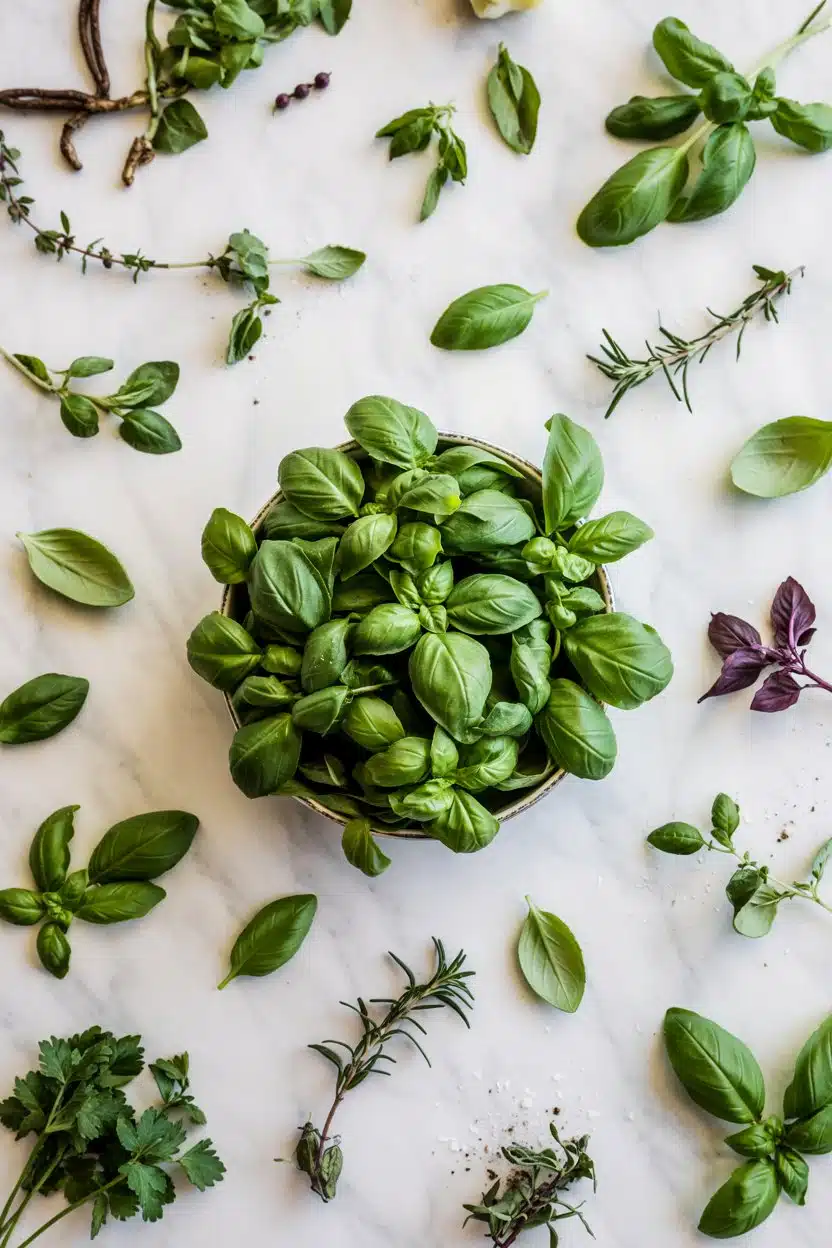
Basil brings a unique sweetness with hints of anise and clove. Standard grocery store herbs don't replicate that exact profile.
Fresh oregano works 1:1 in cooked sauces but tastes earthier and less sweet. Parsley matches basil's fresh brightness in raw dishes like salads and garnishes. Cilantro swaps 1:1 for raw applications but brings citrusy notes instead of anise sweetness. Avoid cilantro in Italian dishes.
5 Substitutes for Basil: Fresh Herbal Brightness
Each swap below handles different aspects-some work better cooked, others shine when used raw.
Remember it later
Planning to try this recipe soon? Save it for a quick find later!
| # | Substitute | Best For | Ratio | Key Note |
|---|---|---|---|---|
| 1 | Fresh Oregano | 🍳 Cooking | 1:1 | Earthier, less sweet |
| 2 | Parsley | 🥗 Raw | 1:1 | Milder, less aromatic |
| 3 | Cilantro | 🥗 Raw | 1:1 | Citrusy, pungent profile |
| 4 | Herb Blend | 🍳 Cooking | 2:1:1 | Complex herbal mix |
| 5 | Spinach | 🍳 Cooking | 1:1 | Texture only swap |
1. Fresh Oregano Leaves 🌿
Fresh oregano steps in when you're cooking Italian sauces, stews, or braises that need herbal depth. The flavor runs earthier and more piney than basil's sweetness.
Use 1:1 in any cooked application. Oregano handles heat better than basil and doesn't wilt into black mush.
- ✅ Shares herbal brightness and aromatic depth
- ✅ Holds up better during long cooking
- ⚠️ Less sweet-lacks basil's anise notes
- ⚠️ Tougher leaf texture when used raw
Add oregano at the start of cooking so its pungency mellows. It works in marinara sauce, pizza sauce, or Mediterranean stews where herbal backbone matters more than delicate sweetness.
2. Fresh Flat-Leaf Parsley 🥗
Parsley brings fresh green brightness without basil's sweetness or strong aroma. It's the swap we use for raw applications like salads, garnishes, and fresh sauces.
Use 1:1 anywhere you'd use basil raw. The flavor stays mild and clean, slightly grassy with a hint of pepper.
Parsley won't overpower delicate ingredients the way basil sometimes can. It works in grain salads, pasta salads, or sprinkled over finished dishes for color and freshness.
Skip it in pesto or dishes counting on basil's signature sweetness. If you're out of parsley too, replacements similar to Parsley cover most bases.
3. Fresh Cilantro Leaves 🌱
Cilantro adds bright herbal freshness with a citrusy punch instead of basil's anise sweetness. Use it 1:1 only in raw dishes where its distinct profile works with the other flavors.
The flavor leans pungent and sharp with citrus notes. Some people taste soap-skip this swap if that's you.
Cilantro shines in salads, salsas, or garnishes where bright herbal notes matter more than matching basil exactly. It works with lime, garlic, and chili but clashes with traditional Italian flavors like tomato and mozzarella.
Don't use it in Caprese salad, marinara sauce, or pesto. The citrusy sharpness fights those classic combinations.
4. DIY Herb Blend: Parsley + Mint + Oregano 🔄
Mixing 2 parts parsley + 1 part mint + 1 part oregano rebuilds some of basil's complexity for cooked dishes. Parsley brings the green base, mint adds sweetness, and oregano provides aromatic depth.
Chop everything finely and mix before adding to your dish. This blend works in sauces, soups, and marinated dishes where the herbs cook down together.
- 🍳 In cooking: Add early so flavors meld
- ✅ Flavor depth: Covers more of basil's range
- ⚠️ Not for raw: Too complex for fresh applications
The texture won't match basil's soft leaves perfectly. Use this when you're cooking the herbs into something rather than featuring them raw.
If you're short on mint specifically, Mint replacements that work fill that gap with similar sweetness.
5. Baby Spinach Leaves 🥬
Baby spinach provides leafy texture and balances acidity in cooked dishes but lacks any herbal aroma or sweetness. Use it 1:1 only when basil's role is textural.
The flavor stays mild and slightly earthy. It wilts similarly to basil but doesn't add aromatic complexity.
Spinach works in pasta sauces, soups, or stir-fries where you need green leaves to wilt into the dish. It adds color and body without changing the flavor much.
Skip it in pesto, Caprese salad, or any dish where basil's aroma matters. For more options, check this simple Spinach substitutes list if you need texture-based swaps.
Picking Your Basil Swap
- For cooked Italian dishes: Fresh oregano or the parsley-mint-oregano blend
- For raw salads and garnishes: Parsley keeps it clean and mild
- For texture in cooked sauces: Spinach adds body without aroma
Match the swap to Cooked applications forgive more-raw dishes need closer flavor matches.
Frequently Asked Questions
Dried basil works in cooked dishes but tastes grassier and less sweet than fresh. Use 1 teaspoon dried for every tablespoon of fresh basil. Add it early in cooking to let the flavor develop. Skip dried basil in raw applications like Caprese salad-it won't soften enough and the flavor stays dull.
The parsley-mint-oregano blend comes closest for pesto since it rebuilds some of basil's complexity. Use 2 cups parsley, ½ cup mint, and ½ cup oregano to replace 3 cups basil. Arugula or spinach work too but won't match the herbal sweetness. Add extra garlic and lemon to boost flavor when using non-basil greens.
Thai basil works 1:1 in most dishes but brings stronger anise flavor and a hint of spice. It holds up better in high-heat cooking than regular basil. Use it in Italian dishes if you want more pronounced licorice notes. It's better suited to Asian stir-fries and curries where that flavor fits naturally.
Store basil like cut flowers-trim the stems and place in a glass of water at room temperature. Cover loosely with a plastic bag and change the water every couple days. Don't refrigerate it. Cold temperatures cause the leaves to blacken quickly. Use basil within 3-5 days for best flavor and color.
Basil's delicate oils break down with prolonged heat, so add it near the end of cooking for maximum flavor. Long-cooked sauces benefit from adding basil twice-some at the start for depth and more at the end for brightness. Raw basil delivers the strongest flavor and most aroma. Heat mutes the sweetness and anise notes significantly.
5 Best Substitutes for Basil
Ingredients
Method
- Choose your substitute based on whether your recipe is cooked or raw.
- If using fresh herbs, finely chop (and mix if making herb blend) before adding.
- Apply the appropriate substitution ratio (usually 1:1 except for herb blend).
- Add cooked substitutes early in the cooking process to meld flavors. Use raw substitutes fresh for brightness.
- Adjust seasoning and taste before serving to ensure balance.
Notes
- Fresh oregano holds up better to heat than basil and adds deeper herbal notes.
- Parsley and cilantro are ideal for raw uses but have distinctly different flavor profiles from basil.
- Herb blends can mimic basil's complexity but work best in cooked applications.



