When you need a fast dinner that looks like you spent an hour but takes 25 minutes, shrimp lo mein delivers. One skillet, high heat, and noodles tossed with juicy shrimp and crisp vegetables.

The wok does the work. Sear the shrimp quickly, stir-fry the vegetables until barely tender, then toss everything with noodles and sauce over high heat.
This works for weeknight meals when takeout sounds easier but homemade tastes better. Perfect for meal prep or last-minute family dinners when the fridge needs clearing out.
Shrimp lo mein cooks in 10 minutes once prep is done. Boil noodles al dente, sear shrimp on high heat, then toss everything together in the same skillet. The key is speed - high heat keeps shrimp tender and vegetables crisp without turning the noodles mushy.
Why This Recipe Works
High heat creates the textural contrast between tender noodles, juicy shrimp, and crisp vegetables in under 10 minutes. The skillet needs to be hot enough to sear shrimp without overcooking while keeping vegetables bright and snappy. For another seafood dish with similar quick-cooking technique, try a flaky homemade crust recipe that relies on high heat and precise timing.
Remember it later
Planning to try this recipe soon? Save it for a quick find later!
Prep Time
15 min
Cook Time
10 min
Total Time
25 min
Servings
4 servings
Difficulty
Easy
Category
Main Dish
Quick Tip
Cook shrimp quickly to avoid toughness
Best For
Weeknight | Meal prep
What makes this work:
- Boiling noodles 1-2 minutes less than package directions keeps them firm enough to hold up during stir-frying
- Searing shrimp on high heat for 1-2 minutes per side develops browning without turning them rubbery
- Adding hard vegetables like carrots first (2-3 minutes) then softer ones last (1 minute) creates crisp-tender texture throughout
- Tossing noodles with sauce over high heat for 1-2 minutes coats every strand without making them soggy
- Finishing with toasted sesame oil off the heat preserves its nutty aroma instead of burning it away
What You'll Need
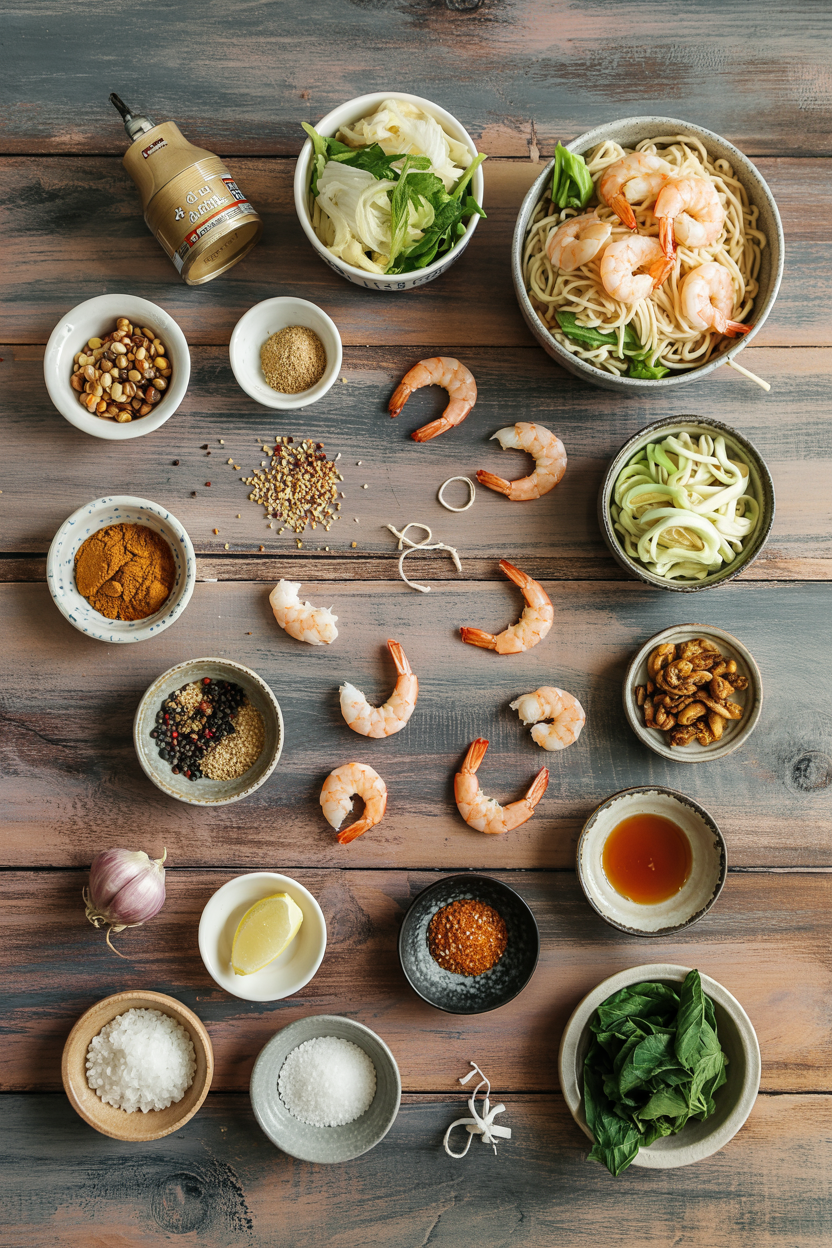
Fresh shrimp and lo mein noodles are the foundation, but the vegetables and aromatics do the flavor work. Stock your pantry with soy sauce and sesame oil, then grab whatever vegetables look good at the store.
- 1 lb medium-large shrimp, peeled and deveined
- 8 oz lo mein noodles or spaghetti
- 1 bell pepper, sliced
- 1 medium carrot, julienned
- 2 cups bok choy or snow peas
- 3 cloves garlic, minced
- 1 tablespoon fresh ginger, grated
- 2 green onions, sliced
- 3 tablespoon soy sauce
- 1 tablespoon oyster sauce (optional)
- 1 teaspoon toasted sesame oil
- 1 teaspoon sugar
Ingredient Details
- Shrimp
Medium-large size (31-40 count) works best - smaller shrimp overcook easily, larger ones take too long to sear through - Lo Mein Noodles
Fresh egg noodles have the right chew, but dried spaghetti works as a substitute if you cook it 1 minute under package time - Soy Sauce
Light or low-sodium lets you control saltiness - regular soy sauce can overpower the shrimp and vegetables - Fresh Ginger
Grate it on a microplane for even distribution - chunks of ginger create harsh bites instead of background warmth - Garlic
Mince it fine so it cooks in 20-30 seconds without burning - large pieces turn bitter over high heat - Sesame Oil
Use toasted sesame oil as a finishing oil, not for cooking - high heat destroys its nutty flavor and creates bitterness - Bell Peppers
Slice them thin so they cook in 2-3 minutes - thick strips stay raw and crunchy in the final dish
Ingredient Swaps
Most swaps work as long as you match cooking times to the original ingredient. Start with what's in your fridge, then adjust the stir-fry timing based on whether the swap is harder or softer than the original.
Common substitutions:
- Soy sauce → Tamari - Same umami depth without wheat, perfect for gluten-free diets (1:1 ratio)
- Lo mein noodles → Rice noodles or spaghetti - Rice noodles softer and more delicate, spaghetti firmer with different chew (same weight, adjust cook time)
- Shrimp → Tofu or chicken - Tofu needs pressing and crisping (5-6 minutes), chicken requires 6-8 minutes until 165°F internal
- Oyster sauce → Hoisin sauce - Slightly sweeter with different umami notes, adds molasses undertone (1:1 ratio)
| Instead Of | Use | Ratio |
|---|---|---|
| Fresh shrimp | Frozen shrimp, thawed and patted dry | 1:1 |
| Lo mein noodles | Spaghetti or rice noodles | 1:1 by weight |
| Soy sauce | Tamari or coconut aminos | 1:1 |
| Sugar | Honey or omit entirely | ½ teaspoon honey or skip |
| Sesame oil | Vegetable oil + toasted sesame seeds | 1 teaspoon oil + 1 teaspoon seeds |
| Garlic | Garlic powder | ¼ teaspoon per clove |
Instructions
The entire stir-fry happens in 10 minutes once prep is done. Boil the noodles while you chop vegetables, then everything cooks in sequence - shrimp first, vegetables second, noodles and sauce last.
Boil noodles in salted water 1-2 minutes less than package directions until al dente. Drain, toss with 1 tablespoon neutral oil to prevent sticking, set aside.
Heat wok or large skillet over high heat until wisps of smoke appear. Add 1 tablespoon neutral oil, swirl to coat, then add patted-dry shrimp in single layer. Sear 1-2 minutes per side until opaque and curled, remove to plate.
Add another tablespoon oil to same skillet. Stir-fry hard vegetables (bell peppers, carrots) 2-3 minutes until crisp-tender. Add softer vegetables (bok choy, snow peas) and cook 1 minute until bright green.
Push vegetables to sides of skillet, add minced garlic and grated ginger to center. Stir 20-30 seconds until fragrant but not browned, then mix with vegetables.
Return noodles and shrimp to skillet. Pour soy sauce, oyster sauce, and sugar over top. Toss everything together over high heat 1-2 minutes until sauce coats noodles evenly. Remove from heat, drizzle with toasted sesame oil, garnish with sliced green onions.
What to Serve With It
Lo mein is a complete meal on its own, but adding one crisp or light side balances the noodles and creates a fuller plate. Pick something that takes less time than the main so everything finishes together. For broader meal planning around seafood mains, check out weeknight tuna stuffed tomatoes meal ideas that follow the same quick-cooking approach.
| Side Dish | Prep | Why It Works | How to Serve |
|---|---|---|---|
| Steamed edamame | Easy | Protein-rich pods add crunch and salt contrast | Boil 4-5 minutes, toss with coarse salt |
| Cucumber salad | Easy | Cool, crisp texture cuts through rich noodles | Slice thin, dress with rice vinegar and sesame |
| Miso soup | Easy | Warm, umami starter without competing flavors | Whisk miso paste into hot dashi or broth |
| Steamed broccoli | Easy | Adds fiber and bright green color to plate | Steam 3-4 minutes, season with soy sauce |
| Spring rolls | Medium | Handheld option with complementary Asian flavors | Serve with sweet chili or peanut sauce |
Three ways to serve it:
- Family-style weeknight: Toss lo mein in large serving bowl, set out a fresh salad on the side and steamed edamame in small dishes for everyone to grab
- Meal prep bowls: Portion lo mein into containers with simple cauliflower recipe florets on the side, reheat separately to preserve textures
- Casual entertaining: Serve lo mein in individual bowls, pair with spring rolls and hot-and-sour soup for a complete Asian-inspired spread
Store and Reheat
Lo mein holds 3-4 days in the fridge but loses some texture as noodles absorb sauce. Store in shallow airtight containers so it cools quickly and prevents bacterial growth. The shrimp stays safe but vegetables soften more each day. For a starchy side that reheats better, try a buttery potato recipe that maintains texture through multiple reheats.
| Method | Time | Best For |
|---|---|---|
| 🍳 Stovetop | 3-4 min on medium heat with splash of water | Best texture restoration, crisps vegetables slightly |
| 📦 Microwave | 1-2 min, stirring every 30 seconds | Quick single portions, softens vegetables further |
| 🔥 Oven | 10 min at 350°F covered with foil | Even reheating for large portions, prevents drying |
For best results when storing:
- Let lo mein cool to room temperature within 30 minutes before refrigerating to prevent condensation that makes noodles mushy
- Store noodles and any extra vegetables in same container since they share similar moisture levels
- Add a tablespoon of water or broth when reheating to loosen sauce and prevent noodles from clumping
- Reheat only what you'll eat - repeated heating breaks down shrimp texture and turns vegetables limp
- Freeze up to 1 month in portions, though thawed noodles will be softer and vegetables lose their snap
Frequently Asked Questions
Yes, thaw frozen shrimp completely in the fridge overnight or under cold running water for 15 minutes. Pat them completely dry with paper towels before searing - any surface moisture prevents browning and creates steam instead of a golden crust.
Store in shallow airtight containers in the fridge for 3-4 days. Reheat on the stovetop over medium heat with a splash of water for 3-4 minutes, stirring frequently until heated through. Microwave works for single portions but softens vegetables more.
Cooked shrimp turn opaque pink and curl into a loose C-shape after 1-2 minutes per side over high heat. If they curl into tight circles, they're overcooked and will be rubbery. Pull them when just opaque since they'll cook slightly more when tossed with hot noodles.
Soggy lo mein comes from overcooked noodles or too much liquid. Cook noodles 1-2 minutes less than package directions and drain them well. If already soggy, increase heat to high and stir-fry 2-3 minutes to evaporate excess moisture quickly.
Steamed edamame, cucumber salad, and miso soup work best because they're quick and light. Cucumber salad stays crisp next to hot noodles, while edamame adds protein and contrasting texture without competing flavors.
Shrimp Lo Mein
Ingredients
Equipment
Method
- Boil noodles in salted water 1-2 minutes less than package directions until al dente. Drain and toss with 1 tablespoon neutral oil to prevent sticking. Set aside.8 oz lo mein noodles, 2 tbsp neutral oil
- Heat wok or large skillet over high heat until wisps of smoke appear. Add 1 tablespoon neutral oil, swirl to coat. Add patted dry shrimp in a single layer and sear 1-2 minutes per side until opaque and curled. Remove shrimp to plate.1 lb shrimp, 2 tbsp neutral oil
- Add another tablespoon of neutral oil to the skillet. Stir-fry hard vegetables (bell pepper, carrot) for 2-3 minutes until crisp-tender. Add softer vegetables (bok choy or snow peas) and cook 1 minute until bright green.1 bell pepper, 1 medium carrot, 2 cups bok choy or snow peas, 2 tbsp neutral oil
- Push vegetables to the sides of the skillet. Add minced garlic and grated ginger to the center. Stir 20-30 seconds until fragrant but not browned, then mix with the vegetables.3 cloves garlic, 1 tbsp fresh ginger
- Return noodles and shrimp to the skillet. Pour soy sauce, oyster sauce (if using), and sugar over top. Toss everything together over high heat for 1-2 minutes until sauce coats noodles evenly.1 lb shrimp, 8 oz lo mein noodles, 3 tbsp soy sauce, 1 tbsp oyster sauce, 1 tsp sugar
- Remove skillet from heat. Drizzle toasted sesame oil over the dish and toss gently. Garnish with sliced green onions and serve immediately.2 green onions, 1 tsp toasted sesame oil
Notes
- Pat shrimp dry and salt lightly before searing to prevent steaming and promote browning.
- Boil noodles 1-2 minutes less than package directions to keep them firm during stir-frying.
- Keep skillet very hot to sear shrimp and vegetables quickly without steaming.