Complete Recipe Article
Most braised pork comes out tender but bland, with soggy edges that lack texture. The fix is a two-step process: low-and-slow braising until fork-tender, then high-heat crisping to create caramelized edges.

The citrus does double duty. Orange and lime juice tenderize the meat during braising, then reduce into a glaze that coats every shred.
This is what you make when meal prep needs to taste intentional, not like leftovers reheated four times.
Pork Carnitas Mexican-Style braises fatty pork shoulder in citrus and spices until it shreds easily, then crisps the shredded meat under high heat. The two-phase cooking creates tender interior with golden caramelized edges. Best for meal prep, weeknight tacos, or casual entertaining when you need hands-off cooking with crispy payoff.
Why This Recipe Works
Fatty pork shoulder breaks down into tender shreds after 2.5 hours at 300°F, while the citrus tenderizes and seasons from the inside out. For a similar slow-cooked approach with different seasonings, this tender roast uses the same low-and-slow principle but with an herb crust.
Remember it later
Planning to try this recipe soon? Save it for a quick find later!
Prep Time
15 min
Cook Time
2 hrs 30 min
Total Time
2 hrs 45 min
Servings
6 servings
Difficulty
Medium
Category
Main Dish
Quick Tip
Finish with high heat to crisp edges
Best For
Weeknight | Meal prep | Entertaining
Five reasons this method delivers:
- Marbled fat renders slowly: Pork shoulder's intramuscular fat melts during braising, keeping every shred juicy instead of dry
- Citrus tenderizes and flavors: Orange and lime juice break down tough connective tissue while adding bright acidity
- Low heat prevents toughness: 300°F braising temperature dissolves collagen without seizing up muscle fibers
- Two-phase texture: Braising creates tenderness, crisping adds caramelized edges with textural contrast
- Forgiving timing window: Pork stays tender from 195°F to 205°F internal, giving you a 30-minute margin
What You'll Need
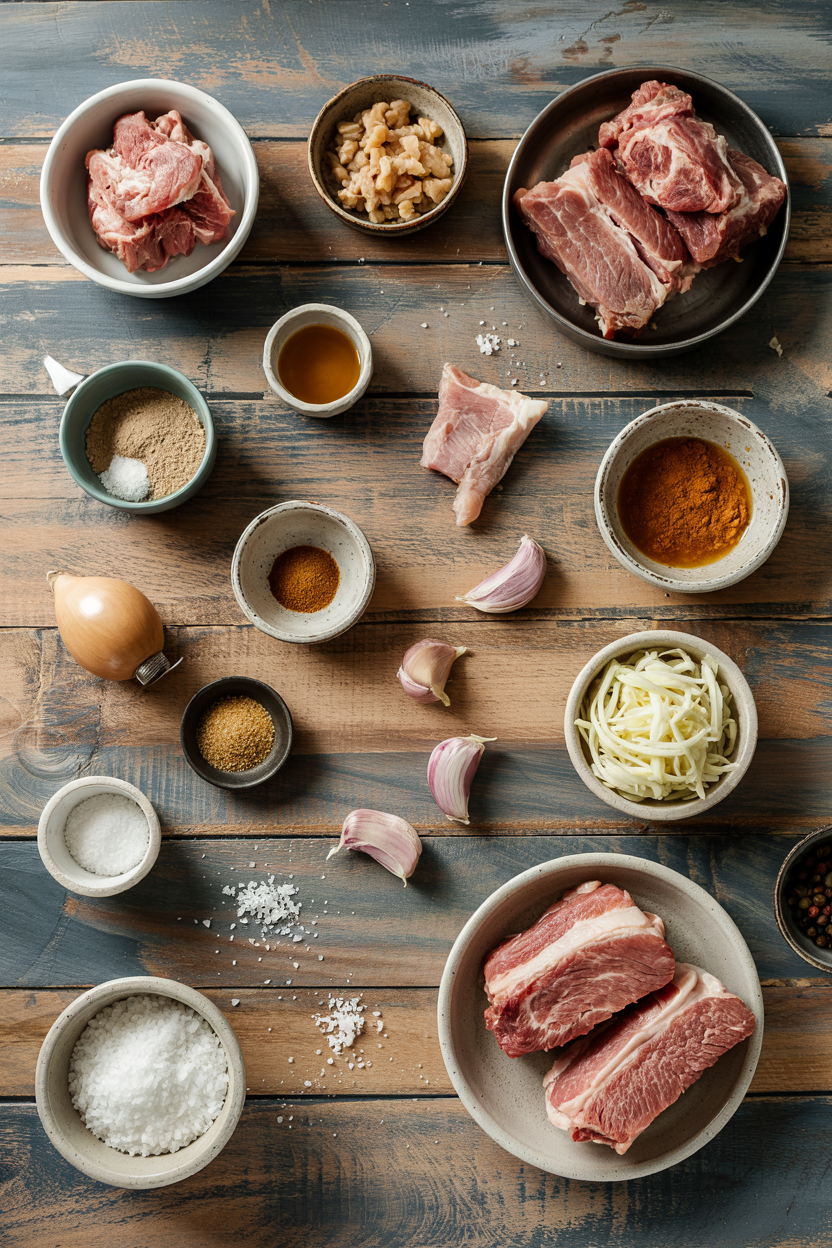
Pork shoulder sits at most grocery stores year-round, usually labeled as pork butt or Boston butt. Stock up on bay leaves and Mexican oregano if you're making this more than once - a creamy potato on the side uses similar spice profiles and timing.
- 3-4 lbs pork shoulder (pork butt), cut into 2-inch chunks
- ½ cup orange juice
- 2 tablespoon lime juice
- 6 cloves garlic, smashed
- 1 medium onion, quartered
- 1 tablespoon cumin
- 1 tablespoon Mexican oregano
- 3 bay leaves
- Salt and black pepper to taste
Ingredient Details
- Pork shoulder
Choose cuts with visible fat marbling - lean pork dries out during long braising - Orange juice
Fresh-squeezed works best but carton juice is fine; skip concentrate, it's too sweet - Lime juice
Fresh lime adds brightness that bottled juice can't match - use 1-2 limes - Garlic
Smash with the flat side of a knife to release oils without mincing - Cumin
Toast whole seeds in a dry pan first for deeper earthy flavor, then grind - Mexican oregano
Mediterranean oregano works in a pinch but tastes sharper and less citrusy - Bay leaves
Remove before shredding - they add herbal depth but turn bitter if left in too long
Ingredient Swaps
Pork shoulder availability varies by region, and some stores only carry boneless cuts. If you're working with what's on hand, these swaps keep the tender-crispy result intact without special shopping trips.
Four swaps that work:
- Pork shoulder → pork butt or Boston butt: Same cut, different name - both have the fat marbling needed for tender carnitas
- Orange juice → pineapple juice mixed with 1 tablespoon apple cider vinegar: Similar acidity and sweetness, slightly tropical undertone
- Lime juice → white vinegar or lemon juice: Match the acidity without exact citrus flavor - use 1 tablespoon vinegar or 2 tablespoon lemon
- Dutch oven braising → slow cooker on low 6-8 hours: Skip the searing step, dump everything in, shred and crisp at the end
| Instead Of | Use | Ratio |
|---|---|---|
| Fresh orange juice | Pineapple juice + vinegar | ½ cup juice + 1 tablespoon vinegar |
| Pork shoulder | Pork butt (Boston butt) | 1:1 by weight |
| Mexican oregano | Regular oregano or thyme | 1:1, slightly different flavor |
| Dutch oven | Slow cooker | Low 6-8 hours |
Instructions
The entire process takes under 3 hours but most of that time is unattended braising. Once the pork hits 195°F internal, you shred and crisp in one fast step.
Step-by-step process:
Sear the pork chunks: Heat 2 tablespoon oil in a Dutch oven over medium-high heat. Brown pork chunks in batches, 3-4 minutes per side until golden. Don't crowd the pan or they'll steam instead of sear.
Build the braising liquid: Remove pork and set aside. Add garlic and onion to the pot, cook 2 minutes until fragrant. Pour in orange juice, lime juice, and 1 cup water. Scrape up browned bits from the bottom with a wooden spoon.
Braise low and slow: Return pork to the pot. Add cumin, oregano, bay leaves, salt, and pepper. Cover with a tight lid and braise in a 300°F oven for 2.5 hours. Check internal temp at 2 hours - pull when it reaches 195°F and shreds easily with a fork.
Shred and strain: Remove pork from braising liquid and let rest 10 minutes on a cutting board. Shred into bite-sized chunks using two forks. Strain the braising liquid and reserve 1 cup for reheating later.
Crisp the edges: Spread shredded pork ½-inch thick on a sheet pan. Drizzle with 2 tablespoon reserved braising liquid. Roast at 425°F for 10-12 minutes until edges turn golden and crispy. Flip once halfway through for even browning.
What to Serve With It
Carnitas needs sides that cut through the richness without adding more heaviness to the plate. Most people pair it with rice and beans, but consider complete kalua pork sandwiches meal ideas for similar pork-forward dinners with contrasting sides.
| Side Dish | Prep | Why It Works | How to Serve |
|---|---|---|---|
| Corn tortillas | Easy | Wrap crisped pork, traditional taco vessel | Warm in dry skillet 30 seconds per side |
| Simple cabbage slaw | Easy | Crunchy contrast to tender pork, adds freshness | Toss shredded cabbage with lime juice and salt |
| Mexican rice | Medium | Mild starch absorbs braising liquid, fills plate | Cook rice in tomato broth with garlic and cumin |
| Black beans | Easy | Adds protein, classic pairing, budget-friendly | Heat canned beans with cumin and garlic powder |
| Pico de gallo | Easy | Bright acidity cuts richness, adds fresh crunch | Dice tomatoes, onion, cilantro, toss with lime |
Three ways to serve it:
- Taco bar setup: Lay out warm tortillas, shredded carnitas, slaw, salsa verde, pickled jalapeños, and lime wedges - guests build their own
- Carnitas bowl: Layer rice, black beans, carnitas, pico de gallo, and avocado slices in a wide bowl - no tortillas needed
- Sheet-pan nachos: Spread tortilla chips on a baking sheet, top with carnitas and cheese, bake 5 minutes, finish with sour cream and cilantro
Store and Reheat
Carnitas holds texture better than most braised meats because you re-crisp before serving. Store the shredded pork in shallow containers with a splash of braising liquid to keep it moist, then crisp fresh each time you reheat.
| Method | Time | Best For |
|---|---|---|
| 🍳 Stovetop | 5-7 min over medium heat | Quick reheating with reserved braising liquid, maintains moisture |
| 🔥 Oven | 15 min at 350°F | Restoring crisp texture when spread thin on sheet pan |
| 📦 Microwave | 2-3 min with damp paper towel | Fast reheat for single portions; loses crispness but stays tender |
For best results when storing:
- Keep braising liquid separate: Store 1-2 cups of strained liquid in a jar - use it to moisten dry carnitas when reheating
- Freeze in portion sizes: Divide shredded pork into 2-cup portions before freezing so you thaw only what you need
- Skip freezing crispy carnitas: Only freeze the tender braised pork before crisping - re-crisp after thawing for best texture
- Label with the date: Frozen carnitas stay good for 3 months but label containers so you use oldest batches first
- Skim fat before storing: Chill braising liquid overnight, then scrape off the solidified fat layer before reheating
Frequently Asked Questions
Pork loin is too lean and dries out during long braising. Stick with pork shoulder or pork butt - the fat marbling keeps carnitas juicy and tender.
Store carnitas in an airtight container for 3-4 days. Keep some braising liquid with the meat to prevent it from drying out.
Pull pork at 195°F for easy shredding. It stays tender up to 205°F, giving you a 30-minute window before it starts drying out.
Toss dry carnitas with reserved braising liquid or a squeeze of lime juice. For bland flavor, add more salt and a pinch of cumin before crisping.
Double the recipe using a larger pot or two Dutch ovens. Freeze shredded pork in 2-cup portions before crisping - thaw and crisp fresh when serving.
Pork Carnitas Mexican-Style
Ingredients
Equipment
Method
- Heat 2 tablespoons oil in a Dutch oven over medium-high heat. Brown pork chunks in batches for 3-4 minutes per side until golden. Avoid crowding the pan to prevent steaming.3-4 lbs pork shoulder, 2 tbsp oil
- Remove pork and set aside. Add smashed garlic and quartered onion to the pot and cook for 2 minutes until fragrant. Pour in orange juice, lime juice, and 1 cup water. Scrape up browned bits from the bottom with a wooden spoon.6 cloves garlic, 1 medium onion, 0.5 cup orange juice, 2 tbsp lime juice, 1 cup water
- Return pork to the pot. Add cumin, Mexican oregano, bay leaves, salt, and black pepper. Cover tightly and braise in a 300°F oven for 2.5 hours. Check internal temperature at 2 hours and pull pork when it reaches 195°F and shreds easily with a fork.3-4 lbs pork shoulder, 1 tbsp cumin, 1 tbsp Mexican oregano, 3 leaves bay leaves, salt, black pepper
- Remove pork from braising liquid and let rest 10 minutes. Shred pork into bite-sized pieces using two forks. Strain braising liquid and reserve 1 cup for reheating or crisping.3-4 lbs pork shoulder
- Spread shredded pork in a ½-inch thick layer on a sheet pan. Drizzle with 2 tablespoons reserved braising liquid. Roast at 425°F for 10-12 minutes until edges are golden and crispy, flipping once halfway through.3-4 lbs pork shoulder
Notes
- Use pork shoulder or pork butt for best fat marbling and tenderness.
- Always check internal temperature; 195°F ensures easy shredding without dryness.
- For best texture, re-crisp pork before serving rather than reheating only.