

Cucumber is about 95 percent water, so it adds cooling moisture and a mild snap that holds up in raw dishes.
Without it, salads can feel dry or too leafy.
In raw salads, zucchini comes closest to cucumber. Use it 1:1 by volume, diced or sliced the same way.
Jicama also swaps 1:1 and keeps the crunch, but it adds sweetness, and green apple turns things tart.
Save celery for cooked dishes, since it tastes more bitter than cucumber in fresh ones.
| # | Substitute | Best For | Ratio | Key Note |
|---|---|---|---|---|
| 1 | Zucchini | ✨ Both | 1:1 | Less cooling effect |
| 2 | Celery | 🍳 Cooking | 1:1 | Stronger, bitter flavor |
| 3 | Jicama | 🥗 Raw | 1:1 | Sweeter and firmer |
| 4 | Green Apple | 🥗 Raw | 1:1 | Tart and sweet |
| 5 | Iceberg Lettuce | ✨ Both | 1:1 chopped | Soft crunch only |
All five swap by volume, so the real choice is flavor. Zucchini and iceberg lettuce taste neutral, celery turns bitter, and jicama and green apple add sweetness.
The 5 Best Cucumber Substitutes, Ranked
1 – Zucchini 🥒
Zucchini matches cucumber's fresh moisture and crisp texture better than anything else. It's mild and neutral, making it work raw or cooked.
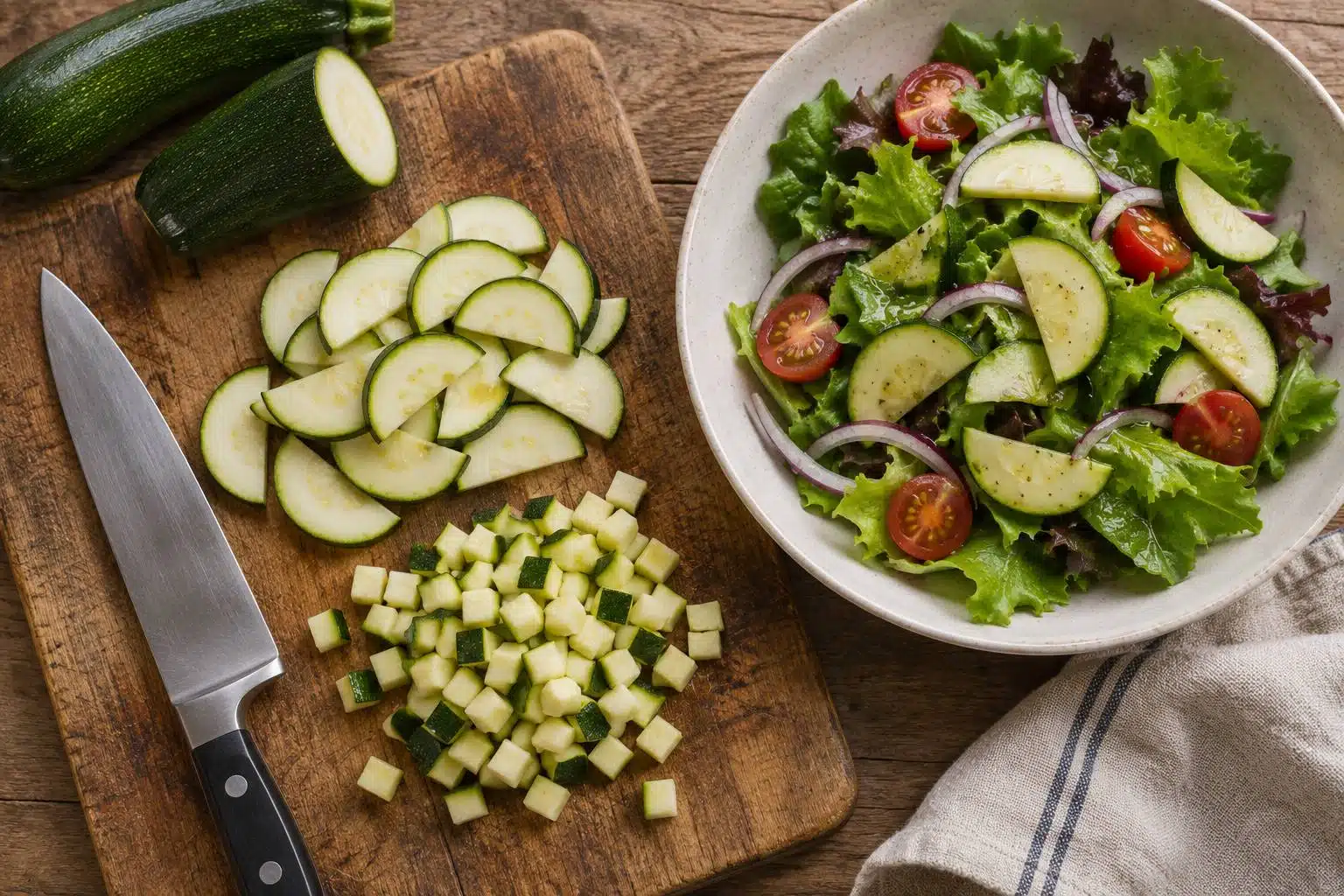
Use 1:1 by volume-dice or slice it the same way you'd prep cucumber. It blends into salads, sandwiches, and wraps without standing out.
The flavor runs more neutral and less cooling than cucumber. You won't get that refreshing snap, but the texture holds up.
- ✅ Closest texture match for raw dishes
- ✅ Works in both raw and cooked applications
- ⚠️ Misses cucumber's cooling effect
Pick small zucchini, under about 8 inches long. Bigger ones have hard skins and need peeling and seeding.
Thin half-moons or ribbons suit cold noodle bowls, fresh spring rolls, and green salads.
2 – Celery 🍲
Celery brings the crunch but shifts the flavor. It's more fibrous and slightly bitter compared to cucumber's mild sweetness.
Use 1:1 by volume in cooked dishes like soups and stews. The heat softens celery's sharp edges and blends it into the background.
Skip it in raw salads unless you want that pronounced celery bite, since it overpowers lighter dressings. If you still want it raw, start with half the amount the recipe gives for cucumber and taste before adding more.
- 🍳 In cooking: Works great in broths and vegetable soups
- 🥗 Raw: Too strong for mild salads and fresh wraps
- ⚠️ Texture note: More fibrous and less watery than cucumber
3 – Jicama 🥗
Jicama delivers juicy crispness with a sweeter, nuttier flavor than cucumber. It holds up raw and adds fresh moisture to salads.
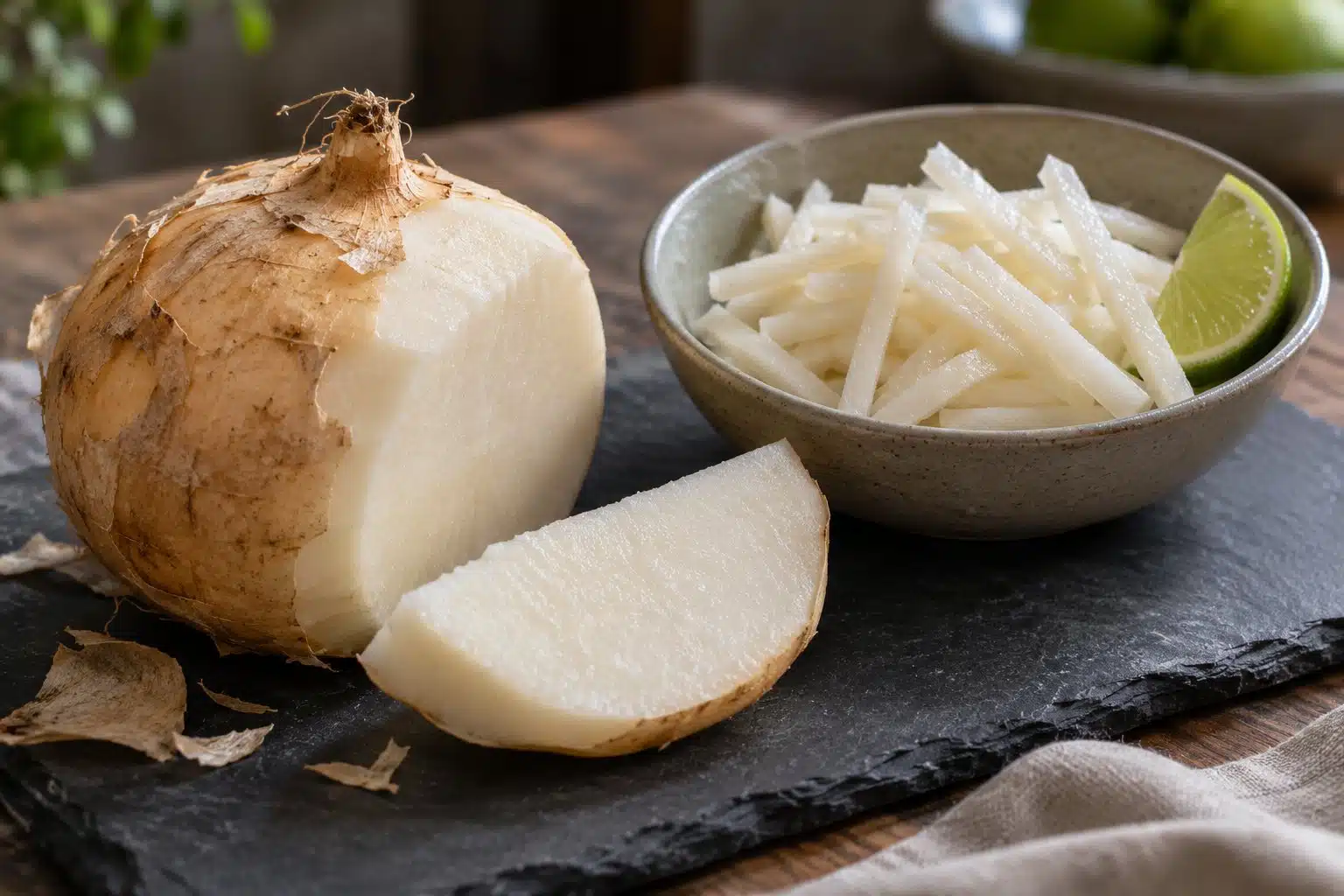
Use 1:1 by volume-peel it first, then dice or julienne. The firm texture stays crisp longer than cucumber in dressings.
Eat only the peeled root, since the rest of the jicama plant is poisonous. It is usually eaten raw with salt, lime juice, and chili powder, so a lime-based dressing suits it.
The sweetness shifts the flavor balance, so jicama fits slaws, fresh salsas, and crunchy salad toppings. Skip it in Greek salads or anything needing cucumber's neutral profile.
- ✅ Stays crisp in dressings longer than cucumber
- ⚠️ Sweeter flavor changes the dish's profile
4 – Green Apple 🍏
Green apple adds firm crunch but brings tart sweetness instead of mild freshness. It changes the dish completely.
Use 1:1 by volume in salads where a pop of acidity works-think Waldorf-style salads or slaws with vinegar dressings. Dice it small so the tartness spreads evenly.
The sweet-tart flavor dominates. Skip it in savory dishes like tzatziki or cucumber-tomato salads.
- ✅ Adds bright acidity and firm crunch
- ⚠️ Sweet-tart flavor overpowers mild recipes
- ⚠️ Cut pieces turn brown, so toss them in lemon juice if they sit
5 – Iceberg Lettuce 🥬
Iceberg lettuce mimics cucumber's high water content but trades firm crunch for soft, leafy texture. It's a last-resort swap when you need moisture more than bite.
Use 1 cup chopped lettuce per 1 cup diced cucumber in sandwiches and light salads. Chop it fine so it blends in.
The texture stays soft-it won't give you that satisfying snap. The flavor's even milder than cucumber, almost tasteless.
- ✅ High water content like cucumber
- ✅ Works in sandwiches and wraps
- ⚠️ Leafy texture instead of firm crunch
- ⚠️ Wilts faster in dressings
Out of iceberg too? Romaine or another crisp lettuce fills the same sandwich role, and the iceberg lettuce substitutes list ranks the options.
Picking Your Cucumber Swap
- For raw salads: Zucchini matches closest-use it 1:1 and expect slightly less cooling flavor
- For cooked dishes: Celery works in soups and stews where its bitter edge mellows with heat
- For extra crunch: Jicama or green apple add texture but shift the flavor toward sweet
- For sandwiches and wraps: Chopped iceberg adds moisture, and thin zucchini slices add a little snap
- For pickles: Zucchini and lettuce go limp in brine, so start with the Kirby cucumber substitutes instead
Frequently Asked Questions
Yes, but zucchini lacks the cooling flavor and releases more liquid than cucumber, so grate it, salt it, and squeeze it dry before stirring it into Greek yogurt tzatziki. The dip tastes less refreshing, but the texture stays close.
Jicama works best for sushi because it stays crisp and doesn't get soggy. Cut it into thin matchsticks and use it 1:1 by volume; the sweeter flavor is the only change.
It works in heartier salads with bold dressings. Start with half the celery, since its bitter, fibrous bite stands out more than cucumber's mild flavor.
Yes, chopped iceberg adds moisture and mild crunch to sandwiches and wraps at 1:1 by volume. You lose cucumber's firm snap, but the sandwich won't feel dry.
Celery and zucchini hold up in cooked dishes like stir-fries and soups at 1:1. Green apple and iceberg lettuce go soft fast, and jicama stays crunchy in a quick stir-fry but keeps its sweetness.
No. They belong to the same gourd family but are different plants, and zucchini (called courgette in the UK and France) tastes milder and less cooling than cucumber.
In raw dishes like salads and cold noodle bowls, yes. In cooked recipes cucumber softens and turns watery, so check the substitutes for zucchini instead.



