
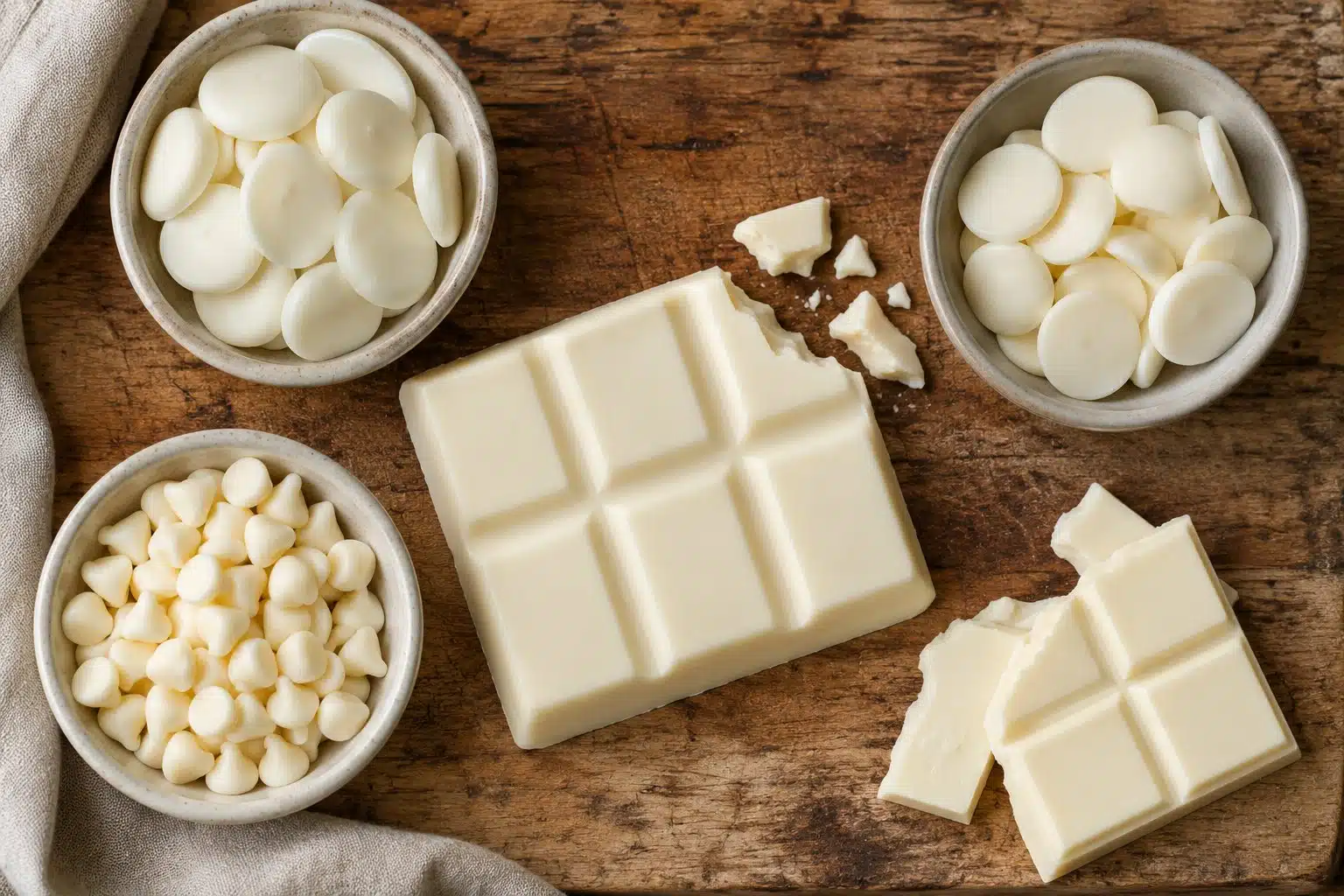
White candy melts or any vanilla candy coating replace almond bark 1:1 by weight. All of them are sugar and palm-type vegetable fat with no cocoa butter, so they melt in the microwave and set hard without tempering.
Real white chocolate is the swap that goes wrong. Its cocoa butter sets soft unless you temper it, and baking chips of any kind need a little shortening or coconut oil before they coat smoothly.
Almond bark contains no almonds and is mostly a US name, so the package you find may say candy coating, compound chocolate, or melting wafers.
What Does Almond Bark Do in a Recipe?
Almond bark is candy coating made with vegetable fat in place of cocoa butter, plus sugar, flavor, and color. It is sold as blocks, round discs, or microwave trays near the baking supplies.
Remember it later
Planning to try this recipe soon? Save it for a quick find later!
A swap has to copy three things.
- Melts without tempering. Vegetable fat has no cocoa butter crystals to manage, so a microwave and a spatula are all the equipment you need.
- Sets hard and fast. Coated pretzels, cake pops, and bark firm up quickly and stay firm, which makes them easy to stack and bag.
- Tastes of sugar and vanilla. Chocolate almond bark adds cocoa powder but no cocoa butter, which is why its label says chocolate-flavored.
Match the first two jobs before you worry about flavor, because the plain sugar-and-vanilla taste is easy to improve. If you aren't sure which version your recipe means, what almond bark is explains the white and chocolate types.
Which Almond Bark Substitute Is Closest?
Every ratio here is by weight, so a recipe that calls for 16 ounces of almond bark takes 16 ounces of the swap. The table ranks them by how closely they copy the melt and the set.
| # | Substitute | Best For | Ratio | Key Note |
|---|---|---|---|---|
| 1 | White Candy Melts | ✨ Dipping + Bark | 1:1 | Closest melt and set |
| 2 | Vanilla Candy Coating Tray | ✨ Dipping + Bark | 1:1 | Same product, other brand |
| 3 | White Melting Wafers | ✨ Dipping + Bark | 1:1 | Shiny snap, slightly waxy |
| 4 | White Baking Chips | 🥧 Bark | 1:1 + oil | Thick until thinned |
| 5 | White Chocolate Bar | 🥧 Soft Sets | 1:1 | Temper or it sets soft |
| 6 | Chocolate Wafers or Chips | 🍫 Chocolate Version | 1:1 + oil | Chips need extra fat |
Rows 1 to 3 are drop-in swaps. Rows 4 to 6 need one extra step, either a spoonful of fat or tempering.
1 – White Candy Melts
Candy melts are the same kind of coating as almond bark: sugar, vegetable fat, and flavor, with no cocoa butter. Use them 1:1 and follow the bag, which for Wilton means the microwave at 50% power with a stir between bursts.
If the melted coating is too thick to dip, stir in about 2 teaspoons of vegetable shortening per 12-ounce bag. Wilton says never to add liquid, because liquid makes the coating seize.
They fail when you want chocolate flavor. America's Test Kitchen found that craft-store chocolate candy melts contain almost no real cocoa and barely taste of chocolate, so keep melts for white and colored coatings.
2 – Candiquik or Store-Brand Vanilla Coating
Candiquik is vanilla candy coating in a microwave tray, and vanilla candy coating is another name for almond bark. Any store-brand tray is a 1:1 swap, and Stop & Shop and H-E-B both sell 16-ounce versions.
Store-brand trays say to microwave at 50% power for about 2 minutes, then stir. Bags of white candy melts do the same job where trays are not sold.
Check the label if anyone avoids milk. The Candiquik vanilla coating lists nonfat milk powder and whole milk powder and carries a milk and soy warning.
3 – White Melting Wafers
Ghirardelli's white vanilla melting wafers replace almond bark 1:1. Palm oil stands in for cocoa butter, so they melt in the microwave without tempering and set shiny with a clean snap.
America's Test Kitchen found that the wafers taste somewhat waxy next to tempered real chocolate, though it rated them fine when you don't have time to temper. The white wafers list nonfat milk, so they are not dairy-free.
4 – White Baking Chips Plus a Little Fat
Most white baking chips contain no cocoa butter either. America's Test Kitchen reports they use palm kernel-type oil, which is why chip-based bark set with a firm snap in its test.
Chips hold their shape on purpose, so they melt thicker than almond bark and need fat added gradually.
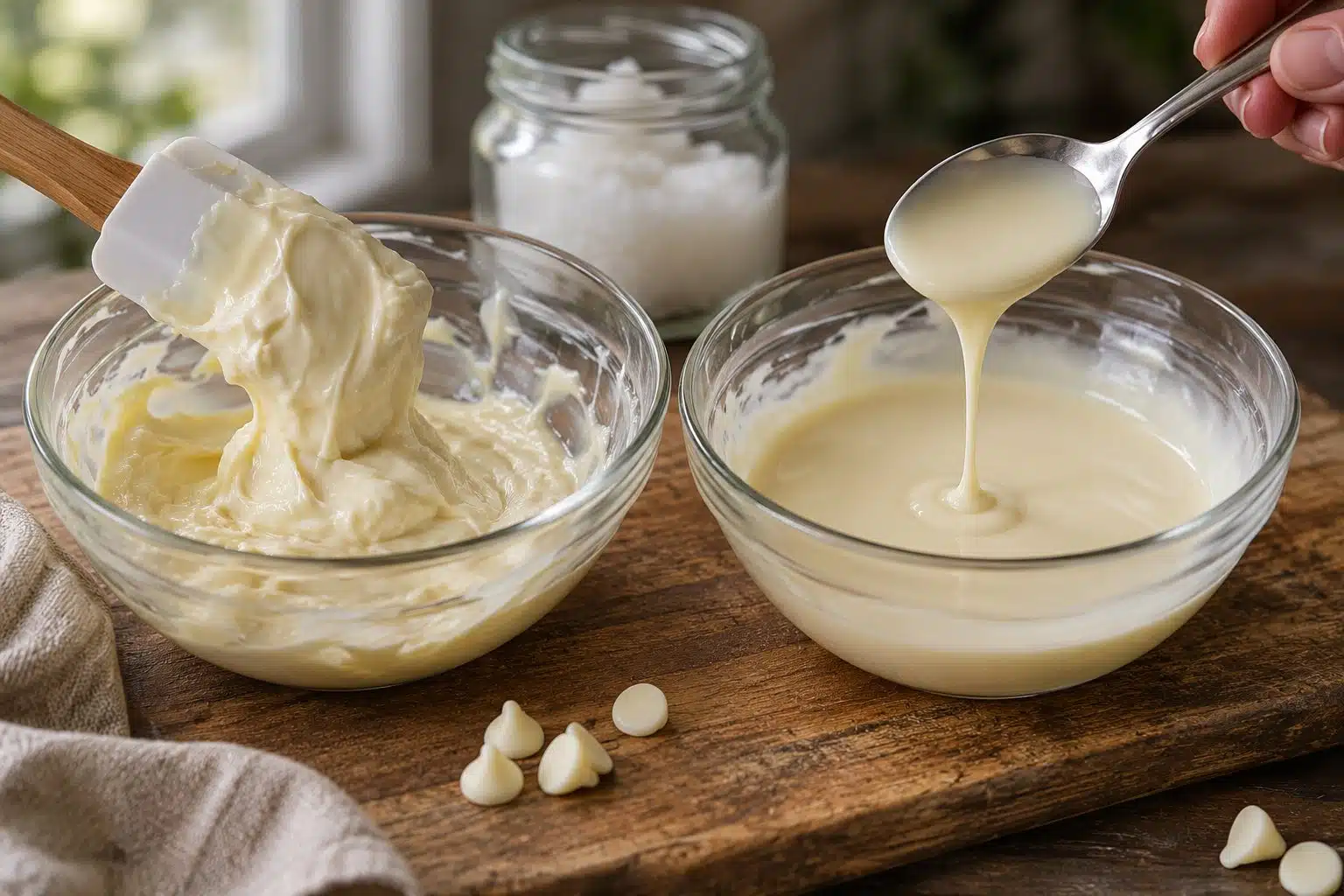
- Ratio: 1:1 by weight, then thin as needed.
- Thin with: 1 teaspoon of vegetable shortening or coconut oil per cup of chips, up to 2 teaspoons if the coating still falls off the spatula in clumps.
- Melt: in the microwave at 50% power, 30 seconds at a time, stirring after each burst.
- Skip: bargain chips that stay grainy or thick after thinning, because some contain so many stabilizers that a smooth melt is nearly impossible.
5 – White Chocolate Bars
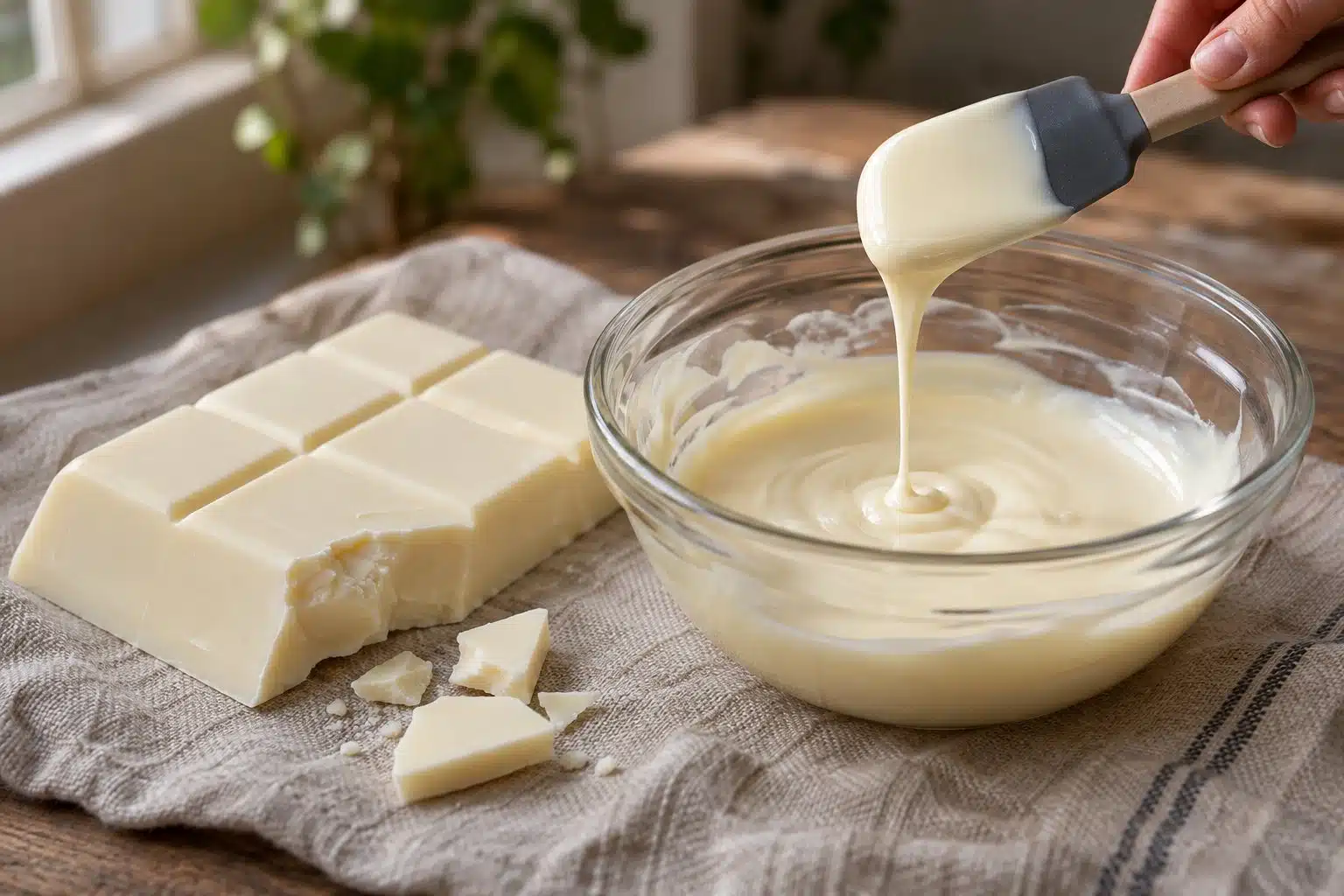
Real white chocolate contains at least 20% cocoa butter by weight, along with at least 14% milk solids, at least 3.5% milk fat, and no more than 55% sugar, under the FDA's rule in 21 CFR 163.124. For brands and taste notes, see what white chocolate is.
The catch is tempering. Melted cocoa butter that has not been tempered sets soft, so America's Test Kitchen's bar-based bark came out soft and truffle-like where chip-based bark snapped.
To temper, melt about three-quarters of the chopped bar over a double boiler until it reaches 110°F, then stir in the remaining quarter. If you have no white chocolate either, the white chocolate substitutes page ranks what else can stand in.
6 – Chocolate Wafers or Chips for Chocolate Almond Bark
Chocolate almond bark has cocoa powder but no cocoa butter, so the closest swap is a compound chocolate wafer, such as Ghirardelli's dark or milk melting wafers, used 1:1. Real chocolate chips also coat well once thinned.
- Fat to add: chips need more fat than bars because their stabilizers keep them from flowing, so start with 1 teaspoon of shortening or coconut oil per cup and go up to 1 tablespoon if the coating clumps on the pretzel.
- Finish: chocolate with cocoa butter needs tempering to set glossy, so an untempered dip looks duller than almond bark.
If you are out of chips too, chocolate chips substitutes ranks what to chop or melt instead.
Which Swap Fits Pretzels, Cake Pops, and Bark?
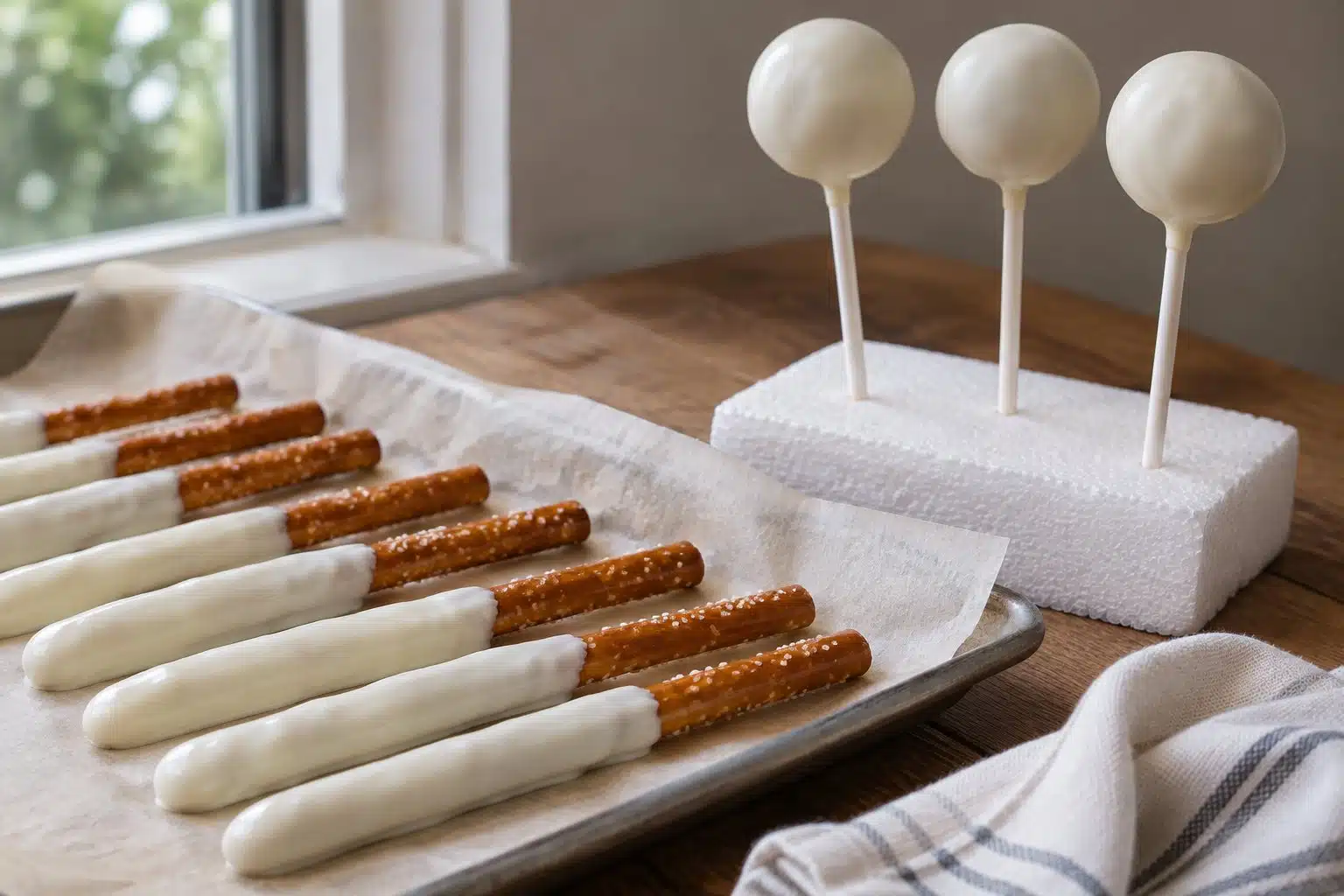
A thin, even coat on pretzels needs the runniest melt, so candy melts, trays, and wafers beat plain chips. Bark is the opposite case, since chip-based bark snaps and bar-based bark stays soft.
| If You Want | Pick | Why |
|---|---|---|
| Dipped pretzels | Candy melts or vanilla coating tray | Thin melt, hard set |
| Cake pops | Candy melts | Add shortening if thick |
| Snappy bark | White baking chips | Set firm in a bark test |
| Soft bark | White chocolate bar | Untempered cocoa butter sets soft |
| Chocolate taste | Chocolate wafers | Dark wafers use real cocoa |
The table matches each job to its swap. Fruit also needs a dry surface, because a drop of water seizes the coating. Our chocolate covered strawberries recipe optionally thins melted semi-sweet chocolate with a tablespoon of neutral oil, and the same oil trick thins any chip-based swap above.
How Do You Melt and Thin a Substitute Without Seizing?
Every swap above melts the same way, so this routine covers all six.
- Dry everything. The bowl, the spatula, and whatever you dip must have no water on them.
- Melt at 50% power. Microwave in 30-second bursts and stir after each one.
- Stop early. Take the bowl out while a few lumps remain and stir until they melt, because overheated coating turns stiff or crumbly.
- Thin with fat only. Stir in shortening or oil 1 teaspoon at a time until the coating drips off the spatula in a ribbon.
- Let it set. For bark, spread the coating thin over the mix-ins and refrigerate it until hard.
Which Swaps Should You Skip?
Two swaps look reasonable and disappoint.
- Modeling chocolate: it is melted chocolate or candy melts kneaded with corn syrup into a clay, so it shapes decorations but cannot dip or coat anything.
- Chocolate candy melts for chocolate flavor: they contain almost no real cocoa, so a recipe that depends on chocolate taste needs wafers or real chocolate instead.
Can You Buy Almond Bark Outside the US?
"Almond bark" is mainly a US name, so shoppers in the UK or Australia will find American recipes more easily than the product. Look for candy melts, compound chocolate, melting wafers, or confectionery coating instead.
Read the ingredient list. Real chocolate lists cocoa butter, while the right product lists palm kernel oil, palm oil, or another vegetable oil.
In Australia, cake-decorating suppliers sell white and dark compound chocolate, including a Nestlé compound range.
Frequently Asked Questions
Not by default. Candiquik's vanilla coating lists milk powders, and Ghirardelli's white wafers list nonfat milk. For a dairy-free coating, melt a dairy-free bar with coconut oil, and expect it to set softer unless you temper it. Our best vegan chocolate roundup lists bars to start with.
For dipping and candy, yes, because it skips tempering. For cookies, mousse, or cake, use real chocolate, since almond bark has no cocoa butter and little chocolate flavor.
Almond bark is a vanilla-flavored candy coating sold under a different name, so a recipe that asks for one accepts the other 1:1.



