Product note: ForkliftKitchen may earn a commission from qualifying purchases made through product links on this page. Learn more.
Mezzetta Basil Pesto is the best jarred pesto for pasta, toast, and sandwiches. Its coarse basil, Parmesan, pine nut, garlic, and olive-oil structure has more range than a smooth cheese spread or a thick cashew paste.
The word pesto on a jar does not promise one texture. Barilla turns basil and cheese into a creamy coating, Seggiano leans on cashews for density, and Mantova uses tofu to give a vegan sauce more body.
We compared current green basil formulas, exact package sizes, verified product identities, and published taste-test findings. Refrigerated tubs and red pesto stay out because they create different storage and flavor decisions.
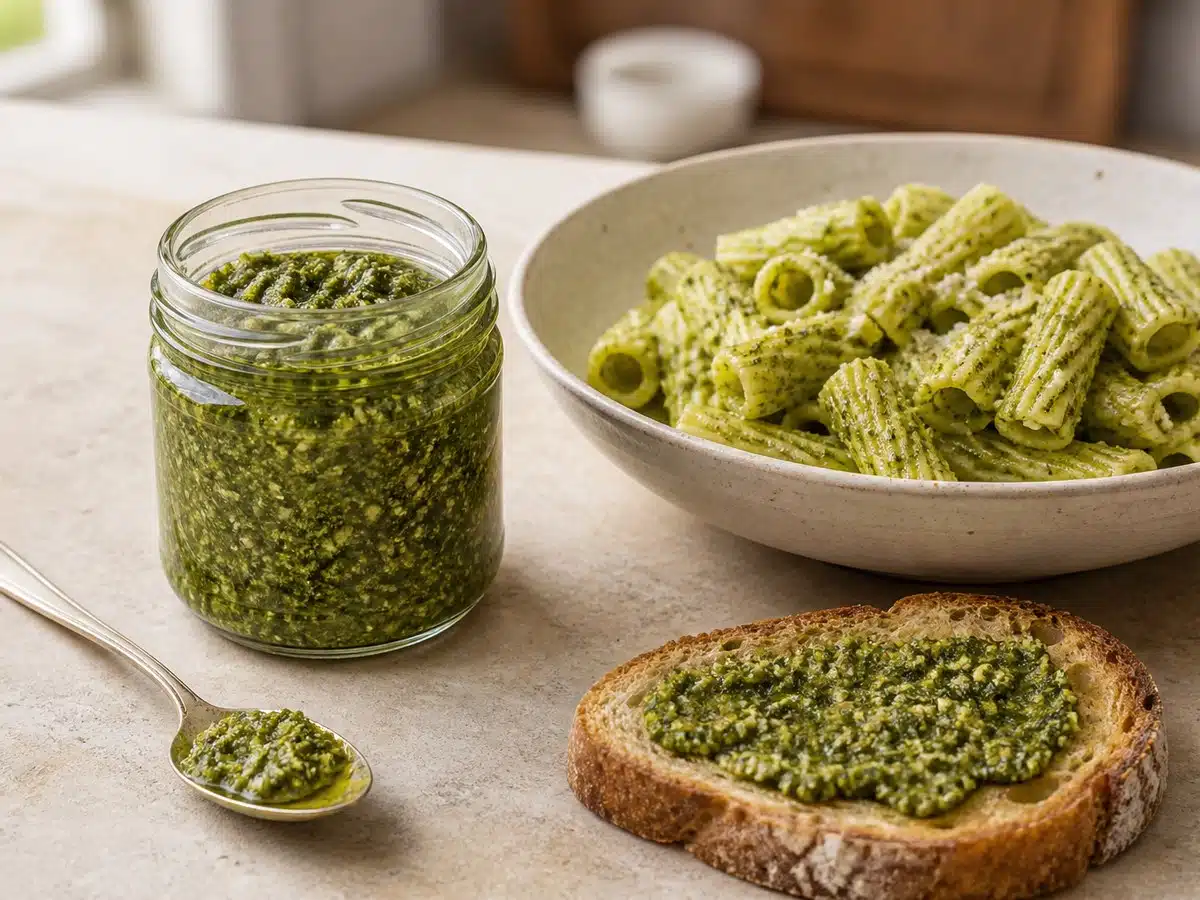
Six Jarred Pestos That Earn Their Place in the Pantry
Mezzetta wins when you want one jar to handle both pasta and spreading. Its rustic texture keeps the basil and garlic distinct, but olive oil makes it loose enough to toss with warm noodles.
Save this ranking
Comparing these products later? Save this ranking for a quick return.
The other jars earn narrower jobs. Compare texture first, then check dairy, nuts, and package size before you commit.
- 🌿 Basil character. Basil should remain noticeable beside salt, cheese, garlic, and acidity.
- 🥜 Oil balance. Enough oil helps pesto coat food, but a loose oil layer should not become the whole experience.
- 🥜 Nut structure. Pine nuts read softer and more traditional, while cashews add thicker, buttery body.
- 🧀 Cheese level. Parmesan, Pecorino, Grana Padano, or whey can move a jar from herb paste toward creamy spread.
- 📦 Package fit. A single small jar suits occasional use, while a two-pack needs a leftover plan.
| # | Product | Best For | Key Note |
|---|---|---|---|
| 1 | Mezzetta Basil Pesto | 🏆 All-Purpose | Rustic herb texture |
| 2 | Barilla Creamy Genovese | 🧀 Creamy Coating | Smooth and cheese-led |
| 3 | Seggiano Raw Basil Pesto | 🌿 Thick Vegan | Cashew and pine nut |
| 4 | Cento Basil Pesto Sauce | 🍇 Traditional | Two cheeses and nuts |
| 5 | Mantova Vegan Basil Pesto | 🧑 Creamy Vegan | Tofu body, two jars |
| 6 | 365 Basil Pesto | 🥗 Everyday Jar | 6.5 oz single jar |
1. Mezzetta Basil Pesto

Mezzetta is the strongest one-jar answer because it stays rustic without becoming dry. Extra-virgin olive oil leads the formula, followed by fresh basil, Parmesan, water, pine nuts, garlic, and a rosemary extract that gives the finish another herbal edge.
A published tasting described the jar as bright, sharp, and chunky, with garlic and Parmesan pieces that remain noticeable. That rougher texture catches on ridged pasta and also holds its place on bread instead of soaking in at once.
The herb finish makes this jar more assertive than a neutral pantry sauce. Use a smaller spoonful first if the rest of the dish already contains rosemary, strong cheese, or a salty cured meat.
This is not the creamiest pick. Barilla makes more sense when you want pesto to behave like a smooth spread, while Seggiano gives you thicker dairy-free body.
Choose Mezzetta when the pesto should remain identifiable after it meets warm pasta, bread, chicken, fish, or roasted vegetables. It offers the most useful middle ground here.
- Extra-virgin olive oil leads the formula
- Rustic garlic and Parmesan texture
- Works as both sauce and spread
- Rosemary finish may compete with delicate food
- Not dairy-free
- Contains pine nuts
2. Barilla Creamy Genovese Pesto

Barilla is the deliberate detour from coarse pesto. Its whey, Parmigiano Reggiano, cashews, vegetable oils, and soluble corn fiber produce a smoother sauce than the pine-nut jars.
Published testers compared the texture to pesto butter because it feels rich and creamy rather than leafy or granular. That consistency spreads evenly across bread and turns into a uniform coating when loosened with a little pasta water.
The jar is useful when bits of nut and cheese would get in the way, such as in a dip base or a thin sandwich layer. It can also soften a dry pasta shape without asking you to add cream.
You give up some definition. The dairy and smooth body push basil toward the background, so Mezzetta or Cento is a better match when you want a more traditional herb, nut, and cheese balance.
Pick Barilla for texture first. It is the jar for someone who wants pesto to melt into the dish rather than sit on top in visible flecks.
- Smooth, creamy texture
- Easy to spread or stir into a dip
- Cheese-led flavor works with pasta
- Less rustic basil texture
- Contains milk and cashews
- Can feel heavy in a large portion
3. Seggiano Raw Basil Pesto

Seggiano is the thick vegan choice, not a thin cheese-free imitation. The formula uses olive oil, 30 percent fresh basil, cashews, sea salt, and pine nuts.
Cashews give the pesto a dense, buttery texture, while pine nuts add a softer nut flavor behind them. Published tasting notes call the jar thick and cashew-forward, so expect it to sit heavily on a spoon before you loosen it.
That body works well on toast, in a vegetable bowl, or as a concentrated pasta sauce. Add warm pasta water a spoonful at a time because too much can turn a rich coating into loose green oil.
Vegan is not the same as nut-free. This jar contains both cashews and pine nuts, and anyone managing an allergy should read the current label rather than rely on the dairy-free claim.
Buy Seggiano when cheese is off the table but thickness is welcome. Mantova is the softer vegan alternative if a tofu-built creaminess sounds more useful than prominent cashew flavor.
- Vegan five-ingredient formula
- Fresh basil listed at 30 percent
- Thick texture holds on bread
- Contains cashews and pine nuts
- Needs loosening for some pasta
- Cashew flavor can lead the basil
4. Cento Basil Pesto Sauce

Cento takes the traditional role because it keeps the familiar herb, oil, cheese, and nut structure intact. Grana Padano and Parmesan bring two levels of savory cheese, while pine nuts and cashews supply a rounded nut base.
A current published tasting found the pesto tart yet rich, with the mild nuttiness of Grana Padano still clear beside basil and garlic. That balance suits simple pasta because no single creamy thickener has to carry the sauce.
The 6.52-ounce jar is small enough for one pasta dinner with little left over, depending on how heavily you sauce it. It also works in spoonfuls over fish, chicken, or vegetables when pesto is the finishing accent.
Traditional does not mean pine nuts alone. Cashews remain part of this formula, so shoppers who want a pure pine-nut pesto or need to manage tree nuts should keep looking and check labels closely.
Choose Cento when the ingredient relationship matters more than a specialized texture. Barilla is creamier, Seggiano is thicker, and Mezzetta brings a sharper herbal finish.
- Two Italian cheeses
- Pine nuts and cashews add depth
- Compact single jar
- Contains dairy and tree nuts
- Small jar leaves little room for a large batch
- Less creamy than Barilla
5. Mantova Vegan Basil Pesto
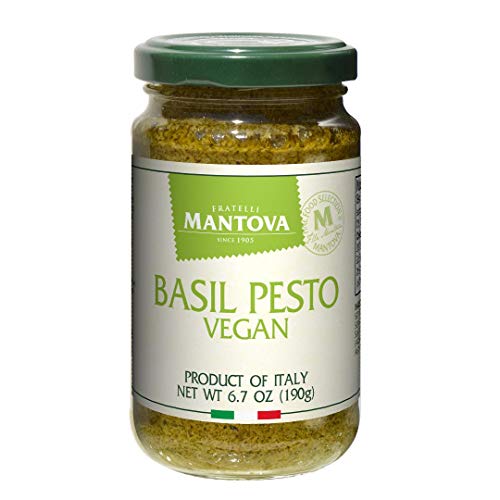
Mantova uses tofu to solve the body that cheese normally provides. The result is a vegan pesto with a softer, creamier direction than Seggiano's thick cashew paste.
Published tasting notes describe an herbaceous sauce with substantial texture from tofu and potato. That structure can feel hearty on pasta or bread without relying on whey or hard cheese.
The two-jar format changes the buying decision. It makes sense for a vegan household that reaches for pesto often, but a single 6.2-ounce to 7.1-ounce jar is safer if you only need one dinner.
The current listing shows a concise ingredient description, so the package remains the final authority for the full formula and allergens. Check both before serving someone with soy or other dietary limits.
Choose Mantova when you want dairy-free creaminess and can use the extra jar. Seggiano is the better vegan pick when a nut-led, thicker pesto is the point.
- Vegan creamy structure
- Tofu adds body without dairy
- Two jars suit frequent use
- Two-pack is a bigger commitment
- Contains soy
- Full current label still needs a check
6. 365 by Whole Foods Market Basil Pesto

The 365 jar wins the package constraint because one 6.5-ounce container is easy to finish. Basil, extra-virgin olive oil, sunflower oil, cashews, Parmigiano Reggiano, Pecorino Romano, pine nuts, and garlic cover the familiar pantry profile.
Two cheeses add salt and savory depth, while cashews and pine nuts create more body than basil and oil alone. Sunflower oil also shares the base, so this is not the pick for someone who wants extra-virgin olive oil to carry the whole formula.
The jar works best when pesto is a weeknight tool rather than the star ingredient. Stir it into warm pasta, spread a thin layer on bread, or use a spoonful to finish vegetables.
This pick comes from formula and package fit, not a claim that it beats the stronger jars in a tasting. Mezzetta has a more distinctive herb finish, and Cento follows the traditional cheese-and-nut lane more closely.
Buy 365 when one modest jar solves the immediate meal. It is the practical choice for a small household that does not want the second jar in Mantova's pack.
- Single 6.5-ounce jar
- Two Italian cheeses
- Familiar basil, garlic, and nut profile
- Contains dairy and tree nuts
- Sunflower oil shares the base
- Less distinctive than the top picks
Why One Jar Spreads Like Butter and Another Stays Coarse
Cheese, cashews, tofu, and added fiber build body, while a simpler oil-and-herb formula stays looser and more textured. Read the first few ingredients to predict how the pesto will behave before you open it.
Pine nuts belong to the traditional Genovese model, but commercial jars often add or replace them with cashews. Cashews are less delicate and create a thicker, buttery paste, while hard cheese adds salt, grain, and savory weight.
Vegan jars take two different paths here. Seggiano uses nuts for density, while Mantova uses tofu and potato for a creamier body.
| Formula Cue | Likely Texture | Strongest Use | Check First |
|---|---|---|---|
| Olive oil, basil, pine nuts | Rustic and loose | Pasta or toast | Oil balance |
| Whey, cheese, cashews | Smooth and creamy | Spread or dip | Milk and nuts |
| Cashews and pine nuts | Thick and dense | Toast or bowls | Tree nuts |
| Tofu and potato | Soft vegan cream | Pasta or dip | Soy and package label |
Do not use the word vegan as shorthand for allergy-friendly. Seggiano contains two tree nuts, and Mantova contains soy, so the current jar must settle any dietary question.
Ingredient order does not predict every flavor note, but it does reveal structure. Use that clue to separate a pasta sauce from a sandwich spread before brand loyalty decides for you.
Should Jarred Pesto Ever Go Into a Hot Pan?
Add pesto after the pan comes off direct heat. Hard frying can separate the oil, tighten the cheese, and dull the basil before the sauce reaches the plate.
Warm noodles and reserved pasta water provide enough heat to loosen the jar. They also help a dense pesto coat the pasta instead of sitting in isolated spoonfuls.
- Reserve water before draining. Keep a cup nearby, even though you may only need a few spoonfuls.
- Move the pan off the burner. Add pesto to warm pasta, not to an empty hot skillet.
- Loosen gradually. Stir in pasta water one spoonful at a time until the sauce coats without pooling.
Thick Seggiano and Mantova may need more loosening than Mezzetta. Creamy Barilla may need less because the formula already spreads easily.
A Small Jar Can Sauce More Pasta Than It Looks
Most jars here hold about 6.2 to 7.1 ounces, which suits one pound of pasta when you loosen the pesto and serve a moderate coating. Toast, sandwiches, and finishing spoonfuls use much less, while Mantova's two-pack makes sense only if you expect a second meal.
| Use | Starting Plan | Adjustment |
|---|---|---|
| One pound of pasta | One small jar | Loosen with pasta water |
| Four sandwiches | Thin spread from part of a jar | Add more only after tasting |
| Dip base | A few spoonfuls | Blend with a creamy base |
| Vegetable finish | One spoonful per plate | Thin if the pesto is dense |
These are planning amounts, not guarantees. Pasta shape, added vegetables, sauce thickness, and personal taste change how far a jar goes.
Open the Jar With a Plan for the Leftovers
Refrigerate opened pesto and follow the timing printed on that jar. Water, dairy, nuts, acidity, and preservatives differ, so one universal refrigerator number is less reliable than the current package.
If you will not use the remainder soon, freeze it in small portions. A small cube is easier to thaw for soup, eggs, vegetables, or one bowl of pasta than a solid block.
- Use a clean utensil every time.
- Return the jar to the refrigerator promptly.
- Freeze extra pesto in meal-size portions when the label window is too short.
- Discard pesto that shows mold, gas, a damaged seal, or an odor that does not match the fresh jar.
An oil layer does not cancel the label. Oil may limit surface air, but it does not make spoiled pesto safe or extend a package instruction on its own.
Package size belongs in the buying decision. A single 365 jar is easier for an occasional cook to finish, while Mantova's second jar works only when frequent dairy-free meals are already likely.
Questions Shoppers Ask Before the Jar Goes in the Cart
Check the formula, package, and intended dish before brand reputation settles the choice.