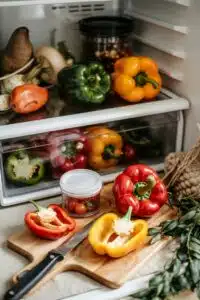
Fresh from the store, raw chicken has one of the shortest fridge windows of any protein - just 1-2 days before you need to cook it or freeze it. That's not a lot of margin.
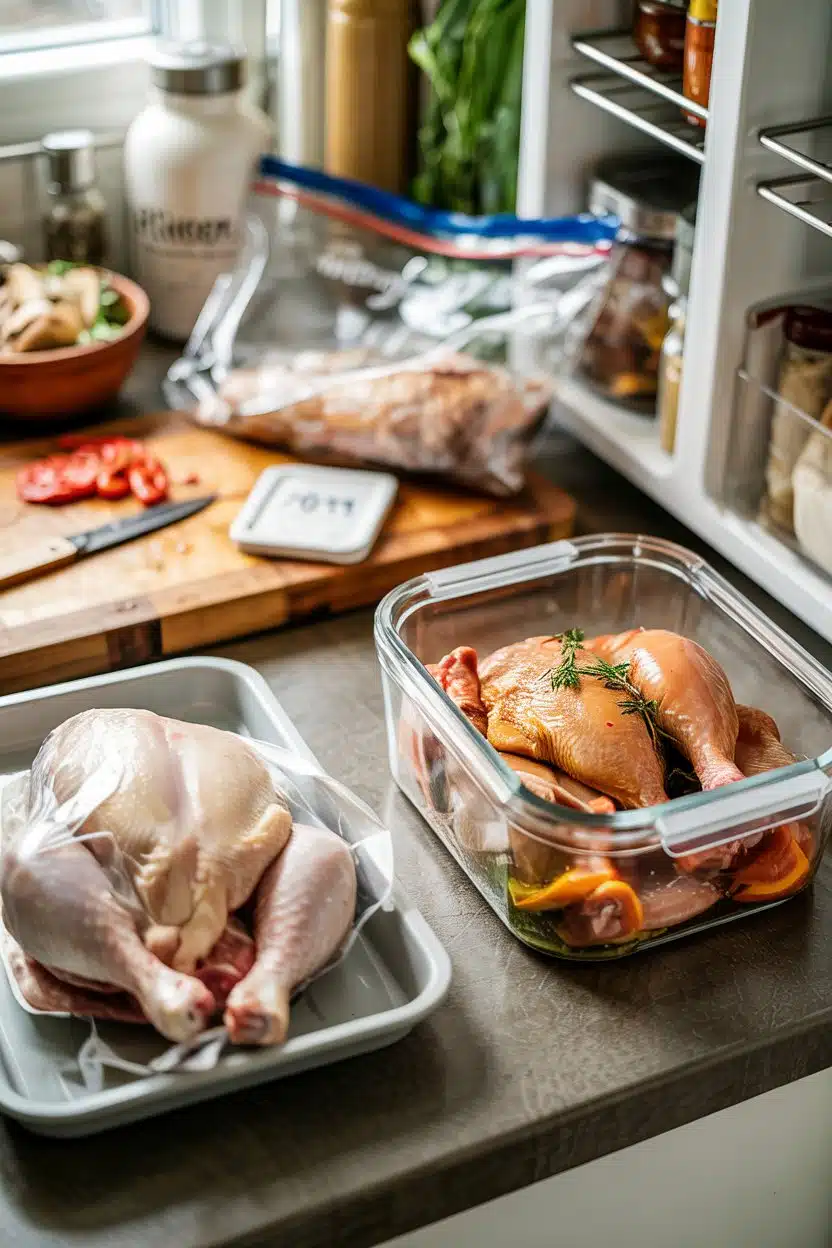
Knowing exactly how long both raw and cooked chicken last, and how to store each correctly, keeps your meals safe and your grocery budget intact.
Raw chicken lasts 1-2 days in the fridge and up to 12 months in the freezer. Cooked chicken holds for 3-4 days refrigerated or 2-6 months frozen. Never store either at room temperature - bacteria multiply fast above 40°F (4°C).
How Long Does Chicken (Raw and Cooked) Last?
Chicken's short fridge life comes down to moisture and bacterial load. Raw poultry carries pathogens like Salmonella that multiply quickly even at refrigerator temperatures, which is why the FDA caps raw storage at just two days.
Remember it later
Planning to try this recipe soon? Save it for a quick find later!
Cooked chicken buys you more time because heat kills surface bacteria, but it's still a four-day limit.
| Method | State | Duration | Notes |
|---|---|---|---|
| 🚫 Pantry | Raw or Cooked | Not safe | Never store chicken at room temperature; bacteria grow above 40°F (4°C) |
| 🧊 Fridge | Raw | 1-2 days | Whole chickens or pieces at 40°F or below; use within 48 hours |
| 🧊 Fridge | Cooked | 3-4 days | Shallow airtight container at 40°F or below |
| ❄️ Freezer | Raw (whole) | 9-12 months | Best quality up to 12 months; wrap tightly to prevent freezer burn |
| ❄️ Freezer | Raw (pieces) | 6-9 months | Pieces lose quality faster than whole birds due to more exposed surface area |
| ❄️ Freezer | Cooked | 2-6 months | Quality best at 2-4 months; proper wrapping is critical |
How to Store Chicken (Raw and Cooked)
Raw chicken needs containment above all else. Cross-contamination is the real risk here - juices dripping onto produce or other proteins in your fridge can spread Salmonella silently.
Keep raw chicken on a plate or rimmed tray in its original sealed packaging, on the lowest shelf, away from ready-to-eat foods.
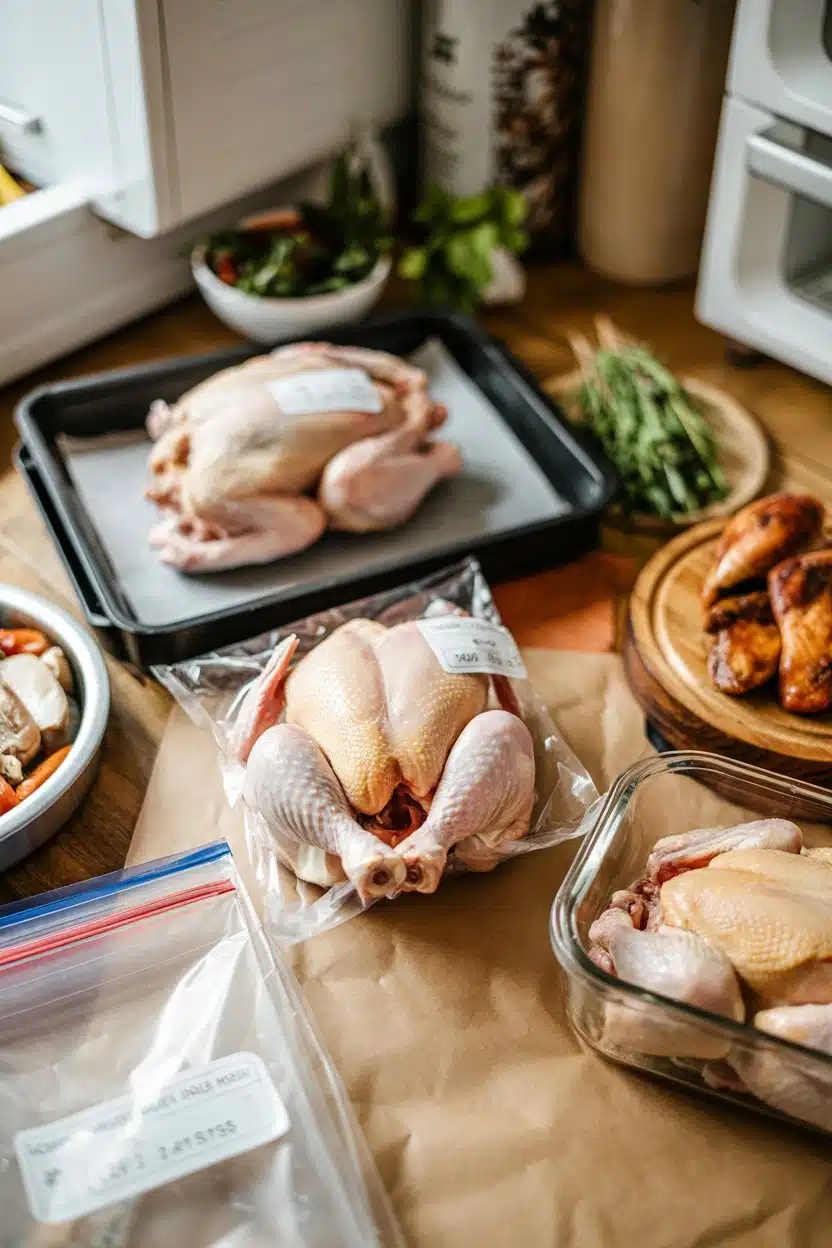
Cooked chicken is more forgiving but still needs proper containers. Shallow airtight containers cool leftovers faster and keep odors contained.
Resealable leakproof bags work equally well for shredded chicken or sauced portions.
1-2 days
Leave in original sealed packaging. Place on a plate to catch drips. Store on the lowest refrigerator shelf, away from produce and cooked food. Fridge must be at or below 40°F (4°C).
3-4 days
Transfer to a shallow airtight container within 2 hours of cooking. Don't stack large pieces - spreading them out speeds cooling. Use a leakproof bag for shredded or sauced portions.
Can You Freeze Chicken (Raw and Cooked)?
Yes, and for most households it's the smartest move when you can't cook raw chicken within 48 hours.
Freezing halts bacterial growth entirely. Raw chicken freezes exceptionally well when wrapped correctly; cooked chicken is a bit more finicky because freezing can make the meat drier and slightly fibrous after thawing.
The grocery packaging that raw chicken comes in is not freezer-proof on its own. It's too thin, and air pockets cause freezer burn within weeks.
Always add a secondary wrap. Just like vacuum sealed salmon's shelf life extends dramatically with proper sealing, removing air from chicken packaging makes a measurable difference in quality.
- Pat dry Remove excess moisture from raw chicken with paper towels - less surface water means fewer ice crystals.
- Portion Divide into meal-sized amounts before freezing. Flat portions in resealable bags thaw faster and more evenly.
- Wrap tightly Cover in plastic wrap or butcher paper first, then place inside a heavy-duty freezer bag or vacuum seal. Remove all excess air.
- Label clearly Write the date and type - "raw whole," "raw parts," or "cooked" - on every package. Rotate oldest stock first.
- Thaw safely Move frozen chicken to the fridge 24 hours before cooking (12-24 hours for pieces, 24-48 hours for a whole bird). For faster thawing, submerge the sealed bag in cold water, changing it every 30 minutes. Never thaw on the counter.
Signs Chicken Has Gone Bad
Trust your senses here - chicken gives clear signals when it's no longer safe. Don't taste-test it to decide. Any one of these signs is enough to discard the whole piece.
Visual Signs
- Raw chicken has turned gray-green or shows dark spots on flesh or skin
- Visible surface sliminess that doesn't wipe away
- Mold or fuzzy growth on cooked chicken
Smell Signs
- Sour, ammonia-like, or distinctly rotten odor - raw or cooked
- Strong sulfuric or putrid notes that persist even after rinsing
Texture Signs
- Sticky or tacky film on raw chicken that remains after rinsing
- Cooked chicken that is unusually mushy or breaks into mealy, stringy fibers
Fresh raw chicken is pale pink and slightly moist - not wet, not sticky. A mild smell is normal.
Anything sharper than that means it's time to discard.
Make Your Chicken Last
Proper storage is mostly about a few consistent habits. These are the ones that matter most:
- 🧊 Freeze raw chicken the day you buy it if you won't cook it within 24 hours - don't wait until day two.
- 📦 Double-wrap everything going into the freezer: plastic wrap first, then a labeled freezer bag. The original grocery packaging alone causes rapid freezer burn, much like [salmon freezer burn explained](https://forkliftkitchen.com/salmon-freezer-burn/) applies to other proteins too.
- 🌡️ Always cook chicken to an internal temperature of **165°F (74°C)** - freezing doesn't kill pathogens, heat does.
- 🗓️ Use a FIFO system: when you add new chicken to the freezer, move the older packages forward so you cook them first.
Frequently Asked Questions
Yes, but only if the chicken thawed in the refrigerator - not in cold water or the microwave. Fridge-thawed chicken can be refrozen within 1-2 days (raw) or 3-4 days (cooked), though each freeze-thaw cycle degrades texture and increases moisture loss. If you thawed it via the cold-water method or microwave, cook it first before refreezing.
No more than 2 hours - or 1 hour if the ambient temperature is above 90°F (32°C). Beyond that window, the chicken has spent too long in the bacterial danger zone (40-140°F) to be considered safe. Discard it rather than refrigerate it and reheat later.
No. Freezing halts bacterial growth but does not kill pathogens like Salmonella or Campylobacter - they survive in a dormant state and become active again once the meat thaws. Cooking chicken to an internal temperature of 165°F (74°C) is what actually destroys harmful bacteria.
Check for heavy freezer burn - large white or grayish patches and significant ice crystals inside the bag - which signals moisture loss and quality degradation. After thawing, apply the same spoilage tests: off smell, gray or green discoloration, and tacky texture all indicate the chicken should be discarded. Chicken stored beyond its quality window (e.g., raw pieces past 9 months) may still be technically safe but will have noticeably compromised texture.
Yes, marinating in the fridge for up to 2 days falls within the safe raw chicken window. However, highly acidic marinades - those with a lot of citrus juice or vinegar - begin to break down the muscle proteins after around 24 hours, resulting in a mushy texture on the surface. For best results, keep marinating time to 2-12 hours for pieces and no more than 24 hours for larger cuts.