Most people rinse their bell peppers the moment they get home and toss them straight into the fridge.
That single habit - washing before storage - is the fastest way to invite mold and cut days off shelf life. Moisture is the enemy, and how you handle capsicum annuum from the first moment sets everything that follows.

Bell peppers are more forgiving than most produce, but only if you store them correctly. A whole green pepper left in the crisper can last up to two weeks.
Slice it without drying it first, leave it uncovered, and you're looking at two days.
Whole bell peppers last 1-2 weeks in the fridge and up to 4 days in the pantry. Sliced peppers need an airtight container and last 3-5 days refrigerated. Frozen slices keep 8-12 months and work best in cooked dishes after thawing.
How Long Does Bell Pepper Last?
Shelf life depends on three things: variety, maturity at purchase, and how much damage the skin has. Red and orange bell peppers are riper at harvest than green ones, so they tend to soften a few days sooner at room temperature.
Remember it later
Planning to try this recipe soon? Save it for a quick find later!
A whole pepper with taut skin and no nicks can outlast a bruised one by nearly a week.
For context on bell pepper and its flavor, ripeness level matters beyond storage too - greener peppers are firmer and more bitter, which is why they hold up slightly better on the counter.
| Method | State | Duration | Notes |
|---|---|---|---|
| 🌡️ Counter | Whole | 1-3 days | Warm kitchens shorten this; keep away from direct sun |
| 🗄️ Pantry | Whole | 2-4 days | Cool, dark space only; firm and unbruised peppers only |
| 🧊 Fridge | Whole | 1-2 weeks | Crisper drawer, unwashed, in a perforated produce bag |
| 🧊 Fridge | Sliced | 3-5 days | Airtight container lined with a paper towel to absorb moisture |
| ❄️ Freezer | Sliced | 8-12 months | Blanching optional; texture softens - best in cooked dishes |
How to Store Bell Pepper
Don't wash whole peppers before refrigerating. Water trapped against the skin breaks it down fast and creates the humid conditions mold needs. Wipe off any visible dirt with a dry cloth instead. Only rinse peppers right before you plan to use them.
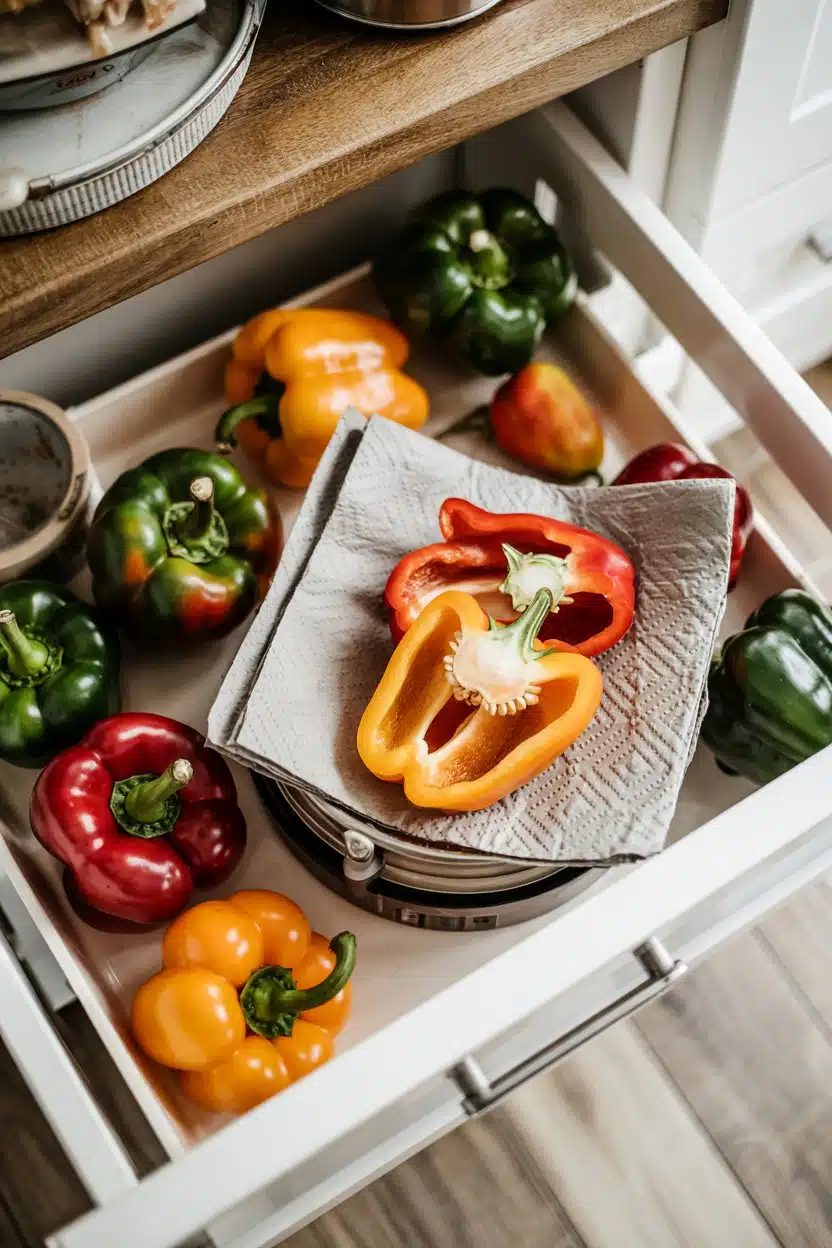
For sliced peppers, drying matters even more. Pat cut pieces thoroughly with a paper towel before storage.
A glass or BPA-free plastic shallow container lined with a paper towel will absorb excess moisture and keep slices crisp for the full 3-5 days.
2-4 days
Whole, firm, unbruised peppers only. Keep in a cool, dark spot away from sunlight and ethylene-producing fruit like bananas or tomatoes. Use quickly.
1-2 weeks
Store unwashed in the crisper drawer inside a perforated produce bag. Place stem-side up on a paper towel to reduce moisture pooling at the base.
3-5 days
Dry cut pieces thoroughly. Transfer to an airtight shallow container lined with a paper towel. Seal tightly - exposed slices absorb fridge odors within a day.
Keep peppers away from ethylene producers - bananas, apples, and tomatoes all emit the gas that accelerates ripening and softening in nearby produce. This applies in both the pantry and the fridge.
A good rule: store peppers with other vegetables, not with fruit.
Can You Freeze Bell Pepper?
Yes - and it's one of the more straightforward vegetables to freeze. The catch is texture.
Frozen and thawed bell peppers become soft and slightly watery, which rules them out for raw snacking or fresh salads. However, that texture change is completely unnoticeable in sautés, soups, stir-fries, and casseroles.
Blanching is optional for bell peppers. A quick 2-minute blanch followed by an ice bath helps retain color - especially for red and yellow varieties - but it isn't required for safety or preservation. Skip it if you're short on time.
- Wash and dry peppers completely - surface moisture leads to ice crystals and speeds up freezer burn.
- Remove stem, seeds, and membranes before cutting so frozen pieces are ready to cook with immediately.
- Slice or dice to your preferred size - strips work well for stir-fries, and diced pieces suit soups or rice dishes.
- Optional blanch: drop pieces into boiling water for 2 minutes, then transfer immediately to an ice bath and drain dry.
- Flash-freeze pieces in a single layer on a sheet pan for 30-60 minutes until individually firm - this prevents clumping.
- Transfer to freezer bags, press out all air, label with the date, and freeze flat for efficient stacking.
To use, cook frozen pieces directly from the freezer into hot dishes.
For softer applications like stuffed peppers, thaw overnight in the fridge.
The quality difference between cooking from frozen versus thawed is minimal - direct frozen is faster and avoids the watery drip.
For guidance on avoiding ice damage with other proteins, the article on salmon freezer burn covers the same core principles of air removal and packaging.
Signs Bell Pepper Has Gone Bad
A good pepper has glossy skin, firm flesh, and a clean, slightly grassy smell. Anything that deviates significantly from that baseline is worth a closer look.
Small dry spots on the exterior can be trimmed, but mold, sliminess, or a sour smell mean the whole pepper goes.
Visual Signs
- Wrinkled or limp skin, especially around the stem end
- Dark, sunken soft spots - brown or black with a wet appearance
- White, gray, or green mold fuzz on cuts, stem, or inside the cavity
- Total loss of glossy sheen across the surface
Smell Signs
- Sour or fermented odor from broken-down cell walls
- Musty smell indicating fungal growth has started
Texture Signs
- Slimy or sticky surface, particularly near cuts or the stem
- Spongy, collapsing flesh with no firm snap when pressed
One practical rule: if a pepper is going soft but has no mold or off-smell, roast or sauté it within the next day or two.
Heat masks textural decline entirely, and the pepper is still safe and fully usable in cooked form.
Getting the Most from Your Bell Peppers
Four habits make a real difference with bell pepper storage, and none of them take extra time.
- 🛒 Buy peppers that feel heavy for their size - thicker flesh means more water content and longer crispness.
- 📦 Store sliced peppers stem-side up in a shallow container so pooled moisture doesn't accelerate the cut edges.
- 🚫 Keep peppers away from ethylene producers at all times - in both the pantry and the crisper.
- 🍳 When a pepper starts to soften, roast it immediately rather than letting it decline further in the fridge.
If you've frozen most of your batch and need fresh bell pepper for a recipe, knowing your replacements for bell pepper can save a last-minute trip to the store.
Frequently Asked Questions
Technically yes, but the texture makes it impractical for raw use. Freezing ruptures cell walls in bell pepper, so thawed pieces turn soft and release liquid - nothing like the crisp snap of a fresh slice. Stick to using frozen bell pepper in cooked dishes only.
Faster than whole ones, yes - but 3-5 days is still reasonable if stored correctly. The key is drying cut pieces thoroughly before sealing them in an airtight container with a paper towel. Skipping either step drops that window to 1-2 days.
A perforated plastic bag or loosely closed produce bag works better than a sealed paper bag for fridge storage. Paper bags absorb and trap moisture directly against the skin, while a perforated bag allows just enough airflow to reduce condensation without drying the pepper out.
Not immediately, but refrigeration extends life significantly. A whole pepper will hold 1-3 days at room temperature and up to two weeks in the crisper. If you're using a pepper within a day or two, the counter is fine - anything longer, refrigerate it.
Yes, as long as those vegetables aren't ethylene producers. Bell peppers are sensitive to ethylene gas and will soften prematurely next to tomatoes or stone fruit - both of which are sometimes stored in crisper drawers. Leafy greens and other low-ethylene vegetables like zucchini make safe crisper neighbors.