That half-used tub you found pushed to the back of the fridge - it might be fine, or it might not.
Ricotta is a fresh, high-moisture cheese, which means it spoils faster than aged varieties and doesn't give you much warning when it's on the way out.
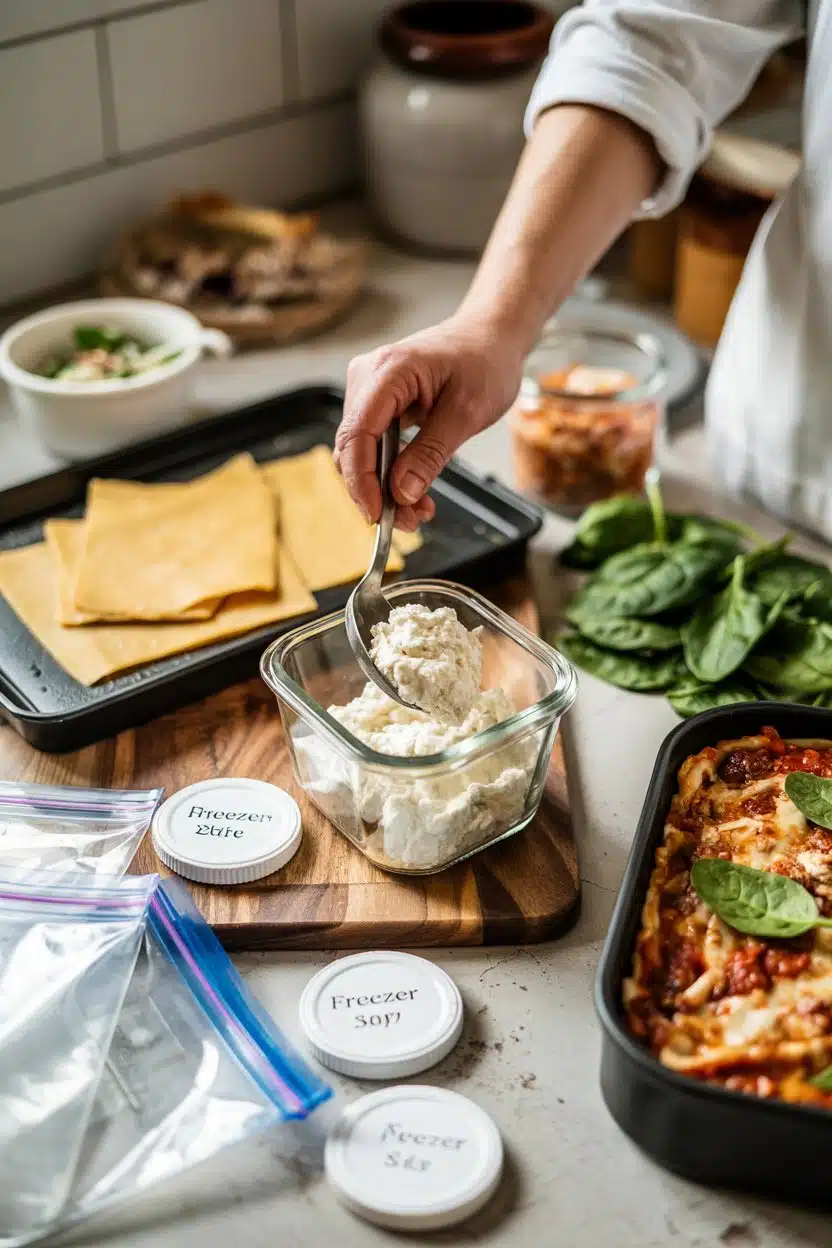
Knowing what to look for and how to store it properly is the difference between a usable ingredient and a waste of money.
Unopened ricotta keeps 7-10 days in the fridge. Once opened, use it within 5-7 days. Freeze in small portions for up to 2 months - expect a texture change best handled by cooking or blending.
How Long Does Ricotta Cheese Last?
Ricotta's shelf life is shorter than most dairy staples because of its high water content and fresh-curd structure.
Remember it later
Planning to try this recipe soon? Save it for a quick find later!
Unlike cream cheese's shelf life, which stretches a bit further, fresh ricotta sits in a narrower window - especially once the seal is broken.
The table below covers all storage scenarios. Always check the printed date on an unopened tub and use that as your ceiling, even if the ranges below run longer.
| Method | State | Duration | Notes |
|---|---|---|---|
| 🧊 Fridge | Unopened | 7-10 days | Use by printed date if sooner; container dates vary by brand |
| 🧊 Fridge | Opened | 5-7 days | Keep in original tub or airtight container; drain excess whey after 1-2 days |
| ❄️ Freezer | Opened | 1-2 months | Texture becomes grainy after thawing - best used cooked or blended |
| ❄️ Freezer | Unopened | 2 months | Factory-sealed tubs freeze well; portion before freezing if possible |
These durations assume consistent refrigerator temperatures at or below 40°F. Anything warmer compresses that window fast.
You'll find similar patterns in how long cottage cheese keeps - another fresh dairy product with the same moisture-driven limitations.
How to Store Ricotta Cheese
The original plastic tub is better packaging than it looks. Keep ricotta in it with the lid sealed, and press a sheet of plastic wrap directly onto the exposed surface before closing - this cuts air contact and slows whey separation.
Don't transfer to a wide, shallow bowl unless you have an airtight lid that fits snugly.
Once whey starts pooling on top after a day or two, spoon it off or tip the tub gently to drain. Leaving it sitting in accumulated liquid accelerates spoilage at the surface.
5-10 days
Store in the original sealed tub. After opening, press plastic wrap directly onto the ricotta surface before replacing the lid. Keep on a middle shelf - not in the door, where temperature fluctuates. Drain pooled whey after 1-2 days.
Ricotta used in dairy recipes like lasagna should be scooped out with a clean spoon each time. Introducing crumbs, sauce residue, or a wet spatula into the tub shortens its refrigerator life noticeably.
Can You Freeze Ricotta Cheese?
Yes - with caveats. Frozen ricotta thaws grainy. The curds break apart, whey separates, and the smooth, creamy consistency you'd spread on toast won't come back without help. That said, it works well cooked into sauces, folded into lasagna filling, or blended into a dip.
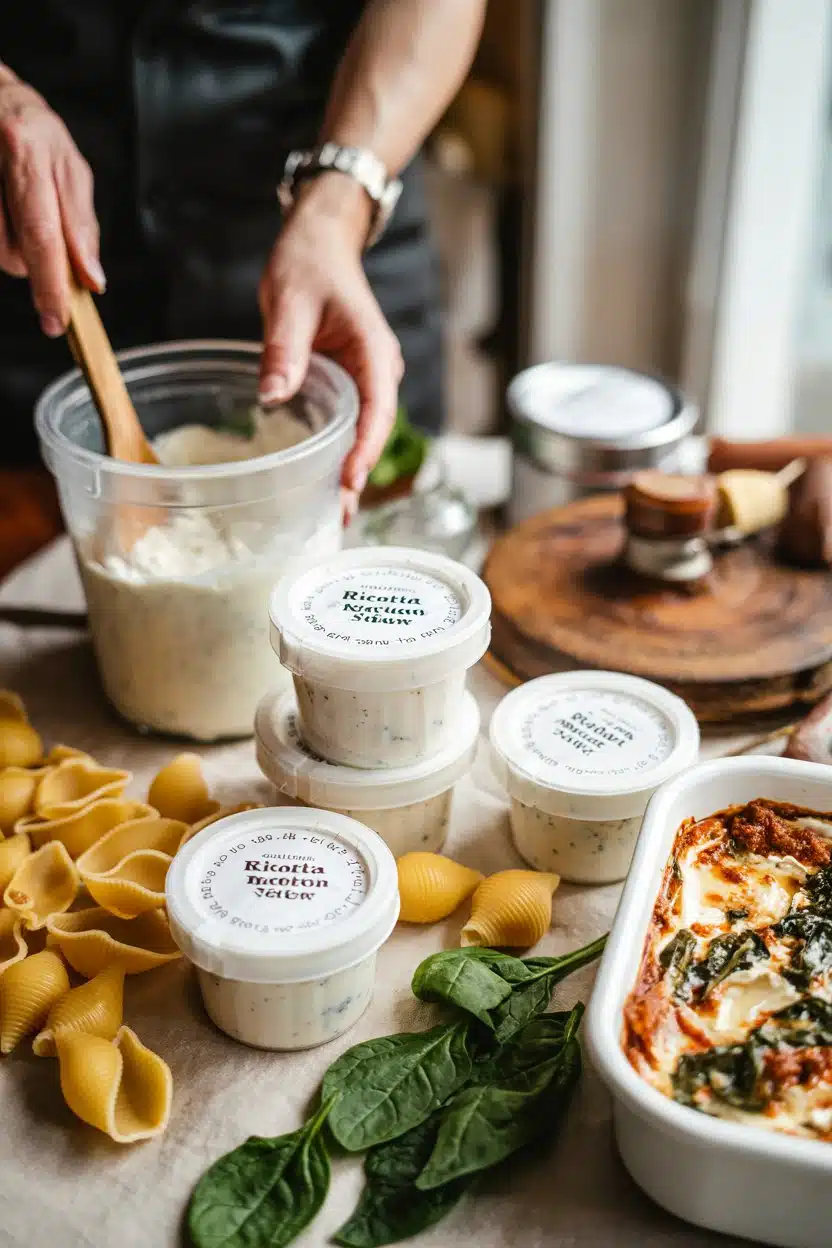
Plan the end use before you freeze it.
- Drain first. Spoon off any loose whey pooling in the tub - frozen liquid pockets make the thawed texture runnier than necessary.
- Portion it out. Divide into ½ to 1-cup amounts and transfer to freezer-safe containers or heavy-duty freezer bags. Flat bags freeze and thaw faster than rigid tubs.
- Press and seal. Push out as much air as possible before sealing. Press bags flat so they stack efficiently.
- Label clearly. Write the freeze date and intended use - "for lasagna" or "for blending" - so you don't reach for it raw without thinking.
- Thaw in the fridge. Allow 24 hours for 1-cup portions. For faster results, microwave on low power in short bursts, stirring between each round.
- Re-whip before use. A quick whisk or 30-second blitz in a blender smooths the grainy texture significantly before adding to cooked dishes.
Freezing large, unopened tubs without portioning is the most common mistake. Thawing a full 32-oz container takes much longer, and the texture degrades further during extended thaw time.
Signs Ricotta Cheese Has Gone Bad
Fresh ricotta has a mild, milky aroma and a slightly moist surface. Any meaningful departure from that baseline is worth taking seriously.
Note that a thin film of clear whey on the surface is normal - it's not the same as the slimy coating that signals spoilage.
Visual Signs
- Gray or green mold spots on the surface
- Darkened or yellowed curds at the edges
- Excessive watery separation with a slimy surface layer
Smell Signs
- Sour, pungent tang well beyond ricotta's naturally mild aroma
- Sharp or fermented smell when the tub is first opened
Texture Signs
- Slimy coating on the curds
- Overly gritty, crumbly curds that won't smooth with stirring
Do not scrape mold off soft cheese and use what's underneath. Ricotta's moisture content allows mold to penetrate the curd mass quickly, and the visible spot is rarely the full extent of it.
If you're unsure, discard it - if replacements for ricotta cheese are available, they're a safer call.
Make the Most of What You Have
A few specific habits reduce waste and keep ricotta in usable condition longer.
- 🧊 Store in the coldest part of your fridge - the middle shelf, away from the door - to avoid temperature swings that accelerate spoilage.
- ❄️ Freeze in ½ to 1-cup portions so each thaw session uses exactly what one recipe needs, nothing more.
- 🥄 Reserve strained whey instead of pouring it out - it works in soups, batters, and bread dough, and it freezes well on its own.
- 📝 Label frozen portions with the date and intended use to avoid accidentally pulling thawed ricotta for a raw application.
Frequently Asked Questions
Yes - baking is actually the best use for frozen ricotta. The heat from an oven smooths out the grainy post-thaw texture that makes frozen ricotta unsuitable for raw or chilled applications. Dishes like baked ziti, stuffed shells, and ricotta-based cheesecake handle thawed ricotta without any noticeable quality loss.
It does. The curd structure breaks down during freezing, so thawed ricotta is grainier, looser, and more watery than fresh. Re-whipping with a whisk or blender partially restores the texture, but it won't return to its original smoothness - plan to use it only in cooked or blended preparations.
One to two months gives the best quality. Ricotta remains safe beyond that - up to three months - but the texture degrades more significantly the longer it stays frozen. Past three months, the curd separation after thawing becomes difficult to correct even with blending.
It's safe in terms of food safety if it was frozen fresh and thawed properly in the fridge. The issue is texture - thawed ricotta is grainy and watery, making it unpleasant in raw applications like a chilled dessert or fresh dip. Re-whipping helps, but cooking is still the better route.
Drain off any pooled whey first, then whisk vigorously or blend for 20-30 seconds. A food processor works well for larger quantities. This won't fully replicate fresh ricotta's texture, however it smooths the curds enough for pasta fillings, sauces, and baked dishes where slight graininess won't matter.