
Most people refrigerate tuna salad without a second thought, then eat it for days until it's gone.
The mistake isn't the storage - it's not knowing the exact window before bacteria from mayonnaise, egg, or canned tuna make that container a risk.
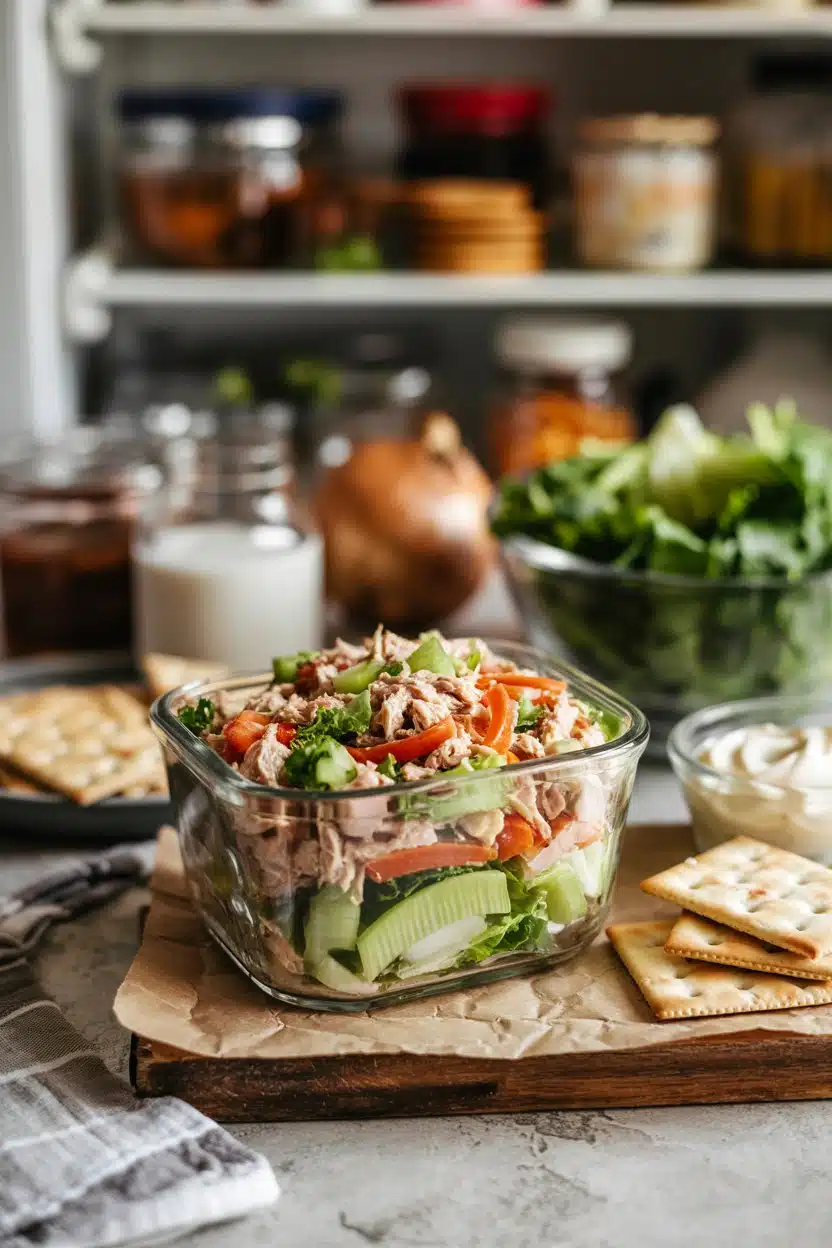
Tuna salad has a shorter safe life than most people assume, and the mix-ins matter.
If you're using a yogurt base instead of mayo, check out mayonnaise swaps that work - some alternatives affect how long the salad holds up.
Tuna salad - homemade or deli-prepared - lasts 3-4 days refrigerated in an airtight container at 40°F or below. Freezing is possible but expect the dressing to separate. Never leave it out longer than 2 hours.
How Long Does Tuna Salad Last?
The 3-4 day fridge window applies whether you made it at home or bought it from a deli counter.
Remember it later
Planning to try this recipe soon? Save it for a quick find later!
That deadline doesn't shift based on how fresh the tuna smelled or how clean your mixing bowl was.
What does shift the risk is temperature - a fridge running above 40°F shortens safe storage below that window.
The same rule applies to keeping chicken salad fresh, since both share a mayonnaise base and similar bacterial growth patterns.
| Method | State | Duration | Notes |
|---|---|---|---|
| 🧊 Fridge | Homemade | 3-4 days | Airtight container at 40°F or below; mayo- or yogurt-based |
| 🧊 Fridge | Deli / Store-bought (opened) | 3-4 days | Same window applies after opening; refrigerate promptly |
| ❄️ Freezer | Prepared (any base) | 1-2 months | Dressing separates on thaw; best quality within 1 month |
| 🏠 Pantry | Prepared | Not safe | Never store at room temperature for extended periods |
Understanding how long tuna keeps before it's mixed into a salad gives useful context - once combined with mayo and add-ins, the clock runs faster than for plain canned tuna alone.
How to Store Tuna Salad
Container choice directly affects how long the salad stays safe. A shallow glass or BPA-free plastic container - roughly 500-1000 ml for 2-4 servings - cools the salad faster and keeps air out more effectively than a deep bowl with plastic wrap stretched over the top.
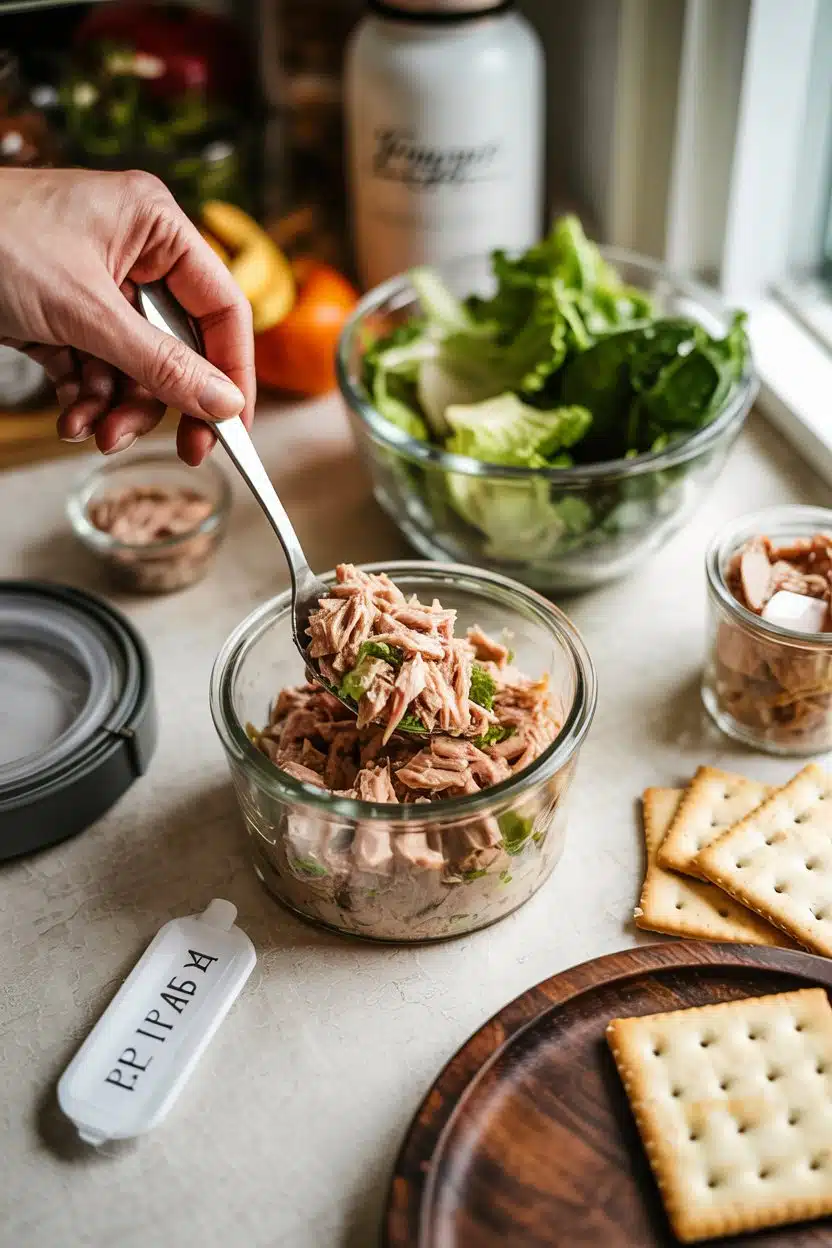
Don't refrigerate tuna salad while it's still warm from freshly drained tuna or just-boiled eggs. Cool it to room temperature first, but keep that window under 2 hours total.
Then seal and refrigerate immediately.
One commonly ignored rule: never store tuna salad in the fridge door. Temperature there fluctuates every time the door opens. The coldest, most stable shelf - typically the back of a middle shelf - is where this salad belongs.
3-4 days
Use a shallow, airtight container. Cool to room temperature within 2 hours of assembly, then refrigerate immediately. Store on a middle shelf at the back - not in the door. Keep away from raw proteins to prevent cross-contamination.
If you used a yogurt-based dressing instead of mayo, the storage method is identical - though storing yogurt correctly in its original form requires its own considerations before it ever gets mixed in.
Can You Freeze Tuna Salad?
You can freeze tuna salad, but you should go in knowing what changes. Mayonnaise breaks down when frozen - it separates on thaw, turning the dressing watery and grainy. Tuna flakes themselves can become slightly mealy.
The salad won't be ruined, but it won't be the same texture either.
- Portion first - divide into single- or double-serving amounts so you only thaw what you need
- Fill containers with headspace - use freezer-safe airtight containers, leaving ½ inch at the top to allow expansion
- Press wrap to the surface - lay plastic wrap directly on the salad before sealing to minimize air contact
- Label with the date - write the assembly date, not the freeze date, so you track the full timeline
- Freeze within 2 hours - same food-safety window as refrigeration applies here
- Thaw in the fridge - allow 24 hours; never thaw at room temperature
- Re-emulsify before serving - drain any pooled water, whip with a fork, and stir in 1-2 teaspoon of fresh mayo or olive oil to restore creaminess
For broader context on how freezing affects seafood texture, the salmon freezer burn guide covers similar degradation patterns worth understanding.
Signs Tuna Salad Has Gone Bad
Trust your senses here. One clear signal is enough to discard the container - you don't need multiple signs to confirm it.
Visual Signs
- Gray-brown discoloration of tuna flakes beyond normal canned color
- Visible mold - white, green, or fuzzy - on the surface or around the container rim
- Thick, cloudy liquid or milky separation with an unusual film on top
Smell Signs
- Sour or fermented odor - noticeably different from normal canned-tuna aroma
- Aggressively sharp fishiness that hits before you even lean in
Texture Signs
- Slimy or tacky consistency on the tuna or throughout the dressing
- Grainy or chalky tuna flesh that wasn't there when first mixed
Don't taste-test to confirm. Bacterial contamination - particularly from Staphylococcus aureus, which thrives in mayo-based salads - doesn't always produce a detectable off-flavor before it's a problem. When in doubt, discard it.
Keep Your Tuna Salad Safe Longer
Small habits extend usable life and cut food waste without adding much effort.
- 🕐 Make small batches - scale to what you'll eat in 3 days; avoid large batches that get reopened repeatedly
- 🥄 Keep crunchy mix-ins separate - store celery, apple, or hard-boiled egg on the side and add right before eating to preserve texture and reduce bacterial surface area
- 📅 Date every container - write the assembly date on the lid and follow first-in, first-out rotation
- 🌡️ Use shallow containers - 1-2 inches deep allows the salad to cool through quickly and stay within the 2-hour food-safety window
The same diligence you'd apply to raw proteins - as covered in this food safety raw meat guide - applies at a scaled-down level to any mayo-based salad sitting in your fridge.
Frequently Asked Questions
Yes, but the mayonnaise will separate on thawing and the texture won't return to its original creaminess. After thawing, drain pooled water and whip in a teaspoon or two of fresh mayo to help re-emulsify. It's best treated as a cooked-egg or sandwich-filler situation rather than a fresh salad.
Two hours is the absolute limit - one hour if the ambient temperature is above 90°F. Beyond that, bacterial growth in the mayo and egg components reaches unsafe levels. Discard it if you've lost track of how long it's been out.
No. The safe window is 3-4 days, and day 5 puts you outside food-safety guidelines regardless of how it looks or smells. Some bacterial contamination - particularly from Staphylococcus aureus - produces no detectable odor or visible change before it becomes a health risk.
No. Refreezing thawed tuna salad accelerates both texture degradation and bacterial risk. The dressing was already compromised on the first thaw; a second freeze-thaw cycle makes the result unpleasant and potentially unsafe. Portion before freezing so you only thaw what you need.
Marginally, but the difference isn't significant enough to change the storage window. Whether you use Greek yogurt, avocado, or olive oil as the binder, the tuna itself and any egg or vegetable mix-ins still cap safe fridge life at 3-4 days. The container seal and refrigeration temperature matter far more than the dressing choice.



