Yogurt lands in your fridge after every grocery run, but knowing exactly how long it stays good - and what to do when you're not sure - is where most people go wrong.
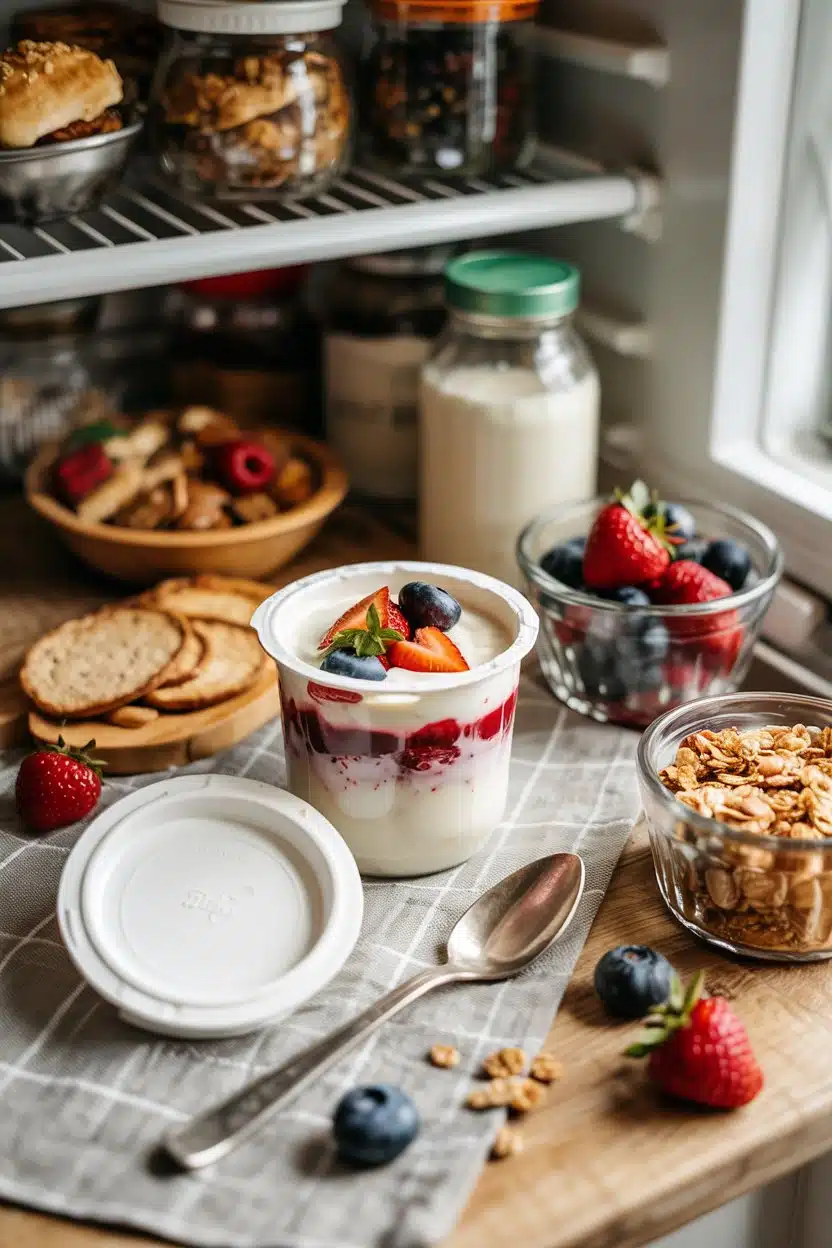
Sell-by dates aren't safety cutoffs, and the gap between "slightly sour" and "genuinely spoiled" matters more here than with almost any other refrigerated dairy.
Whether you bought a giant tub or a single-serve cup, the next few days of storage decisions make all the difference.
Opened yogurt lasts 5-7 days in the fridge; unopened yogurt is often good 1-3 weeks past its sell-by date. Freeze for up to 2 months, but expect texture changes. Store toward the back of the fridge, never in the door.
How Long Does Yogurt Last?
Shelf life depends on whether the container has been opened, how it was produced, and where it's been sitting. Unopened refrigerated yogurt regularly stays good well past its printed date - sometimes by weeks - as long as it's been kept cold and the seal is intact.
Remember it later
Planning to try this recipe soon? Save it for a quick find later!
Opened containers are a different story; once air gets in and utensils touch the surface, the clock shortens considerably.
Greek yogurt and full-fat plain varieties tend to hold up toward the longer end of each range. Low-fat and flavored yogurts, with their added sugars and thinner structure, often turn faster.
| Method | State | Duration | Notes |
|---|---|---|---|
| 🧊 Fridge | Opened | 5-7 days | Keep in original tub or airtight jar; press plastic wrap on surface of partial containers |
| 🧊 Fridge | Unopened | 1-3 weeks past sell-by | Check for container bulging or off-odors before opening; must stay continuously chilled |
| 🏠 Pantry | Unopened (UHT only) | Until printed best-by | Shelf-stable UHT yogurt only; standard refrigerated yogurt is never pantry-safe |
| ❄️ Freezer | Opened | 1-2 months | Best for smoothies or baking after thaw; texture will separate |
| 🌡️ Counter | Opened | 2 hours max | Discard after 1 hour if ambient temperature exceeds 90°F |
How to Store Yogurt
The single biggest mistake people make is keeping yogurt in the fridge door. Door shelves experience repeated temperature swings every time you open the fridge - that means faster souring, earlier whey separation, and a noticeably shorter useful life.
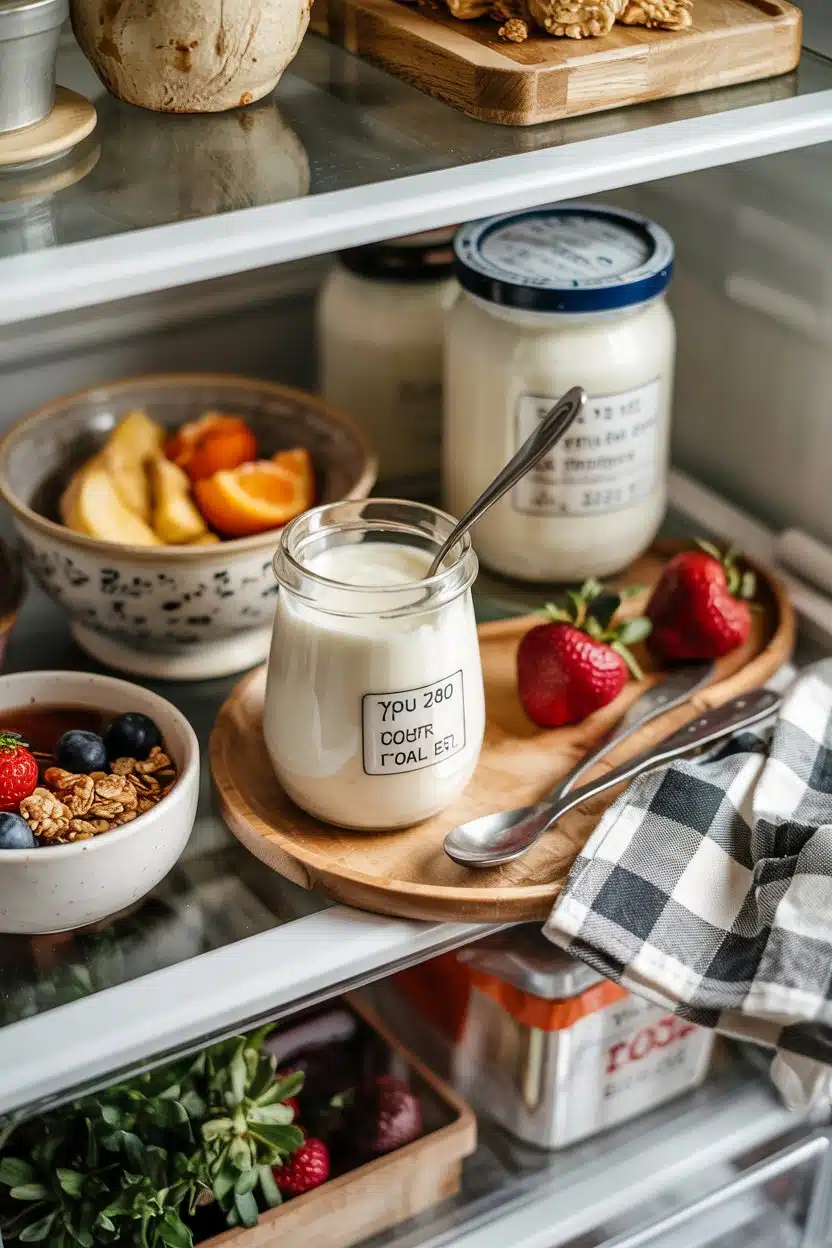
Move it to a back shelf where the temperature holds steady between 34-40°F.
Container choice matters almost as much as location.
If the original tub's lid fits loosely or you've got a partial container, transfer the yogurt to a glass mason jar with a tight screw lid.
For partial containers you plan to use soon, press a layer of plastic wrap directly onto the yogurt surface before sealing - this limits air exposure and slows surface drying and oxidation.
Much like storing sour cream correctly, the goal is creating a near-airtight seal around the dairy itself.
Until best-by date
Shelf-stable UHT yogurt cups only. Keep sealed, away from heat and direct sunlight. Refrigerate immediately after opening and consume within 5-7 days.
5-7 days (opened)
Store on a back shelf at 34-40°F. Use the original rigid tub with a snapped lid or transfer to a glass mason jar. Press plastic wrap directly onto the surface of partial containers to reduce air contact.
Always use a clean utensil every time you scoop. Double-dipping a spoon introduces bacteria directly into the container and noticeably shortens how long it stays good.
Can You Freeze Yogurt?
Yes - with one clear expectation set in advance. Frozen yogurt thaws grainy and watery because the whey separates from the protein structure during freezing. It won't return to its original creamy texture no matter how thoroughly you stir.
Plan to use thawed yogurt in smoothies, overnight oats, marinades, or baked goods rather than eating it straight from the container.
- Portion it out - Spoon yogurt into a shallow airtight container or a silicone ice cube tray for single-serving cubes.
- Leave headspace - Allow at least ½ inch of space at the top; yogurt expands as it freezes.
- Seal and label - Close the container tightly, then write the date on the lid. Use within 1-2 months for best quality.
- Thaw overnight - Move frozen yogurt to the fridge 8-12 hours before you need it. For smoothies, you can blend cubes directly from frozen.
- Stir vigorously - Once thawed, stir well to recombine the separated whey before using.
Signs Yogurt Has Gone Bad
Normal yogurt does several things that can look alarming but aren't: whey pooling on top is standard separation from live active cultures doing their job, and a tangier smell as the days go on is expected.
The indicators below are different - they mean discard, not stir.
Visual Signs
- Fuzzy mold - white, green, blue, or black - anywhere on the surface
- Bulging or swollen plastic tub or foil seal
- Thick dark streaks through curd clumps (beyond normal whey pooling)
Smell Signs
- Putrid or rotten odor clearly distinct from the normal tangy-sour scent
- Sharp chemical or ammonia-like smell
Texture Signs
- Slimy film on the surface that doesn't stir back in
- Ropey or stringy texture throughout the container
Don't taste-test a container you're already suspicious of. Mold on yogurt can send threads deeper than the visible surface, and there's no safe way to spoon around it.
Storage Habits Worth Keeping
A few consistent practices will get you to the full 5-7 days - or beyond - without waste.
- 🏷️ Label opened containers with the date you first broke the seal; it removes all guessing.
- 🥄 Use only clean utensils and spoon out single portions rather than eating directly from the tub.
- 📦 Portion into a small airtight jar for daily servings - smaller containers spend less time warming on the counter.
- 🎯 Finish plain yogurt within 5-7 days of opening; aim for 4-6 days with flavored varieties, which turn faster due to added sugars.
Similar rules apply to other refrigerated dairy: understanding how long milk keeps and how long butter keeps follows the same logic of consistent cold, airtight containers, and sensory checks over date labels.
Frequently Asked Questions
It depends on storage conditions. Plain, full-fat yogurt stored in a tightly sealed container at the back of the fridge - not the door - can still be fine at day 7 or 8. Run through the visual, smell, and texture checks; if nothing is off, it's likely still safe, though quality will be declining.
Greek yogurt typically holds for 5-7 days after opening, the same window as regular yogurt. Because it's strained and has a lower moisture content, it can occasionally edge toward the longer end of that range. Flavored Greek yogurts with fruit mix-ins should be treated more conservatively - aim to finish them in 4-5 days.
Yes - discard the entire container. Unlike hard cheeses where surface mold can sometimes be cut away safely, yogurt's soft, moist texture allows mold to penetrate far below what's visible on the surface. Scooping around the moldy spot is not a safe workaround.
Not straight from the container - thawed yogurt turns grainy and watery due to whey separation, which doesn't fully reverse with stirring. It's safe to eat, but the texture won't match fresh yogurt. Use it blended into smoothies, stirred into sauces, or folded into baked goods where the texture change doesn't matter.
No - that liquid is whey, a natural byproduct of live active cultures and normal protein separation. It's more common in Greek yogurt and increases as the yogurt ages in the fridge. Simply stir it back in; if the smell and texture are normal, the yogurt is fine to eat.