Spinach is one of those greens that looks fine one day and turns into a slimy mess the next.
You've just brought home a fresh bunch or cracked open a new bag, and how you handle it from this point forward determines whether it lasts five days or five minutes.
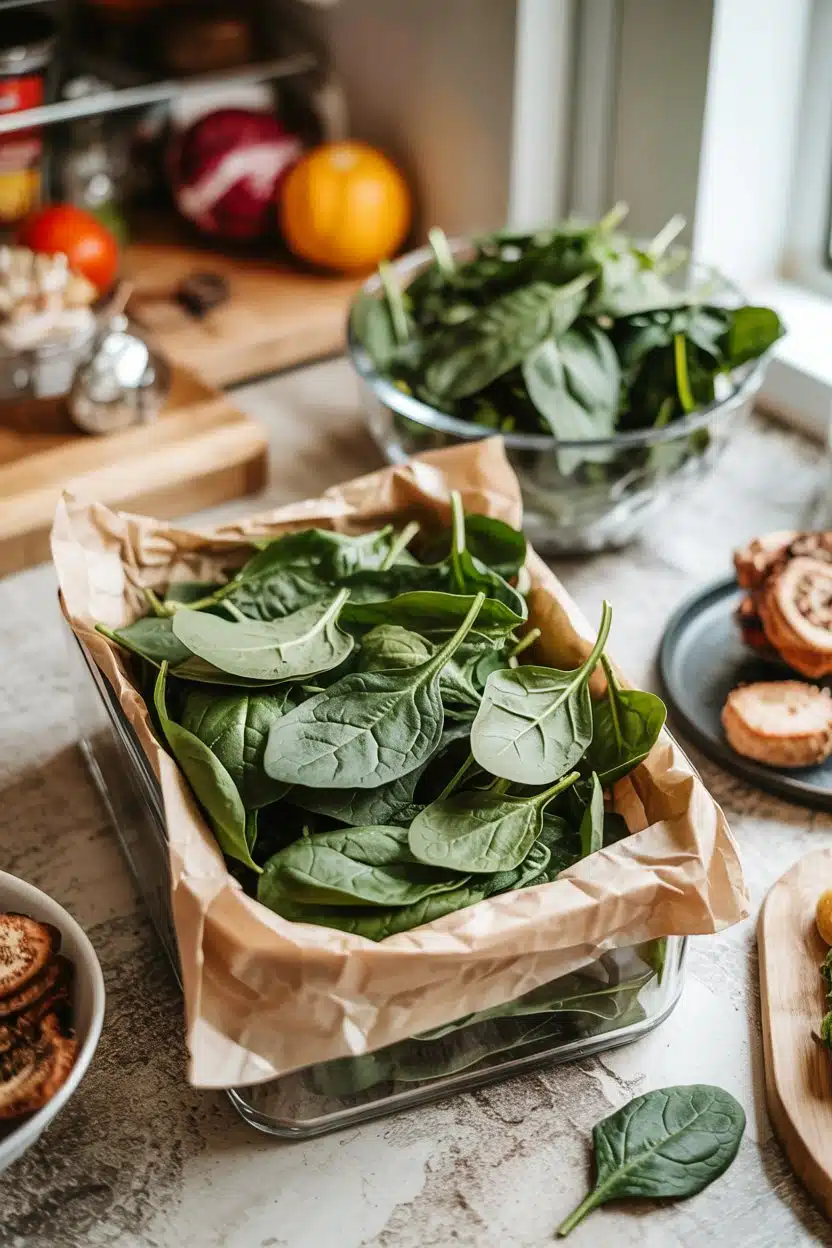
Proper storage makes the difference between spinach you actually use and spinach you throw away, and the gap between those two outcomes is mostly technique.
Raw spinach lasts 5-7 days in the fridge when stored dry. Opened bagged baby spinach goes faster - use it within 3-5 days. Cooked spinach keeps 3-4 days. Freeze blanched leaves for up to 12 months. Moisture is the main enemy at every stage.
How Long Does Spinach Last?
Shelf life depends on form, moisture level, and how carefully the cold chain was maintained before you got home. Loose leaves handled gently and kept dry hit the upper end of the range.
Remember it later
Planning to try this recipe soon? Save it for a quick find later!
Opened commercial bags are more variable - they often trap condensation, so checking daily keeps you ahead of any decline.
If you plan to use spinach in cooking within a week, the fridge is all you need. Anything beyond that, the freezer is the practical answer.
| Method | State | Duration | Notes |
|---|---|---|---|
| 🧊 Fridge | Raw, loose leaves | 5-7 days | Store unwashed or fully dried; breathable container extends life |
| 🧊 Fridge | Bagged baby spinach (opened) | 3-5 days | Commercial bags retain moisture - check daily, use sooner |
| 🧊 Fridge | Cooked | 3-4 days | Cool quickly; shallow airtight containers prevent sogginess |
| ❄️ Freezer | Blanched then frozen | 8-12 months | Best quality; blanching locks color and preserves nutrients |
| ❄️ Freezer | Raw-frozen (flash-frozen style) | 6-8 months | Convenient but more texture loss on thaw than blanched |
How to Store Spinach
The single biggest mistake people make is storing washed, wet spinach in a sealed container. Moisture accelerates sliminess faster than almost anything else. Dry leaves last significantly longer than damp ones.
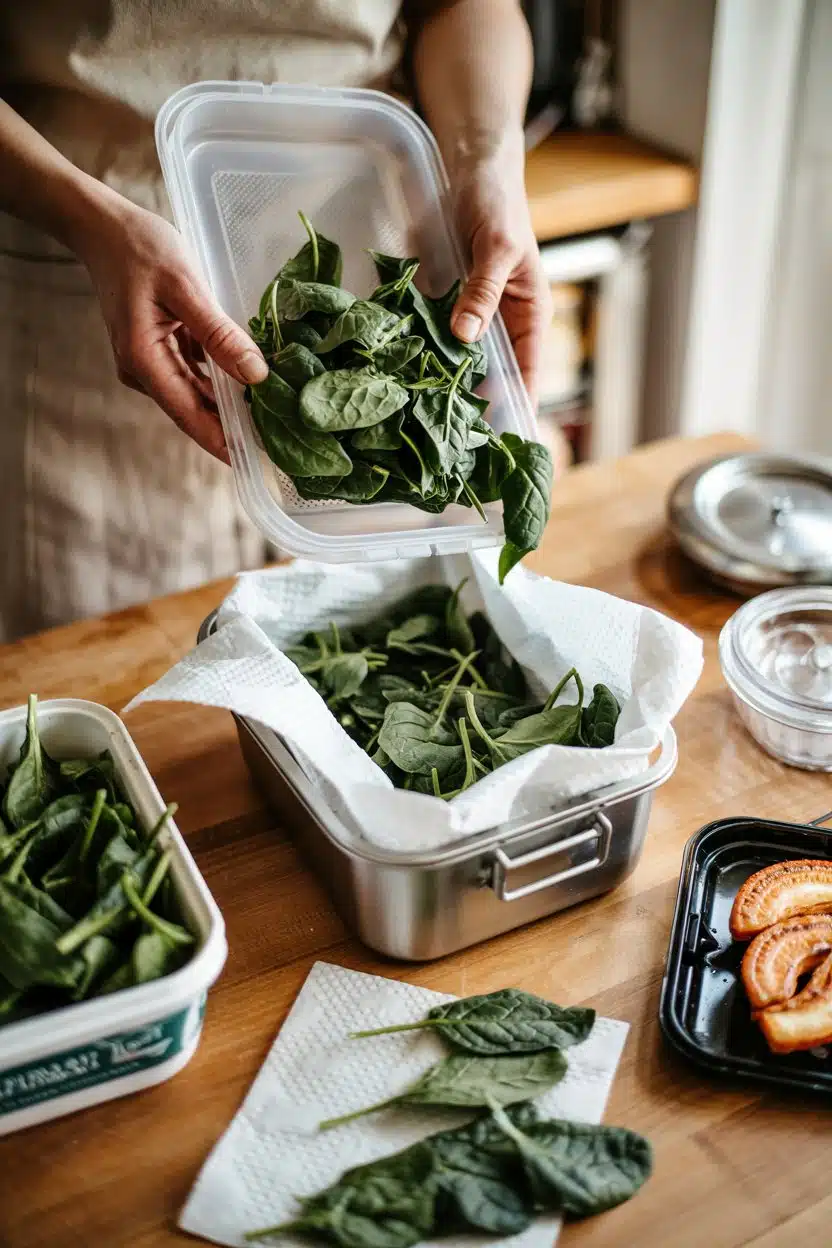
Remove any damaged or yellowing leaves before storing - decay spreads quickly from one leaf to its neighbors. For loose bunches, a quick sort at the start saves the whole bag later.
5-7 days (raw)
Line a perforated produce bag or plastic container with dry paper towels. Place unwashed spinach loosely inside - don't pack it tightly. Add another paper towel on top to absorb any condensation. Store in the crisper drawer, not the fridge door, where temperature fluctuates.
3-5 days
Fold the bag tightly and secure with a clip, or transfer to a container lined with paper towels. Check daily and remove any leaves that are starting to turn. If the bag feels damp inside, swap in a fresh paper towel before resealing.
The crisper drawer maintains higher humidity than the rest of the fridge, which helps spinach stay crisp rather than dry out.
That said, too much humidity without airflow turns the drawer into a condensation trap - the paper towels counteract that.
Can You Freeze Spinach?
Yes, and it's worth doing when you have more than you'll use in a week. Frozen spinach works well in soups, stews, pasta, smoothies, and egg dishes.
Leaves become limp and watery after thawing, so raw salads are off the table - but cooked applications are a clean fit.
Blanching before freezing makes a real difference for anything stored longer than two months. It halts enzyme activity that would otherwise dull the color and degrade nutrients over time. Raw freezing works fine for smoothies where texture barely matters, but blanched is the better call for everything else. For comparison, freezing kale without blanching follows similar trade-offs.
- Trim and rinse Remove stems and rinse leaves quickly under cold water.
- Blanch Drop into boiling water - 2 minutes for baby spinach, 3 minutes for mature leaves.
- Ice bath Transfer immediately to a 1:1 ice bath for the same duration to stop cooking and lock color.
- Drain and dry Squeeze out excess water with a clean towel or salad spinner until leaves are as dry as possible.
- Flash-freeze Spread in 1- or 2-cup portions on a tray and freeze for 30-60 minutes until firm.
- Bag and label Transfer to airtight freezer bags, press out the air, and mark the date.
To thaw, move bags to the fridge overnight. For soups or sautés, add frozen spinach directly - no thawing needed.
Always squeeze out excess water before using thawed spinach in dishes sensitive to moisture, like frittatas or stuffed pasta.
Signs Spinach Has Gone Bad
Spinach gives clear signals before it becomes a food safety issue. Unlike harder vegetables, it doesn't hide spoilage well - you'll see or smell it before you'd ever taste it.
Sliminess is the most common indicator, and it usually shows up first at the center of densely packed leaves.
Spoilage patterns in spinach differ slightly from kale spoilage signs - spinach deteriorates faster and sliminess appears earlier, while kale tends to dry out or yellow more gradually.
Visual Signs
- Glossy or wet-looking film developing on leaf surfaces
- Large dark brown or black patches across the blade
- Widespread yellowing beyond a single leaf or two
- Collapsed, wilted leaves that don't spring back when pinched
Smell Signs
- Sharp, sour or fermented odor instead of a mild green scent
- Off-odors resembling rotten vegetables or ammonia in advanced cases
Texture Signs
- Sliminess between leaves when rubbed together
- Mushy stems or leaves that tear instead of snapping
Making Spinach Last Longer
A few habits at purchase and prep time will reliably extend shelf life across all storage methods.
- 🛒 Buy firm, dry bunches or intact sealed bags - avoid bags with visible condensation or soft spots at the store.
- 🗑️ Pull out damaged leaves immediately after opening; one rotting leaf accelerates the rest.
- 💧 Use a salad spinner after washing - surface moisture is the fastest route to sliminess.
- 📦 Freeze in 1-2 cup portions so you pull only what a recipe needs without thawing and refreezing.
- 🚫 Keep spinach in the crisper drawer, not the door - temperature swings at the door shorten life noticeably.
If you run low on spinach before your next shop, check out alternatives to spinach that work in most of the same dishes alongside spinach.
Frequently Asked Questions
Raw spinach freezes well for smoothies without blanching. Since smoothies blend everything together, the texture loss from skipping the blanching step doesn't matter. Spread clean, dry leaves on a tray, flash-freeze for 30-60 minutes, then transfer to a freezer bag - this prevents clumping so you can grab small amounts at a time.
Opened bagged baby spinach typically lasts 3-5 days in the fridge. Commercial bags are designed to be sealed, so once opened, the modified atmosphere that slows degradation is gone. Transferring the remaining leaves to a container lined with paper towels and checking daily will get you to the upper end of that window.
No - thawed spinach becomes limp and waterlogged, which makes it unsuitable for raw salads. Freezing breaks down the cellular structure of the leaves, and no amount of drying reverses that. Stick to cooked applications: soups, pasta, egg dishes, dips, and grain bowls all handle thawed spinach without issue.
It matters for long-term storage. Blanching deactivates enzymes that break down color, flavor, and nutrients during freezing - without it, spinach stored beyond two months tends to turn dull and develop off-flavors. For short-term freezing under six weeks, raw-frozen spinach performs adequately, especially in smoothies where color isn't a priority.
Sliminess develops from trapped moisture, not just age. Storing washed leaves without drying them first, using an airtight container with no airflow, or keeping spinach near the back of a fridge that cycles humidity are the most common causes. Switching to a paper-towel-lined perforated container and storing in the crisper drawer usually solves the problem.