You spot it at the deli counter - a thick ivory-and-rose block labeled guanciale - and hesitate. It looks like pancetta or even bacon, but it costs more and comes with less explanation. Guanciale is cured pork jowl, air-dried with salt and spices until the fat turns dense and waxy.

It's the fat that matters most here - richer, silkier, and more intensely porky than anything smoked or leaner could produce.
Guanciale is cured pork jowl from central Italy. Its high fat content renders silky in a hot pan, building the base for Roman pasta dishes like carbonara and amatriciana. Raw, it slices firm and clean. Cooked, it delivers deep umami and subtle pepper.
What Is Guanciale?
Guanciale comes from the pig's cheek and jaw - the Italian word itself derives from guancia, meaning cheek. Unlike lardo, which is pure back fat, guanciale has ribbons of lean meat running through a dominant fat layer. That ratio sets it apart from most other cured pork.
Remember it later
Planning to try this recipe soon? Save it for a quick find later!
The cure typically involves coarse salt, black pepper, and dried herbs - thyme, rosemary, or chili depending on the region. After curing, the jowl hangs to air-dry for several weeks.
Lazio and Umbria both claim strong traditions, with subtle regional differences in seasoning.
Guanciale is sometimes confused with pancetta, which comes from the belly, not the cheek. The cheek fat has a different fatty-acid composition - more monounsaturated fat - which contributes to how smoothly it melts.
No smoking is involved at any stage, keeping the flavor clean and unobstructed.
- Whole jowl - the intact cured piece, best for slicing to order and longest fridge life
- Pre-sliced packs - convenient but oxidize faster; use within a week or two of opening
- Cubed/lardons - sold diced, ready for rendering; check for excessive moisture or off smell
What Does Guanciale Taste Like?
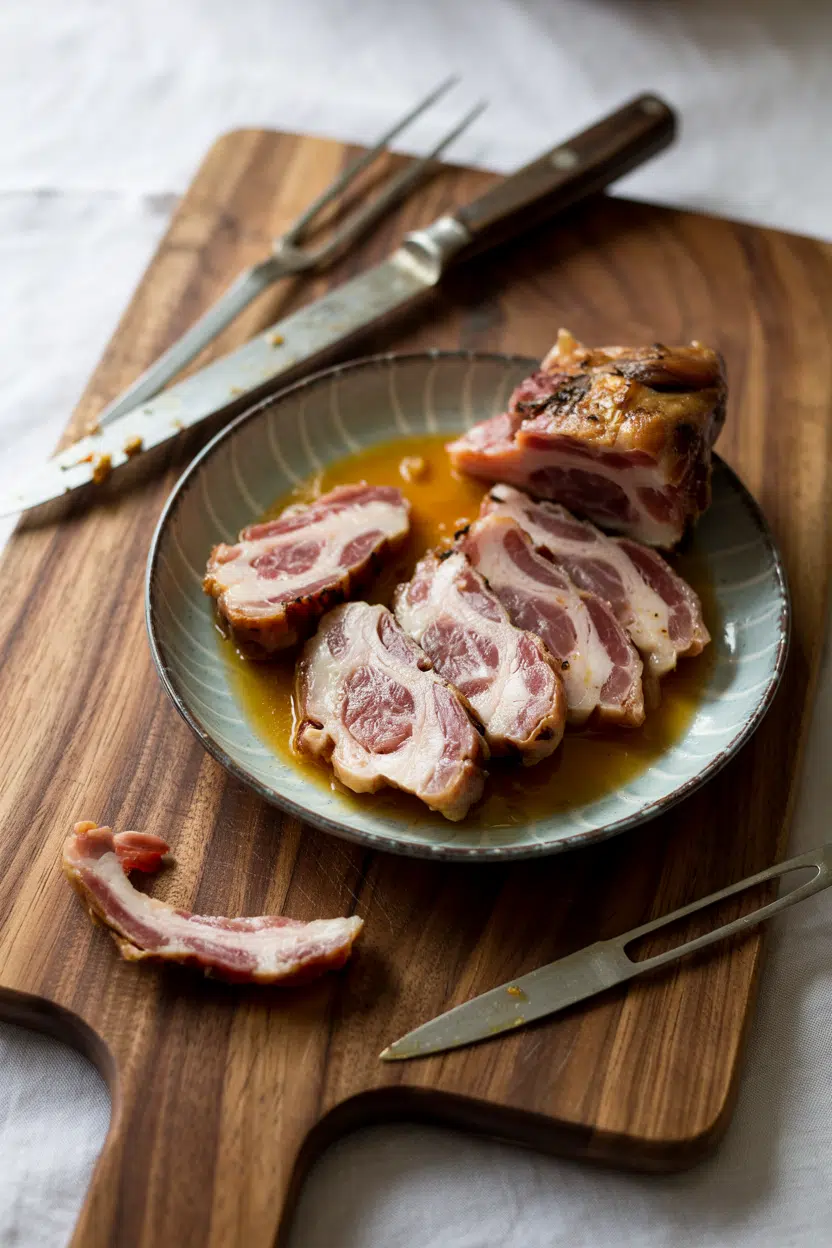
Raw guanciale tastes deeply savory and porky, with a faint sweetness that comes from fat breakdown during the cure. Black pepper is present but not sharp - it sits in the background as warmth rather than heat.
Compared to pancetta, the flavor is noticeably richer and more concentrated.
Heat changes everything. When guanciale renders in a pan, the fat liquefies into a glossy, almost creamy liquid with a nutty, toasted-pork scent.
The lean sections crisp at the edges and turn pleasantly chewy. That shift - from waxy block to silky rendered fat - is exactly why Roman cooks refuse to substitute it.
How to Use Guanciale
Roman cooking treats guanciale as infrastructure, not garnish. It goes in the pan first, rendering slowly until the fat pools and the meat crisps. That fat becomes the cooking medium - everything else builds on it.
For spaghetti carbonara, guanciale renders in a dry skillet until the fat is liquid and the edges have color. The heat is cut before eggs and Pecorino Romano go in, so the residual fat helps emulsify the sauce without scrambling the yolks.
In amatriciana, the rendered fat carries tomato passata and fuses them into one cohesive, porky sauce.
| Method | Best For | Tip |
|---|---|---|
| 🍳 Rendered | Carbonara, amatriciana, bean dishes | Start in a cold pan; let fat release gradually over medium-low heat |
| 🔥 Crisped | Topping soups, adding crunch to greens | Finish on slightly higher heat once most fat has rendered out |
| 🥗 Raw/Sliced | Antipasto boards, charcuterie plates | Slice thin and serve at room temperature for best fat texture |
| 🥘 Braised | Layering into stews, braises, ribollita | Add diced pieces early so fat integrates into the braising liquid |
Beyond pasta, guanciale works well diced into ribollita or white bean soups, where it adds fat and salinity without smoke. Layered under root vegetables before roasting, it bastes them as it renders.
Pairs that hold up to its richness include Pecorino Romano, egg yolks, black pepper, tomato, and cannellini beans. Avoid floral or citrus-forward herbs - they disappear against cured pork's weight.
If you need a substitute, pancetta or other cured options cover most situations, though the fat profile won't be identical.
How to Buy and Store Guanciale
At a good Italian deli or specialty butcher, ask for a whole cured jowl rather than pre-sliced. Whole pieces last longer, slice cleaner, and give you control over thickness.
Look for thick ivory or cream-white fat with a rosy-pink lean section - avoid anything with gray tinges, slimy surfaces, or dried-out crumbly edges. A faint powdery white bloom on the surface is normal and harmless; it's part of the cure.
Store an unopened whole jowl wrapped in butcher paper inside the fridge - it can last several weeks. Once cut, wrap the exposed face tightly and use within one to two weeks.
For detailed guidance on guanciale storage life, the rules shift depending on whether it's vacuum-sealed or hand-wrapped. Freeze portions in plastic wrap plus foil for up to three months without significant quality loss.
Where to Start with Guanciale
Buy a small whole piece first. Render half in a dry skillet, taste the fat that pools, and you'll immediately understand why Roman cooks won't accept a swap. Start with carbonara or amatriciana - both are short recipes where guanciale is the backbone, not a background note.
From there, every other use follows logic.
Frequently Asked Questions
No. Pancetta comes from the belly; guanciale comes from the cheek and jaw. Guanciale has a higher fat-to-lean ratio and a richer, more intense flavor because cheek fat renders more smoothly than belly fat.
Bacon works in a pinch, but smoked bacon changes the flavor profile significantly. The smokiness competes with Pecorino Romano and egg yolks instead of complementing them. Pancetta is a closer substitute.
Place it in a cold, dry skillet and set the heat to medium-low. As the pan warms, the fat releases gradually - this takes 6-10 minutes for lardons. Rushing with high heat crisps the exterior before the interior fat can escape.
Italian delis, specialty butchers, and some well-stocked grocery stores carry it. Online retailers like Eataly or specialty charcuterie shops ship vacuum-sealed whole jowls. Call ahead - many stores stock it only occasionally.
Yes - it's a cured, not cooked, product, so thin slices are safe to eat without heating. Serve at room temperature on an antipasto board so the fat softens slightly and the flavor opens up.