Most people assume gochujang is just a hot sauce - something to add pure fire and step back from. That's the wrong read.
The heat is real, but it's the slowest, most layered part of what this paste does, sitting beneath waves of fermented sweetness, salt, and a deep umami you'd normally associate with aged cheese or miso paste. Getting gochujang wrong usually means using too little of it, or treating it as a finishing garnish when it's built to be the backbone.
Gochujang is a fermented Korean red chile paste with a thick, sticky texture and a flavor profile that combines umami depth, mild-to-medium heat, natural sweetness from fermented glutinous rice, and salt. It functions as a marinade base, stew seasoning, and sauce ingredient across Korean and fusion cooking.
What Is Gochujang?
Gochujang is a fermented red chile paste from Korea, made from four core ingredients: cooked glutinous rice, fermented soybean powder (meju), salt, and gochugaru - Korean red chile flakes.
Remember it later
Planning to try this recipe soon? Save it for a quick find later!
The Gyeongsang and Jeolla regions both claim strong historical ties to the paste, and regional recipes still differ in sweetness levels and fermentation time.
Traditional production involved clay pots and months of outdoor aging. Modern commercial versions compress that timeline, though the fermentation still drives the flavor.
It's categorized alongside doenjang - a fermented soybean paste - as part of Korea's foundational jang condiment family.
You'll see it sold under alternate names including Korean red pepper paste, kochujang, and gochu-jang. Heat level varies by brand - some labels use a spice rating scale from 1 (mild) to 5 (very hot), so check before buying if heat tolerance matters.
- 🌶️ Mild versions - sweeter, more fermented rice flavor forward, less gochugaru heat
- 🔥 Hot versions - higher gochugaru content, sharper finish, still sweet but less so
- 🌾 Gluten-free formulations - exist but require label-checking; most standard versions contain gluten
What Does Gochujang Taste Like?
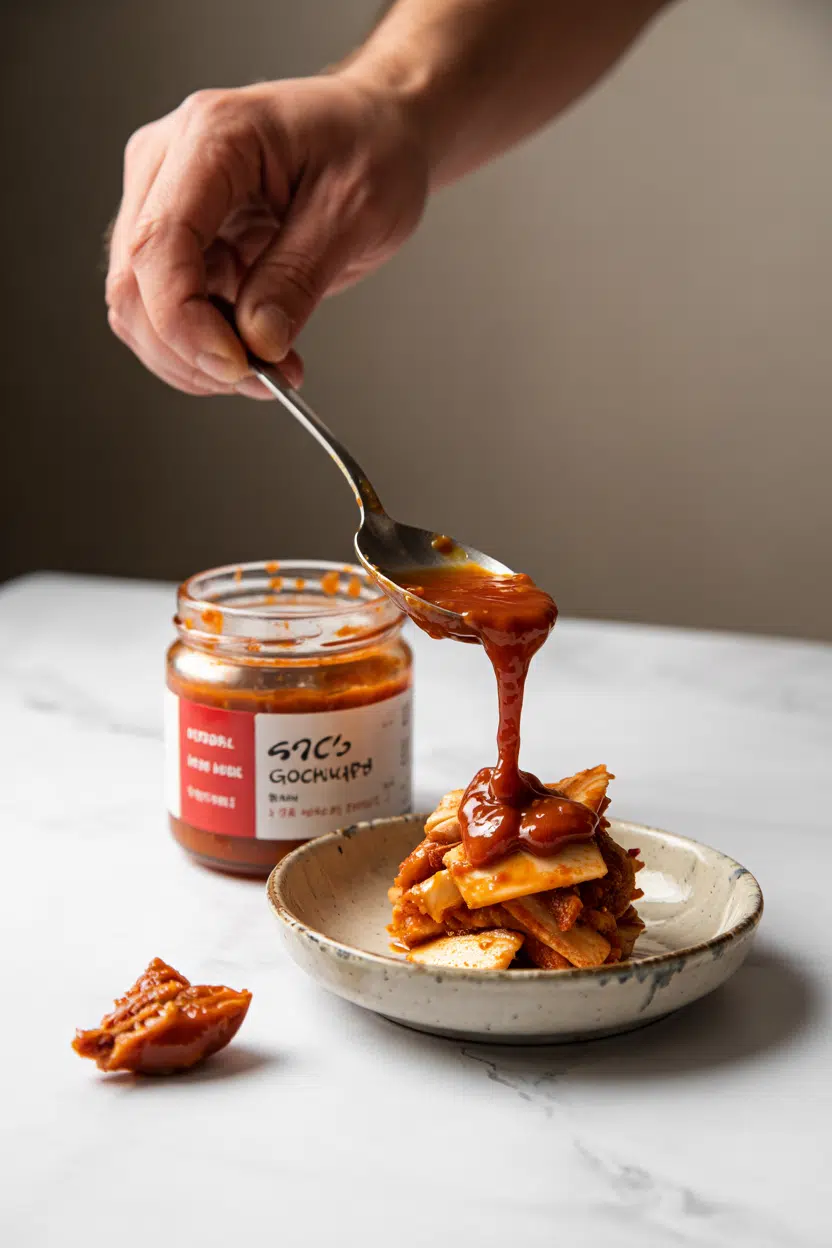
Think of it as a cross between fermented miso and a sweet chile paste, but more complex than either. Sambal oelek is sharper and more acidic.
Miso is earthier but lacks heat. Gochujang sits between them - rounded, warm, with a finish that lingers rather than spikes.
Heat from gochujang builds slowly - it doesn't hit immediately the way raw chile does. Cooking mellows both the sweetness and the spice slightly, pushing the fermented umami forward.
Eaten raw in a dressing or dip, the sweet-heat contrast is sharper and more immediate.
How to Use Gochujang
Gochujang works across four distinct cooking approaches, each pulling out a different aspect of its flavor.
In stews and braises, the fermentation deepens over heat - it's a standard addition to kimchi jjigae and spicy braised short ribs (galbijjim), where it provides both color and body to the braising liquid.
For marinades, mix it with sesame oil, soy sauce, garlic, and a small amount of sugar for a bulgogi-style pork marinade. The sugars in the paste also help achieve caramelization when glazed meats hit a hot grill or oven.
Keep the glaze layer thin - too thick and the sugars scorch before the protein cooks through.
Raw applications are where gochujang's tang shines. Thin it with rice vinegar and sesame oil for a dipping sauce, or blend it with mayonnaise for a sandwich spread with real depth.
The ratio matters: start with one part gochujang to three parts mayo and adjust.
| Method | Best For | Tip |
|---|---|---|
| 🥗 Raw / Mixed | Dressings, dipping sauces, mayo blends | Thin with rice vinegar or sesame oil to adjust thickness |
| 🍲 Simmering | Stews, braises, kimchi jjigae, galbijjim | Add early - long heat deepens the umami and mellows sweetness |
| 🥩 Marinating | Pork, chicken, tofu, bulgogi-style dishes | Include sugar or honey to balance salt; marinate at least 30 minutes |
| 🔥 Glazing | Roasted or grilled chicken, ribs, vegetables | Apply in the last 10-15 minutes to prevent the sugars from burning |
Pairs best with soy sauce, garlic, ginger, scallions, and sesame seeds. Avoid pairing it with delicate raw white fish - the fermented paste overwhelms subtle seafood completely.
How to Buy and Store Gochujang
Look for a deep red, glossy paste in a sealed tub - separated liquid or a pale, dull color signals low quality or degraded product. Check that gochugaru appears near the top of the ingredient list, not buried after starches or artificial colorings.
If you need a gochujang substitute in a pinch, options exist, but no single ingredient replicates the fermented complexity.
Store an unopened tub in a cool pantry. Once opened, refrigerate in a tightly sealed container - this slows active fermentation and prevents surface mold.
Shelf life for refrigerated gochujang runs 6-12 months when kept properly sealed. For a full breakdown, see our guide on gochujang storage guide.
High sodium content means it preserves well, but it doesn't last forever after opening.
Start with One Dish
If gochujang is new to your kitchen, don't start with a stew.
Mix one tablespoon into softened butter or mayo and use it as a spread - that's the fastest way to understand the balance of sweetness, heat, and fermented depth before committing it to a longer cook.
From there, move to a simple marinade: gochujang, sesame oil, garlic, and a splash of soy sauce for chicken thighs. That single formula covers the paste's core strengths without overcomplicating the first attempt.
Frequently Asked Questions
Mild to moderately spicy, depending on the brand. The heat builds slowly rather than hitting immediately, and fermented sweetness tempers the overall burn. Brands label heat level from 1 to 5 - most everyday cooking uses a 2 or 3.
Not directly. Miso shares the fermented umami base but has no chile heat and lacks sweetness. A closer improvised substitute combines miso with a small amount of sriracha and a pinch of sugar - still not identical, but structurally closer.
Refrigerate it in a tightly sealed container. Press a small piece of plastic wrap directly onto the paste surface before sealing - this reduces oxidation and slows surface mold formation significantly.
Most standard formulations do - glutinous rice and fermented soybean (meju) are both common gluten sources in the paste. Certified gluten-free versions exist; check the label explicitly rather than assuming.
Yes - it's commonly eaten raw in dipping sauces and dressings. The flavor is sharper and sweeter uncooked. Thin it with a liquid like rice vinegar or sesame oil first; straight from the tub it's too dense for most raw applications.