You spot it at the cheese counter - a small white tub labeled mascarpone, sitting quietly between the ricotta and the cream cheese. It looks unremarkable, however it's one of the richest dairy products you'll find outside a French pâtisserie.

Mascarpone is a high-fat Italian cream cheese made from heavy cream curdled with acid. It's thick, silky, and mildly sweet - less tangy than American cream cheese. Use it in tiramisu, pasta sauces, risotto, and no-bake cheesecakes. Once opened, it keeps about 5-7 days.
What Is Mascarpone?
Mascarpone originated in Lombardy, northern Italy, likely between the 16th and 17th centuries.
Remember it later
Planning to try this recipe soon? Save it for a quick find later!
It sits in the category of fresh cream cheeses - however, unlike most, it's made from heavy cream rather than whole milk, which gives it an unusually high fat content, typically around 60-75%.
Production is simple: heat cream, add an acid such as citric acid or tartaric acid, then strain the curd through cheesecloth. No aging, no rennet, no salting.
The result is a thick, spoonable white spread with a custard-like body. You may see it labeled mascarpone cheese, mascarpone crema, or mascarpone cream - all the same product.
It's worth knowing what sets it apart from similar soft cheeses:
- Fat content - Far higher than ricotta or standard cream cheese, which is why it enriches sauces without breaking.
- Acidity - Noticeably lower tang than American cream cheese; closer to clotted cream in mildness.
- Texture - Denser than whipped cream but looser than block cream cheese; it holds a spoon's impression cleanly.
What Does Mascarpone Taste Like?
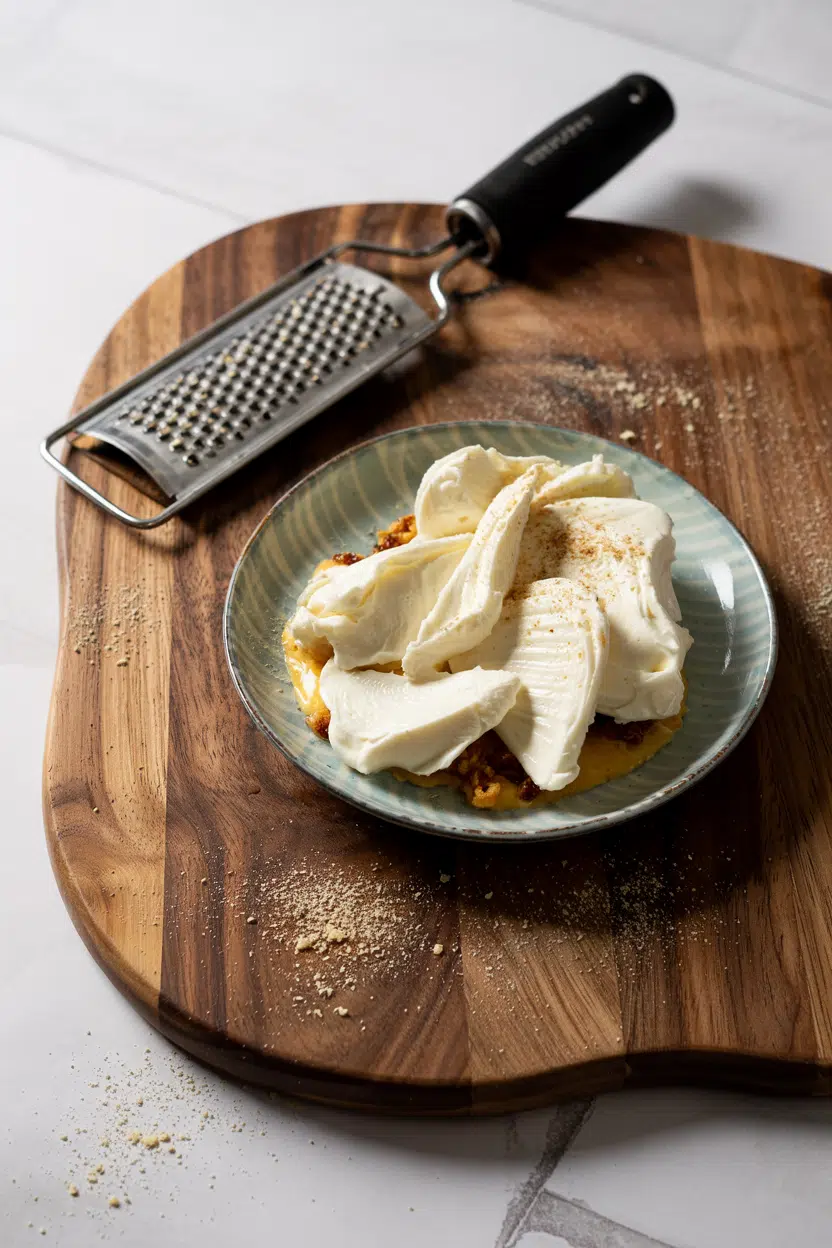
Mascarpone has a rich, buttery flavor with a faint sweetness and only the mildest lactic tang. That tang is subtle enough that most people don't register it as sour - it reads more as "fresh dairy" than sharp or acidic.
Compared to American cream cheese, it's noticeably softer in flavor and far less salty. Think of it as sitting between clotted cream and a very mild cream cheese - creamier than both, sharper than neither.
Heat doesn't sharpen mascarpone's flavor the way it does with aged cheese. Stirred into a warm sauce off the heat, it stays gentle - it enriches without asserting itself.
How to Use Mascarpone
Mascarpone does one thing exceptionally well: it adds richness without adding sharpness. That quality makes it useful across both sweet and savory cooking.
In Italian desserts, it's best known as the base of tiramisu - folded with egg yolks and sugar, then layered over espresso-soaked ladyfingers. Outside Italy, bakers use it for no-bake cheesecakes, mousses, and fruit dips whisked with sugar and vanilla.
On the savory side, stirring mascarpone into risotto off the heat (a technique called mantecatura) gives the final dish an extra layer of body. It also works swirled into hot pasta sauces - add it last, off the burner, to avoid separation.
| Method | Best For | Tip |
|---|---|---|
| 🥗 Raw / Spread | Crostini with honey and lemon zest, soft cheese boards, sandwich spreads with herbs | Serve at room temperature for easier spreading |
| 🥄 Folded Cold | Tiramisu, mousse, no-bake cheesecakes, stabilized whipped cream | Don't overwork - it can thin if beaten too hard |
| 🍳 Stirred Off-Heat | Risotto finish, pasta sauces, ganache enrichment | Remove from heat first; direct boiling causes separation |
| 🧁 Baked (Gentle) | Cheesecake fillings, tart bases, stuffed pastries | Use in custard-style recipes where the oven temp stays low |
Mascarpone pairs naturally with espresso, prosciutto, lemon, honey, and fresh berries. In French pastry contexts, it sometimes substitutes for heavy cream in ganache, yielding a firmer, creamier frosting.
How to Buy and Store Mascarpone
Look for tubs with a firm, glossy surface and no pooled whey at the edges. A bloated lid or visible liquid separation signals age or temperature abuse - skip it.
Once opened, press plastic wrap directly against the surface before replacing the lid. This limits air contact and keeps the texture from drying or absorbing fridge odors.
- Unopened - Lasts 2-3 weeks refrigerated, up to the printed date.
- Opened - Use within 5-7 days; see our full guide on mascarpone storage guide for signs of spoilage.
- Freezing - Not recommended; the fat and water separate on thawing, leaving a grainy texture.
Start With Tiramisu
New to mascarpone? Tiramisu is the right entry point - it requires no cooking, uses the cheese cold and folded, and the contrast with bitter espresso and soaked ladyfingers shows exactly why its richness matters.
If you can't find it locally, check our list of mascarpone swaps before swapping in cream cheese directly. The fat and texture difference is real enough to affect the final result.
Frequently Asked Questions
Heavy cream curdled with an acid - usually citric or tartaric acid - then strained through cheesecloth. No rennet, no salt, no aging. The high cream-to-yield ratio is why it costs more than most fresh cheeses.
No. Mascarpone is made from cream; American cream cheese uses whole milk and has added stabilizers. Mascarpone is higher in fat, lower in protein, less salty, and noticeably milder in tang.
Richer and creamier, with less grain. Ricotta has a slightly grainy texture and a cleaner, lighter dairy flavor. Mascarpone is denser, silkier, and noticeably more buttery.
Yes, but keep oven temperatures moderate. It works well in low-heat custard-style cheesecakes and filled pastries. At high direct heat it can separate, so avoid using it like a standard baking cream.
Five to seven days is the reliable window. Press plastic wrap against the surface before sealing to slow deterioration. Sour smell or visible mold means discard it immediately.