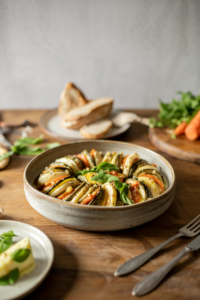
Colorful vegetables layered over warm rice with spicy-sweet gochujang drizzled on top. That's what happens when you cook each vegetable separately and season them individually before building the bowl.

The method prevents soggy vegetables. Blanching spinach for 30 seconds keeps it bright green. Sautéing carrots and mushrooms in separate batches preserves their distinct textures.
This works for meal prep when you need something that holds up in the fridge and reheats without turning mushy. Layer the components, pack the sauce separately, and you have lunch ready for the week.
Korean bibimbap layers sautéed and blanched vegetables over short-grain rice with gochujang sauce. Cook each vegetable separately to retain individual texture and prevent sogginess. Season components individually with soy sauce and sesame oil before assembling bowls.
Why This Recipe Works
Cooking each vegetable separately maintains distinct textures instead of turning everything into a steamed mush. Short-grain rice provides the sticky base that holds the bowl together. For another Korean weeknight option that uses similar techniques, simple homemade vegetarian dishes layer flavors without requiring specialty equipment.
Remember it later
Planning to try this recipe soon? Save it for a quick find later!
Prep Time
20 min
Cook Time
30 min
Total Time
50 min
Servings
4 servings
Difficulty
Medium
Category
Main Dish
Quick Tip
Cook vegetables separately for ideal texture
Best For
Weeknight | Meal prep
What makes this work:
- Rice water ratio of 1:1.25 creates sticky texture that clumps without turning gummy
- Individual seasoning per vegetable builds layered flavor instead of one-note bland bowls
- Medium-high heat for sautéing caramelizes vegetables while maintaining crunch
- Ice water shock after blanching stops cooking and locks in bright green color
- Sesame oil added last preserves nutty aroma that cooking would destroy
What You'll Need
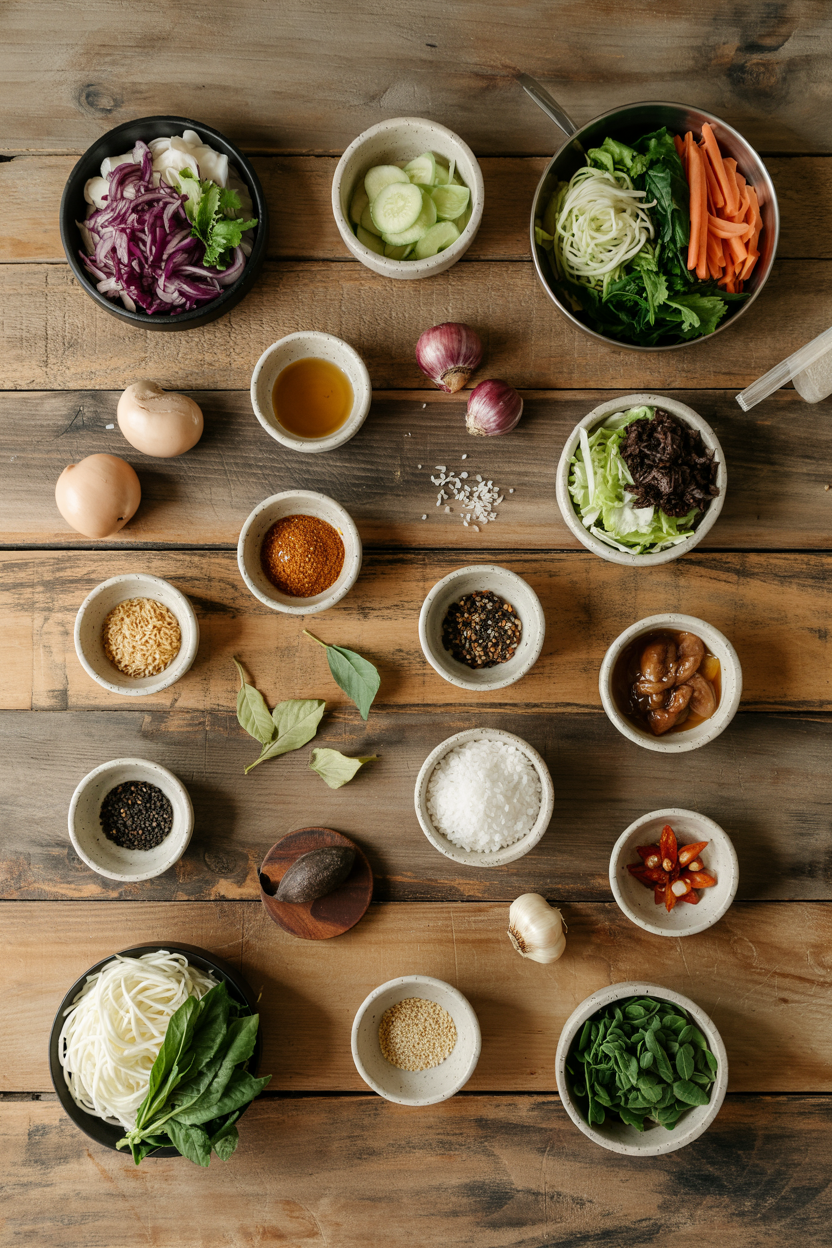
Short-grain rice is non-negotiable for texture. Long-grain varieties won't clump properly and the bowl falls apart when you mix it. Stock up on gochujang and sesame oil for authentic Korean flavor without hunting down specialty ingredients every time.
- 2 cups short-grain rice
- 2½ cups water
- 8 oz spinach
- 2 medium carrots, julienned
- 6 oz shiitake mushrooms, sliced
- 1 cup bean sprouts
- 1 medium zucchini, julienned
- 3 tablespoon gochujang
- 2 tablespoon sesame oil
- 3 tablespoon soy sauce
- 1 tablespoon rice vinegar
- 1 teaspoon sugar
- 4 eggs (optional)
- 1 tablespoon toasted sesame seeds
- 2 cloves garlic, minced
- Neutral oil for cooking
Ingredient Details
- Short-grain rice
Rinse 3 times until water runs clear to remove excess starch - Gochujang
Korean fermented chili paste - check Asian grocery stores or buy online - Shiitake mushrooms
Remove tough stems before slicing - save for stock - Sesame oil
Toasted sesame oil has stronger flavor than plain - use sparingly - Bean sprouts
Fresh sprouts from produce section - canned versions turn mushy - Eggs
Fry sunny-side up for runny yolk that mixes into rice - Carrots
Julienne into matchsticks for quick cooking and uniform texture
Ingredient Swaps
Tamari swaps directly for soy sauce when you need gluten-free. Quinoa works for higher protein but loses the sticky texture that makes bibimbap work.
Four swaps that hold up:
- Soy sauce → tamari - Gluten-free option with slightly less salty punch but same umami depth
- Gochujang → sriracha plus miso paste - Mix 2 tablespoon sriracha with 1 tablespoon white miso for similar heat and fermented funk
- Shiitake mushrooms → cremini mushrooms - Milder flavor but same meaty texture when sautéed
- Bean sprouts → julienned cucumber - Adds crunch without the grassy bean flavor
Short-Grain Rice
Works for: Traditional texture, sticky clumping, authentic bibimbap
Skip if: Need gluten-free grains or want higher protein base
Quinoa
Works for: Gluten-free, higher protein, faster cooking time
Skip if: Want authentic sticky texture or traditional presentation
Fried Egg
Works for: Ovo-vegetarian, adds creamy yolk richness, traditional topping
Skip if: Vegan or prefer plant-based protein like tofu
Instructions
Rice cooks while you prep and sauté vegetables. Time the components so everything stays warm for assembly - cold vegetables make the bowl feel like leftovers even when freshly made.
Cook rice: Rinse 2 cups short-grain rice until water runs clear. Add rice and 2½ cups water to pot, bring to boil, reduce to low, cover, steam 18-20 minutes until tender and water absorbed.
Blanch spinach and bean sprouts: Boil water in medium pot. Add 8 oz spinach, blanch 30 seconds, transfer to ice water. Blanch 1 cup bean sprouts 45 seconds, shock in ice water. Drain both, squeeze excess water, season each with ½ teaspoon soy sauce and ¼ teaspoon sesame oil.
Sauté carrots: Heat 1 teaspoon neutral oil in skillet over medium-high heat. Add julienned carrots, cook 2-3 minutes until softened but still crisp. Season with ½ teaspoon soy sauce, transfer to bowl.
Cook mushrooms and zucchini: Add 1 teaspoon oil to same skillet. Sauté sliced shiitake mushrooms 3-4 minutes until browned and moisture released. Season with ½ teaspoon soy sauce and minced garlic. Repeat with julienned zucchini, cooking 2 minutes until tender-crisp.
Assemble bowls: Divide warm rice among 4 bowls. Arrange vegetables in sections on top. Mix 3 tablespoon gochujang, 1 tablespoon sesame oil, 1 tablespoon soy sauce, 1 tablespoon rice vinegar, 1 teaspoon sugar for sauce. Drizzle over bowls. Top with fried egg if using, sprinkle toasted sesame seeds.
What to Serve With It
Bibimbap covers vegetables and carbs but needs acidic or crunchy sides to balance the rich bowl. Korean cucumber salad cuts through sesame oil richness while kimchi adds fermented punch. For more weeknight falafel balls meal ideas that pair vegetarian mains with complementary sides, look for dishes that add textural contrast without competing flavors.
| Side Dish | Prep | Why It Works | How to Serve |
|---|---|---|---|
| Korean Cucumber Salad | Easy | Crisp, tangy crunch contrasts soft vegetables | Serve in small dish alongside bowl |
| Miso Soup | Easy | Warm broth adds liquid element to dry bowl | Sip between bites for palate cleansing |
| Steamed Edamame | Easy | Simple protein boosts meal without heavy feel | Sprinkle with sea salt, serve warm |
| Kimchi | Easy | Fermented spice cuts richness, adds probiotic punch | Spoon onto rice or eat between bites |
| Pickled Radish | Easy | Bright acidity balances gochujang heat | Chop and scatter over bowl or serve separately |
Three ways to serve it:
- Meal prep bowls - Pack rice and vegetables in separate containers, sauce on side, reheat rice before assembling
- Family-style platter - Arrange all vegetables on large plate around rice bowl, let diners build their own
- Dolsot-style - Heat stone bowl, add thin oil layer, pack rice and press down, cook 5 minutes over medium heat for crispy bottom
Store and Reheat
Store rice and vegetables in separate containers to prevent soggy textures. The egg and gochujang sauce go bad faster than other components - pack those separately if meal prepping. Rice hardens when cold but steams back to tender in 2 minutes.
| Method | Time | Best For |
|---|---|---|
| 🍳 Stovetop | 5-7 min | Reheating rice with minimal texture loss - add splash of water, cover, steam over low |
| 📦 Microwave | 1-2 min | Quick reheating single portions - cover bowl, microwave 1 minute, stir, repeat 30 seconds |
| 🔥 Oven | 10-12 min at 350°F | Larger portions needing even heating - cover with foil, bake until steaming |
For best results when storing:
- Refrigerate assembled bowls up to 3 days - Store in airtight containers, keep sauce separate to prevent soggy rice
- Freeze rice and cooked vegetables separately up to 1 month - Thaw overnight in fridge before reheating
- Skip freezing fresh vegetables - Blanched spinach and bean sprouts turn watery when frozen and thawed
- Store gochujang sauce separately - Mix fresh batch for each serving or keep in small container up to 1 week
- Reheat rice with moisture - Add 1-2 tablespoon water before microwaving to restore soft texture
Frequently Asked Questions
Cook short-grain rice for 18-20 minutes after bringing to boil, then reduce to low and cover. Use 1 cup rice to 1¼ cups water ratio for sticky texture that clumps without turning mushy.
Yes, store rice and vegetables separately in airtight containers for up to 3 days. Reheat rice with splash of water in microwave for 1-2 minutes, warm vegetables in skillet for 2-3 minutes, then assemble fresh.
Korean cucumber salad adds crisp, tangy crunch while kimchi provides fermented spice. Miso soup works as palate cleanser between bites, and steamed edamame boosts protein without heavy feel.
Carrots should soften but maintain crunch after 2-3 minutes of sautéing. Spinach turns bright green after 30 seconds of blanching, mushrooms release moisture and brown after 3-4 minutes, and zucchini becomes tender-crisp in 2 minutes.
Quinoa works for higher protein and gluten-free option but loses the sticky texture that makes traditional bibimbap work. Cook quinoa in 1:2 ratio with water for 15 minutes, but expect looser bowl structure when mixing.
Korean Bibimbap (Vegetarian)
Ingredients
Method
- Rinse 2 cups short-grain rice until water runs clear. Add rice and 2½ cups water to pot, bring to boil, reduce to low, cover, and steam for 18-20 minutes until tender and all water is absorbed.2 cups short-grain rice, 2.5 cups water
- Bring water to boil in a medium pot. Blanch 8 oz spinach for 30 seconds and transfer immediately to ice water. Blanch 1 cup bean sprouts for 45 seconds, then shock in ice water. Drain both well, squeeze out excess water, and season each with ½ teaspoon soy sauce and ¼ teaspoon sesame oil.8 oz spinach, 1 cup bean sprouts, 3 tbsp soy sauce, 2 tbsp sesame oil
- Heat 1 teaspoon neutral oil in a skillet over medium-high heat. Add julienned carrots and cook 2-3 minutes until softened but still crisp. Season with ½ teaspoon soy sauce and transfer to a bowl.2 medium carrots, 1 tsp neutral oil, 3 tbsp soy sauce
- Add 1 teaspoon neutral oil to the same skillet. Sauté sliced shiitake mushrooms for 3-4 minutes until browned and moisture is released. Season with ½ teaspoon soy sauce and minced garlic.6 oz shiitake mushrooms, 1 tsp neutral oil, 3 tbsp soy sauce, 2 cloves garlic
- Using the same skillet, sauté julienned zucchini for 2 minutes until tender-crisp. Transfer to a bowl.1 medium zucchini, 1 tsp neutral oil
- Divide warm rice among 4 bowls. Arrange each cooked vegetable in sections on top of rice. Mix 3 tablespoon gochujang, 1 tablespoon sesame oil, 1 tablespoon soy sauce, 1 tablespoon rice vinegar, and 1 teaspoon sugar to make the sauce. Drizzle sauce over bowls. Top with fried egg if using, and sprinkle toasted sesame seeds.2 cups short-grain rice, 8 oz spinach, 2 medium carrots, 6 oz shiitake mushrooms, 1 cup bean sprouts, 1 medium zucchini, 3 tbsp gochujang, 2 tbsp sesame oil, 3 tbsp soy sauce, 1 tbsp rice vinegar, 1 tsp sugar, 4 eggs eggs, 1 tbsp toasted sesame seeds
Notes
- Cook each vegetable separately to preserve texture and flavor.
- Blanch spinach briefly and shock in ice water to keep bright green color.
- Store rice and vegetables separately if meal prepping to avoid sogginess.