Olive oil is the one fat that changes the character of a dish depending on when you add it.

A drizzle over warm white beans at the table does something a pre-cook addition never will - it stays bright, grassy, and present.
That timing instinct, and knowing which grade to reach for, is what separates a flat dish from one that holds together.
If you're already comparing cooking fats, our guide to replacements for canola oil shows where olive oil fits in that broader swap picture.
Olive oil is a pressed plant oil from the Mediterranean, graded by acidity and processing. Extra virgin is cold-pressed with distinct flavor; refined blends are neutral and better for heat. Best used for dressings, finishing, and medium-heat cooking.
What Is Olive Oil?
Olive oil comes from pressing the fruit of the Olea europaea tree, which has been cultivated across the Mediterranean basin for at least 6,000 years.
Remember it later
Planning to try this recipe soon? Save it for a quick find later!
It is a pressed plant oil, which sets it apart from seed oils extracted by solvents or high heat.
Grade determines everything about how it tastes and where it works in cooking. The grade system is built around two factors: acidity level and how much processing the oil undergoes.
- 🫒 Extra virgin olive oil (EVOO) - Cold-pressed, acidity below 0.8%, no heat or chemical refining; highest polyphenol content and strongest flavor.
- Virgin olive oil - Also cold-pressed but with slightly higher acidity (up to 2%) and a milder flavor profile.
- Refined olive oil - Heat- or solvent-processed to neutralize defects; very low flavor, higher smoke point, sold in blends.
- Pure or light olive oil - Marketing terms for refined blends; "light" refers to color and flavor, not calories.
Olive variety matters too. Arbequina (Spain) produces a buttery, mild oil; Picual (also Spanish) is robust and bitter; Koroneiki (Greece) leans grassy and pungent. These are the same differences you find between apple varieties - same category, meaningfully different character.
What Does Olive Oil Taste Like?
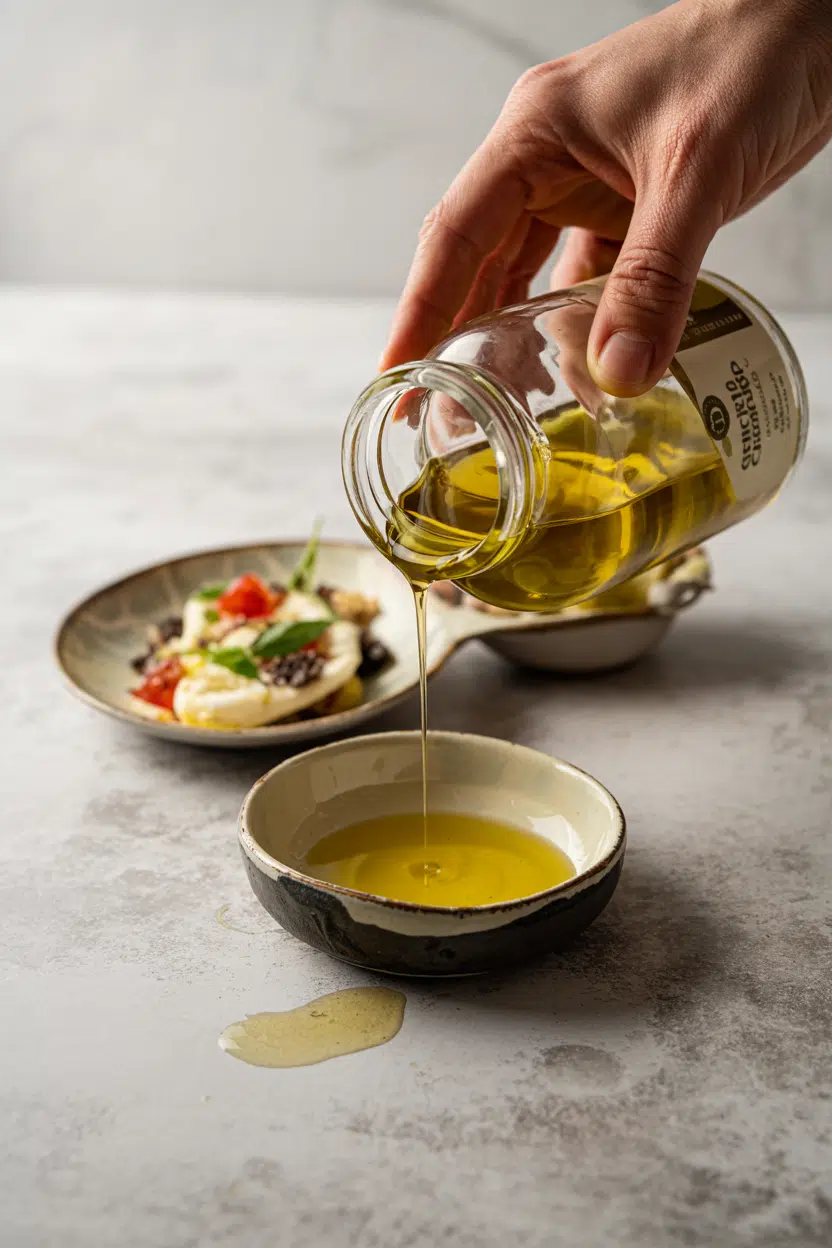
Extra virgin olive oil has a layered flavor that most refined cooking oils simply don't have. The front of the palate picks up green, grassy notes - sometimes fresh-cut grass or green apple in early-harvest oils. The back of the throat gets a distinct peppery bite, which is the polyphenol oleuropein finishing the sip.
Mouthfeel is silky and viscous - closer to avocado oil than to any seed oil, and notably heavier on the tongue than canola.
Heat strips those grassy, fruity notes quickly, which is why high-polyphenol EVOO tastes muted or flat when cooked hard.
Refined blends, by contrast, taste almost neutral with only faint olivey undertones. That difference is not a quality failure - it's just grade doing its job.
If you ever need olive oil stand-ins when a bottle runs out, the choice of replacement should match the grade you're replacing, not just the category.
How to Use Olive Oil
Olive oil works across a wide range of preparations, and the grade you use should follow the cooking method.
For cold applications, swapping out sesame oil in a dressing is one situation where a bold EVOO can actually replicate some of that nutty intensity.
| Method | Best For | Tip |
|---|---|---|
| 🥗 Cold / Finishing | Vinaigrettes, bread dipping, finishing soups and grains | Use your best EVOO here - flavor is fully exposed |
| 🍳 Sautéing | Softening garlic, onions, aromatics over medium heat | Refined or virgin grades hold up better; EVOO works under 375°F |
| 🔥 Roasting | Root vegetables, chicken, fish in the oven | Use a blended or refined grade; EVOO loses its point at high temps |
| 🫙 Infusing | Herb oils, chili oil, garlic-infused oil | Warm over very low heat - never simmer; bottle and refrigerate |
| 🥩 Marinating | Chicken, lamb, vegetables with herbs and lemon | EVOO's bitterness softens overnight and carries herb flavor well |
Italian and Greek cooking rely on olive oil as the foundational fat for almost everything from braised greens to grilled fish. Spanish and North African traditions use it heavily in cold preparations - alioli, charmoula, and herb-heavy table sauces.
Levantine cooks finish hummus, labneh, and fattoush with a visible pool of good oil.
Pairings that work consistently: fresh tomatoes, garlic, lemon, parsley, feta or pecorino, roasted eggplant, and seafood. These ingredients all have enough acidity or salinity to balance the oil's bitterness and fat weight.
Skip olive oil for high-heat deep frying and for desserts that call for a neutral base - butter swaps that work in baking usually point toward neutral oils, not EVOO, for good reason.
How to Buy and Store Olive Oil
Label reading is the real skill here. A harvest date is more useful than a best-by date alone - look for oils pressed within the last 12 months. Dark glass bottles or tins block light; clear plastic does not, and it accelerates oxidation.
What to check before buying:
- ✅ Harvest date - printed on label, ideally within 12 months of purchase
- ✅ Packaging - dark glass, tin, or BPA-free opaque bottles only
- ✅ "First cold-pressed" or "cold-extracted" - confirms no heat processing for EVOO
- ❌ Clear plastic jugs - expose oil to light; avoid regardless of grade
- ❌ No origin listed - "packed in EU" without a source country is a red flag
Store in a cool, dark place with the cap sealed tight. Proper guidance on storing olive oil correctly covers the full timeline - but the short version is: opened bottles are best used within three to six months.
Unlike avocado oil's shelf life, which tracks similarly, olive oil's polyphenols degrade faster once air enters the bottle.
Where to Start With Olive Oil
Two bottles cover most situations. A mid-range EVOO with a harvest date handles finishing, dressings, and bread dipping - this is where flavor earns its cost.
A refined or blended olive oil handles everyday sautéing and oven roasting without waste.
If you've only ever used one bottle for everything, start by reserving your EVOO strictly for cold and finishing use for two weeks. The difference in those applications will be immediate and convincing.
Frequently Asked Questions
Extra virgin is the highest grade of olive oil - cold-pressed without heat or solvents, with acidity below 0.8%. It retains the most polyphenols and has the strongest, most distinct flavor of any grade.
Yes, for low-to-medium heat cooking under roughly 375°F. Its smoke point is lower than refined grades, but the bigger issue is that heat destroys the grassy, peppery flavor you're paying for.
That's polyphenols - specifically oleuropein and oleocanthal - and it's a sign of freshness, not a flaw. Early-harvest and high-polyphenol varieties like Picual are most pronounced; the bite softens as the oil ages.
Canola is almost completely neutral with a faint waxy note. Olive oil - especially extra virgin - has obvious grassy, bitter, and sometimes fruity character that canola never develops regardless of grade.
Three to six months for peak flavor in an opened bottle stored correctly. It won't become unsafe quickly, however the polyphenols and aromatic compounds degrade and the oil eventually turns rancid.