You see it piled high on a Reuben sandwich or steaming alongside cabbage and potatoes, but corned beef is one of those ingredients that most people eat without really knowing what makes it tick.
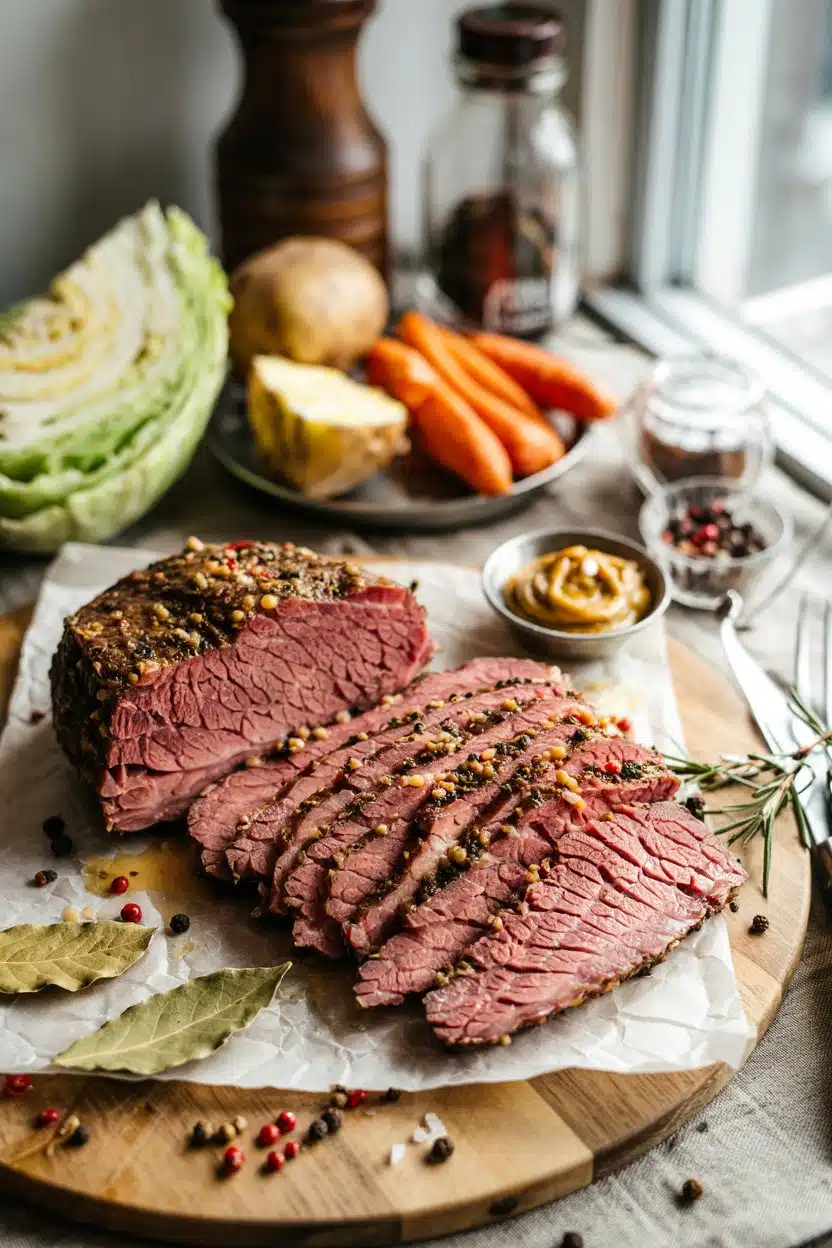
It's not simply cooked beef - it's brisket or silverside that's been cured in a heavy salt brine loaded with pickling spices, a process that fundamentally changes the meat's flavor and structure.
Understanding the role beef plays in this transformation explains why corned beef tastes like nothing else on a plate.
Corned beef is salt-cured brisket or silverside simmered until fork-tender. Its flavor is salty, briny, and lightly spiced - closer to pickled roast beef than a standard braise. Use it in sandwiches, hash, or boiled with vegetables. It keeps 2-3 weeks unopened in the fridge.
What Is Corned Beef?
Corned beef is salt-cured beef - most commonly brisket, though silverside is standard in Britain and Australia - preserved in a brine of coarse salt crystals historically called "corns of salt," which gave the product its name.
Remember it later
Planning to try this recipe soon? Save it for a quick find later!
The cure typically includes pickling spices: whole peppercorns, bay leaf, mustard seed, and often brown sugar or curing salt containing sodium nitrite.
That nitrite is what produces the characteristic pink interior you see when you slice it open.
It's sold two ways: as a whole raw cured joint for home cooking, or as pre-cooked deli-sliced corned beef ready for sandwiches.
Regional names vary - salt beef in the UK, corned brisket or corned silverside in Australia.
Irish-American cuisine brought the boiled version to prominence, while Jewish-American deli culture gave rise to the pressed and sliced format.
Unlike pork and its flavor profile which leans sweet and mild when cured, corned beef stays firmly savory and assertive.
Flavor
Texture
Aroma
Strong
What Does Corned Beef Taste Like?
The dominant note is salt - deep, penetrating salt that the brine drives through every fiber of the meat during curing.
Behind that sits a mild tang, almost pickled, from the acidic brine environment, followed by warmth from peppercorn and a faint sweetness that the brown sugar and slow cooking pull forward.
The closest comparison is pickled roast beef with a hint of something fermented. It shares DNA with pastrami preparation tips, but pastrami gets a smoke rub after curing, making it drier and smokier.
Corned beef stays wetter, brinier, and more direct in its salt hit.
Cooking method shifts the experience noticeably. Long simmering in water mellows the sharpest salt edges and lets the spiced broth flavor bloom into the meat.
Pan-frying cold slices or hash, however, concentrates the salt as moisture evaporates, making those bites more intense. The fat cap on a whole brisket also softens during braising, adding richness that deli-sliced versions lack entirely.
How to Use Corned Beef
Whole cured brisket rewards low, slow cooking. Simmer it submerged for 3 to 4 hours - or pressure-cook it down to around 90 minutes - with the role bay leaf plays and the role mustard seed plays kept in the pot.
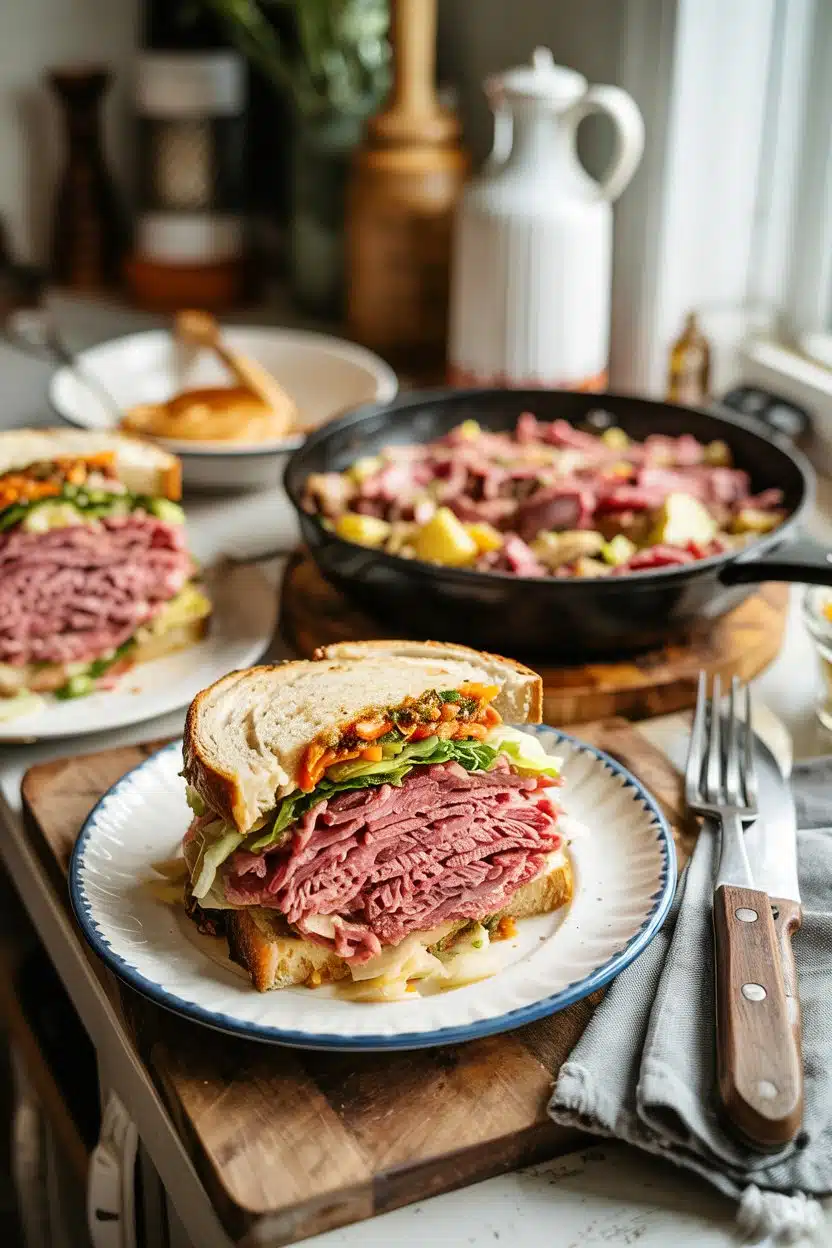
The liquid becomes a flavorful broth worth saving for cooking the accompanying vegetables. Getting cooking corned beef right matters, particularly for timing the cabbage and potatoes so they don't turn to mush.
| Method | Best For | Tip |
|---|---|---|
| 🍲 Simmer/Boil | Corned beef and cabbage, whole joint | Keep water at a low simmer, not a rolling boil |
| 🥩 Pan-fry/Sear | Hash, hot sandwich filling | Use medium-high heat and don't crowd the pan |
| 🥪 Cold-slice | Reuben sandwiches, deli boards | Press overnight under weight for cleaner slices |
| 🥧 Bake | Pies, pasties (British/Irish style) | Dice small so the filling holds together when sliced |
🥪 Jewish-American Deli
🇬🇧 British
🌴 Caribbean
potatoes
rye bread
mustard
sauerkraut
pickles
black pepper
caraway
Avoid pairing corned beef with delicate sweet fruits or light herbal salads. Its brine-forward intensity simply bulldozes those flavors rather than complementing them.
How to Buy and Store Corned Beef
At the counter, choose between a whole raw cured joint or pre-sliced deli corned beef.
For the whole joint, the interior should be bright pink from the cure - not grey or brownish at the edges - with a firm, slightly springy feel and no sour smell. Deli slices should look moist but not slimy.
Store an unopened vacuum-packed joint in the fridge at or below 40°F for up to 2-3 weeks.
Once opened, wrap it tightly and keep a little of the brine in the container to maintain moisture - cooked or opened corned beef keeps 3-5 days refrigerated.
Freeze it for up to 3 months; freeze in portions so you're not defrosting more than you need.
Which Format Should You Buy?
Start with deli-sliced corned beef if your goal is sandwiches or quick hash.
It's already cooked and ready to use within minutes.
Buy a whole raw cured brisket when you want to feed a crowd, control the salt level by soaking the joint before cooking, or need leftovers that stretch across several meals. Corned beef preparation tips also help when you need to adapt a recipe and don't have the right cut on hand.
The whole joint takes more time but gives you more control.
Frequently Asked Questions
No - they start from the same cured brisket base but diverge after that. Pastrami gets coated in a dry spice rub (typically black pepper and coriander) and then smoked before steaming, which makes it drier, smokier, and more complex. Corned beef skips the smoking entirely and goes straight to simmering, keeping it wetter and more briny.
The pink color comes from sodium nitrite (or the older saltpeter/sodium nitrate) used in the curing brine. These compounds react with the myoglobin in beef to form a stable pink pigment called nitrosomyoglobin, which holds its color even after cooking. Without the nitrite cure, simmered brisket would turn grey like ordinary boiled beef.
A whole cured brisket simmered on the stovetop needs around 3 to 4 hours at a low simmer, depending on size - roughly 45-50 minutes per pound. A pressure cooker cuts this to about 90 minutes. The meat is done when a fork slides through the thickest part with no resistance.
Yes, both raw cured and cooked corned beef freeze well for up to 3 months. Wrap tightly in plastic wrap, then place in a freezer bag to prevent freezer burn. Thaw in the refrigerator overnight - don't rush it at room temperature, as the high moisture content makes it prone to uneven thawing.
Not really. Canned corned beef is a fully cooked, compressed product made from lower-grade beef trimmings - often from multiple cuts - with a finer, denser texture and higher fat content than whole-muscle deli corned beef. Deli corned beef is sliced from a whole cured brisket and has a more defined grain, better texture for sandwiches, and a less uniform appearance.